Are prestigious schools also hitting landmines in investments? Just before the sharp decline of Bitcoin, Harvard heavily invested $500 million

Harvard University's endowment fund significantly increased its holdings in Bitcoin ETF to nearly $500 million in the last quarter, but Bitcoin's price subsequently fell over 20% this quarter, exposing it to significant timing risk. Although this investment represents a tiny proportion of its total fund, it highlights the common dilemma faced by institutional investors in accurately timing the market and avoiding volatility as cryptocurrencies become increasingly mainstream
Harvard University's massive endowment fund made a significant bet on Bitcoin just before its price peaked and began to decline, highlighting the severe timing risk that even top institutional investors face as cryptocurrencies become increasingly mainstream.
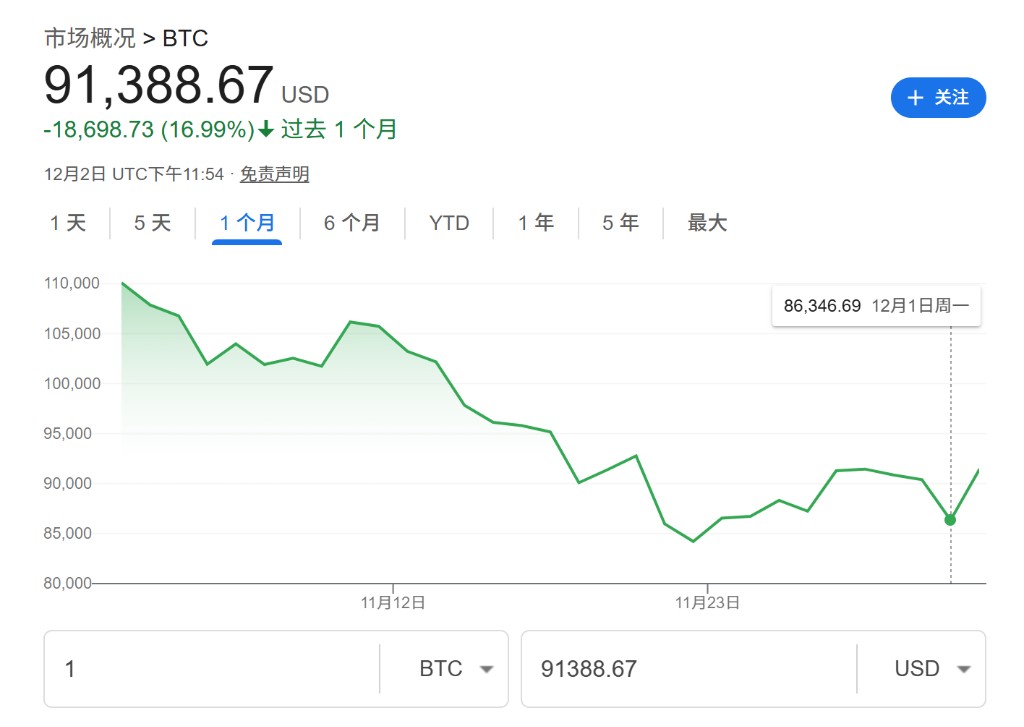
According to a December 2 report by The Wall Street Journal, Harvard University, the wealthiest university in the United States, significantly increased its holdings in the iShares Bitcoin Trust ETF to nearly $500 million in the last quarter, as disclosed in its latest quarterly report. However, since the beginning of this quarter, Bitcoin's price has dropped over 20%, and Tuesday's rebound failed to reverse the downward trend.

The cryptocurrency collapse affecting Wall Street and retail investors also casts a shadow over the prospects of this investment by Harvard. Although any losses in cryptocurrencies are just a drop in the bucket for its massive $57 billion endowment fund, this poorly timed bet reveals a common phenomenon where institutional investors continue to increase their positions even after significant rises in cryptocurrency prices.
If Harvard had sold before the price drop in early October, it could have emerged unscathed or even made a small profit. However, if the university still holds some or all of the shares purchased last quarter, then paper losses may be unavoidable.
Unfavorable Entry Timing
Documents show that Harvard University purchased 4.9 million shares of the iShares Bitcoin Trust ETF in the last quarter (ending September 30). Due to the lack of information on Harvard's specific average purchase price, its potential losses are difficult to calculate accurately.
In the best-case scenario, assuming these shares were bought at the lowest point of Bitcoin's price in early July, Harvard's cost would be approximately $294 million, while the current value of these shares is about $255 million, indicating a paper loss of 14%.
In contrast, the 1.9 million shares that Harvard bought before Bitcoin's surge in the second quarter may be in a much better position.
This nearly $500 million Bitcoin position accounts for less than 1% of the university's $57 billion endowment fund.
Institutions Racing into the Crypto Space
Harvard's actions are a microcosm of Bitcoin's increasing mainstream acceptance among institutional investors.
After this year's astonishing rise, there are still rational funds that remain optimistic and continue to buy. Before this round of correction, Bitcoin's price had surged 34% in 2025, reaching a historic high of over $126,000.
Other universities also seem to have been impacted by the recent drop in cryptocurrency prices, but to a much lesser extent. Schools reporting cryptocurrency holdings in the third quarter include Brown University, which holds $14 million in BlackRock's Bitcoin ETF, and Emory University, which holds $52 million in Grayscale's Bitcoin Mini Trust ETF.
Performance Pressure and the Long-Termism Dilemma
Behind Harvard's investment decisions, there may also be considerations of performance pressure In the past decade, Harvard's annualized investment return rate was 8.2%, ranking last in comparison with Ivy League schools and other top institutions. Although during the eight-year tenure of current CEO N.P. "Narf" Navicar, the annualized return rate improved to 9.6%, and a substantial gain of 11.9% was achieved in the fiscal year ending June 30, it still lags behind MIT's 14.8% and Stanford's 14.3%.
For long-term investors like endowment funds and pension funds, paper losses are not necessarily a problem as long as prices can eventually rebound. Some institutional investors have endured the extreme volatility of cryptocurrencies for years. For example, public pension funds were severely impacted during the cryptocurrency crash in 2022, but since then, the price of Bitcoin has risen more than fivefold.
However, some investors believe that cryptocurrencies are not suitable for long-term holding. Jay Hatfield, CEO of Infrastructure Capital Advisors, stated, "When you're gambling, what you need to do is sell it, not hold it."