Unexpected decline! In November, the ADP employment number in the United States decreased by 32,000, marking the largest drop since March 2023, with a surge in unemployment among small businesses

The ADP report shows that small businesses have become a major area for layoffs. Small businesses with fewer than 50 employees collectively reduced 120,000 jobs, with companies sized between 20 and 49 employees laying off 74,000 people. In contrast, large enterprises with more than 50 employees netted an increase of 90,000 jobs, indicating a clear differentiation in the labor market
In November, the U.S. private sector experienced the largest layoffs in nearly two years, with a reduction of 32,000 jobs, indicating signs of weakness in the labor market.
On December 3rd, the latest ADP employment data showed that private enterprises reduced 32,000 jobs in November, marking the largest decline since March 2023 and falling far short of the market expectation of an increase of 40,000 jobs. This data highlights the increasing pressure on the labor market at a critical moment when the Federal Reserve's policy is shifting.

Small businesses have become the hardest hit by layoffs. Small businesses with fewer than 50 employees collectively reduced 120,000 jobs, with companies employing 20 to 49 people laying off 74,000 workers. In contrast, large enterprises with more than 50 employees netted an increase of 90,000 jobs, showing a clear divergence in the labor market.
On Wednesday, U.S. Commerce Secretary Gina Raimondo denied in an interview that President Trump's tariff policy was the cause of the decline in private sector employment in November, arguing that the temporary government shutdown had slowed down activities in small businesses. The U.S. government's large-scale deportation of illegal immigrants has also suppressed employment data.
This report is the last employment data obtained before the Federal Reserve's meeting on December 9-10. Futures traders expect a nearly 90% probability that the Federal Reserve will cut interest rates by another 25 basis points, although some officials have doubts about the need for further easing of policies.
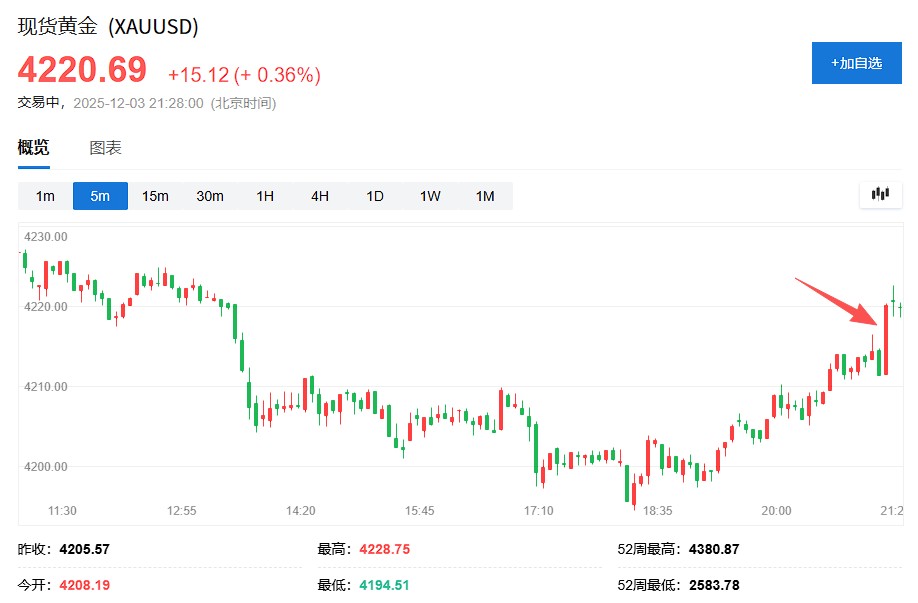
After the release of the November ADP employment figures, the U.S. dollar index, U.S. 10-year Treasury yield, and U.S. stock futures showed little short-term volatility, while spot gold briefly surged about $10, currently reported at $4,220.69 per ounce.

Small Businesses Face Layoff Wave
The weakness in the labor market is primarily concentrated in small businesses.
Businesses with fewer than 50 employees reduced 120,000 jobs in November, the largest single-month decline since May 2020, becoming the main factor dragging down overall employment. Among them, companies with 20 to 49 employees laid off 74,000 workers, contributing to the majority of small business layoffs.

In stark contrast, large enterprises with 50 or more employees actually netted an increase of 90,000 jobs, showing significant differences in the resilience of businesses of different sizes in the current economic environment.
This total decline of 32,000 jobs represents a sharp reversal from the revised increase of 47,000 jobs in October. ADP Chief Economist Nela Richardson stated in a statement:
"Recent hiring has been unstable, as employers are dealing with cautious consumers and an uncertain macroeconomic environment. The slowdown in November is widespread but primarily led by the contraction of small businesses."
Industry Performance Shows Significant Divergence
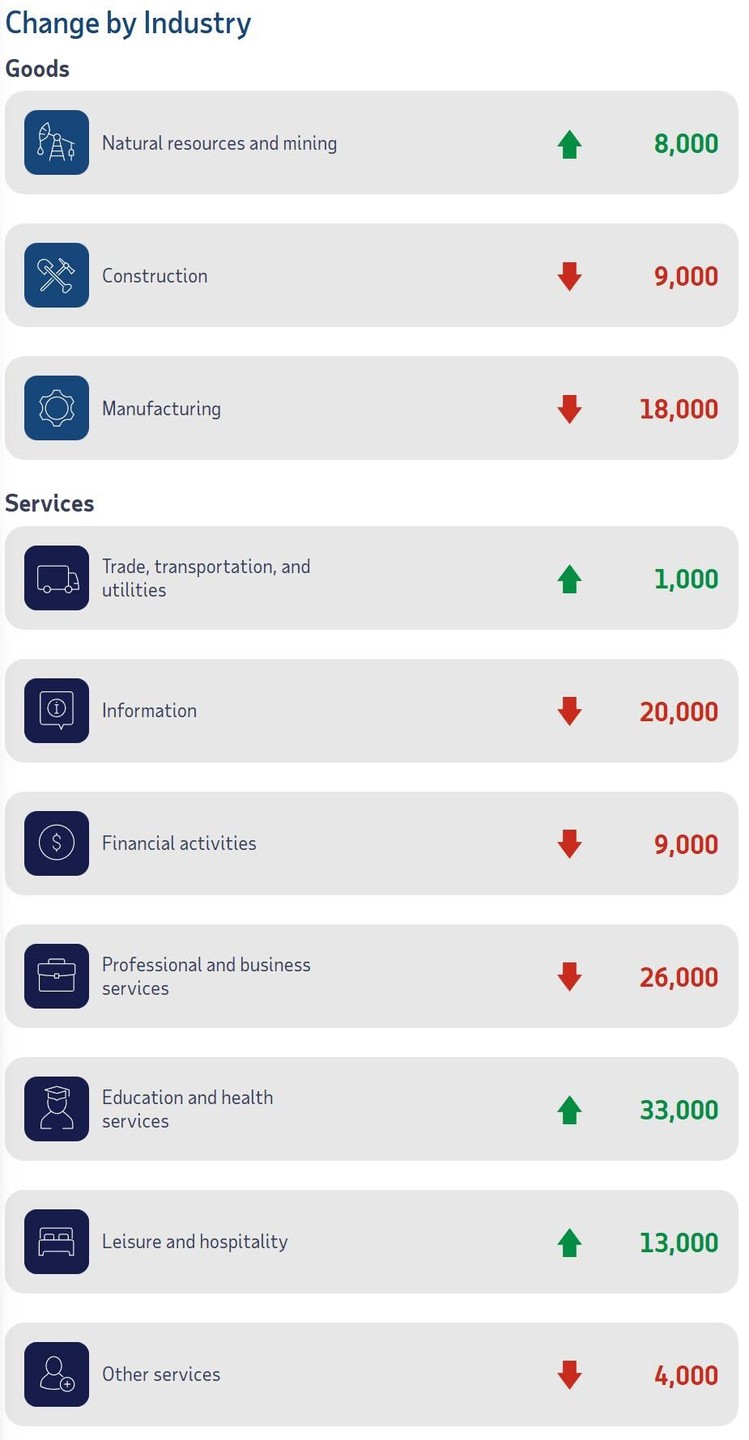
Employment data shows a broad downward trend at the industry level. The professional and business services sector cut 26,000 jobs, becoming the industry with the largest reductions. The information services sector lost 20,000 positions, manufacturing laid off 18,000 workers, and financial activities and construction each reduced 9,000 jobs.
Only a few industries achieved job growth. Education and healthcare services led the way, adding 33,000 jobs, while leisure and hospitality increased by 13,000 jobs. However, these gains are not enough to offset the widespread declines in other sectors.

Wage Growth Cools
Signs of a weakening labor market are also reflected in wage data.
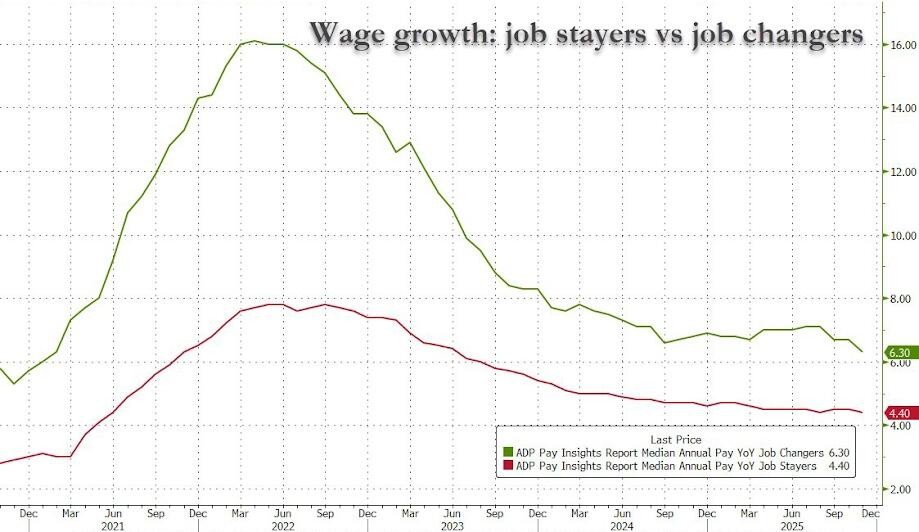
A report released by ADP in collaboration with the Stanford Digital Economy Lab shows that the wage growth for job switchers is 6.3%, the lowest level since February 2021. The wage growth for employees staying in their positions is 4.4%. This data is based on payrolls covering over 26 million private sector employees in the United States.

ADP Chief Economist Nela Richardson stated that employers are responding to cautious consumers and an uncertain macroeconomic environment, with recent fluctuations in hiring activity.
Reportedly, until recently, economists generally believed that the labor market was in a state of low hiring and low layoffs, but several large companies, including Apple and Verizon Communications, have recently laid off or announced layoff plans, which could push the unemployment rate higher.
U.S. Secretary of Commerce Denies Tariffs Are Hurting Employment
On Wednesday, U.S. Secretary of Commerce Gina Raimondo, in an interview on a television program, was asked whether Trump's tariffs could explain the report released by ADP on Wednesday morning. Raimondo said:
No, no, it’s not the tariffs.
Raimondo stated:
Remember the government shutdown caused by the Democrats? What do you think small businesses will do? Those who do business with the U.S. government know they won’t get paid, so they will slow down their projects.
She added:
So you can even see that the number of small businesses in construction has also slightly declined. Therefore, the government shutdown caused by the Democrats has had a negative impact on the economy.
Raimondo further noted:
And remember, when you deport illegal immigrants, this will also suppress the number of private jobs in small businesses.
As Raimondo defends Trump's protectionist policies, this report will become an important reference ahead of the Federal Reserve's policy meeting in December The futures market shows that traders expect a nearly 90% probability of the Federal Reserve cutting interest rates by another 25 basis points, although some officials are cautious about further easing of policies.
In recent weeks, there has been a divergence in the views of Federal Reserve policymakers. One side believes that rate cuts are a necessary measure to prevent further deterioration of the labor market, while the other side is concerned that additional cuts could exacerbate inflation, which remains significantly above the Federal Reserve's 2% target.
The U.S. Bureau of Labor Statistics will release the official non-farm payroll data on December 16, a date that has been delayed due to the government shutdown