


Neglected Risk: Will Japan's Long-Term Yield Control Trigger a "October Crash" in U.S. Stocks?
Japan's long-term government bond yields have risen rapidly, with the 10-year approaching 2% and the 30-year surpassing 3.43%, raising concerns in global markets. Analysts warn of spillover effects, as last October's unusual movements in Japanese rates led to a sharp decline in the Nasdaq 100 index. The widening yield spread between Japanese and U.S. 10-year government bonds could trigger market turbulence. Safe-haven assets like gold have already reacted to the rise in Japanese bond yields. Although most traders do not monitor changes in Japanese rates, they could become an important catalyst for market volatility
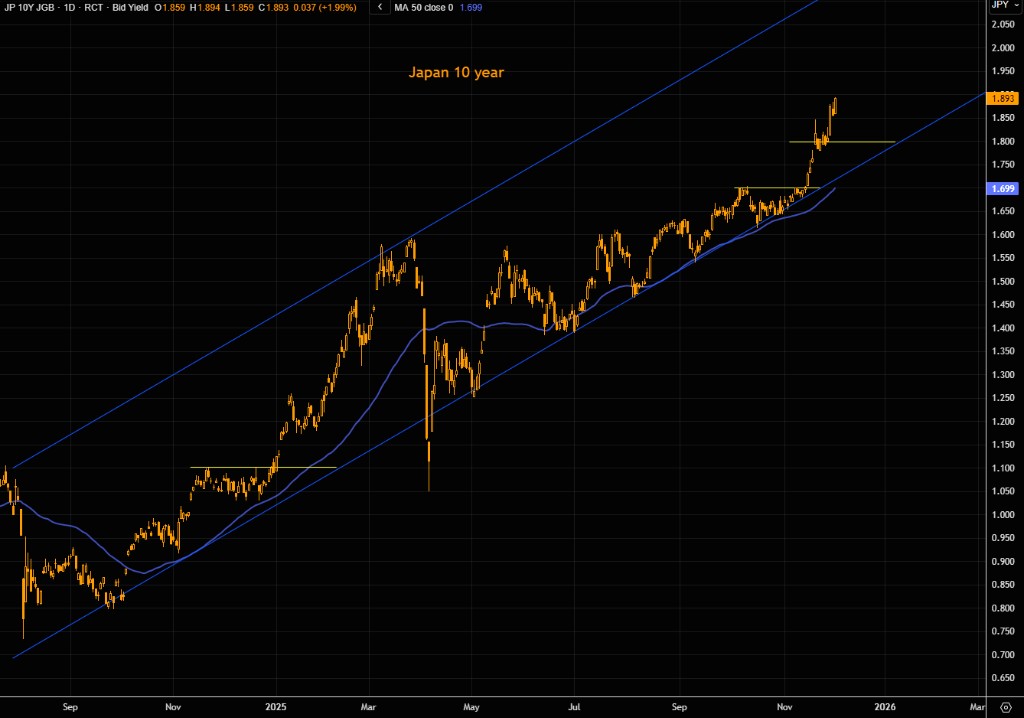
Japan's long-term government bond yields are experiencing an uncontrollable surge, with the 10-year yield continuously hitting new highs, approaching the critical level of 2%, and the 30-year yield soaring to 3.43%, breaking through significant technical resistance. This seemingly localized bond market fluctuation is transmitting risk signals to the global market.
Market analysts warn that the sharp rise in Japanese government bond yields is not an isolated event, and its global spillover effects cannot be ignored. When Japanese interest rates began to deviate in late October last year, the Nasdaq 100 index plummeted in response, and historical experience shows a close correlation between the two.
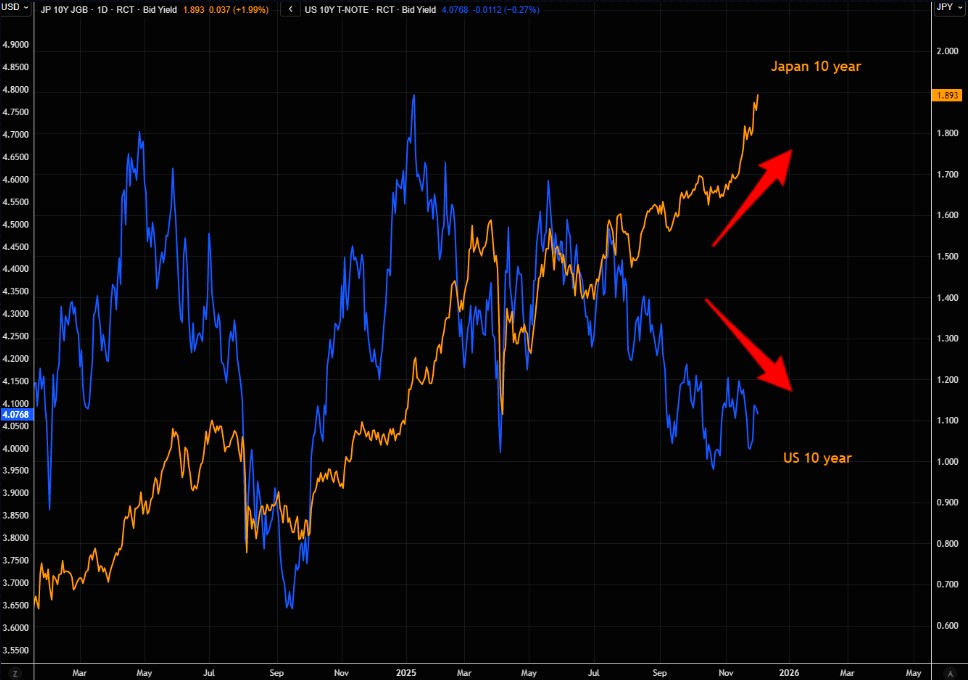
Meanwhile, the current spread between Japanese and U.S. 10-year government bond yields continues to widen, and this significant macro-level change could trigger broader market turmoil. Safe-haven assets like gold have begun to react to the rise in Japanese bond yields, indicating that market concerns about potential risks are heating up.
Analysts point out that although most traders have not yet incorporated changes in Japanese interest rates into their daily risk monitoring, at current levels, this factor could become an important catalyst for increasing market volatility.
Japanese Long-Term Yields Break Key Resistance
The yield on Japan's 10-year government bonds has been hitting new highs for several consecutive days, with the "magnet effect" of 2% continuing to attract higher yields. Technical indicators show that yields are steadily rising within a major trend channel, breaking through each short-term consolidation area, with the 50-day moving average remaining intact.
The 30-year government bond yield has shown even stronger performance, recording another large bullish candle, reaching 3.43%. After breaking through the critical level of 3.3%, long-term yields have broken the long-term consolidation pattern. Technical analysis indicates that there is still a significant vacuum above, and if targeting the upper edge of the trend channel, the upside potential remains considerable.
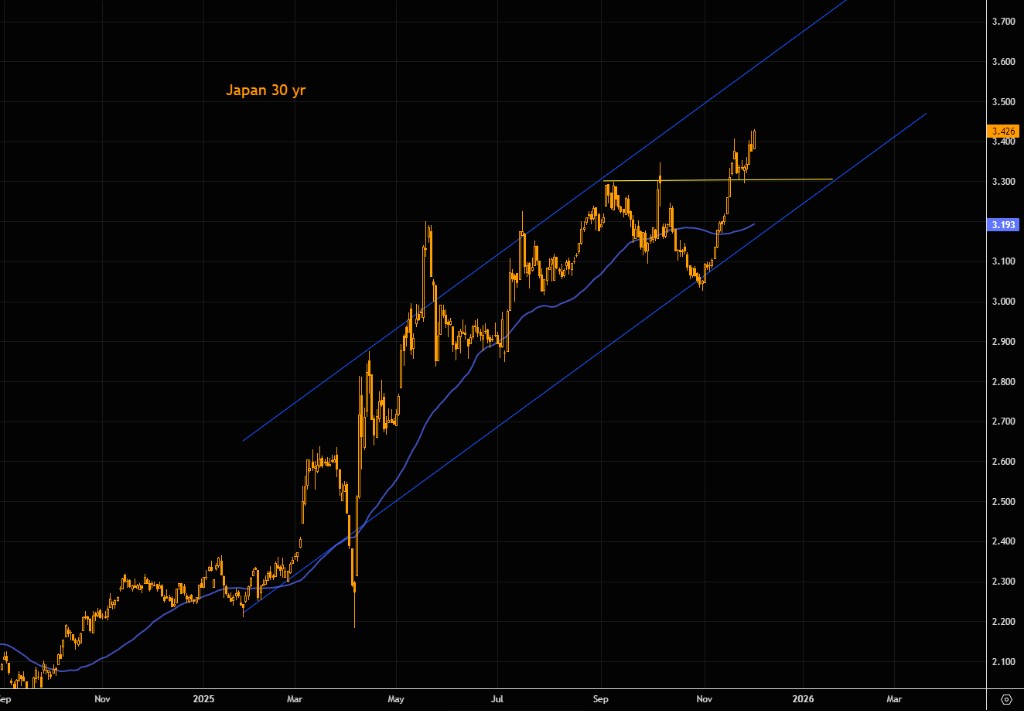
This round of yield increases exhibits clear trending characteristics, continuously breaking through technical resistance levels, demonstrating strong upward momentum.
Repeating Last October's Plunge? Historical Experience Sounds the Alarm
Market memories are fresh from last October's scene: after months of silence, Japanese interest rates finally began to move, and the Nasdaq 100 index immediately plummeted in response. Analysts believe this historical experience provides important reference for the current market trend.
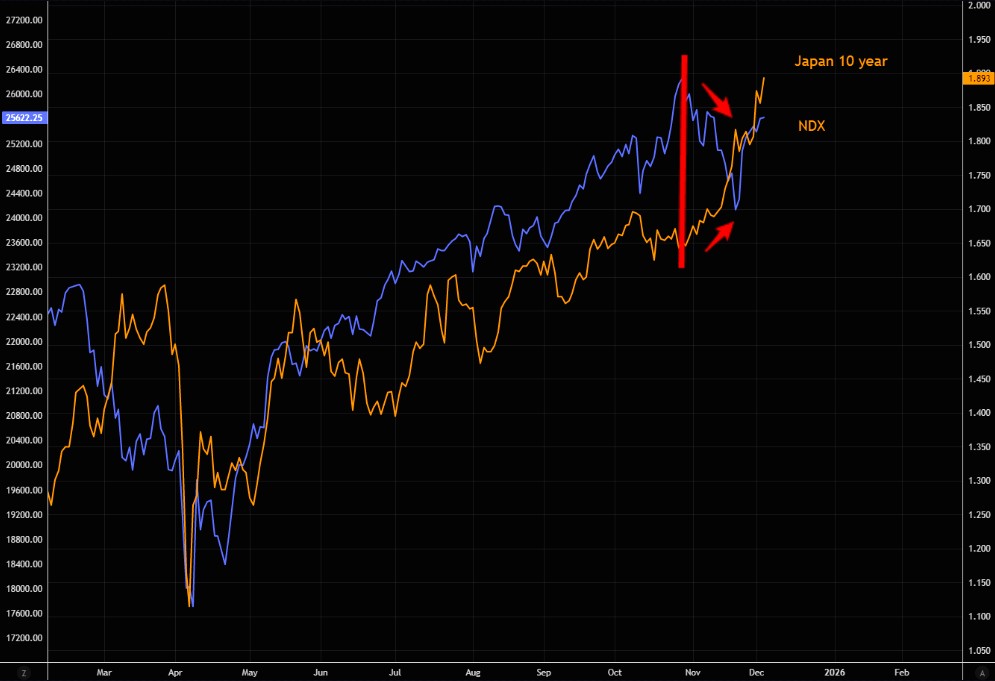
Analysis shows that changes in Japanese government bond yields have a negative correlation with the performance of U.S. tech stocks. When Japanese long-term interest rates rise rapidly, it is often accompanied by a wave of selling in U.S. risk assets The correlation behind this reflects changes in global capital flows and risk preferences. As an important capital-exporting country, changes in Japan's interest rate environment will affect the global liquidity landscape.
Volatility Indicators Stirring
Although most traders do not include Japanese interest rate changes in their daily risk lists, this significant macro-level shift has obvious spillover effects. At current levels, the global risk logic of the VIX index is beginning to take effect, and the pressure signals from Japanese government bonds remain active.
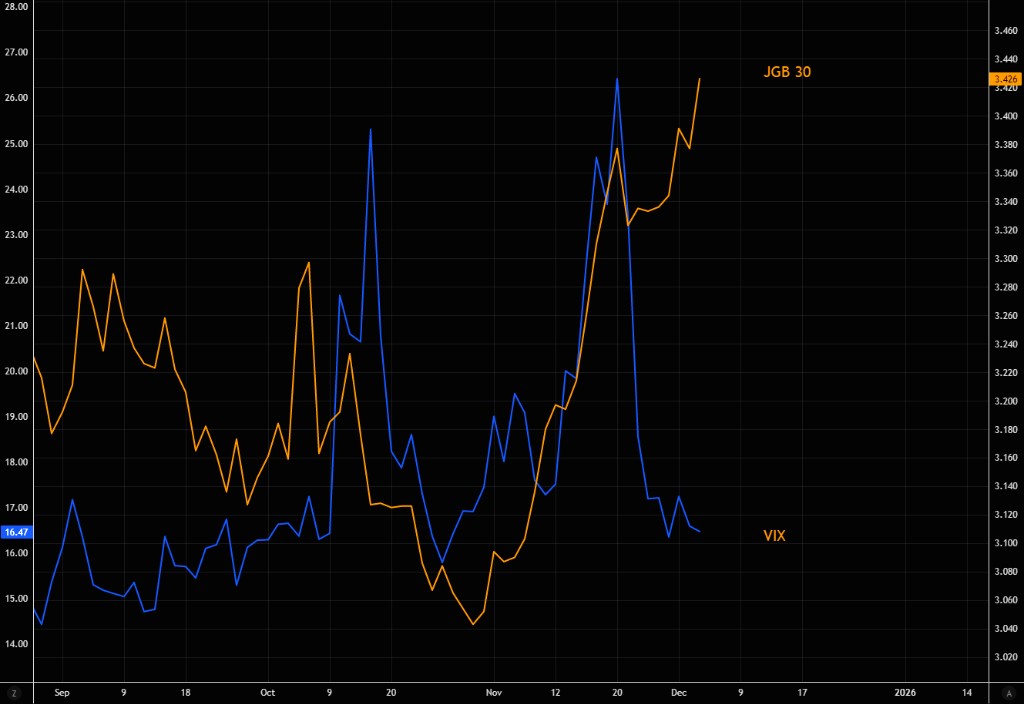
Market analysts point out that while trading the VIX solely based on Japanese government bond trends is not advisable, the current level of Japanese bond yields is sufficient to prompt a reassessment of global risk preferences.
The potential rise in volatility indicators may become a trigger for broader market adjustments.
Expansion of Japan-U.S. Yield Spread Triggers Capital Reallocation
The continuous expansion of the yield spread between Japan and U.S. 10-year government bonds is reshaping the global capital allocation pattern. This change in yield spread reflects a deepening divergence in monetary policies between the two countries, potentially leading to large-scale cross-border capital flows.
The widening spread is typically accompanied by adjustments in arbitrage trading, particularly the unwinding pressure of yen arbitrage trades. Such changes in capital flows often have significant impacts on the prices of global risk assets.
Analysts believe that if the Japan-U.S. yield spread continues to widen, it may exacerbate market instability.
Gold Senses Risk Signals
The gold market has begun to respond to the rise in Japanese long-term yields. The increase in Japanese long-term interest rates is pushing gold prices higher, indicating gold's sensitivity to the global impact of Japanese government bonds.
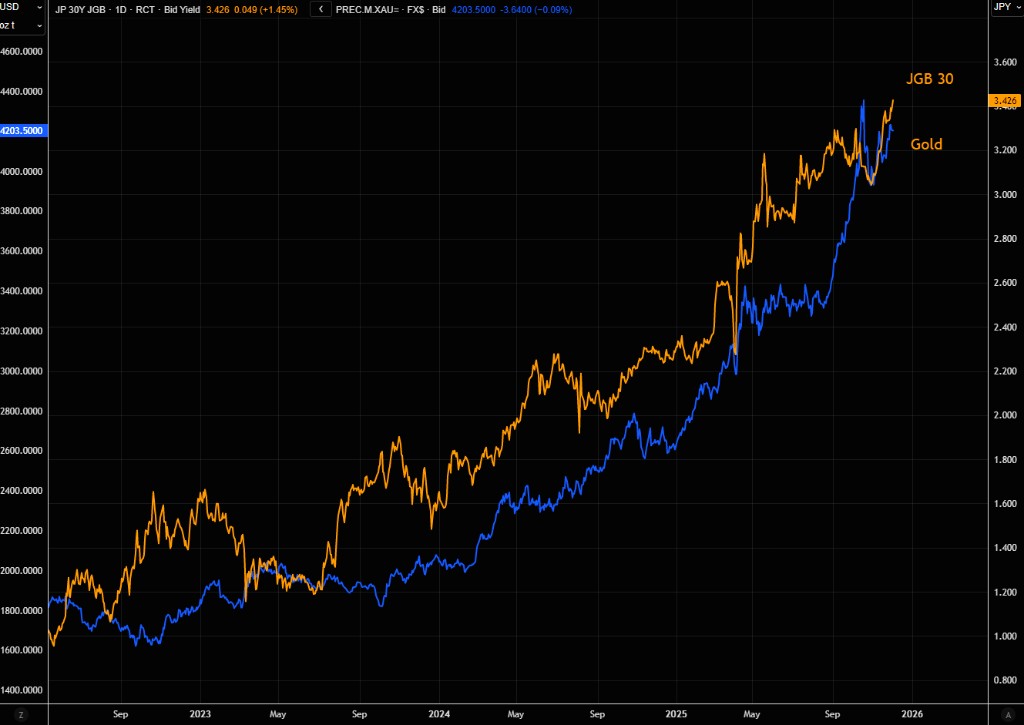
Whether priced in yen or dollars, the trend of gold prices reflects the market's concerns about potential risks. This rise in safe-haven demand often signals that a broader market adjustment is imminent.
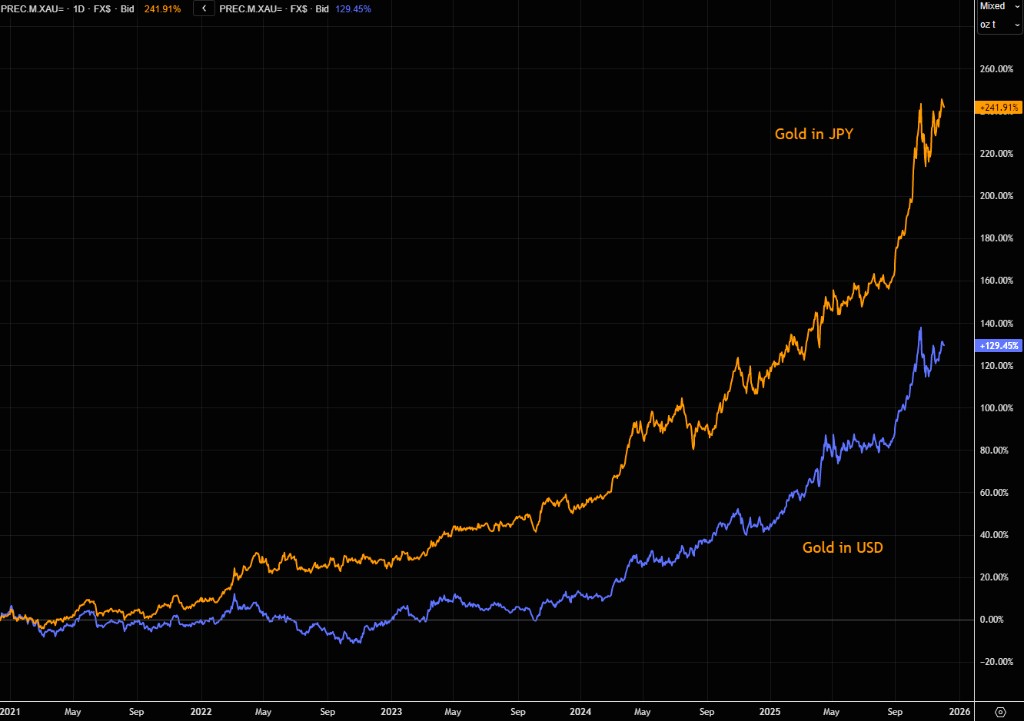
As a traditional safe-haven asset, changes in gold prices provide investors with important risk warning signals.
Risk Warning and Disclaimer
The market has risks, and investment requires caution. This article does not constitute personal investment advice and does not take into account the specific investment goals, financial situation, or needs of individual users. Users should consider whether any opinions, views, or conclusions in this article align with their specific circumstances. Investment based on this is at one's own risk
