Meta's $14.3 billion "poison pill investment" has rendered an AI unicorn useless in six months

Meta invested $14.3 billion in the AI unicorn Scale AI in the summer of 2025, leading to the departure of founder Wang Tao and plunging the company into crisis. Despite claiming that the business is robust, internal employees are uneasy, competitors are eyeing the situation, and the core gig workforce is leaving. Key clients have suspended cooperation, valuations have plummeted, and the future is uncertain
On December 11, news broke that Scale AI, a once-prominent unicorn in the AI field, is experiencing an unprecedented crisis after receiving a hefty investment of up to $14.3 billion from tech giant Meta in the summer of 2025 and losing its 28-year-old founder, Alexandr Wang.
Despite the company's insistence on its robust business, some leaked internal chat records reveal that employees are anxious, competitors are lurking, and its core gig workforce is rapidly dwindling due to pay cuts and reduced workloads.
Moreover, as key clients like OpenAI and Google pause their collaborations, Scale AI's valuation has plummeted in the private market. The future raises questions: will it revive, or as some investors suggest, become a "hollowed-out fish" by Meta and another "zombie" startup after being invested in by a giant?
01. The Shock After Meta's Entry: From Star Unicorn to Internal Trust Crisis
In the summer of 2025, Meta directly poached Scale AI founder Alexandr Wang with a massive investment, a move that sent shockwaves throughout the company like a boulder dropped into deep water.
This company, once seen as the most promising player in the AI infrastructure ecosystem, was soon shrouded in uncertainty and anxiety just weeks after the deal was finalized.
An employee who had participated in ChatGPT vulnerability testing and worked as a contractor for Scale AI even asked ChatGPT about the company's future, receiving a "diagnosis" that felt like a chilling prophecy: "Scale AI will no longer exist as a credible independent entity within 24 months; its infrastructure will inevitably be absorbed by Meta; its customer base will collapse; its role as a neutral third-party red team will effectively end."
This contractor later shared chat records with foreign media, indicating a pervasive sense of oppression among employees. One employee candidly stated that they were prepared to resign, comparing Scale AI to a "ticking time bomb that could explode at any moment."
Before this turmoil erupted, Scale AI was the preferred partner for global AI giants testing training data and evaluating model performance, closely collaborating with companies like OpenAI, Google, and Anthropic.
However, since Meta's entry, these key clients have consecutively hit the pause button. The once-proud model testing and data annotation services have seen a dramatic decline.
Scale AI's fame was built on its large-scale data annotation and task execution teams, which supported the training foundation of many large language models.
However, according to interviews with five current and former contract workers and a wealth of internal communications, this team is rapidly dwindling. The reasons are not complex: declining pay, being forced to invest significant unpaid training time for new projects, and an overall reduction in job opportunities have led to growing dissatisfaction among employees. **
Information shows that since Meta's investment, the activity level in the internal discussion area of Outlier, a gig platform under Scale AI (which claims to have over 100,000 platform contractors), has plummeted from hundreds of replies per week to only dozens.
One task executor revealed that she spent nearly 40 hours in a month participating in onboarding training for new projects but received no actual tasks. "Competitors like the AI recruitment startup Mercor even pay for training," she added.
Another task executor, Elizabeth Boyd, stated that she is now almost no longer participating in Outlier work because she has seen some projects' hourly wages compressed to as low as $20, while she could previously easily earn $50. There was even a gig task advertisement claiming an hourly wage of $20, but only assigned three minutes of tasks every two days, which translates to just $0.99. This treatment has left many contractors feeling angry and helpless.

02. Official Response and Multi-Channel Self-Rescue: Scale AI Strives to Prove It Is Still Growing
In the face of external concerns and escalating negative news, Scale AI has begun to actively defend itself and attempt to prove to the market that the company is still operating healthily. Company spokesperson Joe Osborne publicly responded, stating, "This quarter is expected to be our most profitable quarter since 2025, and the profitability of our data business is higher than before the Meta transaction. The application business (covering projects in collaboration with Fortune 500 companies and the government) has doubled its revenue in the second half compared to the first half."
Osborne also emphasized that since the Meta transaction, the number of active users on Outlier has not decreased but has actually increased, and reiterated that the compensation model is always priced according to the skills required for specific projects, "contributors can see the payment for tasks before accepting them and are completely free to refuse any gig."
To reduce its high dependence on traditional data labeling business, Scale AI is attempting to pursue a diversification route. The company announced its entry into the field of robotic training data and will officially establish a new laboratory in the fall to meet the rising demand for robotic training data.
At the same time, Scale AI has increased its investment in contracts with the U.S. military and government. Since the Meta transaction, the company has won defense contracts totaling up to $199 million. Osborne also emphasized that the previous layoff of about 14% of full-time employees was aimed at enabling the data department to achieve profitability as soon as possible, and that department has now "turned a loss into a profit."
However, the Meta transaction has also brought another unexpected impact: the valuation system has been reshaped. The $29 billion valuation given by Meta has caused Scale AI's stock price in the private market to suddenly appear "overvalued," leading to a near halt in transactions Noel Moldvai, CEO of the private market platform Augment, stated that before the Meta deal, his platform was able to handle millions of dollars in Scale AI equity transactions each month. However, after the deal was finalized, the activity volume shrank significantly. "Although it has recovered somewhat now, the valuation has dropped from about $15 billion to $9 billion."
Moldvai bluntly remarked that this transaction was essentially structured "to bring Wang Tao into Meta," and "what Meta is clearly interested in is him." However, he also believes that there is still room for Scale AI's valuation to rebound in the future.
Data from another private market, Caplight, is more pessimistic, giving a valuation of only $7.3 billion. Osborne denied this, arguing that the valuation is too low and emphasizing that if one refers to the price-to-sales ratio of similar companies, Scale AI's valuation should be significantly higher.
Despite ongoing skepticism from the outside, some investors remain optimistic about Scale AI's long-term potential. One current investor stated that although Meta holds a large stake, it "basically allows the company to operate independently," and Scale AI still has about $1 billion in cash on its books, with no immediate financing plans, leaving the possibility of an IPO in the future.
However, in the brutal competition of the AI training industry, if Scale AI cannot turn the tide, it may become another cautionary tale of a company that rapidly declined after receiving investment from a giant—sliding from a hot star unicorn to the ranks of "zombie companies."
03. Internal and External Challenges: Scale AI Faces Comprehensive Assault from Competitors
While Scale AI is experiencing internal turmoil, external competitors are launching aggressive attacks at a rapid pace. The AI training market is welcoming a new batch of players who are not only quickly attracting talent but also actively poaching Scale AI's core clients.

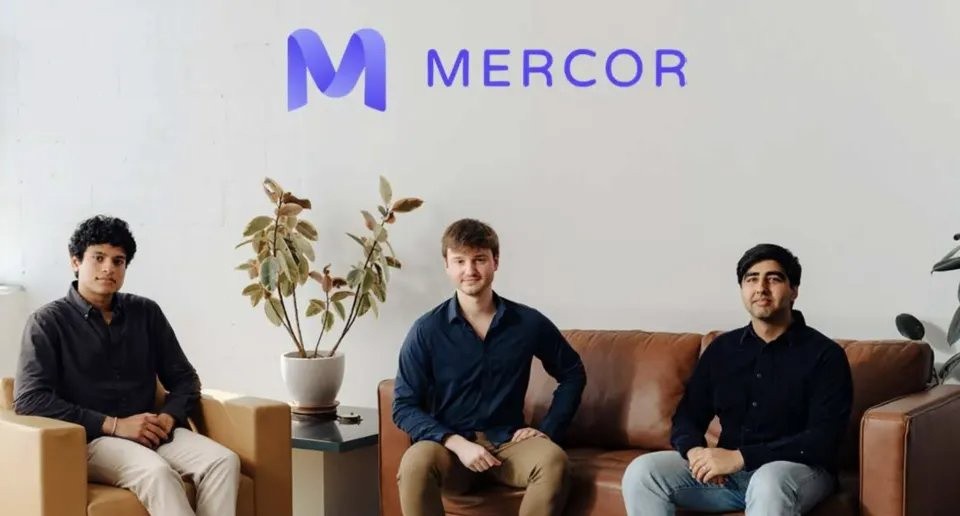
Surge AI has grown into a strong competitor with a valuation of $24 billion, while Mercor, founded by three 22-year-olds, announced in October this year that it completed a $350 million financing round, reaching a valuation of $10 billion.
More symbolically, Mercor has secured at least one key AI training contract from Meta, which could have been awarded to Scale AI (after all, Meta is a major shareholder of Scale AI, holding a 49% stake), but ultimately Meta chose the startup Mercor instead. To the outside world, this unusual move almost equates to a declaration that the trust chain between Scale AI and its largest shareholder is loosening A Scale AI investor admitted to being very dissatisfied with the leadership team's failure to timely prevent customer loss. Reports indicate that Surge AI has exceeded the revenue of Scale AI, which has a financing scale of up to $1.5 billion, without external financing in 2024.
Brendan Foody, CEO of Mercor, publicly challenged the market position of the big brother, criticizing Scale AI for low compensation and declining data quality, stating, "Scale has lost focus on the product itself and quality expansion."
Although a Scale AI spokesperson emphasized that the company's quality metrics "have reached an all-time high," external doubts remain unaddressed.
Moreover, Tammy Hartline, a former advisor to Scale AI, has joined Mercor and bluntly pointed out, "Scale's pace of development is so fast that garbage data and low-quality content are implicitly accepted as part of the business cost."
Faced with the relentless pressure from competitors, Scale AI has chosen to fight back using legal means. In September of this year, the company filed a lawsuit against Mercor in California, accusing it of hiring a Scale employee to "poach its largest client." Mercor firmly denied these allegations, and the case is still ongoing.
Meanwhile, the internal human resource structure of Scale AI has also been impacted. Its red team suddenly laid off 12 outsourced members in September, which, according to two former red team members, is related to a decrease in project volume after the Meta deal. At the end of the same month, the company also shut down its outsourced team in Dallas, which was responsible for general AI work, shifting towards more specialized and vertical business areas.
04. Security Risks and Data Quality Aftershocks: Old Problems Erupt in a New Environment
In addition to challenges in business, talent, and valuation, Scale AI has long been plagued by security and quality issues. These risks did not stem from Meta's investment but were already embedded as enterprise-level risks.
According to a report by Business Insider in June 2025, Scale AI had used public Google Docs to manage task flows for several well-known clients, leaving a large number of AI training files marked as "confidential" completely open, accessible to anyone with the link. This even included a significant amount of private information of outsourced personnel, raising serious security concerns.
Company spokesperson Osborne responded that the company has conducted a thorough investigation and has completely disabled the function of publicly sharing documents from the Scale system. However, this incident did not fully eliminate external doubts.
In fact, issues with lax security measures are not uncommon throughout the AI training industry. Surge AI has also previously exposed sensitive documents from Anthropic due to negligence. However, Scale AI's problems seem to be more persistent In a project executed for Google, Scale AI has continuously faced quality and safety challenges between 2023 and 2024, with thousands of task executors labeled as "spammers" or "cheaters." Recently, Meta also cleaned up groups of over 40 resold AI training accounts.
Although Osborn stated that Scale's data quality is at a "historical high," the challenges facing the company are clearly not just technical issues. The company recently agreed to settle several lawsuits initiated by former employees in California regarding underpayment and misclassification, further exposing the pressure of internal governance.
Today, Scale AI urgently needs to prove that it can continue to survive in an industry shaped by its early efforts. However, for many former employees, the answer may no longer matter. In their view, Scale AI is no longer the star company that once changed the industry landscape.
Risk Warning and Disclaimer
The market has risks, and investment requires caution. This article does not constitute personal investment advice and does not take into account the specific investment goals, financial situation, or needs of individual users. Users should consider whether any opinions, views, or conclusions in this article align with their specific circumstances. Investing based on this is at one's own risk