Micron conference call: "Good days are still ahead!" CEO bluntly states that HBM will be sold out in 2026 and is signing "unprecedented" long-term contracts

Wallstreetcn
2025.12.18 01:31
portai
I'm PortAI, I can summarize articles.

Contrary to market concerns about "slowing AI demand," Micron's CEO stated that the HBM capacity for 2026 is not only not remaining but has already been locked in. More importantly, Micron warned that the entire industry is facing a "structural shortage," and it can currently only meet about half to two-thirds of the order demand from core customers. At the same time, the company is negotiating a "historic," more binding, and specifically committed multi-year supply contract with customers

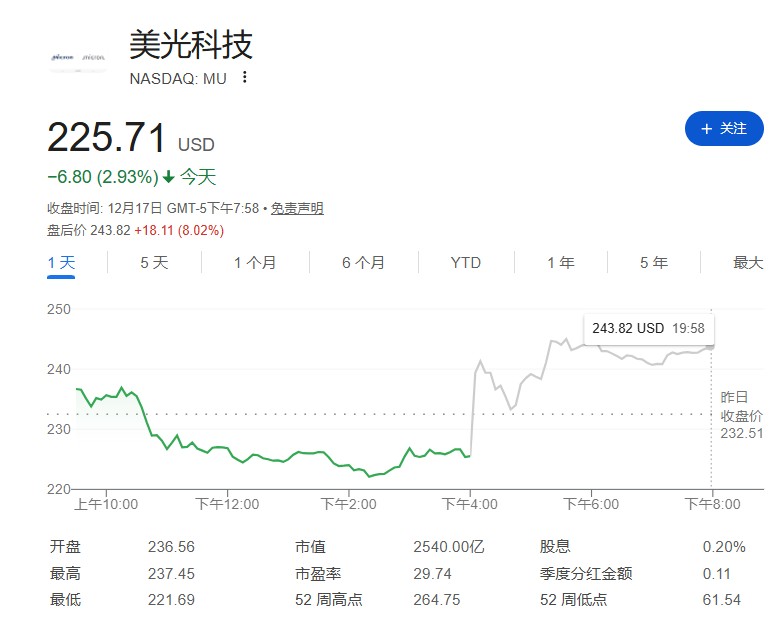
In the context where AI giants like Oracle and Broadcom failed to meet investor expectations, triggering a global tech stock sell-off, Micron Technology provided a strong boost to the turbulent AI market with what it called the "strongest performance ever" and outlook. The company's CEO stated that AI-driven demand is exploding at an unprecedented rate, and the industry supply shortage is expected to last until after 2026, with Micron only able to meet half of the demand from some key customers.

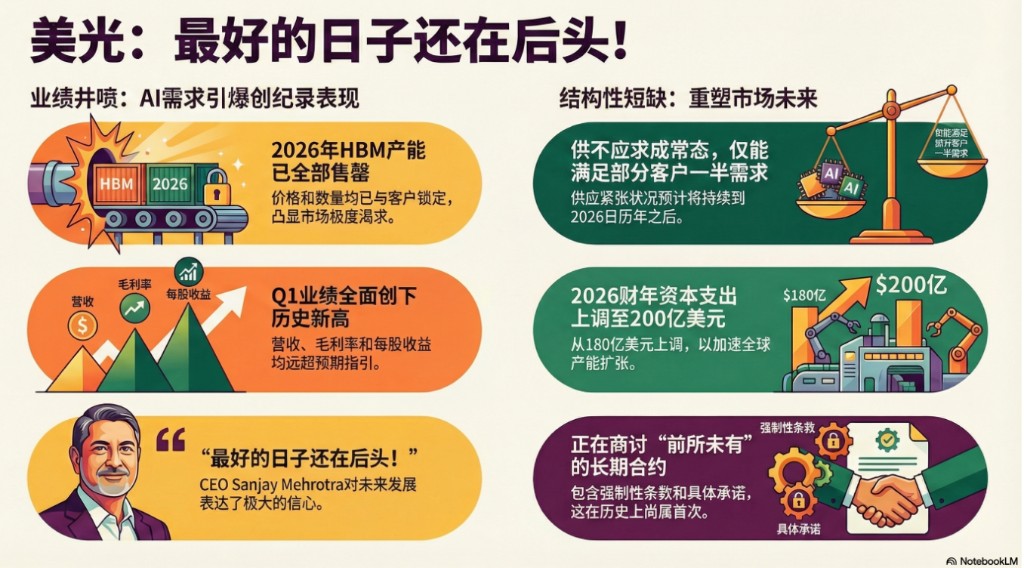
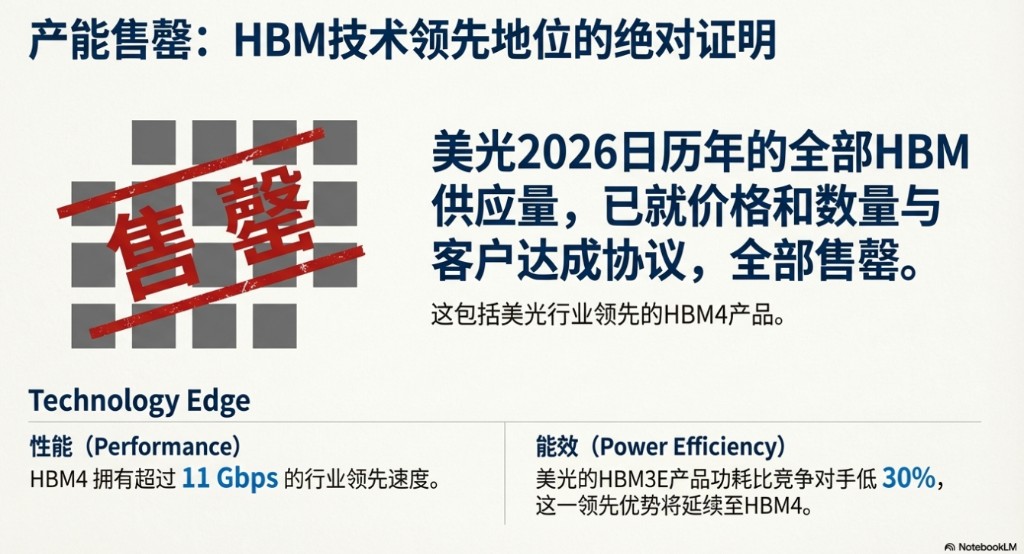
During the earnings call after the U.S. stock market closed on Wednesday, Micron's Chairman and CEO Sanjay Mehrotra announced that the company's first fiscal quarter performance significantly exceeded expectations and provided guidance for a record-breaking second fiscal quarter. More notably, he revealed that the company has reached agreements with customers on price and quantity for high bandwidth memory (HBM) supply for the entire calendar year of 2026, which is now sold out.

This series of significant information provided much-needed support to the tech sector, which has been under pressure due to the poor performance of some AI leaders. Mehrotra's remarks clearly conveyed a message to investors: the supply-demand imbalance in the memory market is not a short-term phenomenon but a structural shift, with supply tightness expected to "last until after the calendar year 2026."

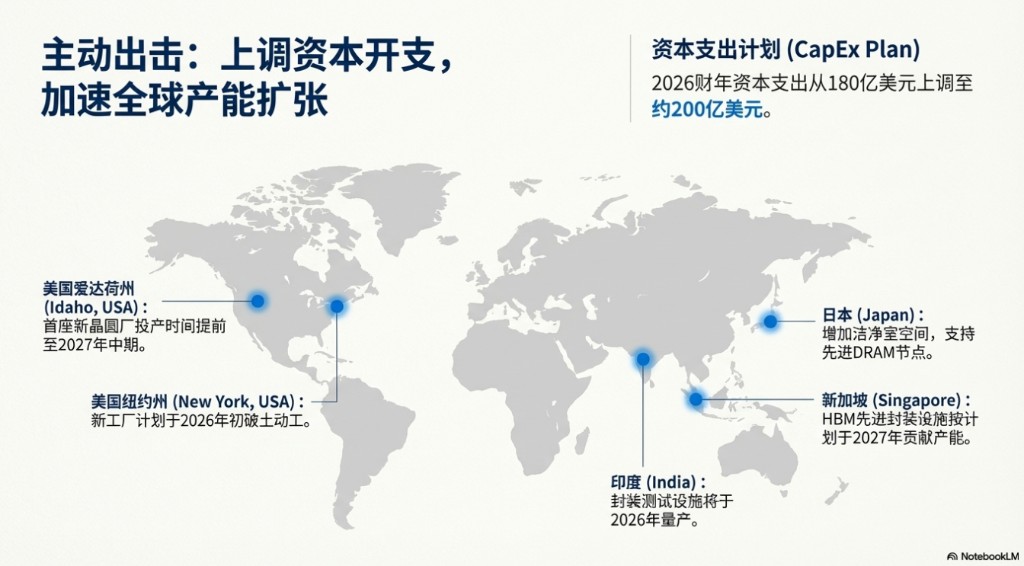
To seize this historic opportunity, Micron is taking decisive action. The company announced an increase in its capital expenditure plan for fiscal year 2026 from $18 billion to approximately $20 billion to accelerate capacity expansion. At the same time, the company is negotiating new, more binding multi-year supply contracts with customers to secure future growth and stabilize customer relationships.

Sanjay Mehrotra even exclaimed during the call: "The best is yet to come!"

Key points from the call:

  • Performance and outlook exceed expectations: Micron's revenue, gross margin, and earnings per share for the first fiscal quarter of 2026 far exceeded the upper limit of guidance, injecting confidence into the recently turbulent AI sector with a record second fiscal quarter outlook.
  • HBM capacity sold out: Micron announced that all HBM (high bandwidth memory) capacity for the calendar year 2026 has been sold out, with prices and sales locked in.
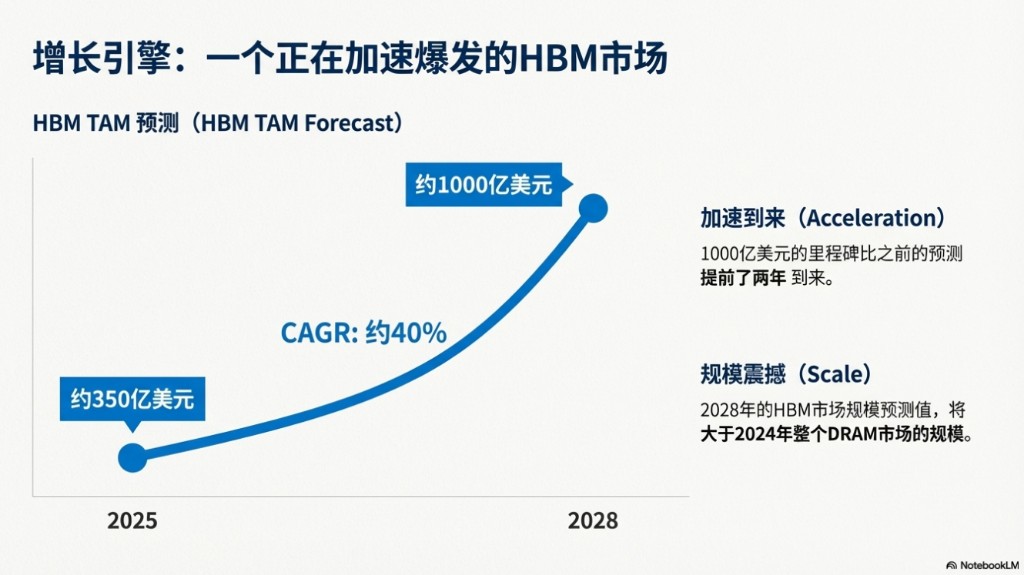
  • Significant upward revision of HBM market expectations: The HBM market size is expected to reach $100 billion by 2028, two years earlier than previous forecasts.
  • Extreme supply-demand imbalance: Industry supply will be "far below demand" for the foreseeable future, with supply tightness expected to continue beyond 2026. The CEO revealed that in the medium term, Micron can only meet 50% to two-thirds of the demand from some key customers.
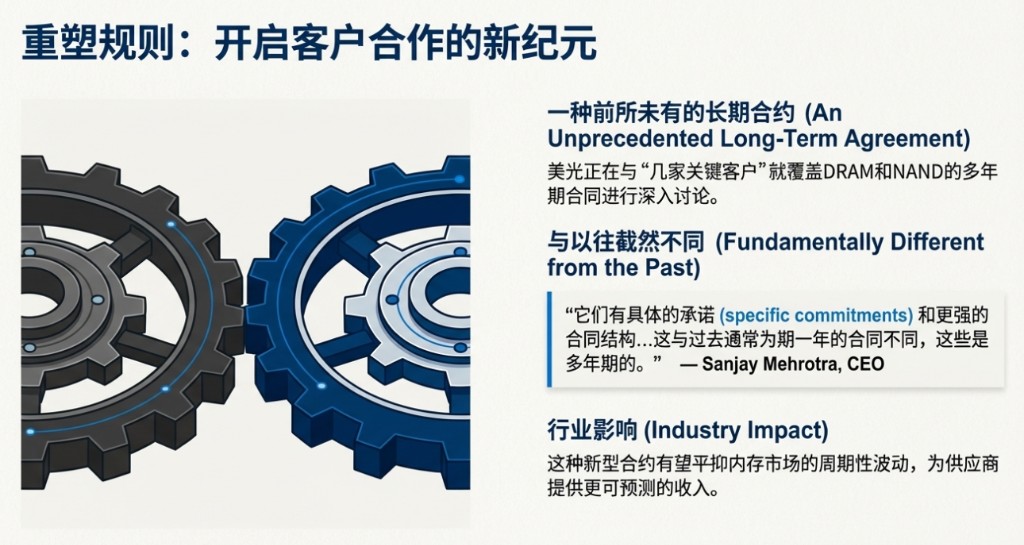
  • Unprecedented long-term contracts (LTA): The company is negotiating a new type of multi-year supply contract with mandatory terms and specific commitments with customers, which is historically unprecedented.
  • Capital expenditure increase: Capital expenditure (CapEx) for fiscal year 2026 has been raised to $20 billion (previously estimated at $18 billion), primarily to support HBM and advanced process nodes
  • AI demand has not slowed down: This refutes market concerns about an AI bubble burst, pointing out that the construction of AI data centers is driving a sharp increase in memory and storage demand.
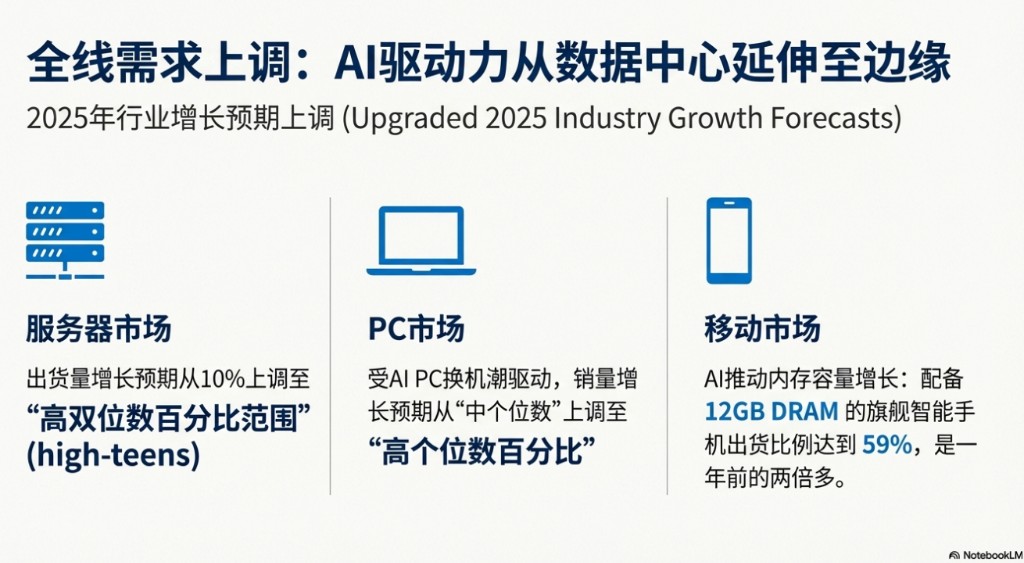
  • Overall demand raised: The company has raised its growth expectations for terminal markets such as servers and PCs, believing that AI is driving structural growth in memory demand from data centers to edge devices.

Supply shortage becomes the norm, CEO states can only meet half of customer demand

Micron's management repeatedly emphasized during the conference call that the current memory industry is facing a serious supply-demand imbalance, which has no solution in the short term. Mehrotra stated bluntly: "We believe that the total supply in the industry will be far below demand for the foreseeable future."

He expects this tight situation to "last until the 2026 calendar year and continue thereafter." During the Q&A session, he even provided a shocking quantitative description: "In the medium term, we can only meet about 50% to two-thirds of the demand from several key customers."

Based on the sharp increase in customer data center construction plans, Micron has raised its industry demand growth expectations for 2025. The company now expects DRAM bit demand growth to be at the lower end of the 20% range (previously high double digits), and NAND bit demand growth to be at the upper end of the 10% range (previously mid to low end of the 10% range). By 2026, the shipment growth of DRAM and NAND will be constrained by the overall industry's supply capacity.

Even more striking is Micron's astonishing upward revision of the HBM market outlook. The company predicts that the overall Total Addressable Market (TAM) for HBM will grow at a compound annual growth rate of about 40%, increasing from approximately $35 billion in 2025 to about $100 billion in 2028. Mehrotra specifically pointed out: "This $100 billion milestone is now expected to arrive two years earlier than our previous outlook." He added that this figure even exceeds the size of the entire DRAM market in 2024.

Increased capital expenditure, accelerating global capacity expansion

In response to the huge demand gap, Micron is increasing its investment efforts. The company's CFO Mark Murphy announced that the capital expenditure budget for fiscal year 2026 has been raised from the previous $18 billion to approximately $20 billion The increased investment will primarily be used to support HBM supply capacity and the mass production of the 1-gamma DRAM node.

Micron is accelerating the expansion of its manufacturing footprint globally. The company has advanced the timeline for the production of its first new wafer fab in Idaho, with initial wafer output expected in mid-2027, earlier than the previously anticipated second half of the year. The new factory in New York is scheduled to break ground in early 2026, with supply expected after 2030. Additionally, the company is also upgrading technology, building capacity, and expanding packaging and testing facilities in Japan, Singapore, and India.

Despite analysts questioning whether the $20 billion capital expenditure is still "conservative" during the Q&A session, management emphasized that the company is constrained by the construction cycle of clean rooms and is doing everything possible to increase output within existing facilities, but new capacity will take time.

New Long-Term Contracts Emerge, Reshaping Customer Relationships

The supply shortage is profoundly changing the relationship between memory suppliers and customers. Mehrotra revealed that Micron is in deep discussions with "several key customers" regarding multi-year contracts that cover not only DRAM but also NAND.

He emphasized that these contracts under discussion are fundamentally different from previous long-term agreements (LTAs). "They have specific commitments and a stronger contract structure," Mehrotra stated, "which is different from the typically one-year contracts of the past; these are multi-year."

Analysts believe that this new type of more binding long-term contract, if it becomes an industry trend, will help smooth out the cyclical fluctuations in the memory market, providing suppliers with more predictable revenue and profits.

Demand Across Major End Markets Revised Upward

The drive from AI is not limited to data centers. Micron has also revised upward its demand expectations for multiple end markets, demonstrating the breadth of demand.

  • Server Market: The company has raised its 2025 server shipment growth expectation from the previous call's 10% to "high double-digit percentage range."

  • PC Market: Driven by the end of the Windows 10 lifecycle and the AI PC upgrade wave, Micron expects PC sales to grow by "high single-digit percentage" in 2025, up from the previous expectation of "mid-single-digit."

  • Mobile Market: AI is driving the growth of memory capacity in smartphones. Data shows that the shipment proportion of flagship smartphones equipped with 12GB DRAM reached 59% in the third quarter, more than double that of a year ago.

Mehrotra concluded that memory has transformed from a system component into a "strategic asset" that determines product performance, whether in data centers or edge devices, as the AI experience relies on ample memory support

The following is the full translation of Micron's earnings call (assisted by AI tools):

Micron Q1 2026 Earnings Call

Meeting Time: December 17, 2025

Company Name: Micron

Management Presentation

[Operator]

Thank you for your patience, and welcome to Micron's fiscal year 2026 first quarter financial earnings call. At this time, all participants are in listen-only mode. After the speakers' presentations, there will be a Q&A session. (Operator instructions). As a reminder, today's program is being recorded. Now I would like to introduce today's host, Mr. Satya Kumar from the Investor Relations department. Please go ahead.

[Satya Kumar, Vice President of Investor Relations and Finance]

Thank you, and welcome to Micron Technology's fiscal year 2026 first quarter financial earnings call. Joining me today on the call are our Chairman, President, and CEO Sanjay Mehrotra, as well as our Chief Financial Officer Mark Murphy. Today's call is being webcast live on our Investor Relations website at investors.micron.com, including audio and slides. Additionally, a press release detailing our quarterly performance has been posted on the website, along with the prepared remarks for this call. Today's discussion will include forward-looking statements that are subject to risks and uncertainties.

These forward-looking statements include statements regarding our future financial and operational performance, as well as statements regarding our business trends and expectations, contract terms, markets, industries, products, regulations, and other matters. These statements are based on our current assumptions, and we do not undertake any obligation to update these statements. Please refer to our latest financial reports filed with the SEC (Form 10-K, Form 10-Q, and other documents) for more information on risks and uncertainties that could cause actual results to differ materially from expectations. Unless otherwise noted, today's discussion of financial results is presented on a non-GAAP financial basis. A reconciliation of GAAP to non-GAAP financial metrics can be found on our website. I will now turn the call over to Sanjay.

[Sanjay Mehrotra, Chairman, President, and CEO]

Thank you, Satya. Micron has had an outstanding start to fiscal year 2026, with first quarter revenue, gross margin, and earnings per share (EPS) all significantly exceeding our guidance.

This financial performance was driven by our strong execution across end markets and products in a supply-constrained environment. **We achieved several records in the first quarter: total company revenue, DRAM and NAND revenue, as well as HBM and data center revenue, with each of our business segments reaching new highs **

We have completed agreements on the pricing and quantity of our entire HBM supply for the 2026 calendar year, including Micron's industry-leading HBM4. We forecast that the total addressable market (TAM) for HBM will grow at a compound annual growth rate (CAGR) of approximately 40% by the 2028 calendar year, increasing from about $35 billion in 2025 to around $100 billion in 2028. This $100 billion HBM TAM milestone is now expected to arrive two years earlier than our previous outlook. Notably, this 2028 HBM TAM forecast is even greater than the size of the entire DRAM market for the 2024 calendar year. We are excited about customer engagement in customized HBM4E, which provides us with further differentiation opportunities, and we continue to make excellent progress on our HBM roadmap.

Memory is now crucial for AI cognitive functions, fundamentally changing its role from a system component to a strategic asset that determines performance from data centers to edge products. This structural shift means that system capabilities heavily rely on advanced memory for real-time contextual processing, which is essential for achieving autonomous and intelligent behavior in AI data centers, as well as applications ranging from autonomous vehicles to advanced medical diagnostics. With our technological leadership, differentiated product portfolio, strong operational execution, and robust balance sheet, Micron is in one of the most competitive positions in history and is one of the largest AI drivers in the semiconductor industry. We expect revenue, gross margin, earnings per share, and free cash flow for the second quarter and the entire fiscal year 2026 to set numerous new records, and we anticipate our business performance will continue to strengthen throughout the year. Sustained strong industry demand and supply constraints are leading to tight market conditions, which we expect to persist into the 2026 calendar year and beyond.

We are in discussions with customers regarding multi-year contracts with specific commitments and are making progress. At the same time, we are focused on maximizing the output of our current factory footprint, enhancing the capacity of our industry-leading technology nodes, and investing in new cleanroom space to increase our supply capabilities. Micron's technological leadership is the foundation of our strong competitive position. Micron has led the industry in DRAM for four consecutive technology nodes and in NAND for three consecutive nodes, with yield improvement rates accelerating at each node.

Our 1-Gamma DRAM node is progressing well. 1-Gamma will be the main driver of our DRAM bit growth in the 2026 calendar year and will constitute the majority of our bit output in the second half of that calendar year. Looking beyond 1-Gamma, the development of the 1-Delta and 1-Epsilon nodes is underway, which will feature the innovative capabilities we anticipate to expand our differentiation and technological leadership. In NAND, we are enhancing our G9 node, achieving strong yield improvements on both data center and client SSDs. Our QLC NAND portfolio, including G9 QLC, has reached an all-time high this quarter. The transition to G9 technology will be the main driver of our NAND bit growth in the 2026 calendar year, and we expect it to become our largest NAND node later in fiscal year 2026 I am pleased to report that the calendar year 2025 is a record year for Micron in terms of internal and customer quality metrics, enabling us to serve as a quality leader in the memory industry. As our products are increasingly integrated into higher-value applications, our leadership in quality is becoming a more important differentiating factor.

Turning to our end markets. As the world's leading technology companies advance towards Artificial General Intelligence (AGI) and transform the global economy, our customers are committed to extraordinary multi-year data center builds. This growth in AI data center capacity is driving a significant increase in demand for high-performance and high-capacity memory and storage. Server unit demand has significantly strengthened, and we now expect server unit growth for the calendar year 2025 to be in the range of 15%-19% (high-teens), up from our previous earnings call outlook of 10%. We expect the strong momentum in server demand to continue into 2026. The content and performance requirements for server memory and storage continue to increase generation after generation. Micron has a differentiated portfolio of high-value data center solutions to meet these demands, including our HBM, high-capacity server memory solutions, and data center SSDs. Micron's HBM4, with industry-leading speeds of over 11Gbps, is on track for high-yield mass production in the second quarter of 2026, in line with our customers' product mass production schedules.

Our HBM4 utilizes advanced CMOS and advanced packaging technology on foundational logic bare chips and DRAM core bare chips, all designed and manufactured in-house. This, combined with our unique HBM design, packaging, and testing capabilities, achieves Micron's industry-leading performance and low power consumption. Micron was the first to adopt LPDRAM in data centers. Micron's low-power DRAM server modules consume only one-third the power of DDR DRAM server modules. Based on this leadership position, we have already sampled our 192GB LP SOCAMM2 product, which increases the capacity per module by 50%, with rack-level LPDRAM density exceeding 50TB. Our data center NAND product portfolio revenue exceeded $1 billion in the first fiscal quarter, and we are seeing strong momentum across our data center SSD product portfolio, thanks to our leading NAND technology. In the high-performance SSD category, Micron launched the world's first PCIe Gen 6 SSD using our G9 NAND. We are seeing rapid increases in certification commitments for this product, including from hyperscale cloud providers. In mainstream storage, our G9 NAND-based SSDs have already seen strong demand in the first quarter of the calendar year 2026.

In capacity storage, our QLC-based 122TB and 245TB G9 SSDs are entering the certification phase with multiple hyperscale customers. PC demand continues to be driven by the end of the Windows 10 lifecycle and AI PCs. We forecast PC unit sales to grow in the high single-digit percentage range in the calendar year 2025, above the mid-single-digit expectations provided in our last earnings call As we look ahead to 2026, we expect these demand drivers to persist, while memory supply constraints may impact the shipment of some PC units. Micron has completed multiple OEM certifications for our 16Gb 1-gamma based DDR5 and our G9 based PCIe Gen4 QLC SSD. Turning to the mobile side, smartphone unit sales are expected to achieve low single-digit percentage growth in the 2025 calendar year. AI is driving the growth of memory content. The shipment mix of flagship smartphones equipped with 12GB DRAM increased to 59% in the third calendar quarter, more than double the level a year ago.

Micron is accelerating innovation across its mobile DRAM product portfolio. In the first fiscal quarter, we began sampling our groundbreaking 1-gamma 16Gb LPDDR6 products to leading OEMs and ecosystem partners, marking an important milestone in next-generation memory technology. LPDDR6 will power edge AI, providing over 50% higher performance and energy efficiency for flagship smartphones and AI PCs. Micron has also sampled our 1-gamma LP5X 24Gb products and has begun bulk shipments of the previously announced 1-gamma LP5X 16Gb products to multiple OEMs. Turning to automotive, industrial, and embedded sectors. In the automotive field, the adoption of L2+ and L3 is driving strong demand today, and customer roadmaps indicate that memory content for fully autonomous vehicles will significantly increase. Micron is uniquely positioned for growth with its differentiated product portfolio and leading market share in the automotive sector. Our ASIL-rated LPDDR5X and UFS4.1 NAND products, optimized for automotive and advanced robotics with bandwidth enhancements, are seeing strong demand and have secured billions of dollars in design wins. In the industrial sector, demand continues to strengthen, driven by the increasing adoption of autonomous systems across various applications.

The long-term demand trajectory for memory and storage in industrial applications (such as factory automation, aerospace and defense, humanoid robots, edge networking, and video surveillance) remains strong. In the automotive and industrial markets, LPDDR4X and DDR4 are also experiencing strong demand, and we are investing to ensure long-term supply from our Manassas, Virginia facility. Now turning to our market outlook. In recent months, our customers' AI data center construction plans have driven a sharp increase in memory and storage demand forecasts.

We believe that, in the foreseeable future, the total industry supply will be significantly below demand. The sharp increase in HBM demand, due to its 3:1 wafer consumption ratio compared to DDR5, further challenges the supply environment, and this ratio will only increase in future generations of HBM. Additional cleanroom space is needed to meet this increased demand, while cleanroom construction lead times are extending globally. All these demand and supply factors collectively contribute to a tight industry situation for DRAM and NAND, and we expect this tightness to persist into the 2026 calendar year and beyond. The expected bit demand growth for the DRAM and NAND industry in the 2025 calendar year is higher than our previous earnings call outlook We now expect DRAM bit demand growth in the low 20% range for the 2025 calendar year, compared to the previous high teens range of 15%-19%. We anticipate NAND bit demand growth in the high teens range for 2025, down from the mid to low teens range of 10% mid to late. We expect that in the 2026 calendar year, industry DRAM and NAND bit shipment growth will be constrained by industry supply. We project that the industry bit shipments for both DRAM and NAND in the 2026 calendar year will grow by approximately 20% compared to 2025 levels.

Micron is working hard to support our customers' needs during this period, and we expect to grow our DRAM and NAND bit shipments by approximately 20% in the 2026 calendar year. Despite our significant efforts, we regret that we are unable to meet the demands of all our customers across various segments. Micron plans to increase our capital expenditures (CapEx) for fiscal year 2026 to approximately $20 billion, up from our previous estimate of $18 billion. This increase will primarily support our HBM supply capacity and our 1-gamma supply for the 2026 calendar year. We are placing equipment orders in advance and accelerating installation schedules to maximize output capacity. Micron is also investing in our global manufacturing footprint to increase supply to support long-term demand. We are seeing strong customer response to our planned U.S. supply. We are advancing the timeline for our first Idaho fab, and we now expect to achieve first wafer output in mid-2027, earlier than our previous expectation of the second half of 2027.

Earlier this year, we announced plans for a second Idaho fab, which will begin construction in 2026 and be operational by the end of 2028. We have made good progress in obtaining the necessary permits for our New York facility, and we appreciate the cooperation of New York State and the Trump administration. We plan to break ground on our first New York fab in early 2026, and we expect that facility to provide supply in 2030 and beyond. In Japan, with the support of the Ministry of Economy, Trade and Industry (METI), we are making investments in technology and manufacturing. In coordination with our Boise R&D team, we are achieving future DRAM technology transitions. We are also increasing cleanroom space at our Hiroshima facility to support these advanced nodes, which will enhance production scale and optimize factory economics. In Singapore, our HBM advanced packaging facility is on track to make a meaningful contribution to our HBM supply in the 2027 calendar year. As HBM becomes part of our Singapore manufacturing footprint, we expect opportunities for synergies between NAND and DRAM production. We are pleased with the progress of our packaging and testing facility in India, which has begun trial production and will enter mass production in 2026. As we make progress on our strategic manufacturing plans, we will continue to respond to market conditions and maintain discipline in our capital expenditure plans. I will now turn the meeting over to Mark to discuss our financial performance and outlook for the first fiscal quarter

[Mark Murphy, Executive Vice President and Chief Financial Officer]

Thank you, Sanjay, and good afternoon, everyone.

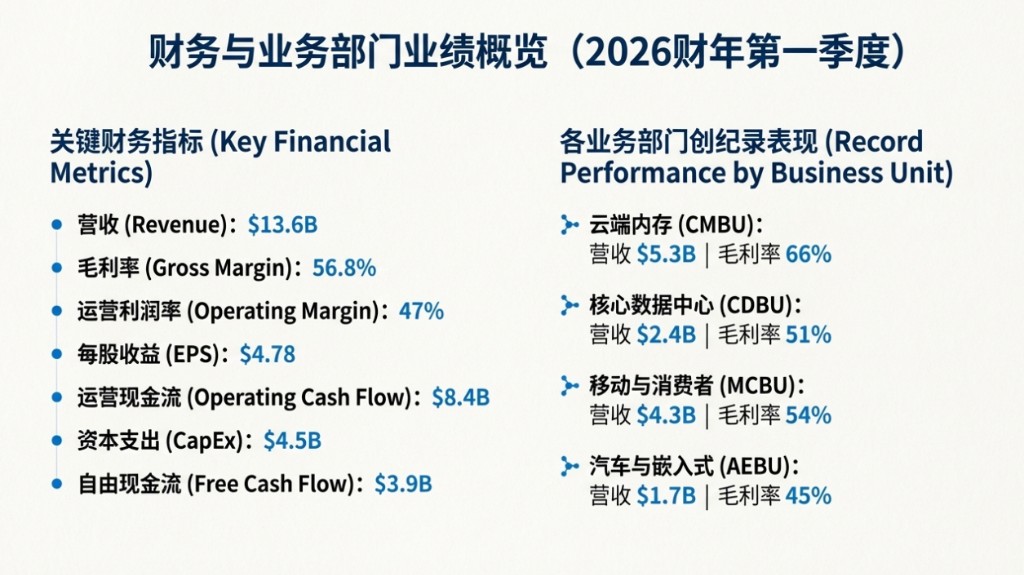
Micron delivered strong financial performance in the first fiscal quarter, with revenue, gross margin, and EPS all exceeding the upper end of our guidance. This quarter, we generated record free cash flow, reduced debt, and returned to a net cash position. Total revenue for the first fiscal quarter was $13.6 billion, a 21% increase quarter-over-quarter and a 57% increase year-over-year, marking a record for the third consecutive quarter. We saw revenue growth across all business segments.

First fiscal quarter DRAM revenue was a record $10.8 billion, a 69% year-over-year increase, accounting for 79% of total revenue. Quarter-over-quarter, DRAM revenue grew by 20%. Bit shipments saw a slight increase, with prices rising by approximately 20%, driven by tight supply in the DRAM industry, pricing execution, and a favorable product mix. First fiscal quarter NAND revenue was a record $2.7 billion, a 22% year-over-year increase, accounting for 20% of Micron's total revenue. Quarter-over-quarter, NAND revenue grew by 22%. NAND bit shipments increased in the mid-single-digit percentage range, with prices rising in the mid-teens percentage range, driven by tight supply in the NAND industry, pricing execution, and a favorable mix. The consolidated gross margin for the first fiscal quarter was 56.8%, an 11 percentage point increase quarter-over-quarter. This improvement was driven by higher pricing, strong cost execution, and a favorable mix.

Now turning to the quarterly financial performance by business segment. The Cloud Memory Business Unit (CMBU) revenue was a record $5.3 billion, accounting for 39% of total company revenue. CMBU revenue grew by 16% quarter-over-quarter, driven by increased bit shipments and higher prices. CMBU gross margin was 66%, an increase of 620 basis points quarter-over-quarter, supported by cost execution and higher pricing. The Core Data Center Business Unit (CDBU) revenue was a record $2.4 billion, accounting for 17% of total company revenue. CDBU revenue grew by 51% quarter-over-quarter, driven by strong bit shipments and higher prices. CDBU gross margin was 51%, an increase of 990 basis points quarter-over-quarter, supported by higher pricing and cost execution. The Mobile and Consumer Business Unit (MCBU) revenue was a record $4.3 billion, accounting for 31% of total company revenue. MCBU revenue grew by 13% quarter-over-quarter, primarily driven by higher pricing, partially offset by lower bit shipments. MCBU gross margin was 54%, an increase of 17 percentage points quarter-over-quarter, primarily driven by higher pricing. The Automotive and Embedded Business Unit (AEBU) revenue was a record $1.7 billion, accounting for 13% of total company revenue. AEBU revenue grew by 20% quarter-over-quarter, driven by higher bit shipments and higher prices.

AEBU gross margin was 45%, an increase of 14 percentage points quarter-over-quarter, primarily driven by higher pricing. Operating expenses for the first fiscal quarter were $1.3 billion, an increase of $120 million quarter-over-quarter, in line with our guidance range. The quarter-over-quarter increase was driven by higher R&D expenses to support our technology and product development in new DRAM and NAND technology nodes. We generated $6.4 billion in operating income in the first fiscal quarter, resulting in an operating margin of 47%, an increase of 12 percentage points quarter-over-quarter and 20 percentage points year-over-year In the first fiscal quarter, tax expenses were $977 million, with an effective tax rate of 15.1%. The non-GAAP diluted earnings per share for the first fiscal quarter were $4.78, a quarter-over-quarter increase of 58% and a year-over-year increase of 167%. Turning to cash flow and capital expenditures. In the first fiscal quarter, operating cash flow was $8.4 billion, capital expenditures were $4.5 billion, resulting in free cash flow of $3.9 billion.

The free cash flow for the first fiscal quarter was a quarterly record high, exceeding our previous record from the fourth quarter of fiscal year 2018 by more than 20%. The ending inventory for the first fiscal quarter was $8.2 billion, a decrease of $150 million quarter-over-quarter, with inventory turnover days at 126 days. DRAM inventory days remained tight, below 120 days. On the balance sheet, we held $12 billion in cash and investments at the end of the quarter, maintaining $15.5 billion in liquidity, including our unused credit lines. In the first fiscal quarter, we repurchased $300 million of stock as allowed under the terms of the CHIPS agreement. During the quarter, we also reduced debt by $2.7 billion, repaid $1 billion of term loan balances, and redeemed $1.7 billion of senior notes. Our debt at the end of the quarter was $11.8 billion, with a net cash balance of over $250 million. Throughout the fiscal year, we expect to further strengthen our balance sheet as we generate additional free cash flow.

Before turning to our outlook, I would like to share an update on how we are benefiting from AI internally at Micron. Today, over 80% of our professional staff are actively using generative AI, with total usage increasing tenfold compared to last year. In manufacturing, integrating AI into yield and quality management has, in some cases, halved the time to identify root causes. Our coding teams have achieved productivity gains of 30% or more using agent AI. In R&D, generative AI accelerates development by reducing cycle times for design validation, product validation, issue classification, and root cause analysis. Across various business functions, generative AI is expanding automation opportunities, and we are deploying conversational analytics to accelerate and improve decision-making. We expect Micron's enterprise-wide use of AI to further enhance our competitiveness in the coming years. Now turning to our outlook for the second quarter of fiscal year 2026, industry DRAM and NAND demand both exceed supply. We anticipate that higher prices, lower costs, and favorable mix will contribute to gross margin expansion in Q2. Operating expenses for the second fiscal quarter are expected to be approximately $1.38 billion. As mentioned last quarter, Micron's operating expenses for the fourth quarter of fiscal year 2026 will also reflect the impact of additional work weeks in this 53-week fiscal year. We expect the tax rate for the second fiscal quarter and fiscal year 2026 to be approximately 15.5%. Micron is investing in a disciplined manner in its global manufacturing footprint to better meet demand. To address supply-demand tightness beyond fiscal year 2026, we now expect capital expenditures for fiscal year 2026 to be approximately $20 billion, primarily focused on the second half of the fiscal year.

We expect free cash flow to strengthen in the second fiscal quarter and anticipate significant year-over-year increases in free cash flow for fiscal year 2026. Any potential impacts from new tariffs have not been included in our guidance Considering all these factors, our non-GAAP guidance for the second quarter of fiscal year 2026 is as follows. We expect revenue to reach a record $18.7 billion, plus or minus $400 million. Gross margin will be in the range of 68%, plus or minus 100 basis points. Operating expenses are approximately $1.38 billion, plus or minus $20 million. Based on approximately 1.15 billion shares outstanding, we expect earnings per share (EPS) to reach a record $8.42, plus or minus $0.20. I will now hand the meeting over to Sanjay for a summary.

【Sanjay Mehrotra, Chairman, President, and CEO】

Thank you, Mark. AI-driven demand has arrived and is accelerating. Micron is seizing these opportunities with the best competitive position in our history. This is thanks to the efforts of our global team, and I want to thank our team members around the world for their hard work and dedication. We are at the most exciting time in Micron's history, and the best is yet to come. We will now begin the Q&A session.

【Satya Kumar, Vice President of Investor Relations and Finance】

Operator, can you please set up the questions?

Q&A Session

【Operator】

Q&A session.

【Operator】

Yes, sir. I’m sure our first question comes from Timothy Arcuri of UBS. Timothy Arcuri, your line is open.

【Timothy Arcuri】

Thank you very much. Sanjay, I want to ask you about the customer LTA (Long-Term Agreement). I know we’ve heard about D5 being bundled with HBM, and even in some cases with NAND. So can you talk about these LTAs? I understand that these contracts seem to extend into 2026, and in some cases even into 2027. I’ve even heard of some extending to 2028.

So can you talk about the nature of these LTAs? And then I have a follow-up question. Thank you.

【Sanjay Mehrotra, Chairman, President, and CEO】

These are multi-year contracts we are discussing with several key customers. Of course, these contracts involve DRAM as well as NAND. As for the terms, certainly, these contracts we are discussing are very different from previous LTAs.

They contain specific commitments in them, as well as a much stronger contract structure. Beyond that, I cannot provide you with specific details at this time. Of course, in the future, if and when appropriate, we will share further details.

【Analyst (Timothy Arcuri)】

Thank you. Then, Mark, I want to ask you about capital expenditures (CapEx). So, you raised it to a net of $20 billion, but it still looks like, I mean, you haven't guided all of the fiscal year 2026 revenue. So, we really don't know what the capital intensity number is. But it looks like it's around 25% to 30%, which is slightly below the 35% metric you typically consider.

So, is this because you are constrained by foundry space? Can you talk about whether this rolls into fiscal year 2027, when we might see CapEx rebound closer to that 35% range? Thank you.

【Mark Murphy, Executive Vice President and Chief Financial Officer】

Thank you.

【Operator】

Thank you. I show the next question in the queue comes from CJ Muse of Canto Fitzgerald. Please go ahead.

【Unknown Speaker】

Back to you.

【Operator】

CJ Muse, your line is open.

【CJ Muse】

Yes. They didn't answer the previous question. Operator?

【Operator】

Yes, sir. Can you turn back to management to have them answer the previous question?

【Operator】

Certainly. Management's line is open. Please continue. I believe the speaker's line has been unmuted at this time. Ladies and gentlemen, please continue to hold. Your call will resume shortly.

【Mark Murphy, Executive Vice President and Chief Financial Officer】

Operator, can you hear us?

【Operator】

Yes, we can now. You are unmuted, sir. Please go ahead.

【Mark Murphy, Executive Vice President and Chief Financial Officer】

Okay. I'm not sure what happened there. We are unmuted here. So I just want to confirm you heard Sanjay's response. Right?

【Operator】

We did not hear it.

【Mark Murphy, Executive Vice President and Chief Financial Officer】

You did not hear Sanjay's response. Okay. Thank you, Tim. So, Sanjay?

【Unknown Speaker】

We heard it, I heard Sanjay's response to the first question, but I didn't hear your response to my question about CapEx and capital intensity, Mark.

【Mark Murphy, Executive Vice President and Chief Financial Officer】

Okay, Tim. Okay, Tim. Thank you. So, you are right, Tim, we did not provide—we did not provide full-year revenue guidance

We do indicate that our CapEx is rising in fiscal year 2026, and a large portion of that CapEx supports DRAM, particularly HBM and the mass production of 1-gamma and 1-gamma. I would say that the plan is roughly to double the construction-related CapEx from 2025 to 2026. At this point, we would expect CapEx to rise in 2027, and — but I want to emphasize that Micron will maintain discipline in CapEx growth to support bit demand, or rather, bit supply, that supply will align with demand. As for your question about capital intensity, our capital intensity is, of course, declining as market conditions remain very constructive, and, of course, we are also working to improve the efficiency of our capital expenditures.

【Timothy Arcuri】

Okay, Mark, thank you.

【Operator】

Thank you. Our next question comes from CJ Muse of Cantor Fitzgerald. Please go ahead.

【CJ Muse】

Yes. Good afternoon. Thank you for taking my question. I think, Mark, following up on the previous question about CapEx, the relative growth seems very conservative, given the context we are in, it feels like you are just sitting here without cleanroom space, and it sounds like you are not meaningfully ahead on cleanroom.

So, can you talk about the philosophy there? I guess what I’m getting from your comments is that you are being very conservative and cautious about increasing capacity here.

【Mark Murphy, Executive Vice President and Chief Financial Officer】

Well, I would say that we have pointed out supply issues for several consecutive quarters, and we have been consuming inventory, node transitions will be the main source of supply growth in fiscal year 2026, and that is exactly what is happening right now. We know that cleanroom space takes time, and the growth of HBM is just accelerating with AI-driven demand, further putting pressure on supply. So, there is no near-term solution, as we mentioned in our prepared remarks, the entire industry is expected to face demand shortages, and we are no different in that regard. But we are acting quickly and doing everything we can to provide supply to our customers.

And we have accelerated equipment orders. We have sped up construction in Idaho. We are doing everything we can to provide supply within our existing footprint and recent capacity expansions. So we provided a bit growth number for 2026 that is supply constrained.

【Sanjay Mehrotra, Chairman, President, and Chief Executive Officer】

And I would add that, of course, we are continuing to invest in technology transitions within our existing footprint. As we have emphasized, the 1-gamma node will be the main driver of our DRAM bit growth in 2026. Of course, you have seen that we are investing not only in technology transitions but also in greenfield capacity, and we are also achieving more advanced technology production capabilities in existing cleanrooms in Japan We are also making necessary investments there.

So, of course, we maintain discipline, but we are very focused and trying to work hard to increase supply there. We are satisfied with our plans for Plant 1 and Plant 2 in Idaho, as well as New York. Of course, in the short term, we are very focused on maximizing production efficiency and maximizing production output from our existing footprint. But yes, I mean, the demand fundamentals are very strong, driven by AI from data centers to the edge, as our customers build out.

And supply is severely constrained. And I want to say that in the medium term, we can only meet about 50% to two-thirds of the demand from a few key customers. So we remain extremely focused on trying to increase supply here and make the necessary investments.

[Analyst (CJ Muse)]

Very helpful.

Then I want to follow up regarding gross margins—obviously, the guidance is excellent, but I'm curious as you go through the 2026 calendar year, how should we think about the cost declines in DRAM and NAND? Is there anything we should keep in mind or think about and expect in our models as you transition from 3E to 4? For example, could there be temporarily high costs due to yield or other reasons? Thank you very much.

[Mark Murphy, Executive Vice President and Chief Financial Officer]

Yes, so our CJR (possibly referring to CJ Muse, a slip of the tongue) cost execution on both DRAM and NAND is very good. Of course, we have gained some leverage on output, but spending control has been very good. Yields have been good. We do have some— we do have some startup costs coming in for new factories and new builds in the network. That will start coming in the second half of 2026 and into 2027. But at this scale of business and these levels, the impact on margins is relatively small. We will not provide cost guidance for the remainder of this year as it depends on many factors, including the mix. But to your earlier question, I can say that we have talked about ramping 1-gamma DRAM and G9 NAND in 2026 to increase supply.

And these ramp-ups are progressing well and will become tailwinds or cost benefits as these nodes ramp up.

[Sanjay Mehrotra, Chairman, President, and Chief Executive Officer]

Regarding your question about HBM3E and HBM4, as we mentioned, we will begin ramping HBM4 into production within the CQ2 timeframe, in line with our customers' demand. Of course, our HBM4 progress is going very well, and we are very satisfied with our products, which are industry-leading with peak performance exceeding 11Gbps. So, I mean, that is the highest performance, and we are very pleased with the overall yield improvement.

We expect our HBM4 to have a faster yield improvement than our HBM3E. Of course, the combination of HBM3E and HBM4 during 2026 will largely be based on our overall customer demand. We will have both of these strongly configured products in our revenue for 2026

【CJ Muse】

Thank you.

【Operator】

I assure you that the next question in our queue comes from Harlan Sur of JP Morgan.

Please go ahead.

【Harlan Sur】

Good afternoon, the quarterly execution has been excellent. Over the past three to four months, as we track various ASIC AI XPU projects, there has been a significant upward adjustment in the projected shipments of ASIC XPUs for next year. For example, Google TPU, AWS Trainium, etc., right? All these XPUs will still use HBM3E. Has the team seen this recent positive momentum in the order book for 3E? Given that you are fully booked for the 2026 calendar year, it looks like there will be upward growth potential next year. How will the Micron team attempt to manage this upward dynamic for 3E while also addressing the strong demand for HBM4?

【Sanjay Mehrotra, Chairman, President, and CEO】

So as I mentioned to Harlan earlier, there will certainly be a mix of HBM3E and HBM4 for 2026.

And as we have shared with you in the past, we are engaging with multiple customers, there is a whole ecosystem of HBM customers, and we are closely engaging with them. They will all contribute to our strong year-over-year growth in revenue for 2026. Of course, this will be composed of both HBM3E and HBM4. So as I said, I mean, we will continue to manage the mix of both based on customer requirements.

I can tell you that in 2026, HBM supply will be tight. Non-HBM DRAM will also be tight. So we continue to see, as we emphasized in our prepared remarks, that the supply environment is tightening, and we see strong year-over-year growth for HBM in 2026. We raised our revenue forecast for HBM today. We emphasized that by 2028, we expect it to be a $100 billion TAM. This is two years earlier than our previous outlook.

So, of course, HBM is on a good track. I can also tell you that customers, as their architectures evolve, as their platforms evolve, these are customers across the entire ecosystem, of course, they need more and more HBM. I mean, the value of memory is critical in providing AI capabilities, functionalities, and performance. More HBM is needed, which is the case for various AI platforms across the industry.

【Analyst (Harlan Sur)】

I appreciate that, Sanjay.

Then, after experiencing a flat trend in enterprise SSDs for two to three quarters, I believe the team has seen a strong acceleration in the business. According to some third-party research estimates, I think your enterprise SSD business grew about 25% quarter-over-quarter in the most recent quarter, right? So you are the third largest market share leader among eight or nine competitors, right? Very strong market position. Given that, I would assume that the demand trend here is increasing, delivery times are extending, is the Micron team also signing long-term supply agreements with your ESSD customers? Secondly, I mean, is the demand for SSDs more related to the expansion of inference workloads as customers actively shift towards monetization? In other words, is the storage intensity of inference workloads higher than that of training workloads?

【Sanjay Mehrotra, Chairman, President, and CEO】

Regarding enterprise SSDs, I am really proud of our engineering and business teams, and of course our sales team, for the strong momentum and share growth we have in enterprise SSDs with customer engagement. Certainly, our enterprise SSDs are a significant part—let me say an important part—of our data center strengthening portfolio. Of course, DRAM continues to increase in our data center portfolio, but data center SSDs are an important part of our overall revenue mix.

We expect to continue focusing on gaining share through our strong SSD roadmap, customer engagement, and the high quality we provide to our customers. As I mentioned, we are discussing multi-year contracts with several key customers, and our SSDs—our data center SSDs—are part of that. Let me tell you, these multi-year contracts are not just about data center customers. They are also about multiple customers across our various segments.

Regarding your question about whether SSD demand is growing with inference versus training, what I can tell you is that in data center AI applications, I mean, as generative AI shifts more towards video, this certainly drives greater demand for more SSDs. So, I mean, the rapid evolution of AI from training to inference and the rapid evolution of AI models and applications are all driving greater growth in enterprise SSDs. Yes, driven by Gen AI.

【Harlan Sur】

Thank you, Sanjay.

【Operator】

I will share our next question from Tom O'Malley at Barclays.

Please go ahead.

【Thomas O'Malley】

Hey guys, thanks for taking my question. Sanjay, your past discussions about Micron's mass production in HBM and the overall market's mass production have been very helpful. You provided some new information about HBM, a $35 billion market growing at a 40% compound annual growth rate, but specifically for Micron, I’m curious if you can give us any percentage information regarding HBM in today's DRAM business from a dollar perspective.

Then on the share front, as you enter next year, there is clearly a large competitor looking to become more competitive in the third generation (HBM3E). We haven't heard any news about the fourth generation (HBM4). How do you feel about your competitive position entering next year? Do you think you will make different strategic decisions based on their public certification of memory in the coming months? Thank you very much.

【Sanjay Mehrotra, Chairman, President, and CEO】

We feel very good about our competitive position.

We feel very, very good about our products and our HBM4 products, emphasizing that this is industry-leading performance, exceeding 11Gbps, which is the best performance specification in the industry, with our performance. Of course, we also feel very good about the power consumption of our products. In the past, we have shared with you that our HBM3E power consumption is 30% lower than any competitor in the industry, and we maintain our low power momentum, which is very important in data center applications. So, we maintain our performance and power consumption, and of course, our strong capacity position on the HBM4 roadmap.

So, we feel very good about our competitive position, our roadmap, and our roadmap for the years beyond 2026. We are very proud of our team's ability to successfully execute the HBM3E capacity ramp over the past few quarters. As we have shared with you, in CQ3, our HBM3E share— I mean our HBM share reached parity with our DRAM share. We have always emphasized that as we reach this share, especially in this supply-constrained environment, we will manage the mix of HBM and non-HBM. All of these have high demand, and both HBM and non-HBM have strong profitability. So, looking at our strategic customer relationships and our overall profitability and growth objectives, we will continue to manage the mix between HBM and non-HBM. But of course, HBM is growing, and we have emphasized how we expect the TAM to reach $100 billion by 2028, two years earlier than our previous forecast.

Of course, our HBM will also grow. 2026 will see our HBM revenue achieve strong year-over-year growth. In this supply-constrained environment, as I mentioned, the overall DRAM (including HBM) supply-demand gap is indeed the largest we have seen, and I have previously quantified this. So, in this environment, of course, working closely with our customers, we will continue to manage the product mix here.

【Analyst (Thomas O'Malley)】

Thank you, Sanjay.

And just as a follow-up, you have historically mentioned a run rate of about $8 billion.

If you look at November and February, you raised the total TAM, but is there any specific information regarding the HBM contribution for the November quarter and your expectations in the guidance?

【Sanjay Mehrotra, Chairman, President, and CEO】

We really won’t provide specific details on revenue breakdowns. I mean, we emphasized that in the first fiscal quarter, our HBM revenue was record-breaking. We did emphasize that. Beyond that, we really won’t provide specific details on revenue

I can only tell you again that in 2026, we will see strong year-on-year growth in HBM revenue.

[Thomas O'Malley]

Thank you, sir—

[Sanjay Mehrotra, Chairman, President, and CEO]

To reiterate, our product positioning is very good. So, I mean, this is a very good position in managing the overall business portfolio.

[Operator]

Thank you.

I show our next question comes from Krish Sankar of TD Cowen. Please go ahead.

[Krish Sankar]

Yes. Hi.

Thank you for the question. Congratulations on the amazing performance and guidance. My first question is for Mark. I know you talked about sustainability for next year.

I'm a bit curious about how you view gross margins after the February quarter, say going into May. Will they improve or stay at these levels? How do you view gross margins? And a follow-up question for Sanjay.

[Mark Murphy, Executive Vice President and Chief Financial Officer]

Thank you, Krish. We do not guide beyond Q2. As you know, we did guide for a record Q2, 68%, an 11-point increase quarter-over-quarter, 7 points higher than the previous record.

We did indicate that our business will strengthen throughout the year. So we do believe margins can rise. We do believe that DRAM and NAND margins will rise. But keep in mind that at these high margin levels, mathematically, the percentage increase in gross margin from the same price increase will decrease. So yes, we would expect gross margins to expand after the second fiscal quarter, but we would expect that growth to be more gradual than what we have seen in the past few quarters or in the guidance for the first and second quarters.

[Krish Sankar]

Got it. Thank you very much, Mark, that’s very helpful—

[Mark Murphy, Executive Vice President and Chief Financial Officer]

Krish, just one last thing, we have indicated a strengthening throughout the year because we believe this constructive market environment will remain so throughout the year, these favorable market conditions. But we also—we are doing well on cost execution. As Sanjay mentioned earlier, we are deploying bits into the valuable parts of the market and where we can best serve our customers.

[Analyst (Krish Sankar)]

Got it. Thank you very much, Mark, very helpful. Sanjay, just as a follow-up to the previous question, I understand you don’t want to set some boundary conditions, but a year ago, when you said your HBM market share would approach your DRAM market share, GDR market share, you fully delivered on that

So when you talk about a 40% CAGR in 2028 and a $100 billion TAM, how do you view Micron's HBM market share in this space? Should we assume it will be in the low 20% range, that is, that lineage, or will it be lower?

【Sanjay Mehrotra, Chairman, President, and CEO】

Thank you. Krish, to reiterate, we really won't specify the share. As we mentioned, we will manage the business mix between HBM and non-HBM. It's like any other product in our portfolio; when we have a strong product roadmap across the portfolio, of course, we will consider all the strategic reasons and customer relationships to manage our portfolio mix. So, Krish, we really won't break that down.

I will just say that in the current industry environment, we see it as having enduring industry fundamentals for the foreseeable future, and we are in a very good position with all the tailwinds of our portfolio, certainly with memory overall appreciating, of course HBM, but also including non-HBM in data centers and other markets. We will just be very focused on managing our business portfolio, of course, to maximize mid-term benefits while also considering the long term.

【Analyst (Krish Sankar)】

Thank you, Sanjay. I appreciate it.

【Sanjay Mehrotra, Chairman, President, and CEO】

Thank you.

【Operator】

Please hold for the next question. Our next question comes from Chris Dainley of Citi. Please go ahead.

【Analyst (Chris Dainley)】

Hey, thanks, guys.

I just wanted to dive deeper into these long-term customer contracts you are negotiating. Can you give us more of a sense of when you think you might be able to sign these contracts, and maybe talk about what the hurdles are? Is it just the unprecedented length or scale? Given that AI companies are asking you for so much capacity, can you get them to, more or less, contribute to the construction of new fabs? Thank you.

【Sanjay Mehrotra, Chairman, President, and CEO】

So, we really won't get into the details of our discussions with customer contracts, but again, I will emphasize a few key factors. Customers are concerned about securing sufficient memory long-term in the environment we are entering. This has led to constructive dialogues with several key customers and across multiple markets regarding their supply and other important specific commitments related to these long-term agreements.

So not getting into details, but as I emphasized, the contract structures we are discussing are unlike anything we have seen before. They are much stronger contract structures with specific commitments. Of course, unlike previous contracts, those in the past were typically one-year contracts, while these are inherently multi-year. As we look to address customer discussions, of course, we have to look at our overall supply

I have mentioned to you that in the medium term, we can only meet about half to two-thirds of the demand from a few key customers. So all of this must be taken into account when we manage our customer relationships and keep our strategic goals in mind, especially when managing our contract discussions. Really, without going into the details here.

【Analyst (Chris Dainley)】

That is still very helpful, Sanjay.

Thank you. My follow-up question is just about HBM and the pricing there. Given the strong demand, I think you mentioned that you are sold out for 2026. Are you locked in at fixed prices, or because of the strong demand, can you let the prices fluctuate a bit, like with DDR5, for example?

【Sanjay Mehrotra, Chairman, President, and CEO】

We are very pleased with our product positioning and our ability to work with customers. As we emphasized in our prepared remarks, our HBM for 2026 is sold out in terms of volume, and we have completed negotiations with customers for the sales and pricing for the 2026 calendar year.

As we have always emphasized, our HBM has strong profitability, and of course, we are very focused on return on investment (ROI). Our non-HBM business also clearly has healthy profitability, which is reflected in the results we generate and the guidance we provide here.

【Analyst (Chris Dainley)】

Awesome. Thank you, Sanjay. Congratulations again on the performance.

【Sanjay Mehrotra, Chairman, President, and CEO】

Thank you.

【Operator】

Thank you. Our next question comes from Vivek Arya of Bank of America Securities.

Please go ahead.

【Vivek Arya】

Thank you for taking my question. Sanjay, I am curious, to what extent would rising memory prices impact demand for electronic products? If you set aside the data center and AI markets, do you see any elasticity? As you look towards more consumer and traditional enterprise products in 2026, do you see any impact on demand? How does this affect the direction of memory pricing next year?

【Sanjay Mehrotra, Chairman, President, and CEO】

We emphasized in our prepared remarks that in some consumer markets, I mean, considering the semiconductor prices here, considering the memory prices here, some unit demand may be affected. Of course, some customers, for example in smartphones and PCs, may make some mix adjustments in their portfolios to respond to the available supply

However, these have already been included in our existing forecasts. So, what I mean is that some potential impacts on unit demand and some changes in customer mix have already been factored into our forecasts. Of course, even so, we see a very, very tight supply environment here, with a huge gap between supply and demand. However, I want to emphasize that the AI experience from data centers to the edge, including in edge devices such as smartphones and PCs, really requires more memory to be essential.

So, without sufficient memory, the AI experience, functionality, and capabilities of those edge devices will indeed be affected. So what I mean is that the focus here is that AI from data centers to the edge is driving an increase in content, and as customers look at their roadmaps, the demand for memory is also increasing. That’s why customers are certainly working with us to secure supply for their long-term multi-year plans.

【Analyst (Vivek Arya)】

Thank you.

【Operator】

This concludes our Q&A session and today’s conference call. At this time, I would like to end today’s conference call. Thank you all for participating. You may now disconnect.

Event has ended

Note: The translation of the meeting transcript may not be 100% accurate