


申万宏源:春节前反弹是 A 股胜率最高的日历特征之一

Shenwan Hongyuan pointed out that the rebound before the Spring Festival is one of the calendar characteristics with the highest winning rate for A-shares. Global monetary policy is tending towards stability, with central banks adopting dovish rate hikes and the Federal Reserve taking a non-hawkish approach to rate cuts. It is expected that the capital market will smoothly pass through the critical verification period in December. The spring stock market will see liquidity easing, with net subscriptions for the CSI 300 and A500 ETFs increasing. The spring market may unfold in non-main battlefields, with limited upward space for the main structural line
I. The Bank of Japan's dovish rate hike and the Federal Reserve's non-hawkish rate cut indicate that the next Federal Reserve Chair must be "super dovish." December is a critical verification period for global monetary policy, expected to conclude smoothly. In the U.S. midterm election year, the dual easing of monetary and fiscal policy is expected to dominate asset pricing again. The overseas environment faced by A-shares may become more stable.
The Bank of Japan's 25 basis point rate hike was in line with expectations, while the magnitude and timing of future rate hikes will depend on the evolution of inflation and the economy. The dovish rate hike by the Bank of Japan has led to further depreciation of the yen against the dollar. Concerns about the retreat of carry trades have eased. Previously, the Federal Reserve's rate cut was in line with expectations, the restart of balance sheet expansion occurred earlier than expected, and the statements were not hawkish. Additionally, Trump stated that the next Federal Reserve Chair must be "super dovish." Thus, December is a critical verification period for global monetary policy, and the capital markets are likely to navigate it smoothly. Moving forward, in the U.S. midterm election year, the mid-term expectations of dual easing in monetary and fiscal policy may once again dominate asset pricing. The window for incremental fiscal efforts may only be observed after the U.S. government shutdown issue is resolved, likely after February 2026. In the near future, the overseas environment faced by A-shares may become more stable.
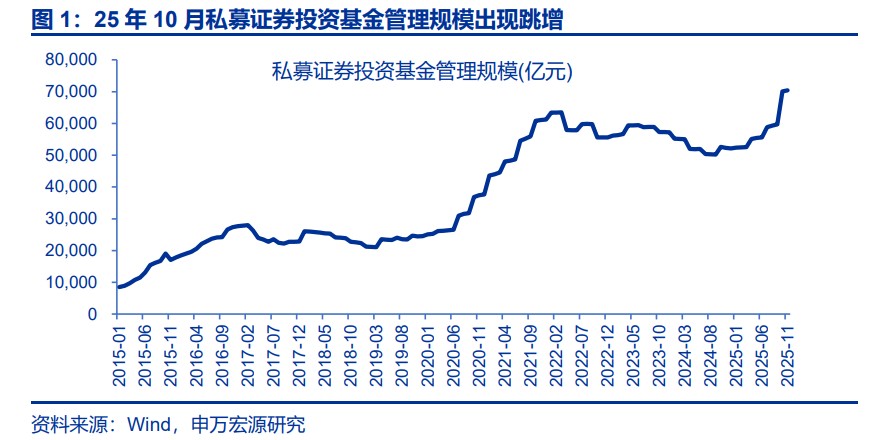
II. Spring stock market liquidity remains loose: In October, high-net-worth investors adjusted to increase allocations to private equity; insurance companies are expected to have a good start, but there is insufficient preemptive speculation; net subscriptions for CSI 300 and A500 ETFs have surged. There are many windows for stabilizing capital market expectations in spring: February for the Spring Festival, March for the Two Sessions, and April when Trump may visit China.
The main assets in spring still face upward resistance: market style characteristics have returned to the state before the end of October, and the upward space is still fundamentally unresolved. The optical module is based on the Alpha logic center uplift, while other segments of the AI industry chain remain under pressure in terms of Beta, with the positioning in the structural bull high area unchanged. Additionally, the expectations for cyclical recovery have been revised downward in stages. The upward space in the spring structural main battlefield is limited, and the spring market may first play out in non-main battlefields (industry and policy themes, high dividend speculation, various oversold rebounds).
Thoughts on the characteristics of the spring market: There will be a spring market in 2026, and it is about to start. However, the main structural focus of institutions (AI industry chain, cyclical recovery) has limited upward space, while the non-main battlefields (industry and policy themes, high dividend speculation, various oversold rebounds) may be very active in the market.
We highlight two short-term positive factors: 1. Spring stock market liquidity remains loose: (1) In October, high-net-worth investors concentrated on increasing allocations to private equity during the pullback, leading to a significant increase in the management scale of private equity securities investment funds. (2) Insurance dividend products remain attractive, and both large and small insurance premiums are expected to have a good start. Meanwhile, there has not been a significant speculative opening rally in A-shares recently, high dividend assets have a relatively high short-term cost-performance ratio, and the proportion of oversold assets is even higher. Insurance companies are currently increasing their allocations to A-shares. (3) Net subscriptions for CSI 300 and A500 ETFs have surged.
- From February to April, there will be stable windows for capital market expectations each month: The rebound before the Spring Festival is one of the calendar characteristics with the highest winning rate for A-shares. The two sessions in March may review the formal draft of the 14th Five-Year Plan, and policy catalysts may become more abundant. In April, Trump may visit China, confirming the easing of China-U.S. economic and trade relations, which is also a key window for stabilizing capital market expectations.
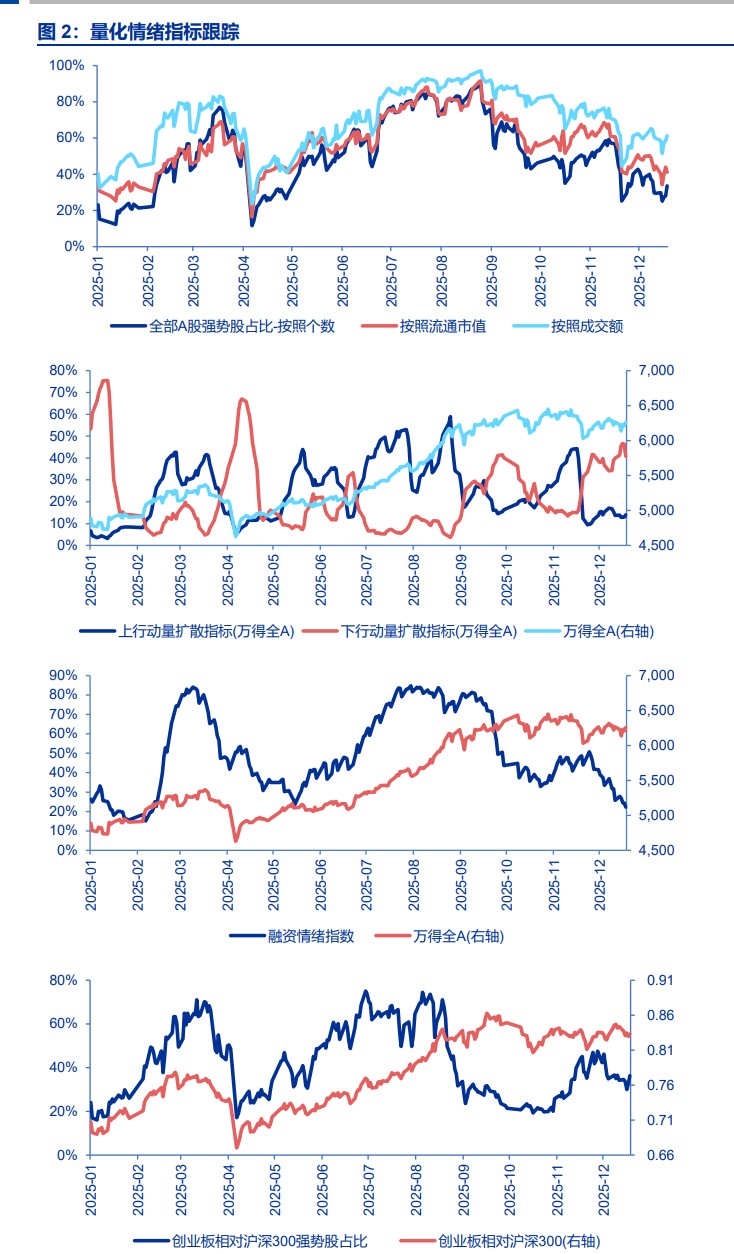
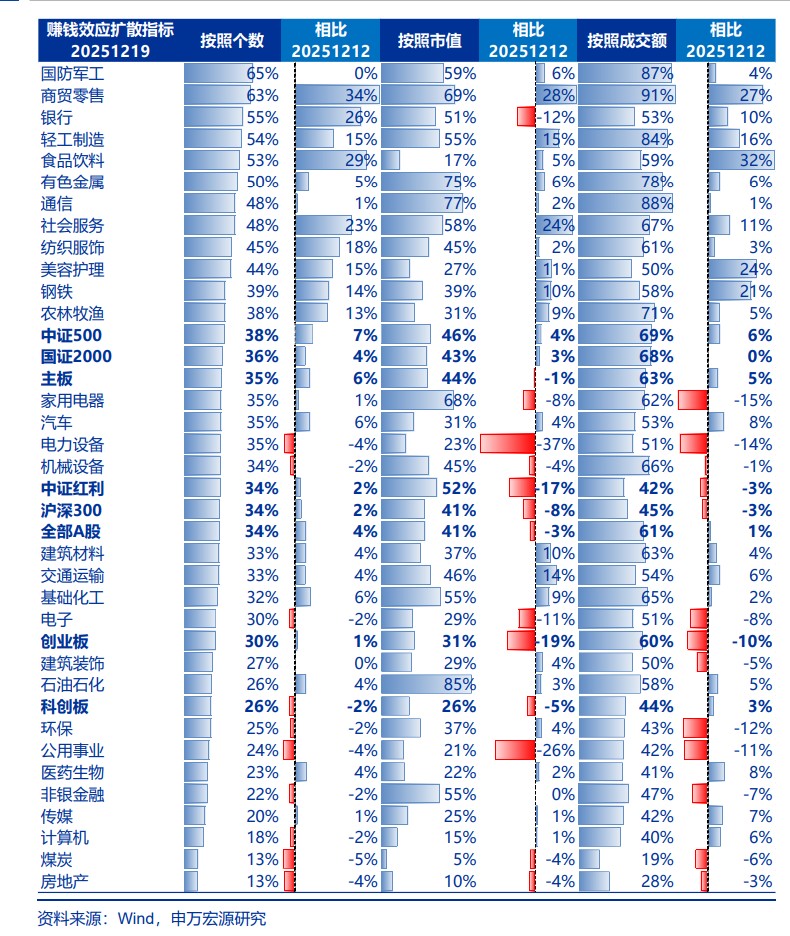
The judgment that there is resistance to upward movement in the main line assets of spring remains unchanged, and the spring market may first unfold in non-main battlefields. Since late November, the macro environment faced by the A-share market has shown a "restoration," and the style characteristics have also reverted to the state before the end of October. However, the issue of upward resistance has not been fundamentally resolved. The logic of optical connectivity is being interpreted, but concerns about the decline in capital expenditure of leading technology stocks in the U.S. in 2026 still persist, and the AI industry chain Beta remains under pressure. An upward breakthrough in optical connectivity may not drive breakthroughs in other segments of the AI industry chain. The positioning of the structural bull market in 2025 is still in a high area, and it is currently in a high-level oscillation phase. Attention should also be paid to the possibility of triggering adjustments at the "suspected bull market level." At the same time, expectations for extraordinary policy efforts have been revised down, and the offensive nature of pro-cyclical investments has also weakened. In the spring market, the main offensive direction that institutional investors focus on may lack sufficient elasticity, and the volatile market may first start from non-institutional heavy positions.
3. The mid-term judgment remains "the two-stage theory of the bull market": The 2025 bull market 1.0 (technology structural bull) is already in a high area, currently in a quarterly high-level oscillation phase, and attention should be paid to the possibility of triggering adjustments at the "suspected bull market level." There will be a bull market 2.0 in the second half of 2026. This is a comprehensive bull market resonating with various positive factors such as cyclical improvement in fundamentals + new stage of technology industry trends + migration of resident asset allocation towards equities + the visibility of China's influence enhancement.
Judgment on style rhythm in 2026: The period dominated by pro-cyclical and value styles is mainly in the first half of 2026, with a bottoming phase in Q2 2026, where technology and advanced manufacturing may have fundamental Alpha logic directions that could start before the bull market. The second half of 2026 will see a comprehensive bull market, where pro-cyclical assets may only initiate the bull market, but ultimately the bull market will still be dominated by technology and advanced manufacturing.
The spring volatility will first unfold in non-main battlefields. The activity of spring policies and industrial themes is the main source of profit effects, with a focus on commercial aerospace, nuclear fusion, service consumption, and robotics. After the optical connectivity reflects the Alpha logic in place, there may be new high-level oscillation segments, while other technology growth mainly presents opportunities for rebound from oversold conditions. The expected good start for January premiums + high dividend short-term cost-effectiveness is relatively high, and a rebound in high dividends at the beginning of the year is expected, which may become the main clue for the short-term repair of oversold industries. Spring pro-cyclical investments still lean towards industrial metals and basic chemicals and other cyclical Alpha.
Risk Warning and Disclaimer
The market has risks, and investment requires caution. This article does not constitute personal investment advice and does not take into account the specific investment goals, financial situation, or needs of individual users. Users should consider whether any opinions, views, or conclusions in this article are suitable for their specific circumstances. Investment based on this is at your own risk
