The yen rises in the short term! Japanese Finance Minister: Has "discretionary power" against speculation in the foreign exchange market and will take bold action

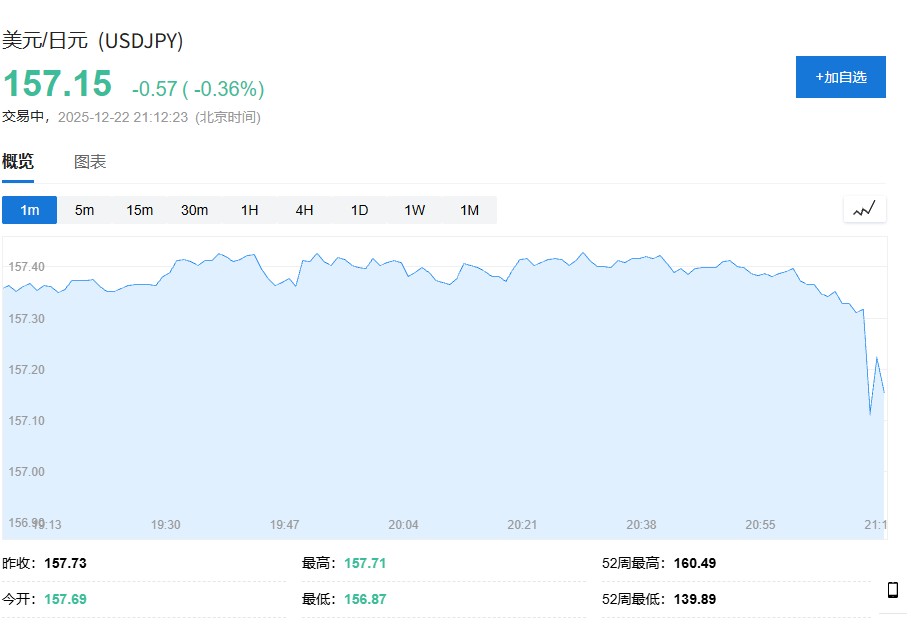
Japan's Finance Minister issued a warning to the foreign exchange market, stating that there is "discretion" over exchange rates that deviate from fundamentals, implying that the intervention threshold has been recognized by the U.S. Additionally, aggressive fiscal stimulus from the high government has pushed Japanese government bond yields to a 27-year high, with market expectations that authorities may intervene again during increased volatility. On Monday evening, the exchange rate of the yen against the dollar hovered around 157.49
The Japanese government has issued its strongest warning yet to speculators in the foreign exchange market. Japanese Finance Minister Shunichi Suzuki clearly stated that Japan has the "free hand" to take bold action against exchange rate fluctuations that deviate from economic fundamentals.
On the 22nd, according to Bloomberg, Suzuki pointed out in an interview on Monday that the recent market volatility is clearly speculative and not a reflection of fundamentals. She emphasized that "Japan has clearly stated it will take bold action against this trend," according to the joint statement from the finance ministers of Japan and the United States. Previously, despite the Bank of Japan raising borrowing costs to the highest level in 30 years, the yen did not appreciate but instead depreciated, not only weakening against the US dollar but also hitting a historic low against the euro.
Atsushi Mimura, the Deputy Minister for International Affairs at the Japanese Ministry of Finance, expressed "deep concern" over the "one-sided" and "sudden" fluctuations of the yen on the same day. According to the Financial Times, Mimura pointed out that "the government hopes to take appropriate measures against excessive market volatility," a wording that traders view as a signal that intervention may be imminent. On Monday evening, the yen was hovering around 157.49 against the US dollar.

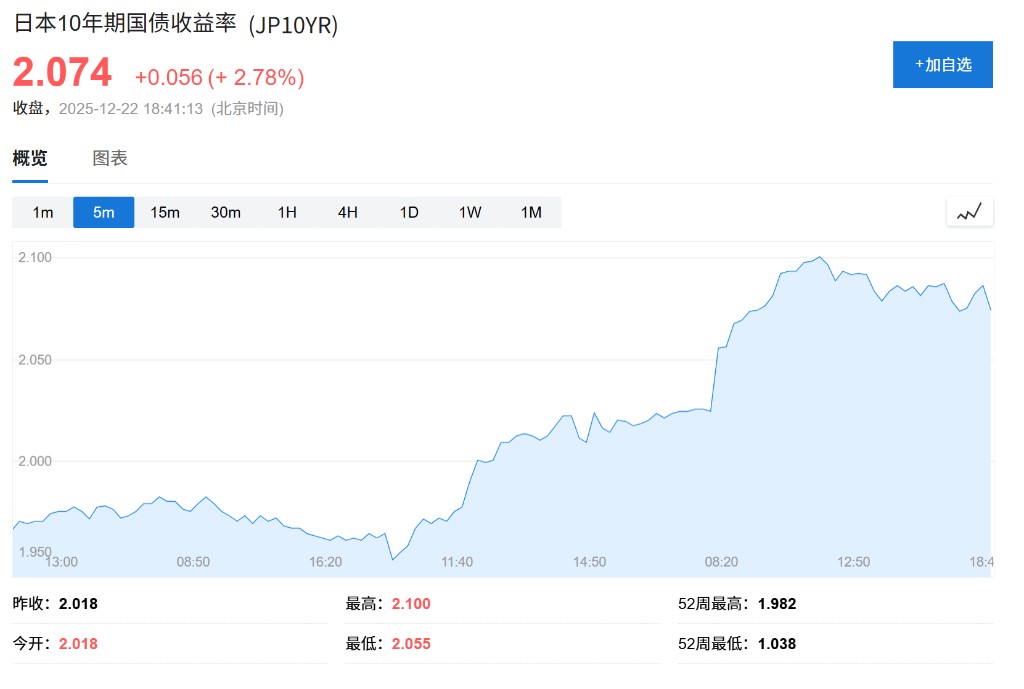
Speculation about Japanese government intervention comes amid severe volatility in the Japanese bond market. Due to Bank of Japan Governor Kazuo Ueda's failure to send a strong signal regarding future tightening steps, coupled with concerns over debt issuance triggered by the large-scale fiscal stimulus plan introduced by the new Prime Minister Sanae Takaichi's government, the yield on Japan's 10-year government bonds briefly rose to 2.1% on Monday, reaching the highest level in 27 years.

Implicit "Green Light" from the US
Suzuki's statement about having a "free hand" stems from a prior monetary consensus reached between Japan and the United States. Her predecessor, Katsunobu Kato, signed a joint agreement with US Treasury Secretary Janet Yellen in September. According to the statement, while both sides committed to letting the market determine exchange rates, they also confirmed that they reserved the space for intervention in certain circumstances, including excessive volatility.
Suzuki believes this means Japan can act independently when necessary. "If that's the case, we have a free hand," she stated. This remark indicates that Japanese authorities believe their threshold for intervention has been recognized by allies, and there is no need to seek additional diplomatic green lights during market turmoil.
Last year, when the exchange rate approached the 160 mark, the Japanese Ministry of Finance spent about $100 billion to support the yen. Regarding the current exchange rate level, Suzuki declined to comment and did not set a specific benchmark to define "excessive or disorderly fluctuations." She noted that each situation is different, and expecting a fixed pattern is erroneous, which differs from the standard proposed by former exchange rate supervisor Masato Kanda last year, suggesting that "a fluctuation of 10 yen in a month" could be seen as too rapid
Central Bank Rate Hike Fails to Halt Currency Decline
The recent weakness of the yen is counterintuitive, as the Bank of Japan has just implemented a rate hike. Although the official interest rate has risen to 0.75%, the highest level in 30 years, Bank of Japan Governor Kazuo Ueda did not provide clear guidance on the timing and magnitude of further rate hikes during the subsequent press conference. This ambiguous stance disappointed market participants hoping for hawkish signals, triggering a sell-off of the yen.
Yujiro Goto, Chief Foreign Exchange Strategist at Nomura Securities, stated that the timing for the Ministry of Finance to take "bold action" may not be far off. He pointed out that if officials begin to use terms like "disorderly," the market may interpret it as a signal that intervention is imminent.
Regarding the upcoming Christmas holiday, Satsuki Katayama, when asked if she would enter the market during the quiet trading period, stated that the authorities are "always prepared."
Aggressive Fiscal Stimulus Boosts Yields
In addition to the uncertainty surrounding monetary policy, concerns about Japan's public finances are also intensifying. The government of Prime Minister Suga is working to drive economic growth through aggressive fiscal spending. Satsuki Katayama revealed that the government's supplementary budget and the upcoming annual budget will both be expansionary.
According to local media reports, the budget for the new fiscal year starting in April next year may expand to a record 120 trillion yen (approximately $760 billion) or more. Additionally, Japan has just approved a supplementary budget plan amounting to 18.3 trillion yen, the largest package since the easing of pandemic controls, which requires the issuance of an additional 11.7 trillion yen in bonds.
This expectation of large-scale fiscal expansion has directly impacted the bond market. In addition to the surge in the 10-year government bond yield, the two-year Japanese government bond yield, which is highly sensitive to central bank policy, also jumped to a historic high of 1.105% on Monday. Analysts point out that part of the reason for the bond sell-off is investors' concerns that the continued weakness of the yen will exacerbate domestic inflation, thereby forcing the Bank of Japan to raise interest rates at a faster pace