Crazy precious metals! Gold and silver are the same, platinum and palladium are soaring, a big risk "is just around the corner" in the short term

Precious metals surged across the board, with gold and silver hitting new highs, while domestic platinum and palladium both reached their daily limit. The significant increase in positions and active trading in the Shanghai Futures Exchange may have fueled this round of market activity. However, the euphoria comes with risks, as JP Morgan warns that high silver prices are eroding photovoltaic demand. At the same time, there is a need for heightened vigilance regarding the technical selling pressure triggered by the Bloomberg Commodity Index rebalancing starting January 8: it is expected that the scale of silver sell-offs will account for 9% of futures positions, while gold will account for 3%. This massive forced selling may disrupt the seasonal benefits typically seen in the new year
The precious metals market is closing out 2025 with a frenzy not seen in decades, but behind this feast ignited by easing expectations and geopolitical risks, a foreseeable major risk is quietly approaching.
On Tuesday, December 23, market sentiment reached a boiling point. In the Chinese market, the main contracts for platinum and palladium on the Guangzhou Futures Exchange both hit the 10% limit up, setting new highs since their listing. Currently, the gains for both have slightly retreated.

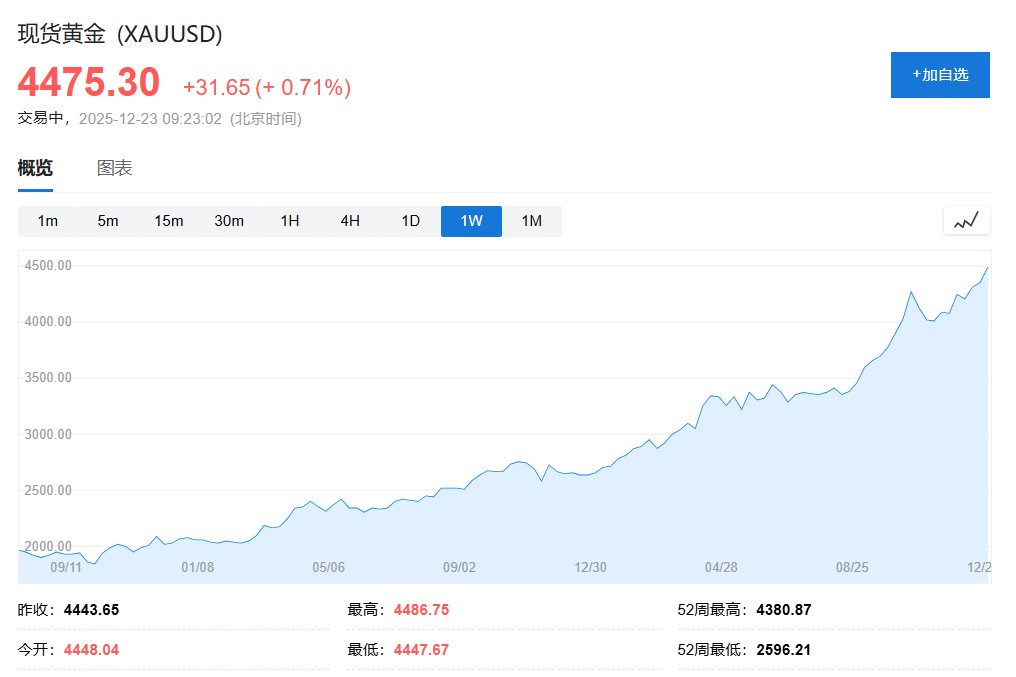
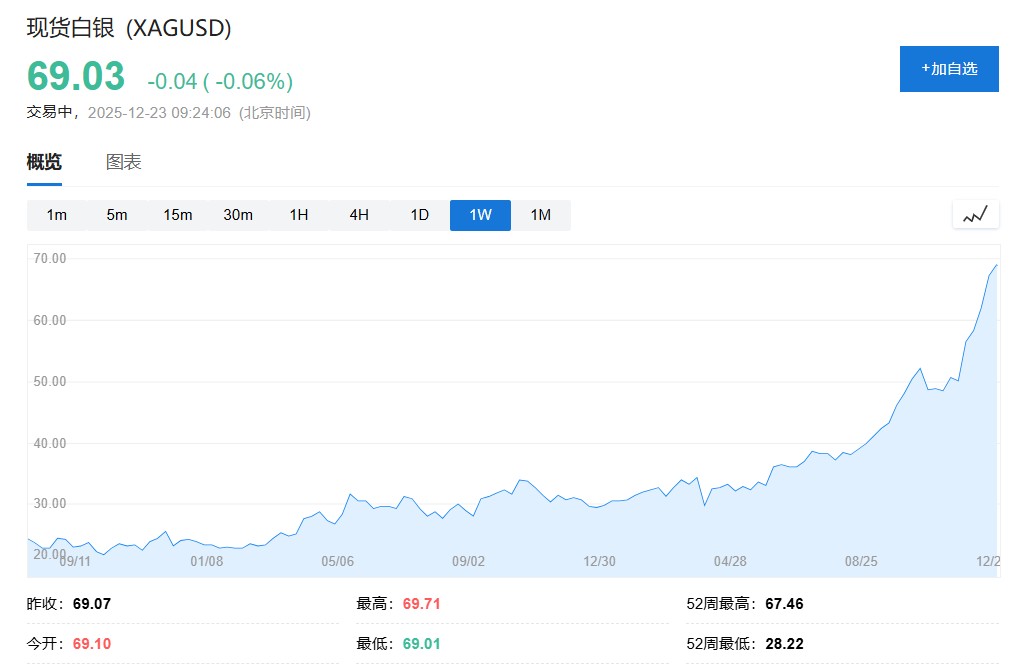
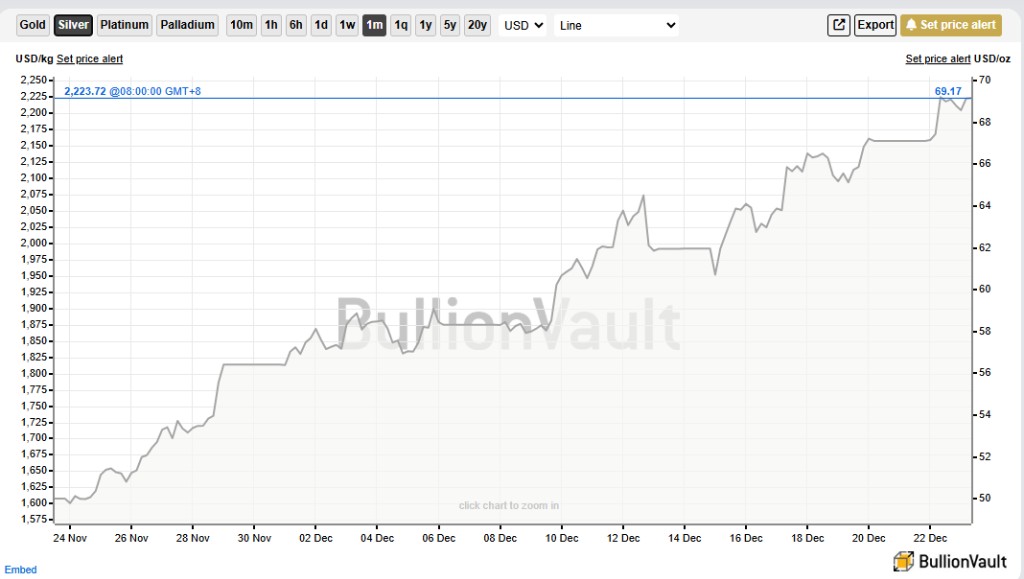
At the same time, driven by expectations of further interest rate cuts by the Federal Reserve in 2026 and geopolitical tensions near Venezuela, the spot gold price rose again today by 0.7%, briefly reaching a historical high of $4,486 per ounce, marking over 50 record highs this year. Silver prices surged 3.5% yesterday to $69.46 per ounce, but today the upward momentum has paused, with prices remaining high.


However, beneath the revelry, risks are accumulating. JP Morgan issued a warning in its latest research report that due to gold and silver prices significantly outperforming the market for three consecutive years, their weight in the Bloomberg Commodity Index (BCOM) has become severely overweight. This almost guarantees that during the upcoming index rebalancing in January 2026, passive funds tracking this index will be forced to conduct large-scale "technical sell-offs."
For the market, this means an intense battle of bullish and bearish factors is about to unfold. On one hand, there are record prices, strong upward momentum, and traditional seasonal benefits at the beginning of the year; on the other hand, there is a foreseeable, large-scale forced selling. This short-term risk is "imminent" and could bring severe volatility to the soaring precious metals market at the start of the new year.
Precious Metals Soar Across the Board, Achieving Unprecedented Gains in Decades
Entering "Christmas week," the precious metals market is rising across the board, with several varieties heading towards their strongest annual performance since 1979.
According to data released by BullionVault on Monday, the annual gains for gold and silver are the highest in 46 years. With only a few trading days left in the year, gold's annual gain is nearing 70%, while silver has surged nearly 140%.

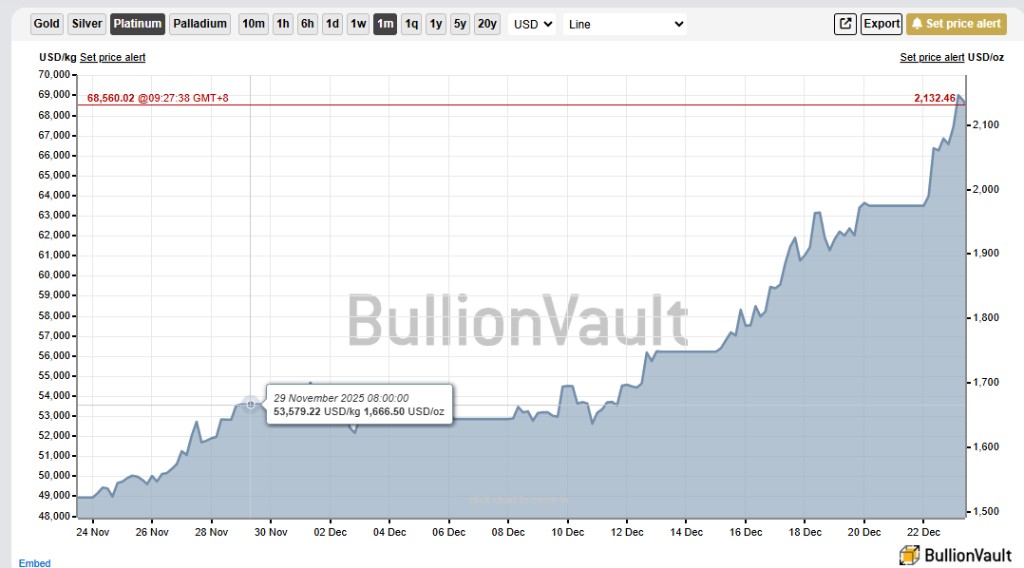
Platinum group metals are also performing remarkably: platinum surged 5.1% on Monday to over $2,075 per ounce, the highest level in over 16 years, with an annual gain of nearly 130%, marking the largest annual increase since the London benchmark price was established in 1990; Palladium once rose 4.6% to a nearly four-year high of $1,802 per ounce, with an annual increase expected to exceed 95%.

The macro backdrop for this round of increases includes a weakening dollar and the market's general expectation that the Federal Reserve will cut interest rates twice in 2026, although Fed officials predict only one cut. Additionally, U.S. military operations off the coast of Venezuela have added a geopolitical risk premium to the market.
Notably, according to data from the U.S. Commodity Futures Trading Commission (CFTC) as of December 9, net long positions held by speculators such as hedge funds in Comex gold and silver futures and options have remained at relatively moderate levels and have not fully kept pace with the rapid price surge.
Chinese Funds Fuel Platinum Frenzy
Behind the astonishing rise in platinum prices is trading activity from China. JP Morgan noted in a report on December 18 that platinum prices surged from the $1,700 per ounce range to above $1,900, with the main driver appearing to be "strong" futures trading activity and a surge in open interest at the Guangzhou Futures Exchange (GFEX).
The report indicated that since the Guangzhou Futures Exchange launched platinum and palladium futures on November 27, the average daily total trading volume of its platinum contracts has increased to nearly 5 million ounces, recently even surpassing the trading volume of the New York Mercantile Exchange (NYMEX). Meanwhile, the total open interest at the Guangzhou Futures Exchange has soared to over 1 million ounces, about a quarter of that of the New York Mercantile Exchange.
To address the overheated trading, the Guangzhou Futures Exchange announced on December 18 that it would set a position limit of 500 contracts for platinum and palladium for non-futures company members or clients.

Silver's "Double-Edged Sword": High Prices Erode Photovoltaic Demand
For silver, which has seen the most remarkable increase this year, its sharp rise is becoming a double-edged sword, with the risk of long-term demand destruction increasingly evident, especially in the photovoltaic sector.
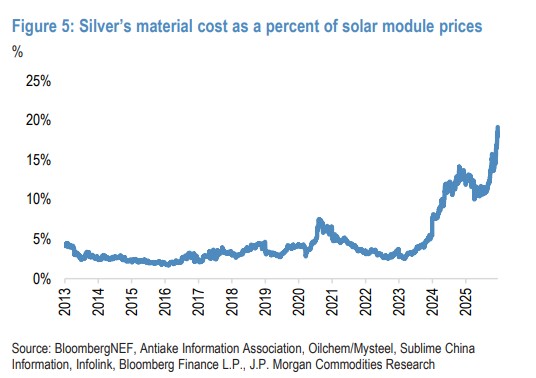
JP Morgan's analyst team led by Gregory C. Shearer believes that the nearly 130% increase in silver prices this year has significantly raised its cost share in the total selling price of solar modules from typically below 5% before 2024 to nearly 20%. This severely squeezes the already "thin" profit margins of photovoltaic module manufacturers. High costs are forcing the industry to accelerate "thrifting," which means reducing silver usage through technological means.
The report estimates that if silver-saving technologies such as silver-coated copper paste and zero-busbar (0BB) become more widely adopted, silver demand could be threatened by up to 50 million to 60 million ounces in the coming years. Although in the short term, the physical market tightness caused by uncertainties surrounding the U.S. "Section 232" tariffs masks this long-term risk, once market tightness eases, the risk of demand destruction could lead to a "more abrupt reversal" of silver's strong performance relative to gold

A Technical Storm is Coming: January Index Rebalancing May Trigger Concentrated Selling of Gold and Silver
For precious metal investors, the most immediate short-term risk comes from the upcoming important annual rebalancing of commodity indices.
Wallstreetcn reported that, according to a warning in a report released by JP Morgan in December, the highly watched Bloomberg Commodity Index (BCOM) will begin its annual weight adjustment on January 8, 2026. Due to the outstanding performance of gold and silver over the past three years, their weights in the index have far exceeded target levels.
Therefore, passive funds tracking this index (with assets under management exceeding $60 billion) will be forced to concentrate their selling of gold and silver futures between January 8 and 14 to complete the rebalancing.
The report provides a clear forecast for the scale of the sell-off:
-
Silver: Will face the heaviest selling pressure, with the expected sell-off accounting for about 9% of its total open contracts in the futures market. The report particularly emphasizes that this year's selling pressure on silver is "more pronounced than last year."
-
Gold: Is expected to face selling equivalent to about 3% of its total open contracts.
This foreseeable technical sell-off will directly hedge against the traditional seasonal strength of gold at the beginning of the year (which has risen in 8 out of the past 10 years at the start of the year). Investors need to be highly vigilant about whether this strong outflow of funds will break historical patterns and bring severe volatility to the market in the first week of the new year.