


The Long March 12A rocket successfully completed its maiden flight and entered orbit, but the first stage recovery failed

The Long March 12A carrier rocket was successfully launched at the Dongfeng Commercial Aerospace Innovation Test Area, with the second stage entering the designated orbit, but the first stage recovery failed. Although the first stage recovery target was not achieved, the mission obtained key engineering data, laying the foundation for subsequent launches. China Aerospace Science and Technology Corporation will continue to optimize the recovery plan and promote reusable verification
According to Xinhua News Agency, at 10:00 on December 23, the Long March 12A Yao-1 carrier rocket was launched from the Dongfeng Commercial Aerospace Innovation Test Area. The second stage of the carrier rocket entered the designated orbit, while the first stage was not successfully recovered, and the flight test mission achieved basic success. The Long March 12A is a reusable rocket developed by the China Aerospace Science and Technology Corporation's Eighth Academy.

According to the news publicity center of the National Defense Science and Technology Industry Bureau, the Long March 12A is a liquid oxygen-methane carrier rocket characterized by "first stage reusability." The rocket is approximately 70.4 meters long, with both the first and second stages having a diameter of 3.8 meters, and the fairing diameter is 4.2 meters, with a launch weight of about 437 tons. Although this mission did not achieve the planned recovery goal for the first stage of the rocket, it obtained key engineering data on the rocket's real flight status, laying an important foundation for subsequent launches and reliable recovery of the second stage. The development team will conduct a comprehensive review and technical reset of the test process as soon as possible, fully investigate the cause of the failure, continuously optimize the recovery plan, and continue to advance reusable verification.
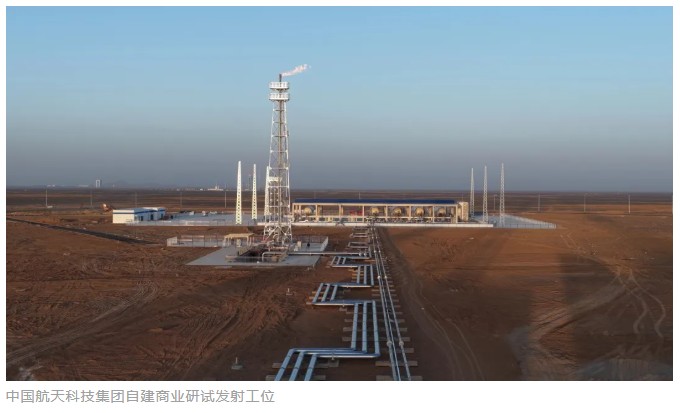
On December 2, China Aerospace Science and Technology Corporation Commercial Rocket Co., Ltd. (referred to as "China Commercial Rocket") announced that the group's first self-built commercial research and launch station passed completion acceptance and was officially completed in the Jiuquan Dongfeng Commercial Aerospace Innovation Test Area. It was introduced that this station integrates functions such as command testing and fuel loading, supporting both cutting-edge technology tests and actual commercial launch missions, making it a key move for China Aerospace Science and Technology Corporation's layout in commercial aerospace. In the future, reusable rockets will continue to iterate here.
In August, Shandong Maritime Commercial Aerospace Launch Technology Co., Ltd. (HaiShangFa) mentioned on its official WeChat account that the HaiShangFa team had ensured the success of the static ignition test of the CZ-12A (Long March 12A) second stage rocket developed by the Eighth Academy.
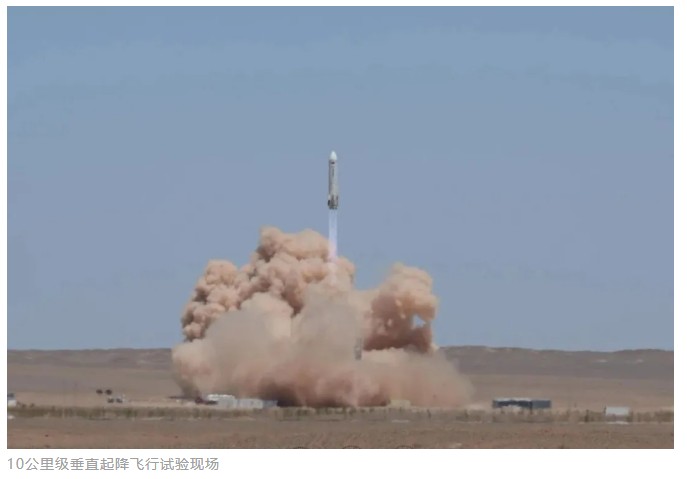
In June 2024, China Aerospace Science and Technology Corporation announced the successful completion of the country's first 10-kilometer vertical takeoff and landing flight test of a reusable carrier rocket. This rocket is the test rocket verifying the reusable technology of the Long March 12A, developed under the overall management of the Eighth Academy. The test comprehensively verified the 3.8-meter diameter rocket body structure, large-load landing buffer technology, high-thrust variable-thrust reusable engine technology, dual low-temperature pressurized delivery technology, high-precision navigation guidance control technology for return landing, and health monitoring technology, laying a technical foundation for the first flight of a 4-meter-class reusable carrier rocket in 2025.
 Recently, the private commercial aerospace company Landspace's Zhuque-3 Yao-1 launch vehicle made its maiden flight, becoming the first in the country to conduct a first-stage recovery verification. Zhuque-3 completed its flight mission as planned, with the second stage entering the designated orbit, but the recovery test failed. Subsequently, Landspace disclosed key technical details of the first-stage recovery verification. This test accumulated flight data during the flight process, laying a solid foundation for future model iterations and improvements, while also verifying the correctness of the composite control strategy and corresponding guidance algorithms.
Source: Shanghai Securities Journal
Risk Warning and Disclaimer
The market has risks, and investment requires caution. This article does not constitute personal investment advice and does not take into account the specific investment objectives, financial conditions, or needs of individual users. Users should consider whether any opinions, views, or conclusions in this article are suitable for their specific circumstances. Investment based on this is at one's own risk
