


Nomura: AI demand unexpectedly strong, memory supercycle expected to last at least until 2027

Nomura predicts that the memory "super cycle" will continue until 2027, primarily due to the unexpected surge in demand for AI servers and enterprise-level SSDs. As large-scale capacity release will not occur until 2028, the supply-demand gap will drive DRAM prices significantly higher. Nomura has raised its earnings expectations for Samsung and SK Hynix, believing that the profitability of general storage has reached or even surpassed that of HBM
Nomura believes that the global memory industry's "super cycle" will last longer than expected, thanks to unexpectedly strong demand for AI servers and a surge in enterprise solid-state drive (eSSD) demand, with this upward cycle expected to continue at least until 2027.
According to news from the Chasing Wind Trading Desk, Nomura analyst CW Chung's team emphasized in a report on the 24th that not only is the demand for high-bandwidth memory (HBM) robust, but the demand for general-purpose DRAM in both AI servers and traditional servers is also expected to experience explosive growth in 2026. This has prompted customers to adopt proactive procurement strategies, pushing supplier price increases beyond Nomura's previous forecasts.
Given that large-scale capacity releases on the supply side will not occur until at least 2028, Nomura expects the memory market to remain in a state of supply shortage for the next few years. Nomura predicts that the operating profits of major memory manufacturers in the fourth quarter of 2025 will significantly exceed market expectations. Specifically, PC and mobile DRAM prices have increased by 30-40% quarter-on-quarter, while server DRAM prices have risen by 40-60%.
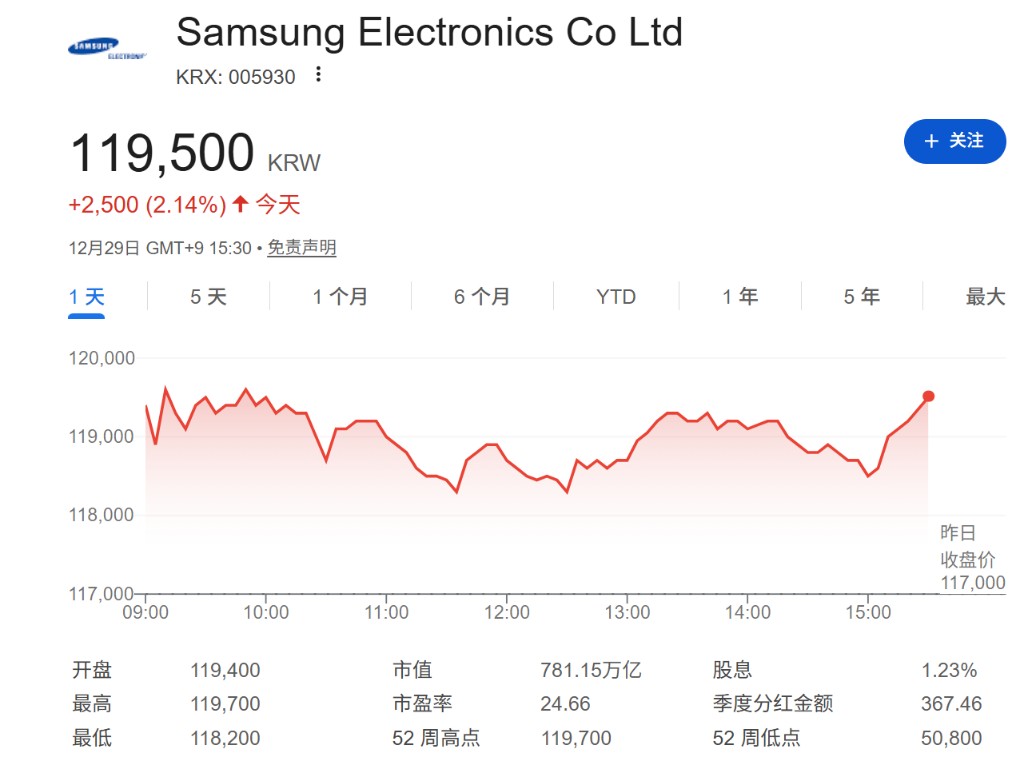
In light of this positive news, Nomura reiterated its "buy" ratings for Samsung Electronics and SK Hynix. Nomura raised Samsung Electronics' target price by 6.7% to 160,000 KRW and SK Hynix's target price by 4.8% to 880,000 KRW, believing that the valuations of both companies remain attractive compared to industry peers, and with significant improvements in profitability, their stock prices still have about 45%-50% upside potential.
AI Demand Reshaping Market Landscape
Nomura believes that the impact of AI technology on the memory market is far greater than expected. Although there have been some concerns about AI capital expenditure capabilities recently, the global AI companies' data center expansion plans have not slowed down, but rather exceeded expectations. In addition to the strong demand for HBM, the demand forecast for general-purpose DRAM in 2026 is also surprising.
This strong demand comes not only from AI servers but also from a surge in SSD demand from non-AI servers. Nomura pointed out that due to the surge in demand, memory customers have begun to strategically stockpile inventory, giving suppliers greater pricing power. In contrast, the supply side's response has been relatively lagging, with meaningful supply increases expected to occur no earlier than 2028. This supply-demand mismatch is the main basis for Nomura's judgment that the "super cycle" will last until 2027.
Nomura believes that the profitability of general storage chips is rapidly catching up and may even surpass that of HBM. Although the market's focus has previously been mainly on HBM, Nomura estimates that the profitability of Samsung Electronics and SK Hynix's general storage businesses has already exceeded or is approaching that of their respective HBM businesses.
Specific data shows that DRAM prices for consumer products (PC and mobile) have increased by 30-40% quarter-on-quarter, while server DRAM prices have risen by as much as 40-60% quarter-on-quarter. In the NAND sector, although the price increase for mobile applications is relatively moderate, enterprise SSD prices are expected to rise by 30-40% quarter-on-quarter in the fourth quarter of 2025 Based on this, Nomura believes that its previous forecast of a 25% quarter-on-quarter increase in the average price of general DRAM in the fourth quarter of 2025 appears overly conservative.
Supply Shortages and Flexible Product Mix
In terms of supply, Nomura believes that the shortage will continue until 2027. Although investors have been closely monitoring the capacity expansion of memory manufacturers, large-scale capacity release takes time considering the timelines for new factories, expansions, and upgrades.
Previously, memory companies primarily allocated capacity to HBM, but with the rapid increase in profit margins for general storage chips, Nomura expects manufacturers to produce general products more flexibly than before. This strategy not only maximizes profits but also enhances manufacturers' bargaining power in future HBM price negotiations with ASIC customers. Nomura specifically mentioned that Samsung Electronics is expected to focus more on general products and produce HBM4 for Nvidia, while SK Hynix and Micron will also adopt flexible product mix strategies based on their own strengths.
Upgrading Profit Expectations for Two Korean Giants
Based on the above market judgment, Nomura has significantly raised its financial forecasts for the two Korean memory giants, Samsung Electronics and SK Hynix.
- Samsung Electronics: Nomura raised its operating profit forecast for the fourth quarter of 2025 by 22% to 21.5 trillion won and significantly increased its operating profit forecast for 2026 by 21.5% to 133.4 trillion won (far exceeding Bloomberg's consensus expectation of 93 trillion won). Nomura believes that Samsung Electronics will benefit from a weak won and stronger-than-expected increases in general DRAM prices, with its operating profit margin for general DRAM expected to significantly exceed that of HBM in the fourth quarter.
- SK Hynix: Nomura raised its operating profit forecast for the fourth quarter of 2025 by 8.2% to 17.5 trillion won and increased its operating profit forecast for 2026 by 9.7% to 109 trillion won. Nomura expects that starting from the fourth quarter of 2025, SK Hynix's operating profit margin for general DRAM will exceed that of HBM, with the overall DRAM operating profit margin expected to increase by 6 percentage points quarter-on-quarter to 66%.
Nomura believes that the current price-to-earnings multiples for Samsung Electronics and SK Hynix are still lower than their memory peers, and with companies adopting proactive shareholder return policies and disciplined capital expenditures, both companies are expected to see a valuation re-rating
