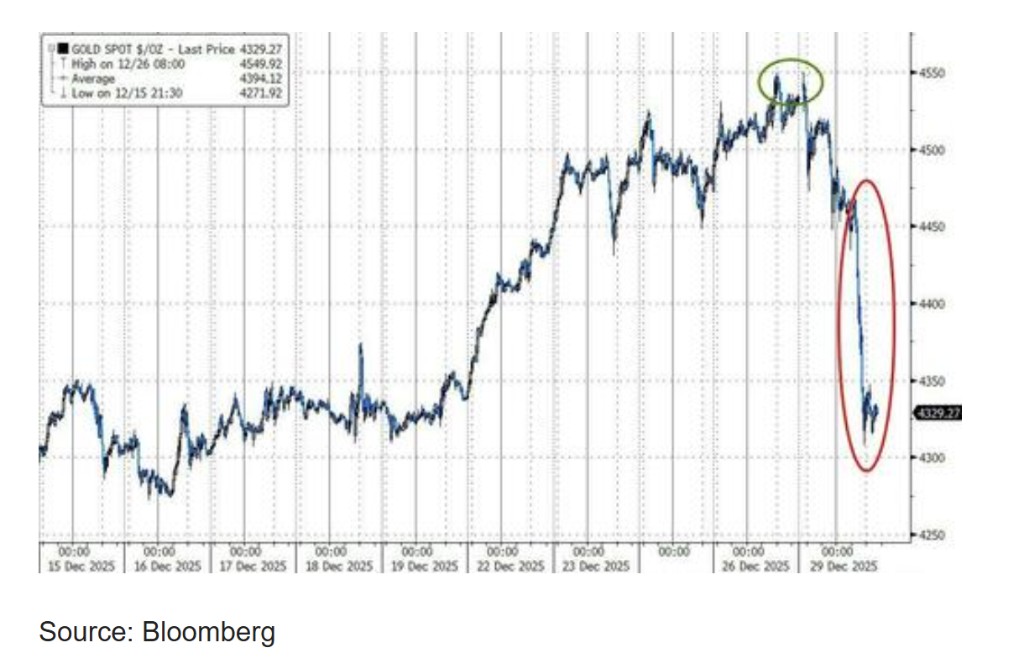
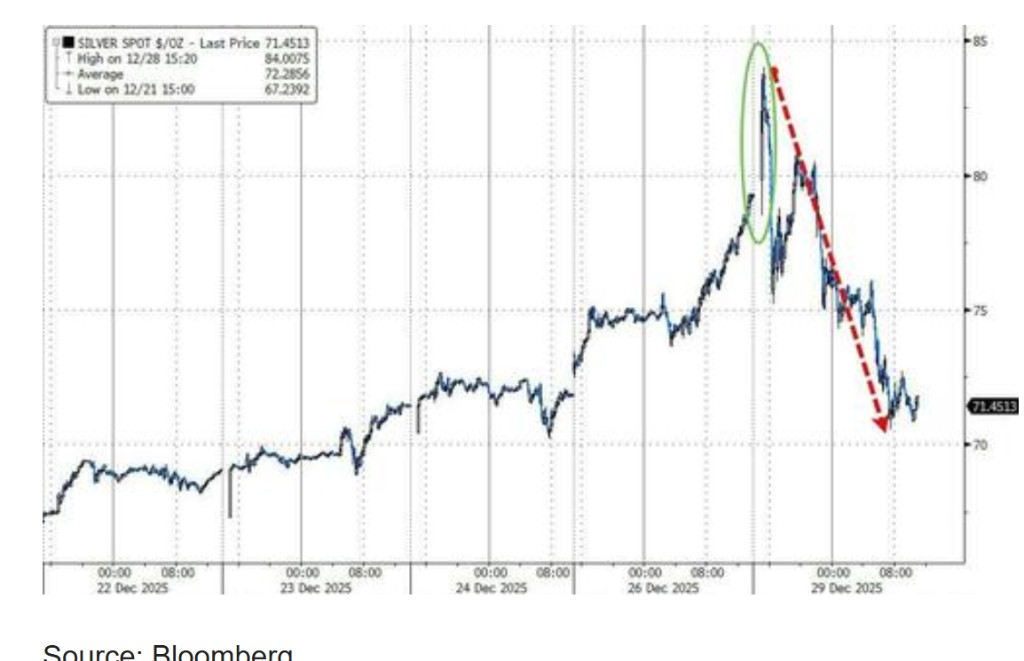
Is the New Year rally over? Investors "take profits," gold and silver plummet

On Monday, spot gold plummeted 5%, and silver fell sharply by 11%, marking the largest single-day decline since September 2020. In the year-end seasonal market, precious metals typically perform strongly: over the past decade, gold has averaged an increase of about 4% during this period, while silver's increase has been close to 7%. However, after prices reached historical highs this year, profit-taking by investors combined with insufficient market liquidity led to a sharp correction in gold and silver
After experiencing a strong rebound at the end of the year, the gold and silver markets faced severe sell-offs on Monday. The thin market liquidity at year-end exacerbated price volatility, leading traders to take profits, which caused precious metal prices to plummet across the board, ending the recent one-sided upward trend.
Spot gold fell by as much as 5% during the session, marking the largest single-day drop since October 21 and the second occurrence of such a significant single-day plunge this year.
Silver's decline was even more severe, with intraday losses reaching 11%, the largest single-day drop since September 2020.

Both metals have significantly retreated from their recently set historical highs, indicating that the previous rapid price increases have raised market concerns about overheating.
Michael Haigh, head of fixed income and commodity research at Societe Generale, warned, “Do not overinterpret these large fluctuations,” noting that the market often experiences “extreme lack of liquidity” at the end of each year.
Haigh believes that Monday's decline was primarily due to investors choosing to take profits after gold and silver experienced a strong seasonal rebound. He pointed out that precious metals typically see very strong upward trends before the New Year. Over the past decade, gold has risen about 4% during this period, while silver's increase is usually close to 7%.
Technical indicators also supported the logic behind this sell-off. The 14-day Relative Strength Index (RSI), which measures buying and selling momentum, indicated that gold had been in the overbought territory for the past two weeks, suggesting a correction was imminent. Silver's situation was even more extreme, having risen over 25% since mid-December, with its RSI far exceeding the 70 level, indicating that buying pressure was too crowded in the short term.
Diminishing Speculative Atmosphere and Margin Increases
The reversal in silver prices occurred just hours after it soared above $84 per ounce. Previously, strong investment demand from China had pushed silver prices higher, causing the premium of Shanghai spot silver over London prices to rise to more than $8 per ounce, setting a record for the largest price difference in history.
According to Bloomberg, citing China Futures Ltd. analyst Wang Yanqing: “The speculative atmosphere is very strong. The market is speculating around tight spot supply, and the current situation is somewhat extreme.”
To curb risks, exchanges have begun to take action. According to a statement from CME Group Inc., the margin for some Comex silver futures contracts will be increased starting Monday. When exchanges raise margin requirements, traders must put up more cash to maintain their positions, forcing undercapitalized speculators to reduce or close their positions. Wang Yanqing believes this move will help reduce speculative behavior The world's largest physical silver exchange-traded fund (ETF) — iShares Silver Trust also did not escape, with an intraday drop of 10%, marking the largest decline since 2020.
Spot Market Pressure and Inventory Status
Bloomberg market strategist Brendan Fagan commented that the dizzying rebound in silver and the subsequent sharp correction have kept the market focus persistently on the severely pressured spot market.
The latest silver rebound occurred just two months after the London silver market faced a comprehensive short squeeze. At that time, the inflow of funds into ETFs and exports to India eroded the already extremely low inventory. Although there has been a significant inflow of funds into the London vaults since then, most of the available silver globally remains in New York, and traders are awaiting the results of a U.S. investigation that could lead to tariffs or other trade restrictions