Asian stock markets welcome a bumper year: South Korea surges 76%, Japan surpasses the peak of the bubble economy era at year-end, Indonesia achieves its best performance in 11 years

The South Korea Seoul Composite Index has achieved its strongest annual performance since the 21st century, with AI infrastructure and chip stocks leading the rise, as SK Hynix increased by 270% and Samsung by 125% throughout the year. The Japan Tokyo Stock Exchange Index rose 22% this year, driven by valuation corrections that pushed the index to new highs multiple times within the year. This year, foreign capital has net exited the Indonesian stock market by $1 billion, the largest scale in five years, but retail investors entering the market helped the Jakarta Composite Index rise 22% this year
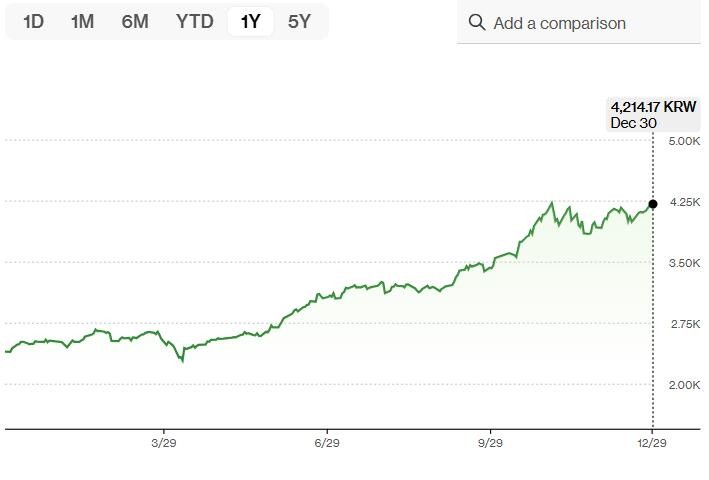
In 2025, major Asian stock markets delivered impressive results, with South Korea, Japan, and Indonesia's stock indices all recording double-digit gains. The South Korea Composite Stock Price Index surged nearly 76% for the year, marking the largest increase since 1999; the Japan Tokyo Stock Price Index closed at a record high for the year, surpassing the peak during the 1989 bubble economy; and the Indonesia Jakarta Composite Index rose about 22%, achieving its best performance since 2014.
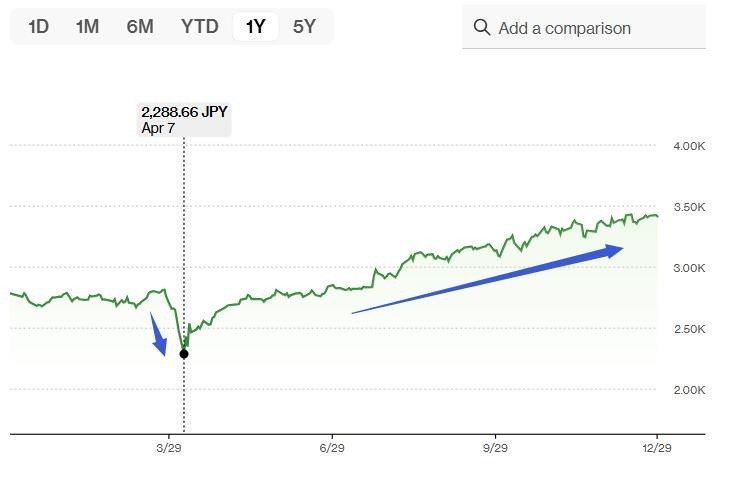
The rise in the South Korean stock market was the most prominent in Asia, far exceeding the approximately 17% increase of the S&P 500 Index and the approximately 25% increase of the MSCI Asia-Pacific Index this year. Chip giants like Samsung Electronics and SK Hynix led the gains, with strong performances also seen in the military and nuclear power sectors. The Japan Tokyo Stock Price Index ended the year at 3408.97 points, up 22% for the year, marking the third consecutive year of annual gains, indicating a continuously expanding buying base in the Japanese stock market.
The rise in the Indonesian stock market was primarily driven by local retail investors, offsetting the impact of a net outflow of $1 billion in foreign capital. Following a series of interest rate cuts that led to a decline in bond yields, Indonesian retail investors seeking higher returns entered the market in large numbers. Brokerages such as Citigroup, JP Morgan, and Nomura have pointed out that these markets still have room for further gains next year.
South Korea: AI Infrastructure and Chip Stocks Lead the Strongest Surge in 25 Years
The South Korea Composite Stock Price Index closed down 0.2% at 4214.17 points on Tuesday, but the cumulative increase for the year reached 75.6%, marking the strongest annual performance in 25 years since entering the 21st century. The rise in the South Korean stock market spanned multiple sectors, including semiconductors, military, nuclear power, and beauty products, particularly K-beauty.

AI-related infrastructure investment became a major driving force. Power transformer manufacturer Hyosung Heavy Industries and nuclear power supplier Doosan Enerbility both rose over 320% this year, as investors bet on a surge in power demand for data centers amid a lack of rapid carbon-free alternatives.
Morgan Stanley analysts indicated that investor interest in grid and infrastructure stocks may continue through 2026, driven by the modernization of the grid, AI data centers, and decarbonization efforts coming together.
In the storage chip sector, Samsung Electronics rose 125% to a historic high, while SK Hynix saw an increase of about 270%, with related companies SK Square and Korea Circuit also climbing over 330%, as the market anticipates a shortage of storage chips. Defense contractors Hanwha Aerospace and Hanwha Ocean saw increases close to or exceeding 200%, benefiting from increased defense spending following Trump's reshaping of traditional security alliances.
The K-beauty sector showed mixed performance. APR surged 362%, surpassing established competitors, Amorepacific rose 14%, while LG Household & Health Care continued its years-long decline. Game developers Krafton and Com2uS, as well as companies in the electric vehicle supply chain like Enchem and SK Innovation, faced pressure due to weak demand and intensified competition Analysts from brokerages such as Citigroup, JP Morgan, and Nomura Holdings expect that the South Korean stock market still has room for growth, predicting at least a 20% increase next year. They believe that strong earnings growth will support this upward trend.
Japan: Valuation Correction Drives TSE Index Beyond Bubble Era
The Tokyo Stock Exchange (TSE) index closed at 3,408.97 points on the last trading day of 2025, surpassing the 2,881.37 points recorded at the end of 1989, setting a new year-end historical high. The index rose 22% for the year, marking its third consecutive year of annual gains.
Hideyuki Ishiguro, Chief Strategist at Nomura Asset Management, stated that the new year-end high indicates that "the buying base for Japanese stocks is expanding." He noted that with changes in the economy, corporations, and politics, "the trend of valuation correction is strengthening," with the rally extending from AI-related stocks to financial stocks such as banks, as well as domestic demand stocks like construction and real estate.
Due to the announcement of reciprocal tariffs by the Trump administration in early April, the TSE index plummeted nearly 14% over five trading days ending April 7. Subsequently, concerns over the trade war eased, and the relatively low valuation of Japanese stocks compared to US and European markets led to a historical high in July. The index continued to reach new highs, benefiting from improved corporate earnings expectations, policies from the Kishida government, and ample global liquidity.

Buying interest has expanded to small-cap stocks, indicating an increase in market attractiveness. The small-cap and mid-cap sectors of the TSE index rose 27% and 26% this year, respectively, outperforming the 21% gain of large-cap stocks for the first time since 2022. The blue-chip Nikkei 225 index closed at 50,339.48 points, setting a new year-end historical high for the second consecutive year, with an annual increase of 26%, outperforming the TSE index for the third consecutive year.
Ishiguro expects the TSE index to outperform the Nikkei index in 2026, as the Japanese government "plans to revise corporate governance guidelines that will encourage companies to utilize cash, further improving price-to-book ratios, which will drive broad stock buying."
Indonesia: Retail Investors Create Best Performance in 11 Years
The Jakarta Composite Index in Indonesia has risen about 22% this year, marking its best performance since 2014, following the upward trend of most regional peers. The MSCI Asia-Pacific Index rose 26% during the same period. The index closed nearly flat on Tuesday, ending the last trading day of the year.
Media sources believe that the significant rise in the Indonesian stock market this year is mainly due to increased participation from domestic retail investors, who are seeking higher returns after a series of interest rate cuts led to declining bond yields. Retail investors typically buy speculative stocks, including those associated with the country's billionaires, ignoring foreign investors' concerns about sluggish economic growth and the risks of rising national expenditures.
In stark contrast to the active entry of retail investors, foreign capital has net flowed out of the Indonesian stock market by $1 billion this year, the highest since 2020. According to data from the Indonesia Stock Exchange, the number of domestic retail investors has increased nearly fivefold to over 20 million during the same period Ahmad Mikail Zaini, the chief economist of PT Sucor Sekuritas, stated that various factors, including the acceleration of loan growth and the rising participation of domestic institutional investors against the backdrop of low fixed income returns, will further support the Indonesian stock market. The brokerage expects the Jakarta Composite Index to reach 11,000 points next year, an increase of 27% from the current level