In 2025, the framework of the bond market failed

Wallstreetcn
2025.12.31 04:06
portai
I'm PortAI, I can summarize articles.

The bond market performed poorly in 2025, with the market not realizing that the level of difficulty exceeded that of 2017. Although this year's decline was not as severe as in 2017, the investment experience was worse, mainly due to changes in market demands for bond yields, a decrease in the number of credit bonds, and a shorter average duration. The market experienced factors such as a shortage of liabilities, seasonal failures, and trade disruptions, which affected the stability and expectations of the bond market

Summary

2025 has passed, but it seems that many in the market have not realized that this year is actually "more difficult" than 2017. From the perspective of the China Bond Total Price Index, although this year's decline is not as severe as the "bear market ceiling" of 2017 (-4.26%), several market performances may be "worse."

First, in 2017, the yield on certificates of deposit was relatively high, and many people began to "lie flat" with certificates of deposit at the beginning of the year, but by the end of 2024, the market's requirement for bond investments is "to earn returns from trading";

Second, the coupon rates in the bond market in 2017 were very high, with many credit bonds yielding over 7.5%;

Third, the average duration of bonds in the entire market and the duration of funds in 2017 were relatively short, with weighted durations of 3.4 years and 1.0 years, respectively.

These combined effects have made this year's investment experience and holding experience relatively poor. So what market pricing and expectations from 2025 have been "ignored" that can bring us some lessons?

1. Tech Bull Disperses Bond Bull (February): The first round of adjustment in the bond market this year should be the "liability shortage" from February to March. At that time, not many people realized that this was the prelude to this year's adjustment, but it was already taking shape. Additionally, the recent rise in equities and high growth in non-bank deposits can be seen as a continuation of the "924 stock-bond seesaw" for 2024 and the upcoming stock-bond seesaw market in July 2025. Meanwhile, various insurance and annuity views on their relatively low positions in tech stocks began to change during this phase, which also affected subsequent stock-bond balancing strategies.

2. Liability Shortage and Seasonal Failure (March): The "seasonal failure" began in March this year. In fact, over the past decade, the bond market rarely experienced a downturn in March, but due to major banks selling OCI and the "liability shortage," a downturn occurred. This seasonal failure also appeared in November and December; one or two instances of seasonal failure are coincidental, but with multiple occurrences, by the end of the year, we believe it is actually due to the seasonal maturity of various bank deposits, compounded by the reversal caused by institutions rushing to increase their financial products.

3. Trade Disruption Interlude (April): This round of trade disruption has had a significant impact on the bond market, akin to a large-scale "carving a boat to seek a sword." If we review the bond market's rise in April, the starting point may not be the trade disruption, but rather after the major banks sold OCI bonds and settled profits in late March, leading to an oversold recovery in bonds. In terms of comparative starting points, this year is significantly different from 2018; looking back, the most important lesson from 2018 may be that any asset pricing and models that overly rely on export forecasts have poor robustness and are very easily "ignored."

4. The Starting Point of Story Reconstruction (June): In fact, some signs of bond market adjustments can already be found in the equity market. In this environment, we argued in our mid-term strategy report "Story Big Switch" that it is not based on mainstream methodologies, but rather that we believe GDP and high-frequency performance in the second half of the year will exceed market expectations and lead to interest rate adjustments, facing the same data How the market changes its subjective value judgment (narrative switch). The previous decline in interest rates has overdrawn too many not-so-reliable stories, and in the following six months, "narrative" gradually became a high-frequency term in the capital market.

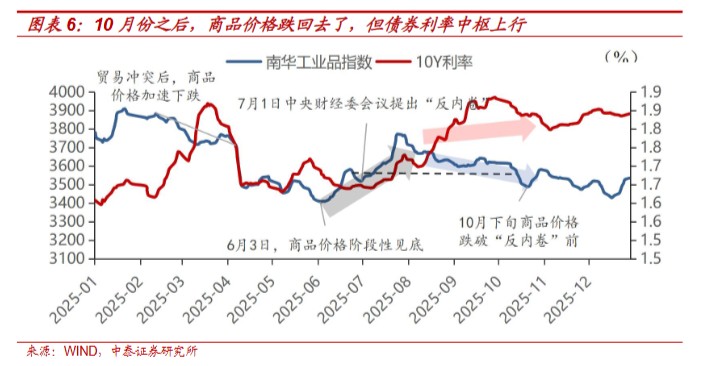
5. Anti-involution: Hosting Guests in Tall Buildings (July): The starting point of the "anti-involution" market was when the prices of various commodities fell to a low point, followed by a policy-catalyzed price "reflexivity." After July, commodity prices continued to rise, and inflation expectations improved rapidly, leading the market to have high expectations and confidence for the upcoming positive year-on-year PPI, which was also an emotional factor triggering adjustments in the bond market. However, the subsequent "anti-involution" varieties of commodities gradually "narrowed," with only the real supply and demand of the new energy-related sectors able to support the price "anti-involution." By the fourth quarter, the real estate chain remained the same, and the prices of commodities such as glass, soda ash, and black chain gradually returned to or even fell below the levels before "anti-involution," but bond yields did not.

6. Which is the primary principle: trading or fundamentals? (September): As September arrived, many in the market began to notice that housing prices continued to decline, and the supply and demand improvement expectations brought by anti-involution had not materialized. Two types of investment logic entered a "voting competition": on one hand, from a micro trading structure perspective, for example, funds holding a lot of long-term bonds, bond funds were still under the dual impact of "net value decline + new redemption regulations." On the other hand, by the end of September, various "news" began to have a "real impact" on the market, although some news later proved to be unfounded, it still influenced some decisions of market investors at that time. In fact, bonds originally had trading first, followed by various "post-event analysis" research frameworks, and overly emphasizing the framework while ignoring the primacy of trading itself indeed felt a bit "backward."

7. Bond market has some recovery, but buying bonds has little impact (October): In October, driven by market expectations of easing and the second outbreak of trade disturbances, the market showed some positive performance. Ultimately, after the resumption of bond buying in October, a small recovery was formed, but several events occurred this month, indicating that the bond market had not formed a longer valuation repair. This month saw trading institutions becoming optimistic and slightly extending duration from mid-month, but on the other hand, the liability behavior of banks and other entities continued to show a phenomenon of "repair leading to redemption." In comparison, bonds with maturities of less than ten years performed steadily, and credit performance was even more stable. The total amount of funds investing in bonds in the market remained stable, with banks' bond investments returning from off-balance sheet to on-balance sheet, and the total amount of bonds in the market was also stable, with total duration fixed. When trading institutions reduced duration, allocation institutions increased duration. This ultimately led to a major discussion on "bond market supply and demand" caused by banks exceeding EVE standards from November to December.

8. Bond market supply and demand issues begin to be framed (November): As the bond market continued to decline after the recovery in October, Q3 economic data and monthly high-frequency indicators, such as Beijing housing prices, continued to weaken, making it impossible for the fundamentals to explain interest rates. The explanatory power of the stock-bond seesaw also significantly decreased, and the hedging effect between stocks and bonds happened to "fail." The bond market neither has the anchor of equity nor the "fundamental anchor." At this point, the market truly begins to shift from studying institutional behavior to delving into "liability behavior," systematically reviewing changes in the insurance premium structure (the proportion of participating insurance has increased). The restrictions on bank Economic Value of Equity (EVE) have affected bond reinvestment, while the relative rigidity of the issuance costs and maturities of interest rate bonds has led the bond market to recognize that the supply and demand for bonds, especially long-term interest rate bonds, is a medium to long-term "debt repayment" issue.

9. New Year’s Opening Red, Institutional Linear Allocation, Trading Institutions Retreat (December): After a significant drop due to concentrated trading of ultra-long bonds at the beginning of the month, the bond market maintained a range-bound fluctuation. The dominant factors for the strength of short bonds are mainly: 1) Central bank's increased liquidity support; 2) Accelerated fiscal spending at year-end; 3) Large banks' net lending exceeding seasonal norms. 4) Additionally, there are many expectations regarding bond purchases and reserve requirement ratio cuts. However, regardless of whether the bond purchase volume and reserve requirement cuts materialize, the direction of liquidity easing is relatively strong at the end of the year and the beginning of the next year, making the leverage interest rate spread strategy consistently effective. However, there is considerable divergence in views on long bonds by year-end. From a long-term perspective, the mainstream view in the market is indeed that the supply and demand issue for ultra-long bonds + the risk of widening interest rate spreads exists, but in the short term, some believe that the adjustment has already been relatively in place, allowing for a converging game.

Of course, some opinions suggest that the supply in the first quarter will not be much, which may alleviate the supply and demand pressure for ultra-long bonds, but the reduced supply since December this year has not hindered the rapid rise of interest rate spreads, with the focus still on expectations. Interest rate spreads below 40 basis points do not provide much room for speculation, and the cross-year market for ultra-long bonds is still not worth looking forward to.

The theory of the bond market's "traditional framework" failing: Leveraging thought is "knowledge liability." There have been some remarks in the market suggesting that the bond market does not follow the "traditional framework."

As mentioned earlier, the fundamental research framework is constructed retrospectively, while bond trading is primary. Most "traditional frameworks" have a history of only three to five years, which cannot be called traditional, let alone a framework: 1) For example, determining interest rates based on housing prices, using low-frequency data to guide high-frequency trading; 2) For example, using PPI and housing prices to describe whether there is deflation; 3) The "Waterloo" of the bond market quantitative model in 2025.

In the past, when the world underwent rapid changes, sometimes lower-dimensional "methodologies" were of little use. The excessively abstract bond market methodologies (monetary - credit analysis, de-globalization, Japanization, balance sheet recession, producer - consumer country binary analysis, etc.) essentially leverage thought; if the direction is correct, it may lead people to all-in on a track, but conversely, framework assets can turn into framework liabilities, leading to "cognitive overload." Since the popularity of "Sapiens: A Brief History of Humankind," "Narrative Economics," and others in the investment community, most people have become aware of the "artificial fictitiousness" of various concepts. However, not every fiction can be effective; the logic of fiction is only valid when it can genuinely solve problems; otherwise, it will be eliminated by the real world.

**The lesson left for the bond market by 2025 is: Do not confine yourself within established frameworks; research methods should shift from "asset pricing research" to "liability behavior research." In 2026, we look forward to seeing which frameworks will be invented and which will be eliminated **

Main Text

The year 2025 has passed, but it seems that many in the market have not realized that this year is actually "more difficult" than 2017. From the perspective of the China Bond Total Price Index, although this year's decline is not as severe as the "bear market ceiling" of 2017 (-4.26%), several market performances may be "worse."

First, in 2017, the yield on certificates of deposit was relatively high, and many people began to "lie flat" with certificates of deposit at the beginning of the year, but by the end of 2024, the market's requirement for bond investments was "to earn returns from trading"; second, the bond market in 2017 had very high coupons, with many credit "rich mines" and numerous credit bonds yielding over 7.5%; third, the average duration of bonds in the entire market and the duration of funds in 2017 were relatively short, with weighted durations of 3.4 years and 1.0 years, respectively. These combined effects have made this year's investment experience and holding experience quite poor.

So, what market pricing and expectations from that time in 2025 have been "ignored," and what experiences can they bring us?

Tech Bull Disperses Bond Bull (February)

The first round of adjustments in the bond market this year should be the "liability drought" from February to March. At that time, not many people realized that this was the prelude to this year's adjustments, but it had already begun to take shape.

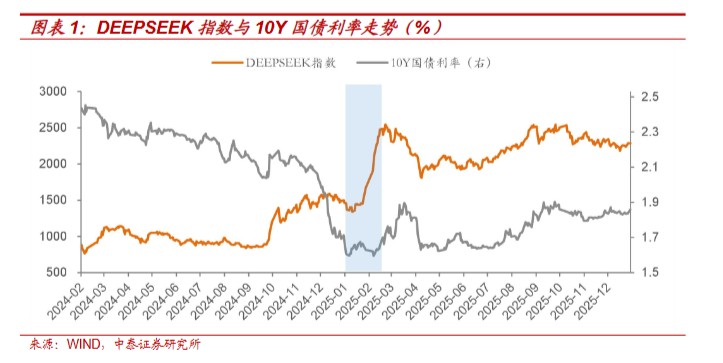
On the surface, the adjustment in the bond market in February was triggered by high liability costs. Most people believed it was a "withdrawal" reaction after the bond market surged in December and January. However, the tech market represented by Deepseek began to rise (with an increase of nearly 50% from January 27 to February 17), and the diversion of fixed income funds to equity funds was already underway.

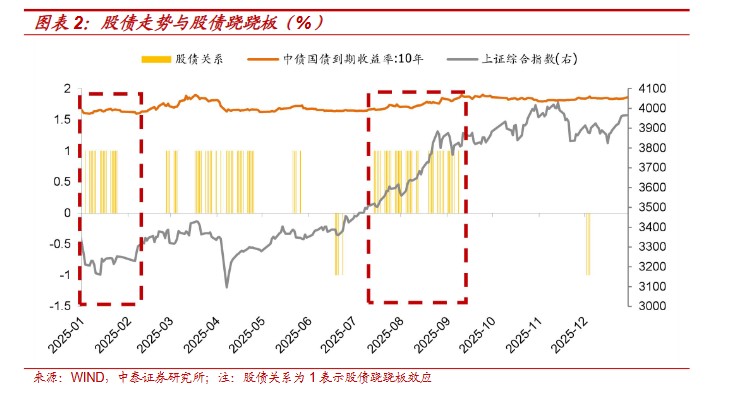
Additionally, this round of equity increases and the high growth of non-bank deposits can be seen as a "continuation" of the "924 stock-bond seesaw" in 2024 and the upcoming stock-bond seesaw market in July 2025. At this time, many people still held the idea of a "dual bull market in stocks and bonds"—the most pleasing viewpoint, but it later proved to be an illusion.

There was also the "thought stamp" of veteran tech investors—long-term investment returns in tech stocks are 0, and investments in tech stocks without performance support require loose liquidity conditions, etc. However, in reality, the dual bull market in stocks and bonds had already appeared and ended by the end of 2024.

At that time, the market seemed unaware of the rapid industrial trend changes in the AI sector and the potential performance prosperity of tech companies that might be reflected in the semi-annual reports. This later manifested as the second round of the stock-bond seesaw brought about by the resonance of anti-involution and tech trends in July.

In summary, most discussions about the "dual bull market in stocks and bonds" are likely from fixed income practitioners, while equity investors seem unconcerned about how bonds perform. This implies a dangerous notion: if we only use liquidity as a "hammer" to explain asset prices, then all problems will become "nails," leading to all equity bull markets being viewed as "water bulls," thus neglecting the truly important performance bulls and industry trends.

At the same time, various insurance and annuity perspectives on their relatively low positions in technology stocks have begun to change during this phase, which also affects subsequent strategies for balancing stocks and bonds.

Liability Shortage and Seasonal Failure (March)

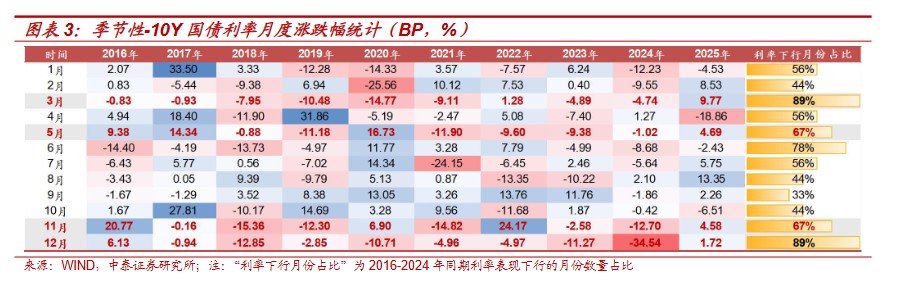
"Seasonal failure" began in March of this year. In fact, over the past 10 years, the bond market has rarely experienced a downturn in March, but this March saw a decline due to major banks selling OCI and factors like "liability shortage," leading to a round of downturn:

This seasonal failure also appeared in November, December, etc. A couple of instances of seasonal failure are coincidental, but when multiple instances occur, by the end of the year, we believe it is actually due to the seasonal maturity of various bank deposits, compounded by the reversal of institutional inflows from wealth management products.

Whenever a large number of high-priced fixed deposits mature at the end of the quarter, coupled with good equity performance and increased risk for residents, the outflow of deposit liabilities exacerbates this seasonal "reversal" in December.

Trade Disruption Interlude (April)

This round of trade disruption has had a significant impact on the bond market, akin to a large-scale "carving a boat to seek a sword." If we review the bond market's rise in April, the starting point may not be the trade disruption, but rather after the major banks settled profits from selling OCI bonds in late March, leading to a rebound in bonds that coincided with the U.S.-China trade disruption at the beginning of April, resulting in three days of gains.

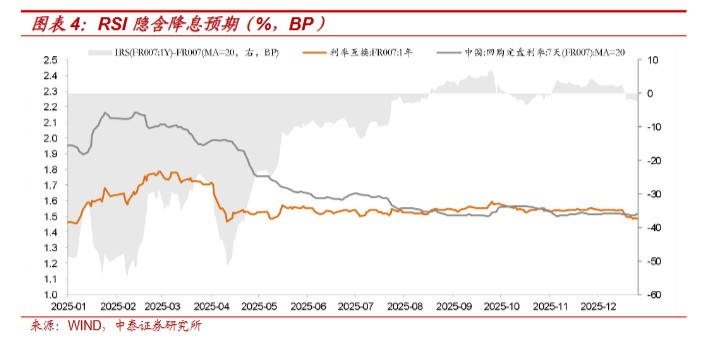
From the perspective of IRS pricing, the market priced in nearly 50 basis points of rate cut space at that time, mixed with the indirect conclusion of "de-globalization," where producing countries face deflation and consuming countries experience inflation, along with the conclusion of Japanification and years of low inflation in balance sheets.

Some people reviewed the U.S.-China trade disruption of 2018 and concluded that this year is a replay of 2018. In reality, there are significant differences between this year and 2018 at the starting point of the analogy:

  1. The 2018 trade disruption was between the U.S. and China, while in 2025, the U.S. is imposing taxes globally;

  2. Before the 2018 trade disruption, the bond market experienced a "rate hike bear market" in 2017, with higher levels, whereas the current starting point has seen a low interest rate after years of a bond bull market; however, does reviewing the 2018 trade disruption have no value? Useful insights from reflecting on the most important experiences of 2018 might be: any asset pricing and models that overly rely on export forecasts have poor robustness and are very easily "overlooked."

Throughout 2018, there were concerns about exports declining in the following month, but in reality, exports did not significantly decline and continued to surge. The actual significant decline in export growth did not occur until 2019, when trade disturbances had subsided.

Therefore, when the market based the conclusion that "interest rates can continue to decline significantly" on the high probability of exports negatively impacting GDP in the second half of the year, this misalignment dominated the reversal of interest rates. After the second round of trade disturbances in October, its impact on the China-U.S. market had become "optional."

Looking from the end of 2025, exports became a significantly positive contributor to GDP for the entire year. By November, the export surplus reached $1 trillion, which led to another interesting prediction: whether in technology-style equity investments or total GDP calculations, there are high expectations for exports next year. Let's return to April: if any asset pricing that overly relies on export forecasts may not be robust, what does this mean for next year?

The Starting Point of Story Reconstruction (June)

In June, some signs of adjustment in the bond market could already be observed in the equity market:

  1. After the spring excitement, the recovery in the real estate sector was falsified in the second quarter;

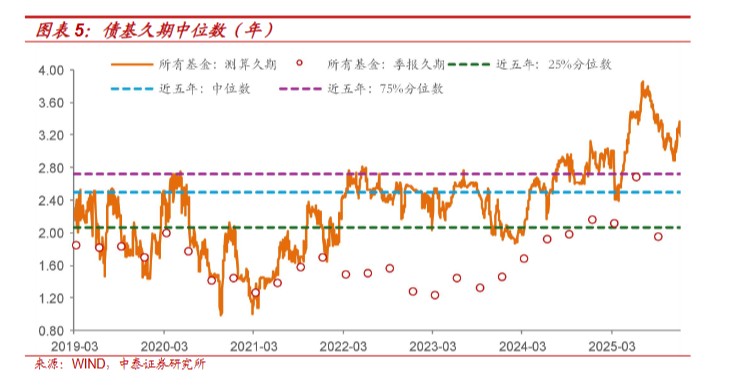
  2. From the perspective of institutional behavior, by the end of June, the median duration of bond funds had risen to a yearly high (3.42 years, 74th percentile for the year), but interest rates had not returned to previous lows;

  3. Investors in the bond market viewed the equity market as "water buffalo," seemingly unaware of the underlying industrial trends and their transmission to performance.

In this environment, we argued in our mid-term strategy report "Story Big Switch" that it was not based on mainstream methodologies, but rather how the market changes its subjective value judgment (narrative switch) in response to the same data, which would lead to GDP and high-frequency performance exceeding market expectations and resulting in interest rate adjustments.

The past decline in interest rates had overdrawn too many not-so-reliable stories, such as the "Japanification" narrative, which was somewhat broken in the tech wave of February. Additionally, in July, the market discovered a third path out of low inflation beyond monetary and fiscal measures; the narrative of de-globalization was once broken by the consecutive recoveries of U.S. and A-shares, and the shadow of trade disturbances began to recede.

In the following six months, "narrative" gradually became a high-frequency term in the capital market.

Anti-Involution: Hosting Guests in Tall Buildings (July)

The starting point of the "anti-involution" market was after various commodity prices fell to low points, leading to a policy-catalyzed price "reflexivity." After July, commodity prices continued to rise, and inflation expectations improved rapidly, to the extent that the market began to have high expectations and confidence for the upcoming positive year-on-year PPI, which was also an emotional factor triggering adjustments in the bond market However, the subsequent "anti-involution" varieties of goods gradually "shrink," with only the physical supply and demand of the new energy-related sectors still able to support the price "anti-involution." By the fourth quarter, the real estate chain remained the same, and the prices of commodities such as glass, soda ash, and black chain gradually returned to or even fell below the levels before the "anti-involution."

It can be said that the stimulation of "anti-involution" on inflation expectations is actually a "interlude" or "smoke and mirrors" of the large diversion of funds between stocks and bonds; commodity prices have fallen back, but bond yields have not.

Which is the primary principle: trading or fundamentals? (September)

As September arrived, many in the market began to notice that housing prices continued to decline, and the supply and demand improvement expectations brought about by the anti-involution had not materialized (by mid-December, some commodity prices returned to levels before the anti-involution).

Two types of investment logic entered a "voting contest" in the market. On one hand, starting from the micro trading structure, for example, funds holding a lot of long-term bonds, bond funds are still under the dual impact of "net value decline + new redemption regulations." On the other hand, by the end of September, various "news" began to have a "real impact" on the market, although some news later proved to be unfounded, it still influenced some decisions of market investors at the time.

Some also believe that a better investment approach this year is based on trading rather than solid fundamental analysis. This aligns with some past popular (but quickly fading) notions, such as that studying credit is more suitable for investment (when high-yield bonds were prevalent), or that solid fundamental research is more suitable for investment (in a bull market trend based on fundamental logic). Now it may be found that purely trading might actually be more suitable for investment (without any deeply rooted framework, starting from perspectives like absolute returns in banking).

Therefore, in reality, bonds originally had trading first, followed by various "after-the-fact" research frameworks, and overly emphasizing frameworks while neglecting the primacy of trading itself does seem a bit "backward." However, this is similar to what the market believes at the end of 2024, which is to "gain profits from trading," as the entire market does not view the bond "lying flat strategy" favorably.

Ultimately, the experiences of 2025 tell the market that "lying flat" might be the best strategy, but the reason "lying flat" becomes the best strategy is that everyone institutionally "cannot lie flat," making the "lying flat strategy" easy to understand but difficult to implement.

Bond market has some recovery, buying bonds has little impact (October)

In October, driven by the market's expectations of easing and the second outbreak of trade disturbances, the market showed some positive performance After restarting bond purchases in October, a small recovery was formed. However, several events this month indicate that the bond market has not established a longer-term valuation repair:

  1. Google launched the new version of its large model, Gemini, and catalysts like TPU, reigniting industry trends in the technology sector despite expensive valuations;

  2. There is virtually no overseas concern regarding grand narratives such as trade friction, beggar-thy-neighbor policies, and the end of American exceptionalism, which has laid the groundwork for the conclusion of trade disruption transactions;

  3. The announcement of restarting bond purchases at the Financial Street Forum on October 27 led to a 0.32% increase in 30-year Treasury futures throughout the day, with a gap up the next day.

However, after the official announcement of a bond purchase amount of 20 billion on November 4, this round of easing transactions essentially came to an end. It can be said that in a downward trending market, even with accurate event-driven factors, it is difficult to go against the trend for too long.

This month, there was a shift towards optimism and a slight increase in duration from trading institutions starting mid-month. On the other hand, however, the liability behavior of banks and other entities continued to show a phenomenon of "repair leading to redemption," making each rebound insufficiently sustained. Once TL rebounded to the weekly resistance level, it would surge and then retreat.

In comparison, bonds with maturities of 10 years or less performed steadily, and credit performance was even more stable. On one hand, the funds for investing in bonds across the market are stable, while bonds with maturities of over 20 years face widening spreads due to the withdrawal of trading institutions, with corresponding funds returning to the short end. From the performance of 10-year Treasuries and T, the fourth quarter performance is hard to describe as a bear market; additionally, from the perspective of short credit, the spreads also remain at low percentiles.

The total amount of funds invested in bonds in the market is stable, with banks shifting their bond investments from off-balance sheet to on-balance sheet. The total amount of bonds in the market is also stable, with the overall duration fixed. As trading institutions reduce duration, allocation institutions increase duration. This ultimately triggered a major discussion on "bond market supply and demand" due to banks exceeding EVE standards from November to December.

Bond Market Supply and Demand Issues Begin to Take Shape (November)

As the bond market continued to decline after the recovery in October, Q3 economic data and monthly high-frequency indicators, along with Beijing housing prices, weakened, making it impossible for the fundamentals to explain interest rates.

Additionally, after October, the equity market experienced high-level fluctuations, with some trading days showing weakness in stocks, bonds, and commodities. The explanatory power of the stock-bond seesaw also significantly decreased, especially since various wealth management products issued fixed income + products since October, causing the hedging effect between stocks and bonds to "malfunction."

The bond market lacks the anchor of equities and has lost the "fundamental anchor." At this point, the market truly began to shift from studying institutional behavior to delving into "liability behavior," systematically reviewing changes in the insurance premium structure (increased proportion of participating insurance), while the restrictions on bank EVE affected bond reinvestment. The relative rigidity of the issuance costs and terms of interest rate bonds began to make the bond market recognize that the supply and demand of bonds, especially long-term interest rate bonds, is a medium to long-term "debt repayment" issue From the perspective of the "debt repayment theory," the current interest rate level seems to have returned to September of last year, but there is still a considerable amount of time left in terms of the duration of the bond stock.

New Year’s Opening Red, Linear Allocation by Institutional Investors, Trading Institutions Retreat (December)

After a significant decline due to concentrated trading of ultra-long bond supply at the beginning of December, the bond market maintained a range-bound fluctuation. Short-term interest rates continued to decline, and there was a slight recovery in the long end during this period. Since December, short bonds with a maturity of about three years have hardly dropped, and at the end of the year and the beginning of the first quarter, funds are generally relatively abundant. Coupled with strong expectations for bond purchases at the end of the month and a reserve requirement ratio cut at the beginning of next year, institutional enthusiasm for going long is relatively high.

The main factors for the dominance of strong short bonds due to loose funds are: 1) The central bank's increased liquidity support; 2) Accelerated fiscal spending at year-end; 3) Large banks' net financing outflow exceeding seasonal norms. 4) Additionally, there are many expectations regarding bond purchases and reserve requirement ratio cuts, which open up the market's imagination for further easing. However, we still believe that the necessity for large-scale bond purchases in December is not high.

Regardless of whether the bond purchase volume and reserve requirement ratio cuts materialize, the direction of monetary easing is relatively certain at the end of the year and the beginning of the new year, and the leverage interest rate spread strategy remains effective. However, there is considerable divergence in opinions on long bonds at year-end. From a long-term perspective, the mainstream view in the market is that there are issues with the supply and demand of ultra-long bonds + risks of widening interest spreads, but in the short term, some opinions suggest that the adjustment has already been relatively in place, allowing for a converging game.

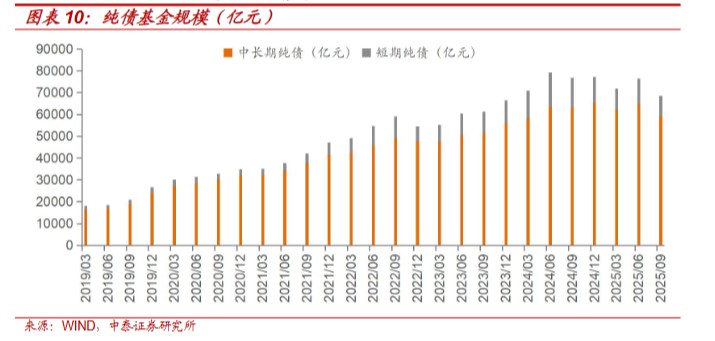
From the perspective of public funds, the scale of pure public debt at the end of 2022 was 5.5 trillion yuan, and as of the third quarter of this year, it was still 6.9 trillion yuan, likely to be just over 6 trillion yuan by year-end. This means that the scale and interest spreads have basically returned to 2023, and we believe that the speed may have overdrawn the rhythm for the entire year of next year too quickly. But has it ended? Most likely not.

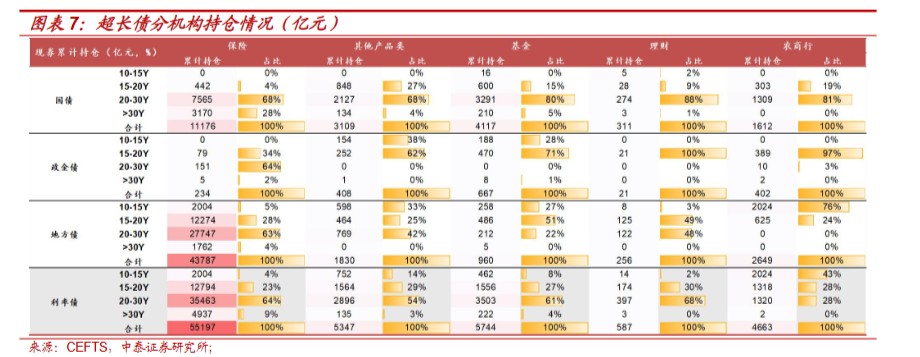
So during this period, although there has been a significant net purchase of bond funds, the recovery trend since last week is a relatively rare recovery led by funds in the second half of the year. However, bond funds have participated less in ultra-long bonds, mainly dominated by insurance, possibly influenced by the expected allocation demand for the New Year’s opening red.

Of course, some opinions believe that the supply in the first quarter will not be much, which may alleviate the supply and demand pressure on ultra-long bonds. However, the supply since December of this year has been even less, yet it has not affected the rapid rise in interest spreads, with the focus still on expectations. Interest spreads below 40 basis points do not provide strong gaming space, and the cross-year trend for ultra-long bonds is still not worth expecting

Bond Market "Traditional Framework" Failure Theory: Leveraging Thinking Equals "Knowledge Debt"

There have been some remarks in the market suggesting that the bond market does not follow the "traditional framework."

As mentioned earlier, the fundamental research framework is constructed retrospectively, while bond trading is primary. Moreover, most so-called "traditional frameworks" have only been established in the past three to five years, making it difficult to call them traditional or even frameworks:

  1. For example, determining interest rates based on housing prices and using low-frequency data to guide high-frequency trading formed a market consensus only in the years following the "three red lines." In the market of 2015, there was a continuous rise in housing prices and a continuous decline in interest rates, so there was no such "traditional" framework;

  2. For instance, using PPI and housing prices to describe whether there is deflation only formed market consensus after 2017 and 2022. Before 2017, the bond market was still focused on CPI being greater than PPI.

  3. The "Waterloo" of bond market quantitative models in 2025, where various quantitative models have overfitted the data set from the past few years of the bond market bull market, essentially represents a quantitative "carving" of the "bull market pullback long" thinking. However, the direction is wrong, and the more leveraged the thinking, the easier it is to experience "cognitive overload."

In the past, when the world was changing rapidly, sometimes lower-dimensional "methodologies" were of little use. The excessively abstract bond market methodologies (monetary - credit analysis, de-globalization, Japanization, balance sheet recession, producer-consumer binary analysis, etc.) essentially leverage thinking. If the direction is correct, it may lead one to all-in on a particular track; conversely, framework assets can turn into framework liabilities, leading to "cognitive overload."

Since the popularity of "Sapiens: A Brief History of Humankind," "Narrative Economics," and other works in the investment community, most people have become aware of the "artificial fictitiousness" of various concepts. However, not every fiction can be effective; the logic of fiction is only valid when it can genuinely solve problems; otherwise, it will be eliminated by the real world.

The lesson left for the bond market in 2025 is: do not confine yourself within established frameworks; research methods should shift from "asset pricing research" to "liability behavior research."

In 2026, we look forward to seeing which frameworks will be invented and which will be eliminated.

Risk Warning and Disclaimer

The market has risks, and investment requires caution. This article does not constitute personal investment advice and does not take into account the specific investment goals, financial situation, or needs of individual users. Users should consider whether any opinions, views, or conclusions in this article align with their specific circumstances. Investment based on this is at their own risk