


2025 Foreign Exchange Review: Weak Dollar, Reversing Yen, Strong Euro

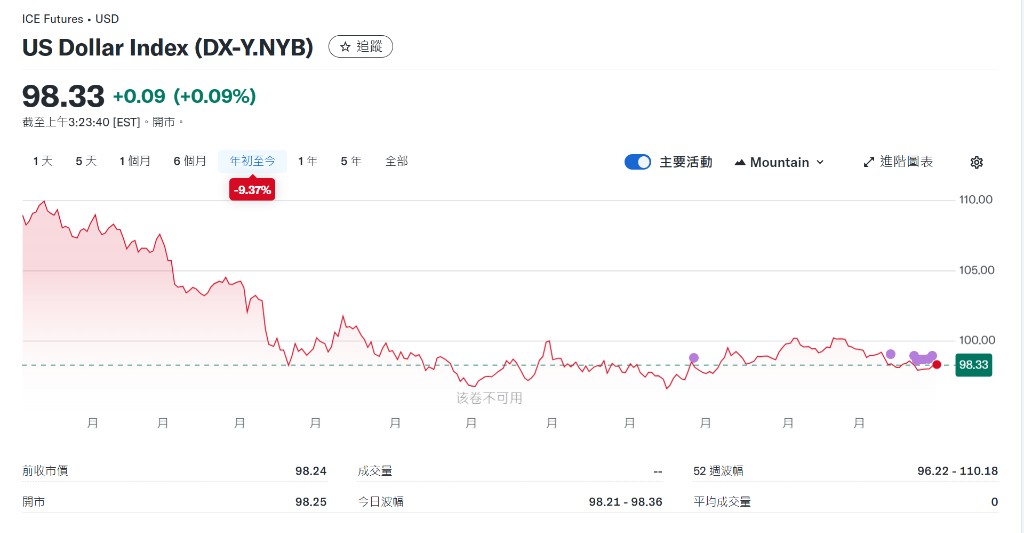
The US dollar ended 2025 with a sharp decline of 9.5%, marking its worst performance in eight years; the euro and pound strengthened. The Japanese yen became an exception due to a slow tightening pace, with bullish positions completely reversing by the end of the year, leading to a pullback in gains and a flat performance for the year. Looking ahead to 2026, as the independence of the Federal Reserve comes into question and global economic growth continues, the weakness of the US dollar may persist, with non-US currencies and commodity currencies expected to continue rising
The foreign exchange market closed in 2025 with a significant weakness of the US dollar, which is experiencing its largest annual decline since 2017.
Latest market dynamics show that the US dollar index plummeted 9.5% throughout the year, marking its worst performance in eight years. On the last trading day of 2025, the dollar index hovered around 98.228, but the overall downward trend is difficult to reverse. Against the backdrop of a weakening dollar, non-US currencies rebounded across the board, with the euro and pound leading with annual gains of 13.5% and 7.6%, respectively, both achieving their best annual performance in eight years.
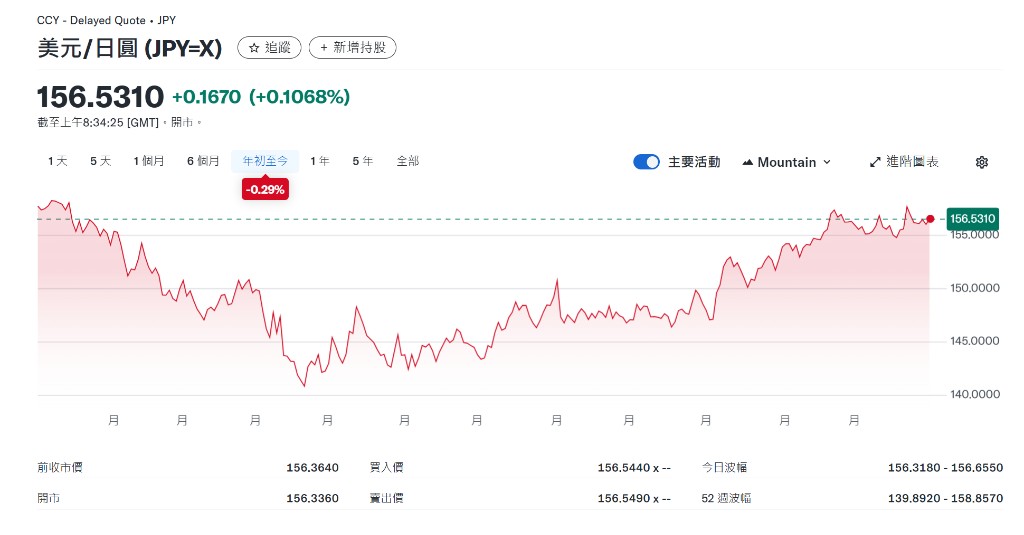
The Japanese yen was the only exception. Despite the Bank of Japan raising interest rates twice during the year, the slow pace disappointed investors. The large number of long yen positions established in April had completely reversed by the end of the year, causing the yen to give back its previous potential gains and not benefit from the dollar's decline.
Concerns about the independence of the Federal Reserve further exacerbated the pressure on the dollar. With Trump announcing plans to unveil a nominee for the new Federal Reserve chair in January next year to replace Jerome Powell, whose term ends in May, policy uncertainty has significantly increased. According to data from the Commodity Futures Trading Commission (CFTC), the market has maintained a net short position on the dollar since April this year, indicating persistent pessimism among investors regarding the dollar's outlook.
Looking ahead to 2026, analysts generally believe that the dollar's weakness may continue. Goldman Sachs strategists pointed out that against the backdrop of robust global economic growth, the Federal Reserve cutting rates while other central banks remain on hold, the dollar is likely to continue to weaken. This not only supports the strength of the euro and pound but also provides breathing room for emerging market currencies.
Cloudy Outlook for the Dollar
The dollar's decline in 2025 is primarily due to the dual pressures of macro policy and the political environment. In addition to the onset of the rate-cutting cycle, concerns about the widening US fiscal deficit and Trump's tariff policies linger. Prashant Newnaha, senior Asia-Pacific rates strategist at TD Securities, stated that the logic of being bearish on the dollar remains valid in 2026, and shorting the dollar against the euro and Australian dollar is expected to continue performing well.
Although the minutes from the Federal Reserve's December meeting showed internal disagreements among decision-makers regarding rate cuts, providing temporary support for the dollar, it did not change long-term expectations. Current trader pricing indicates that the market expects the Federal Reserve to cut rates twice in 2026, higher than the central bank's own forecast of once. Goldman Sachs added in its report that if signs of a recession in the labor market emerge or if the rate cuts deepen, the dollar's decline could further widen.
Yen: Reversal Expectations After Missing Opportunities
The yen is one of the few currencies in 2025 that failed to capitalize on the dollar's weakness to achieve gains. Despite the Bank of Japan raising interest rates twice in January and early December, investors were disappointed by the slow and cautious pace of monetary tightening. The large number of long yen positions in the market in April had completely reversed by the end of the year, leading to the yen giving back its gains, with the overall performance remaining flat for the year. **
On Wednesday, the exchange rate of the Japanese yen against the US dollar stabilized around 156.35, a level that still raises concerns about intervention and verbal warnings from Tokyo officials. Strategists at MUFG believe that as 2026 approaches, conditions for a pullback in the dollar against the yen may mature. With US yields declining, the yen's safe-haven status is expected to recover. The institution predicts that if market momentum shifts, the yen is expected to rebound to 146 per US dollar in the fourth quarter of 2026.
Strong Rise of Euro and Commodity Currencies
Winners in the foreign exchange market in 2025 are mainly concentrated in euro-denominated currencies and commodity currencies. The euro against the US dollar maintained around 1.1747 at the end of the year, while the British pound against the US dollar was at 1.3463. The strong gains of both are primarily due to the broad weakness of the dollar. Meanwhile, commodity currencies also performed well. The risk-sensitive Australian dollar is expected to soar over 8% for the year, marking its best annual performance since 2020; the New Zealand dollar, although with smaller gains, also recorded a 3.4% annual increase, ending four consecutive years of decline.
Domestically, the onshore renminbi against the US dollar broke the 7.0 mark yesterday, reaching a high of 6.9960, the highest level since May 17, 2023. Previously, the offshore renminbi had already surpassed this closely watched psychological barrier on December 25. Market participants expect that supported by capital inflows and economic recovery expectations, the renminbi still has room for appreciation.
As 2026 approaches, the market generally expects this currency rotation pattern dominated by dollar weakness to continue
