Top 10 strongest U.S. stocks in 2025, with 3 in storage

Wallstreetcn
2026.01.01 09:43
portai
I'm PortAI, I can summarize articles.

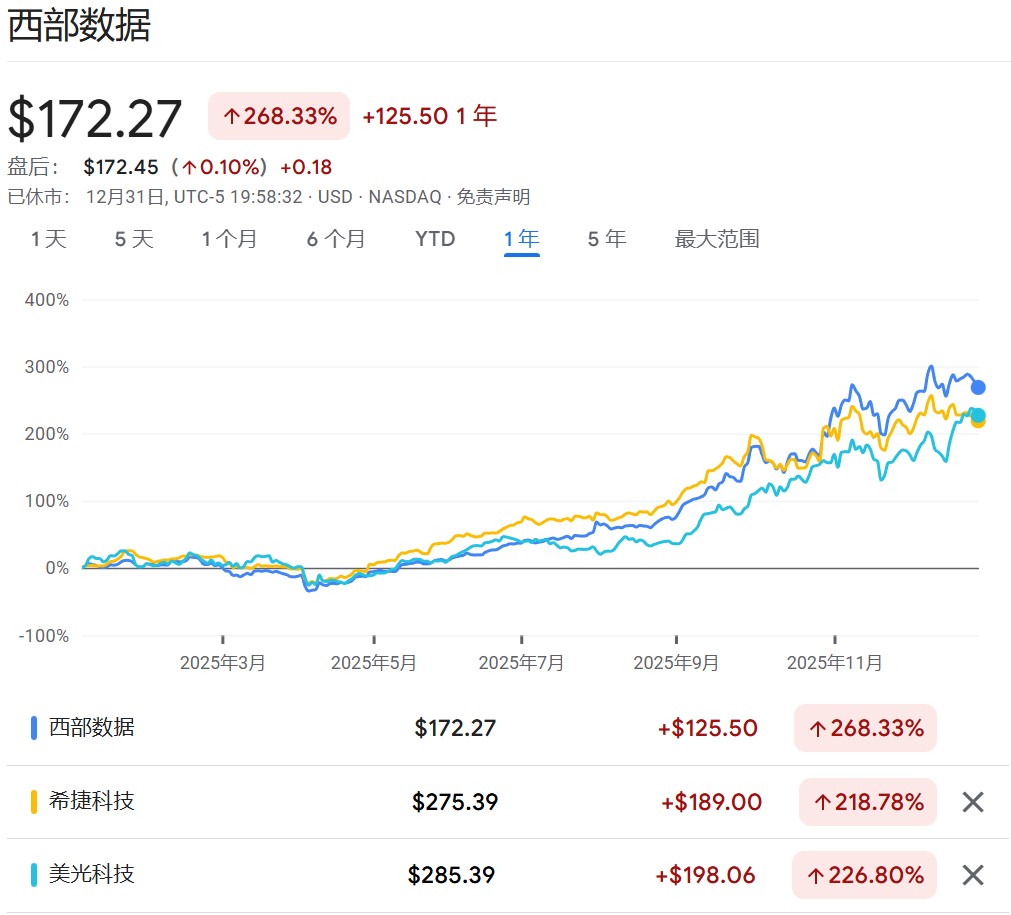
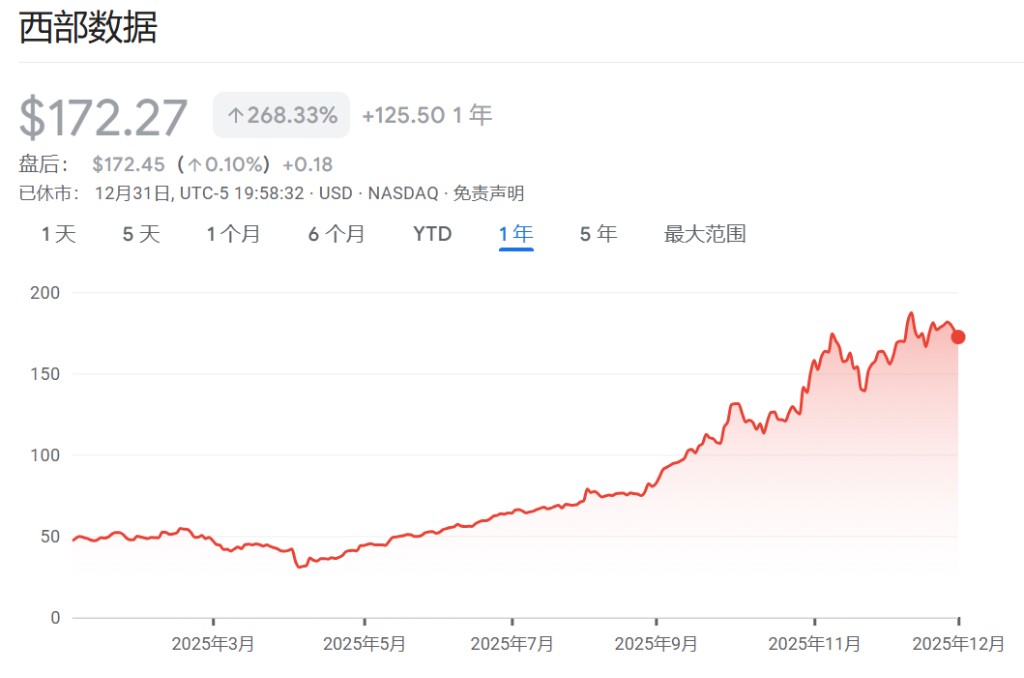
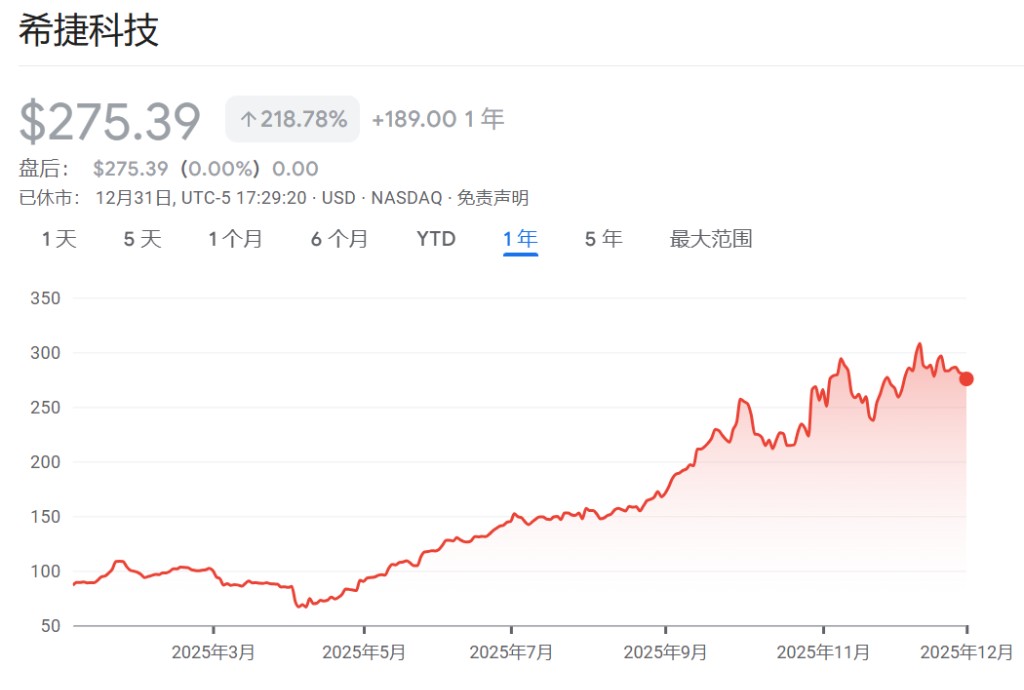
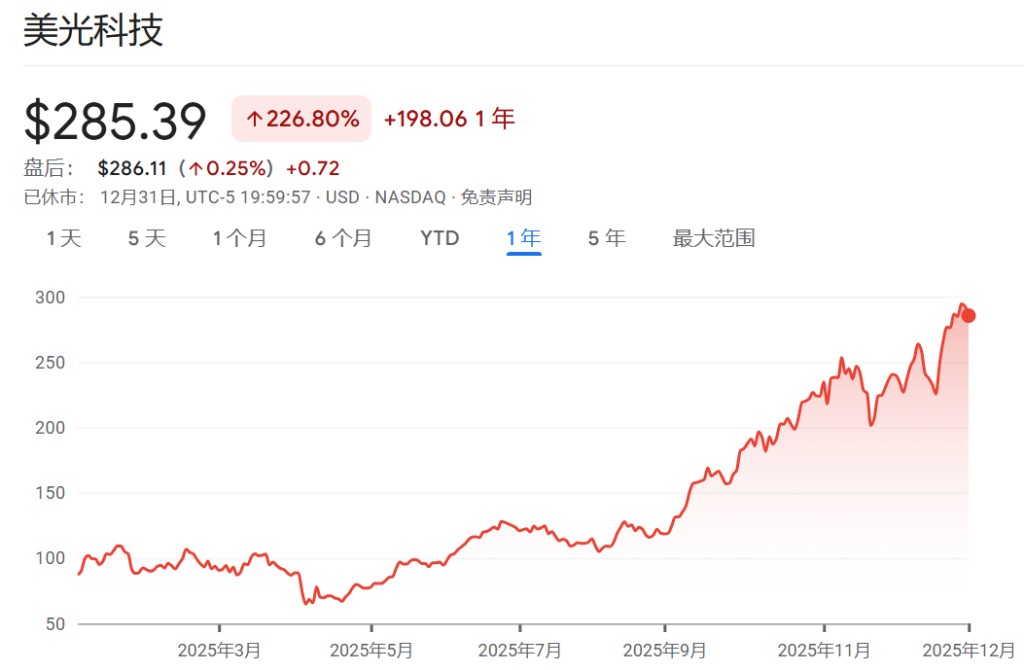
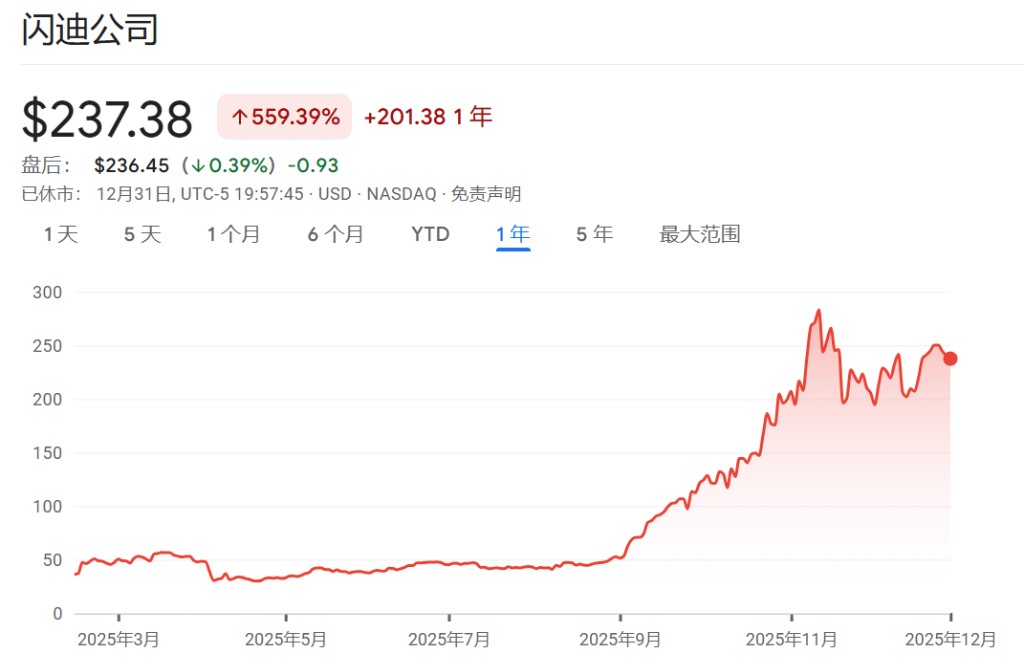
In 2025, the AI investment logic spread from computing power to infrastructure, with data storage becoming the biggest winner. Western Digital, Micron Tech, and Seagate Tech ranked first, second, and third in the S&P 500 with increases of 268%, 227%, and 219%, respectively. In addition, SanDisk, which was just included in the S&P 500 at the end of the year, saw an annual increase of 559%, but was not officially counted in the annual "best stocks" due to its late inclusion

In 2025, AI trading continues to show strong performance in chip stocks, but they are no longer the only main players.

Data storage companies emerged as the biggest winners in the S&P 500 index in 2025, with three of the top ten stocks by percentage increase coming from this sector—Western Digital, Micron Technology, and Seagate Tech, which ranked first, second, and third in the index with increases of 268%, 227%, and 219%, respectively.

This performance marks a significant expansion of the AI investment theme. Hyperscale cloud service providers have committed to investing over $440 billion in AI infrastructure over the next 12 months, making data storage and memory chip companies direct beneficiaries of this spending frenzy. The massive capital expenditures from tech giants like Microsoft, Amazon, Google, and Meta have created unprecedented demand for storage device manufacturers.

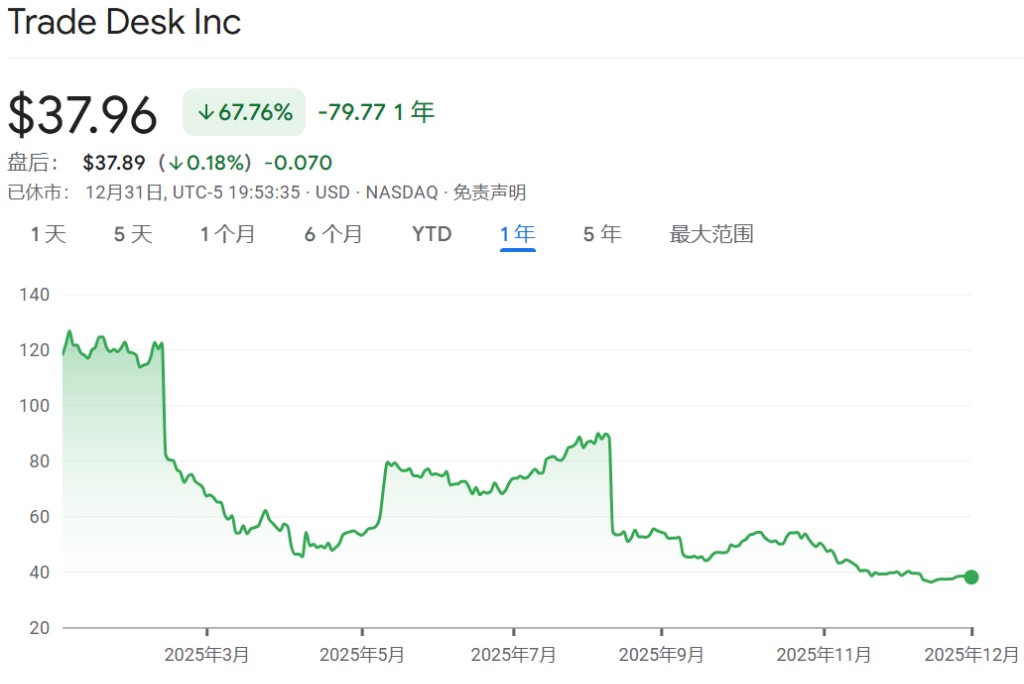
At the same time, economic uncertainty and tariff concerns have severely impacted consumer stocks. Trade Desk, with a nearly 70% decline, became the worst-performing stock in the S&P 500 index, while sectors such as healthcare, retail, and consumer staples also faced widespread pressure.

Data Storage Companies Lead the Market

Against the backdrop of the AI bull market entering the "infrastructure phase," data storage companies have risen to prominence.

Western Digital became the biggest winner in the S&P 500 in 2025, with its stock price soaring 268% throughout the year. As a leader in the traditional hard disk drive (HDD) sector, the company benefited from the strong demand for high-capacity, low-cost storage from AI data centers. More importantly, this increase is not merely driven by sentiment, but is a concentrated reflection of improved fundamentals, given its market capitalization of $60 billion.

Seagate Tech also performed impressively, with an annual increase of 219%. The demand for the company's highest-capacity and highest-margin hard disk products saw significant growth. Seagate's CEO stated that the emergence of AI has "redefined the economic value of data" and fundamentally changed the structure of storage demand.

Micron Technology ranked among the strongest stocks in the U.S. market with a 227% increase. Although Micron is more focused on memory chips, it is also a direct beneficiary of the AI data surge. The company's performance and guidance for the November fiscal quarter significantly exceeded market expectations, providing a strong conclusion to the annual market.

Additionally, SanDisk, which was just added to the S&P 500 at the end of the year, achieved an impressive annual increase of 559%. Although it was not officially counted among the year's "best stocks" due to its late addition to the index, its popularity in the capital market after being spun off from Western Digital further confirms the logic that "storage is an essential need for AI."

A major feature of 2025 is the shift in market leadership. Compared to the previous two years dominated by computing power chips and large model platforms, this year's strong stocks are more concentrated in "behind-the-scenes roles" such as data, storage, data center construction, cooling, and electricity.

This means that the investment logic in AI is transitioning from the "technological breakthrough" stage to the "scalable implementation" and "infrastructure arms race" stage. For investors, this change is equally important—it determines where the next round of excess returns may come from.

Traditional Defensive Sectors Dull

In stark contrast to the booming AI industry chain, some traditional sectors are clearly under pressure in 2025.

Economic uncertainty, tariffs, and inflation concerns have severely impacted consumer stocks. Clorox, frozen fries manufacturer Lamb Weston Holdings, Campbell's, and beverage giant Constellation Brands are all among the top 20 biggest losers in the S&P 500 index. Fast-casual dining brand Chipotle Mexican Grill, after achieving double-digit growth for two consecutive years, fell nearly 40% in 2025.

The retail sector has also been hit hard. Deckers Outdoor fell nearly 50%, ending a nine-year upward trend. The company, which owns brands like Hoka and Ugg, suffered due to several weak earnings forecasts and analyst downgrades.

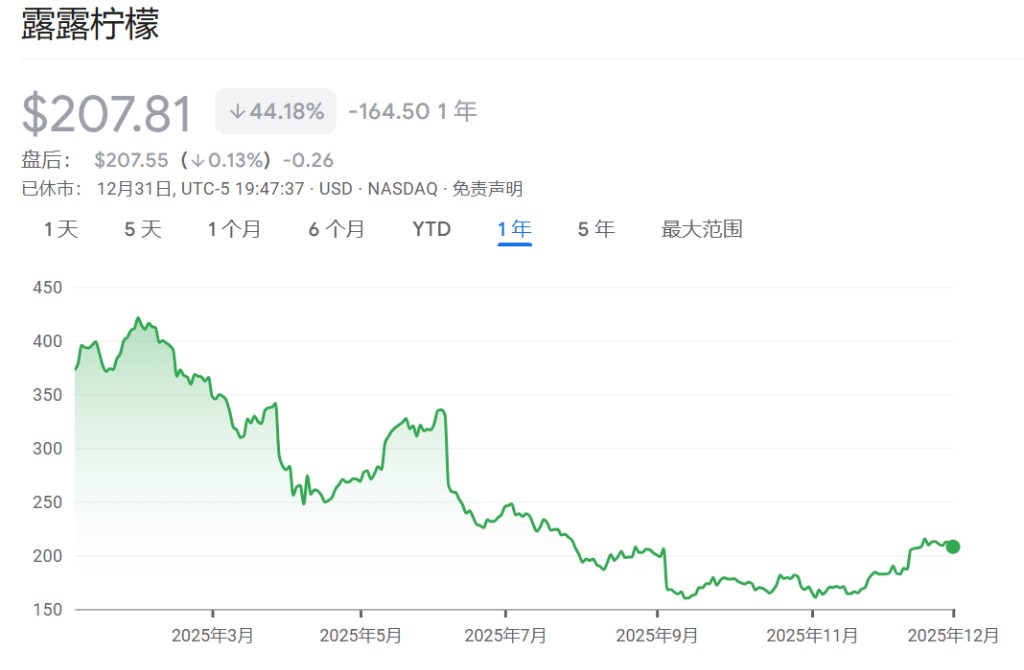
Lululemon Athletica dropped 44% this year, marking its second consecutive year of double-digit declines. The sportswear retailer is undergoing a business restructuring after experiencing a slowdown in growth and the departure of its CEO. Activist investor Elliott Investment Management has built a position of over $1 billion.

Despite market expectations that the healthcare sector would benefit from the policy shift of the Trump administration, the sector performed poorly in 2025. Molina Healthcare fell over 40%, marking its second consecutive year of double-digit declines. UnitedHealth Group and Centene both dropped over 30%, ranking among the top 25 biggest losers in the S&P 500 index.

Fintech companies faced a Waterloo. Advertising technology company Trade Desk's stock plummeted 68%, becoming the worst-performing stock in the S&P 500 index in 2025, while fintech company Fiserv fell 67%, with its stock price dropping below $100. Real estate investment trust Alexandria Real Estate Equities saw its stock price drop 50%, becoming the "bottom performer" of the year in the U.S. stock market