


After the changes in Venezuela, OPEC+ stated that "it will maintain stable oil production until the first quarter of 2026."

OPEC+ believes that geopolitical variables have not changed its recent policy stance, and the current low inventory levels indicate a well-balanced market. OPEC+ emphasizes maintaining policy flexibility and continues to assess the market on a monthly basis. Although Venezuela has significant reserves, its daily production is only 1 million barrels due to insufficient investment, making it difficult to impact global supply in the short term
Despite facing a turbulent geopolitical situation, the latest statement from OPEC+ core member countries reaffirms their commitment to maintaining stability in the oil market, confirming that the current oil production policy will remain stable until the first quarter of 2026.
On January 4 local time, eight key OPEC+ member countries, including Saudi Arabia, Russia, Iraq, the United Arab Emirates, Kuwait, Kazakhstan, Algeria, and Oman, held a video conference to review the global market conditions. The participants decided to reaffirm their decision announced on November 2, 2025, to suspend the planned production increase in February and March 2026, given the seasonal demand patterns.
This decision was made against the backdrop of ongoing geopolitical tensions, particularly the turmoil in Venezuela triggered by the U.S. forcibly controlling President Maduro, as well as strained relations between Saudi Arabia and the UAE over the Yemen issue. However, OPEC+ representatives stated that these geopolitical variables have not changed the organization's recent policy stance, and market stability remains the top priority.
The joint statement noted that the current relatively low inventory levels indicate that, despite a significant drop in oil prices last year, the oil market is actually in a good balance. Analysts pointed out that in a fragile market environment, OPEC+ chose to act cautiously, aiming to avoid introducing new uncertainties into an already volatile market by retaining policy flexibility.
It is worth noting that although Venezuela has huge reserves, its daily production is only 1 million barrels due to insufficient investment, making it difficult to impact global supply in the short term.
Production Policy and Market Balance
In the latest statement, the aforementioned eight major oil-producing countries emphasized that the current market conditions still provide support.
Despite a decline in oil prices of over 18% in 2025 due to supply growth exceeding demand and heightened concerns about oversupply, marking the steepest annual drop since the pandemic, OPEC+ believes that low inventory levels are strong evidence of a good balance between supply and demand in the market.
Furthermore, the organization clearly stated that whether the previously announced voluntary production cut of 1.65 million barrels per day can partially or fully return to the market will entirely depend on the evolving market conditions, and the return process will only occur in a "gradual manner."
The oil-producing countries emphasized that "flexibility" remains at the core of their strategy, which includes retaining the option to extend or reverse additional voluntary adjustments, such as the announced production cut plan of 2.2 million barrels per day in November 2023.
To ensure the seriousness of policy implementation, OPEC+ reaffirmed its commitment to collectively adhere to the Cooperation Declaration.
The oil-producing countries confirmed that any excess production since January 2024 will be fully compensated, and the Joint Ministerial Monitoring Committee will continue to monitor compliance and compensation progress. The eight member countries agreed to continue holding monthly meetings to assess the market, with the next meeting scheduled for February 1, 2026.
Uncertainty in Venezuela and Capacity Realities
Although OPEC+'s current policy focus is on maintaining the status quo, the political changes in Venezuela add new complexities to the market According to Jorge Leon, an analyst at consulting firm Rystad Energy AS, the political transition in Venezuela adds another layer of significant uncertainty.
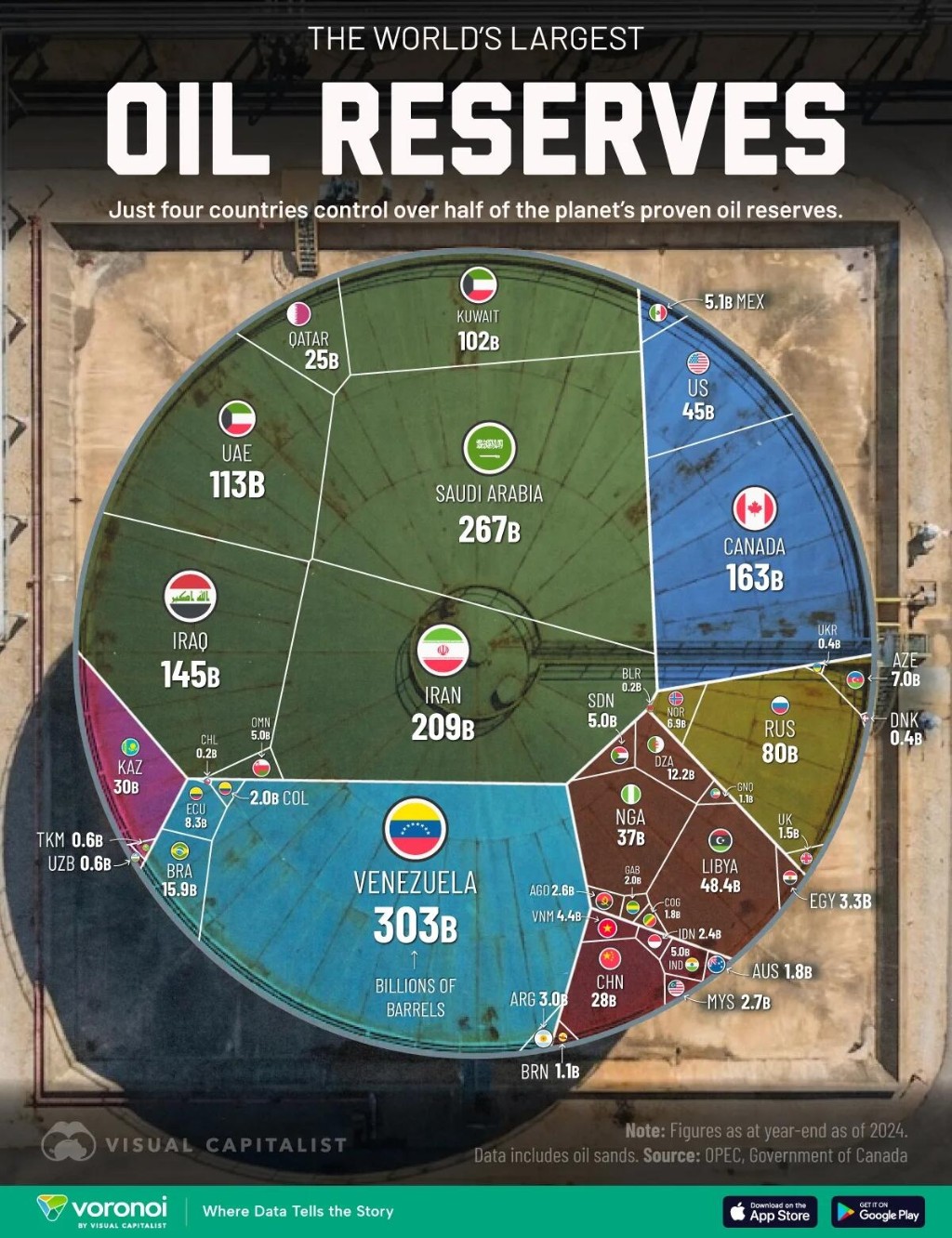
While Caracas may have the largest oil reserves in the world, years of underinvestment and mismanagement have greatly diminished its status.
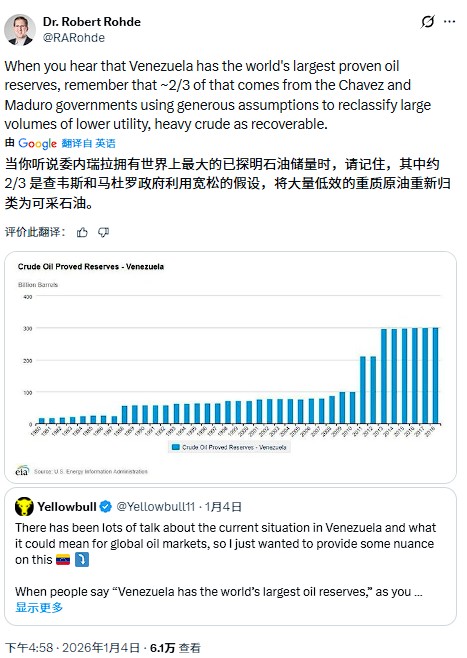
Robert Rohde, chief scientist at the independent scientific research organization Berkeley Earth, pointed out on social media platform X:
About two-thirds of Venezuela's so-called "largest proven oil reserves in the world" come from the loose assumptions used by the Chávez and Maduro governments to reclassify a large amount of low-utilization heavy crude oil as recoverable reserves.
Currently, Venezuela's oil production is about 1 million barrels per day, only one-third of what it was a decade ago, accounting for less than 1% of global supply.
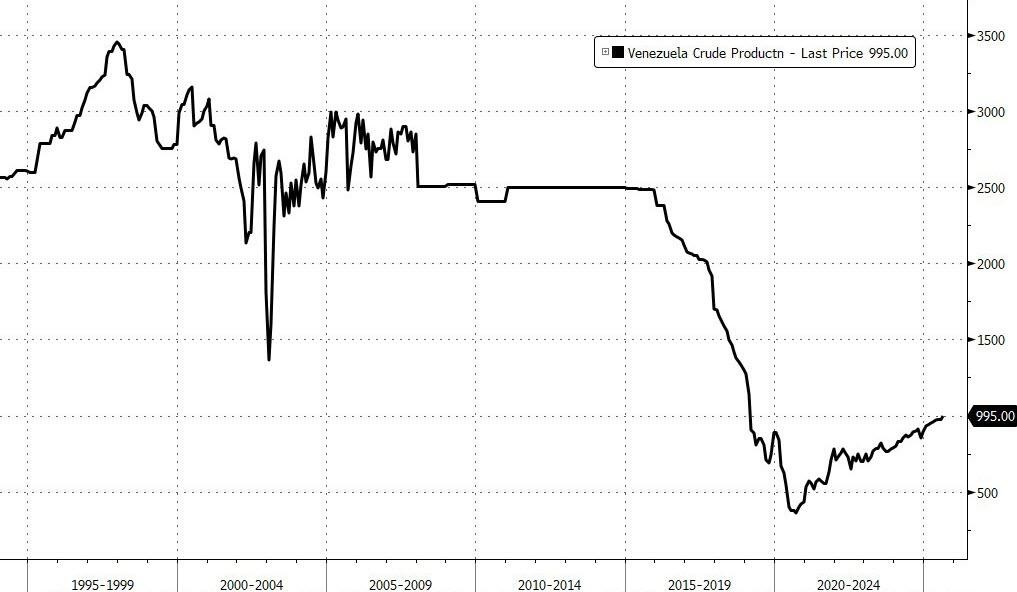
It is worth noting that recently, Washington has been pressuring the Maduro regime while seizing and tracking oil tankers, leading to a 25% reduction in production from the country's key Orinoco Belt.
According to consulting firm Kpler, if sanctions are lifted, Venezuela's production could increase by about 150,000 barrels per day within a few months. However, to restore production to 2 million barrels per day or higher, "massive reforms" and substantial investment from international oil companies would be required.
This also means that in the short term, Venezuela is unlikely to cause a dramatic impact on the global supply landscape
