


"Storage surge" is fundamentally reshaping the bill of materials structure for hardware manufacturers

I'm PortAI, I can summarize articles.
存儲市場進入 “超級牛市”,價格漲幅超過 2018 年曆史峯值。受人工智能和服務器需求推動,供應商定價權達到歷史最高。預計 2025 年第四季度內存價格將上漲 40%-50%,2026 年第一季度再漲 40%-50%,第二季度上漲約 20%。內存對 iPhone 17 Pro Max 物料清單的影響顯著,預計佔比將超過 20%。
存儲市場已進入 “超級牛市” 階段,其漲幅超過了 2018 年的歷史峯值。在人工智能和服務器容量持續旺盛的需求推動下,供應商的定價權已達到歷史最高水平。根據韓國 Counterpoint Research 近期發佈的《內存月度價格追蹤報告(2026 年 1 月)》,** 預計 2025 年第四季度內存價格將上漲 40% 至 50%,2026 年第一季度將再上漲 40% 至 50%,2026 年第二季度還將進一步上漲約 20%**。
對智能手機的影響:截至 2025 年,內存佔 iPhone 17 Pro Max 物料清單 (BoM) 的 10% 以上,較 2020 年 iPhone 12 Pro Max 的 8% 大幅增長。對於配備 16-24GB LPDDR5X 內存和 512GB-1TB UFS 4.0 存儲的旗艦機型,近期的價格上漲可能會使內存成本佔總物料清單 (BoM) 的 20% 以上。
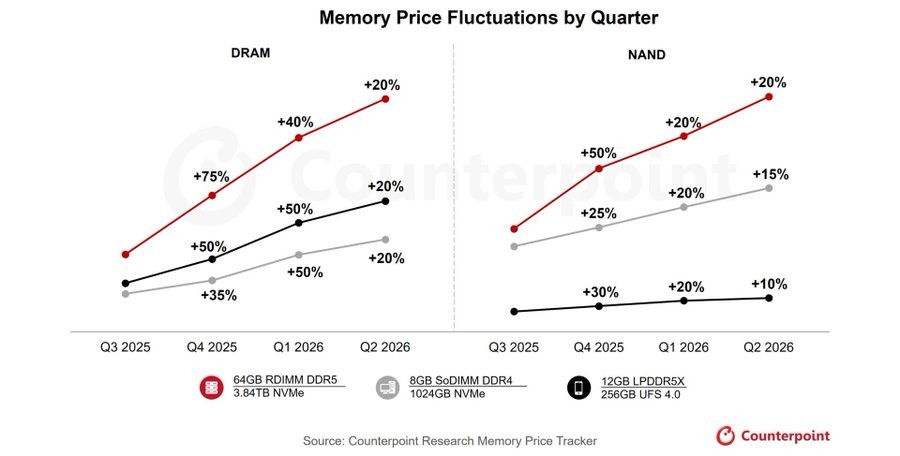
Source: 華爾街見聞 The copyright of this article belongs to the original author/organization.
The views expressed herein are solely those of the author and do not reflect the stance of the platform. The content is intended for investment reference purposes only and shall not be considered as investment advice. Please contact us if you have any questions or suggestions regarding the content services provided by the platform.
Post your comment

No Comments