


On the eve of MiniMax's IPO, institutions oversubscribed by more than 70 times, with Baillie Gifford, GIC, and the Norwegian Sovereign Fund entering the market

The allocation structure of this MiniMax Hong Kong IPO reflects the structural optimism of top international long-term capital towards China's core AI assets. Long-term investors represented by Baillie Gifford, GIC, and the Norwegian Central Bank have become the main subscribers. Their deep involvement not only provides a solid foundation for the issuance but also points to a reassessment of the long-term value of leading Chinese technology companies by global capital in the current environment
Chinese generative artificial intelligence startup MiniMax Group Inc. is set to go public in Hong Kong, with strong support from top global long-term funds and sovereign wealth funds during its placement phase.
According to sources familiar with the matter, investment firms Baillie Gifford, Singapore's sovereign wealth fund GIC Pte, and Norway's central bank investment management company have all participated in this subscription. This indicates that despite the complex macro environment, global capital remains highly focused on leading AI targets in China.
According to Wallstreetcn, MiniMax will issue 29.2 million shares at a price of HKD 165 per share, exercising a 15% adjustment right on the offering size. The IPO pricing is at the high end of the proposed range, raising HKD 4.8 billion (approximately USD 619 million), making it one of the most watched transactions in the recent market. Sources told Bloomberg that after excluding cornerstone investments, institutional investors' subscription multiple for MiniMax shares exceeded 70 times. This level of oversubscription reflects strong demand from the market for this Chinese tech company, seen as a challenger to OpenAI.
The issuance received over 460 bids from institutions. According to sources, global long-term investors and sovereign wealth funds accounted for the majority of the institutional placement shares, excluding the cornerstone portion. These types of investors typically hold stocks for a longer duration and do not engage in short selling, and their entry often signifies recognition of the company's long-term fundamentals.
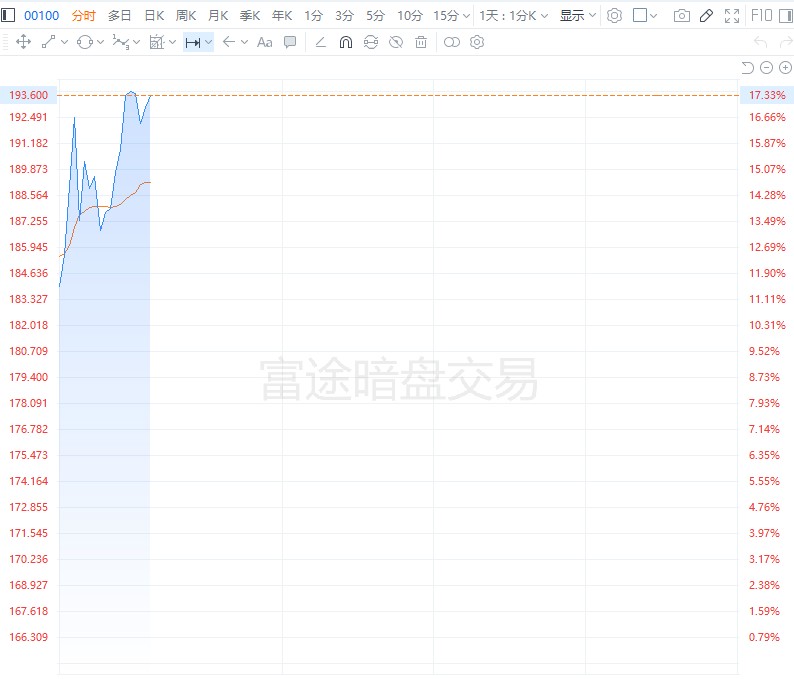
MiniMax is scheduled to start trading in Hong Kong this Friday. Currently, the mainland China and Hong Kong markets are experiencing a wave of heavyweight AI tech company listings. Its competitor, Zhizhu, performed excellently in its Hong Kong debut on Thursday, with the stock rising over 17% in the dark market, reaching a high of HKD 200.20. MiniMax's subsequent market performance will be seen as a key barometer for investors assessing whether Chinese AI companies can effectively challenge their American counterparts.
Top Institutions Backing the Placement
According to Bloomberg, citing sources, MiniMax's IPO has attracted purchases from internationally renowned institutions, including Baillie Gifford, GIC Pte, Norges Bank Investment Management, and asset management company Schroders Plc.
These institutions have significant influence in the global capital markets. Baillie Gifford is known for long-term investments in tech growth stocks, while GIC and Norges Bank are representatives of the largest sovereign wealth funds globally. Representatives from Schroders Plc declined to comment, while Baillie Gifford, GIC, and Norges Bank did not respond to requests for comment
Industry Competition Landscape and Capital Efficiency
MiniMax and Zhipu represent a pragmatic development model for China in the field of artificial intelligence. Compared to the United States' OpenAI and Anthropic PBC, these two Chinese companies demonstrate higher capital efficiency, operating with less capital investment, fewer chip resources, and a more streamlined workforce.
As Zhipu achieved a 13% increase on its first trading day on Thursday, market attention has now shifted to MiniMax, which is set to list on Friday. The stock price movements of these two companies are not only related to their own valuations but are also seen as an early litmus test for international investors to gauge the competitiveness of Chinese AI startups.
