


The internal rivalry of "Old Deng" and "Little Deng" in technology

The internal competition between "Old Deng" and "Little Deng" in technology reflects the rebalancing of incremental funds between "Old Deng" of "consensus growth" and "Little Deng" of "non-consensus growth." From a fundamental perspective, the new increment in real estate policy and the narrowing decline in PPI suggest that the spring rally is expected to continue. With the current market halfway through, there is still room for growth, focusing on non-consensus hot themes such as non-ferrous metals, brain-computer interfaces, semiconductors, as well as non-bank and pro-cyclical industries with improving performance expectations
Report Highlights
-
The competition between "Old Tech" and "New Tech" in the technology sector is essentially a rebalancing of incremental funds seeking valuation elasticity between "consensus growth" represented by "Old Tech" and "non-consensus growth" represented by "New Tech."
-
From a fundamental perspective, the new increments in real estate policy and the continuous narrowing of PPI declines suggest that the spring rally is likely to continue.
-
With more than half of the current spring rally completed, there is still some room for time and space under the sixteen consecutive days of gains, and the trading volume/industry differentiation/heat/two financing indicates that trading is not extremely overheated.
-
Allocation: ① Focus on non-consensus hot themes: non-ferrous metals/brain-computer interfaces/semiconductors/robots/AI applications/insurance; ② From a fundamental and policy perspective, pay attention to non-bank sectors with improved performance expectations, cyclical sectors (coal, non-ferrous metals), real estate chain, and consumer electronics.
Note: In this article, we classify technology stocks that have shown significant performance growth, stock price increases, and heavy institutional investment over the past year, such as PCB and CPO, as "Old Tech," while industries with future growth expectations and recent accelerated increases, such as commercial aerospace and brain-computer interfaces, are classified as "New Tech" (there is no value judgment between "Old Tech" and "New Tech").
Report Body
I. The Competition Between "Old Tech" and "New Tech" in Technology
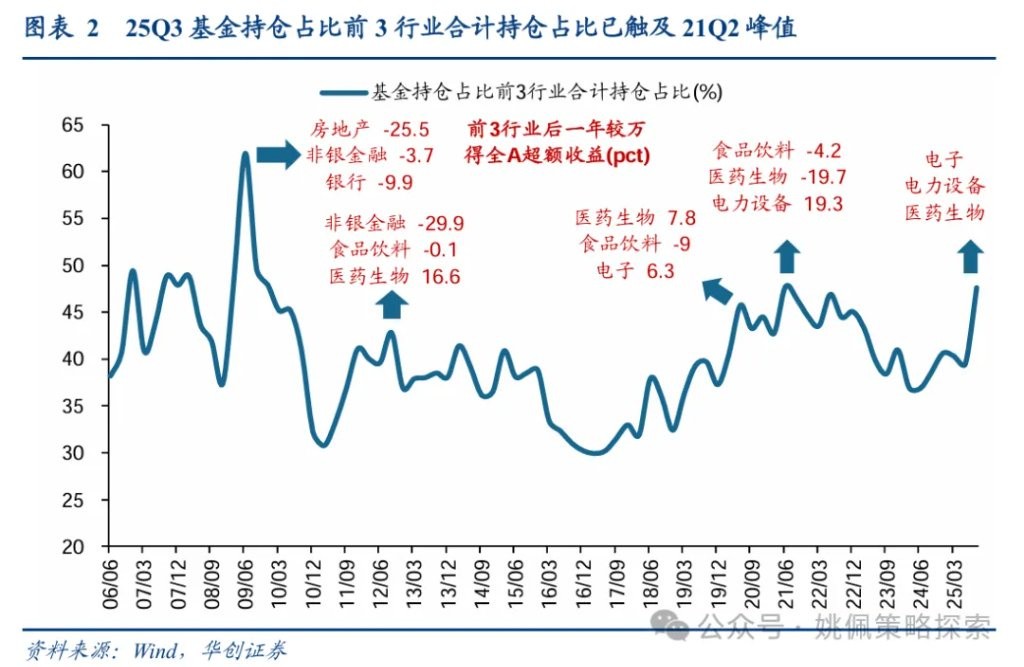
The competition between "Old Tech" and "New Tech" in technology is a rebalancing of incremental and existing funds in the direction of "consensus growth" and "non-consensus growth." We have observed that this round of spring rally has formed differentiation within the technology sector. We believe this is not due to the weakening fundamentals of "Old Tech," but rather that "Old Tech" has entered a waiting phase for performance realization to digest valuations, temporarily yielding the rhythm to "New Tech," whose valuations may need to wait for the April earnings season for validation. Before that, new market entrants are not inclined to continue pushing up already crowded assets but are more willing to seek new pricing space in areas that have not yet formed a consensus. Specifically, taking the Wind concept index as an example, the "Old Tech" themes leading the gains in 2025, such as computing power, PCB, and CPO, have seen increases of 66%, 71%, and 163% respectively from January 25 to December 16, while the gains since December 17 have only been 12%, 11%, and 10%, which are less than the returns of "New Tech" themes in this round of spring rally, such as satellite navigation at 31%, commercial aerospace at 29%, and brain-computer interfaces at 24%. This aligns with the operational risks we highlighted in "The Second Half of the Bull Market, Real Reinflation—2026 Investment Strategy," indicating that over the past year, the technology mainline represented by computing power, CPO, and PCB has formed a highly consistent expectation under continuous institutional accumulation. As of Q3 2025, the top three industries by fund holding ratio (electronics 26%, new energy 12%, pharmaceuticals 10%) accounted for a total holding ratio of 48%, reaching the peak of 48% in Q2 2021. Historical experience shows that industries that significantly over-allocate after reaching peak levels often struggle to continue contributing significant excess returns, leading to a decline in their marginal attractiveness in allocation, resulting in structural shifts within the technology sector
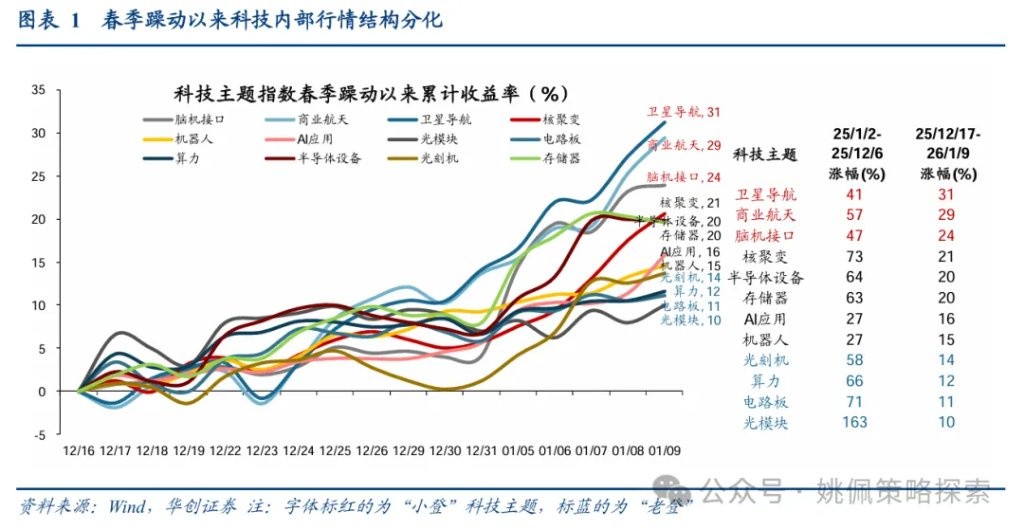
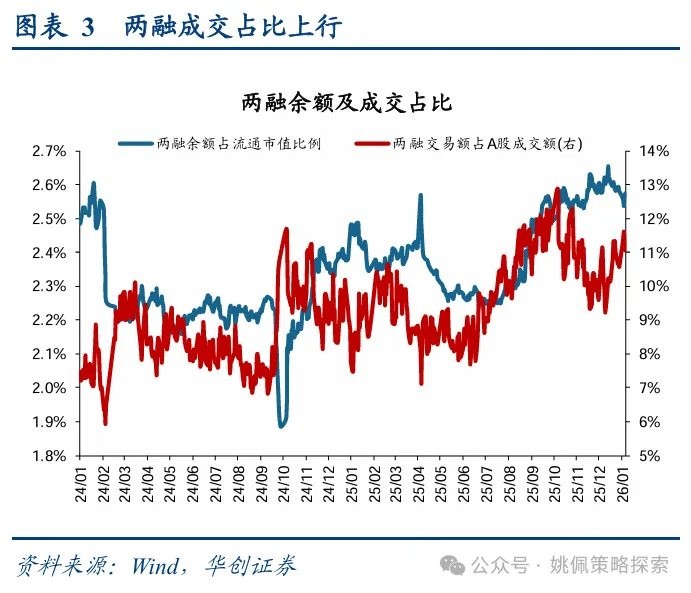
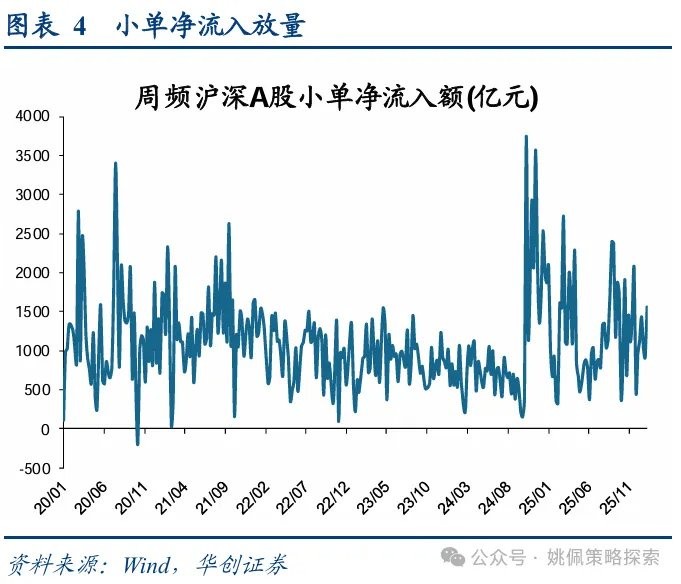
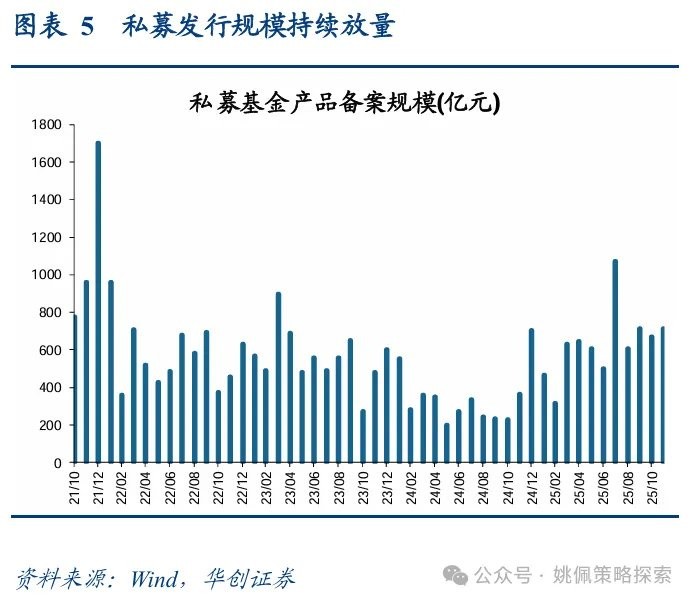
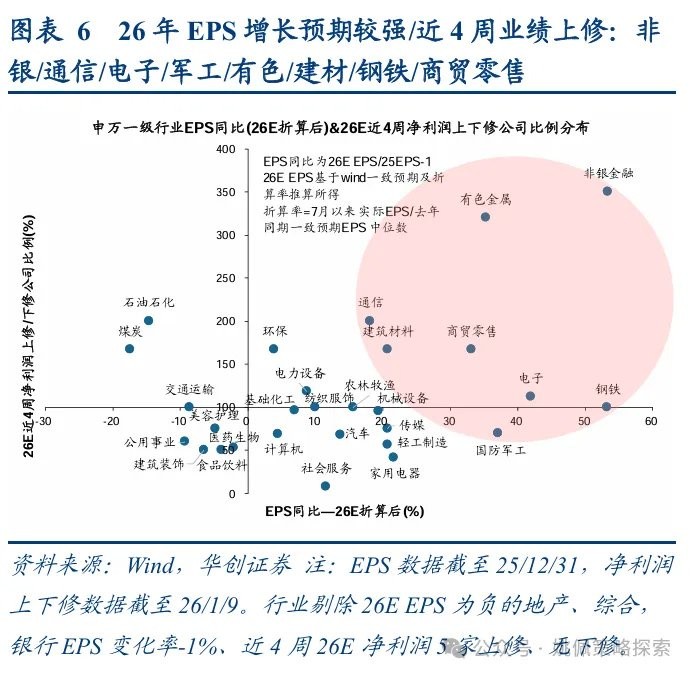
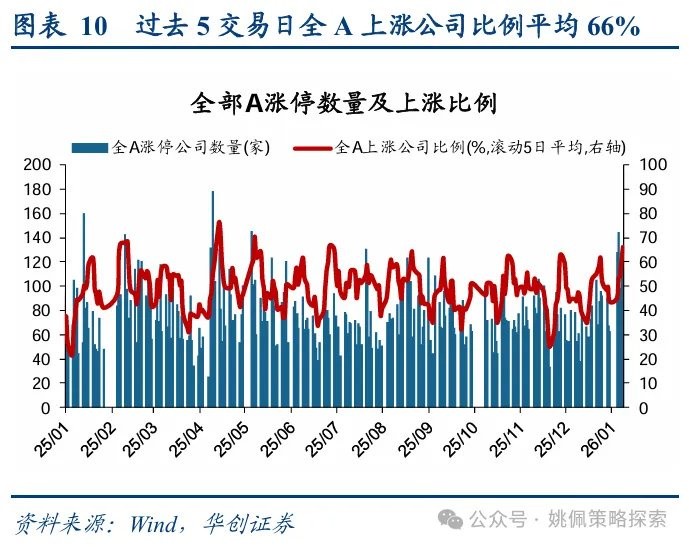
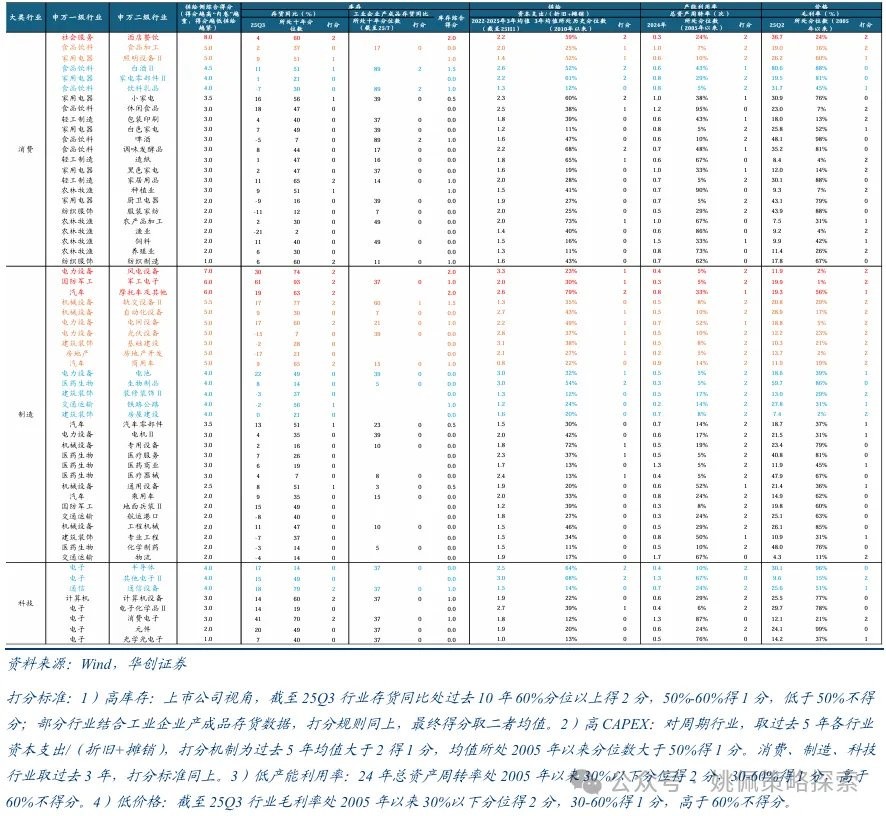
The activity of the current technology "small leader" is mainly due to short-term incremental funds seeking valuation elasticity in directions with growth fundamentals, rather than pushing up the "old leader" technology that existing funds have already clustered around. The divergence between "old leader" and "small leader" in technology is primarily about incremental funds, as "old leader" technology has generally formed a cluster of existing funds with high consensus. From the structure of incremental funds, the initiation of this round of market was mainly driven by a significant inflow into the A500 ETF, which then spread to margin trading, small orders, and the expansion of private equity funds. The overall fund attributes are relatively short-term and trading-oriented: from the proportion of margin trading volume to total A-share trading volume, it has risen from 9% on December 12 to 11% on January 8; in terms of net inflow of small orders (orders less than 40,000 yuan), the weekly inflow from December 1 to December 5 was 95.8 billion yuan, and this week’s net inflow reached 155.7 billion yuan; regarding the scale of private equity registration, it has also continued to expand in the second half of 2025, increasing from 50.1 billion yuan in June to 71.3 billion yuan in November. Due to the high cost of funds after leveraging, such funds prefer directions with high elasticity and thematic imagination. The reason why new themes such as commercial aerospace and brain-computer interfaces are receiving attention is not merely due to concept speculation, but because they have high growth expectations in military (37% year-on-year EPS growth in 2026, same below), machinery (19%), etc., and achieve valuation repricing by introducing new industrial narratives. Currently, to find industries that can still pull valuations based on expected growth, we believe that these industries must have both high expected growth in 2026 and recent dynamic upward revisions in performance. Specifically, we focus on the following two aspects: ① Year-on-year EPS, that is, the expected growth of 2026 EPS relative to the expected growth of 2025 EPS is strong. Since the consensus expectations for EPS are usually optimistic, we adjust the 2026E EPS based on the median of actual EPS/consensus expected EPS since July; ② In the past four weeks, the proportion of companies with upward/downward revisions in 2026E net profit is relatively high. Based on this, we summarize that industries with strong performance expectations for 2026 and recent dynamic upward revisions in performance include non-bank financials, telecommunications/electronics, military, non-ferrous materials/building materials/steel, and retail trade.
II. The Realistic Basis for Continued Spring Rally
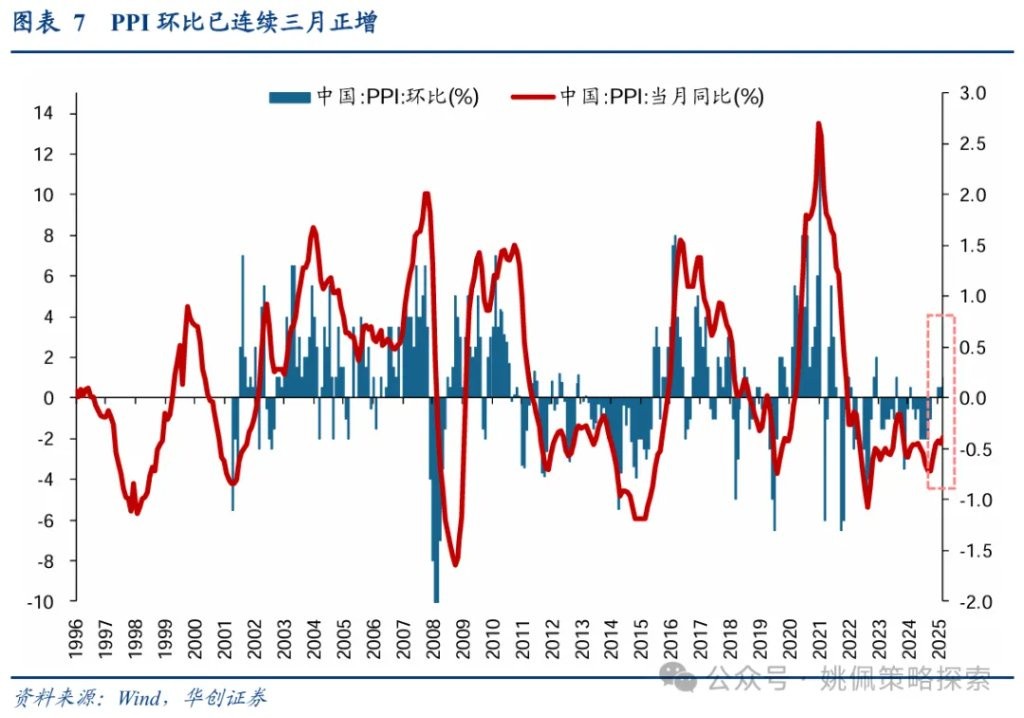
From a fundamental perspective, we believe the spring rally is likely to continue. The fundamental signals mainly come from improvements in real estate policies and prices. Regarding real estate, we have previously discussed in our weekly reports "The Main Line of the Rally and Its Diffusion - Strategy Weekly Focus," "Year-End Review of Major Asset Classes - Strategy Weekly Focus," "Reserving Rally Varieties - Strategy Weekly Focus," and "The Focus of the Rally Still Lies in Real Estate - Strategy Weekly Focus" that the core of the spring rally remains in real estate. Since our report was issued, frequent supportive policies for stabilizing the real estate market have been introduced, which bolster market risk appetite: Vanke's bond extension was not approved, but the grace period was extended from 5 working days to 30 trading days until January 28; on December 24, the Beijing Municipal Commission of Housing and Urban-Rural Development optimized the purchase restrictions, commercial loan, and provident fund policies; on December 30, the Ministry of Finance and the State Administration of Taxation reduced the value-added tax rate on housing sales under 2 years from 5% to 3%, which helps to reduce inventory in real estate; starting January 1, the provident fund loan interest rate was officially lowered by 0.25 percentage points to 2.6%; on January 1, the magazine "Qiushi" published an article titled "Improving and Stabilizing Expectations for the Real Estate Market," which, according to our statistics, is the first time in the past decade that the magazine has dedicated a complete article to discussing real estate issues, emphasizing that real estate has significant financial asset attributes and remains a foundational industry supporting the national economy, clearly stating that "policies should be provided all at once, and not through a piecemeal approach," while also acknowledging the current high level of real estate debt and the need to effectively address the possibility of bankruptcy restructuring for certain real estate companies. On the other hand, the continuous narrowing of the PPI decline verifies our view since July that the main driver of the bull market has shifted from liquidity-driven financial re-inflation in the first half to EPS-driven physical re-inflation in the second half. From a yearly perspective, re-inflation and performance recovery remain important clues, and the continuous improvement in prices in the short term supports the continuation of the spring rally; specifically, the PPI has turned positive for three consecutive months (0.1% on October 25, 0.2% on November 25, and 0.2% on December 25), and the year-on-year decline of the PPI has also continued to narrow (recovering from -3.6% in July 2025 to -1.9% in December 2025), with prices improving beyond expectations.
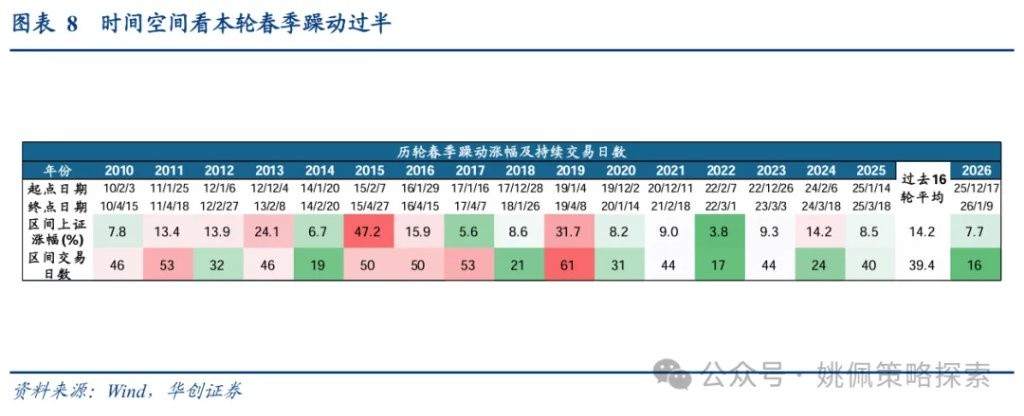
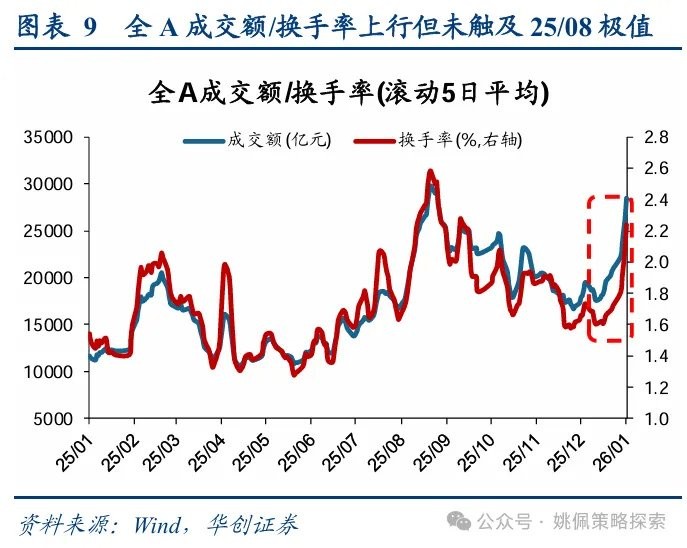
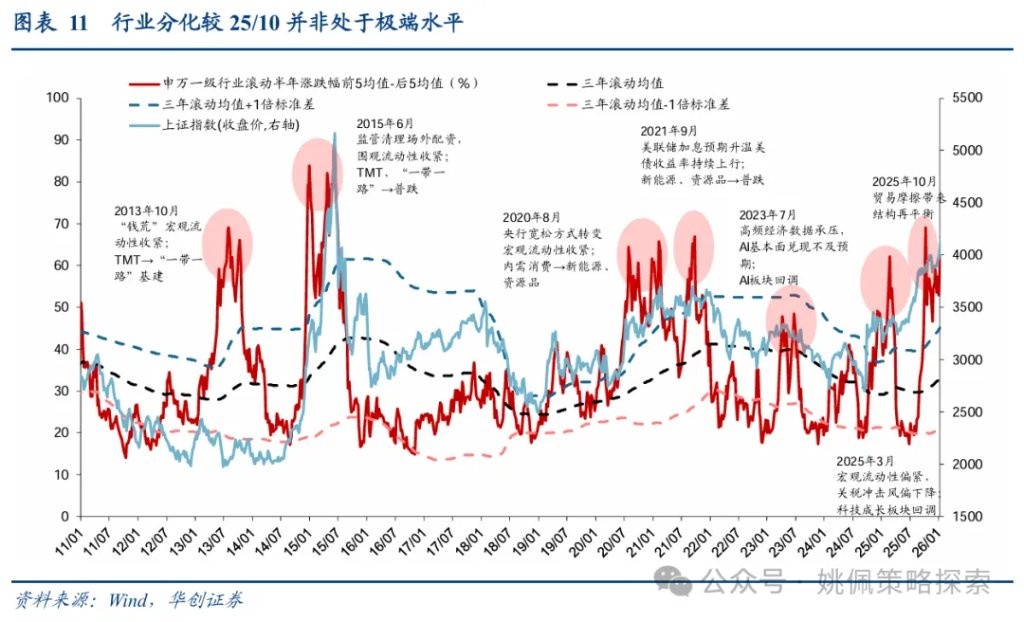
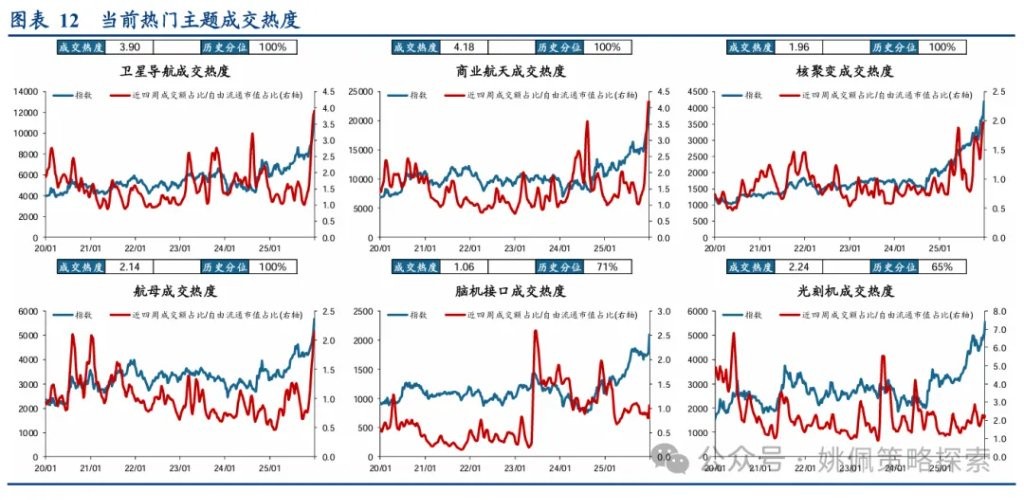
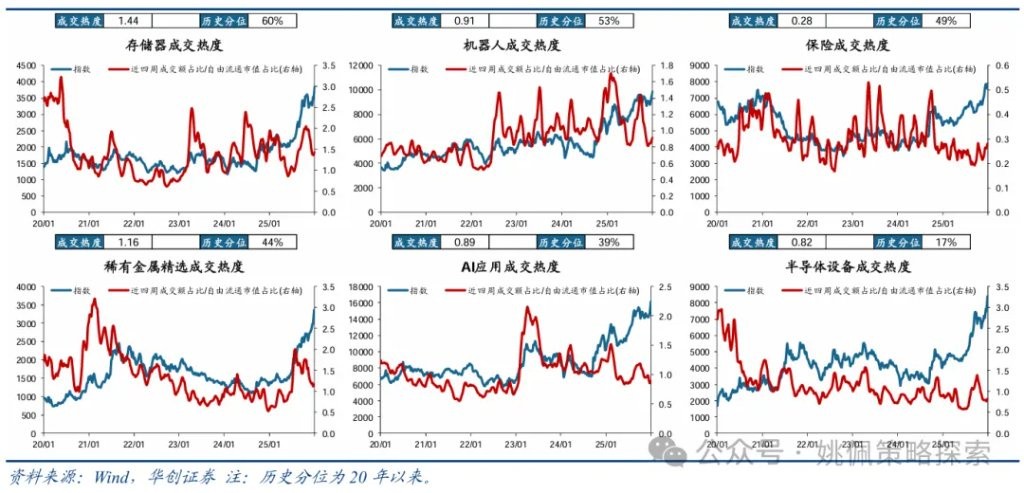
This round of the spring rally is halfway through, and there is still room for time and space under the sixteen consecutive days of gains, with trading not being extremely overheated. Considering the historical rhythm of spring rallies, this round may still have room in terms of both increase and duration. We have compiled data on various spring rallies since 2010, and relative to the average increase of 14.2% and a duration of 39 trading days in the past 16 rallies, the current increase of the Shanghai Composite Index is 7.7% with a duration of 16 days, indicating there is still about half a margin remaining At the same time, based on our discussion in "A-shares have risen for fourteen consecutive days, how hot is the excitement?", we measure the current trading indicators under the sixteen consecutive days of gains from four perspectives, which do not indicate extreme overheating: ① As of January 9, the total trading volume of the entire A-share market was 3.15 trillion, with a turnover rate of 2.4%, which still has room compared to the peak values of 3.2 trillion/2.8% at the end of August, and the peak level at the end of August does not necessarily represent the peak value of this bull market; ② The average rolling six-month price change of the top 5 and bottom 5 sectors in the Shenwan first-level industry reached 62%, down from 69% at the beginning of October, indicating that the current sector differentiation has not reached extreme levels; ③ The trading heat of popular thematic tracks is measured by the "proportion of trading volume in the past 4 weeks to the total A-share market/ proportion of free float market value to the total A-share market," among which only commercial aerospace/satellite navigation/nuclear fusion/aircraft carriers are at historical highs in trading heat. In contrast, brain-computer interfaces (current trading heat percentile 71%, same below), robotics 53%, insurance 49%, rare metals 44%, AI applications 39%, semiconductor equipment 17%, etc., are still at historically low to mid-levels; ④ As mentioned earlier, margin trading is the main source of incremental funds, and although its trading share has risen to 11%, it still lags behind the previous peak of 13% on October 9.
3. Allocation Direction
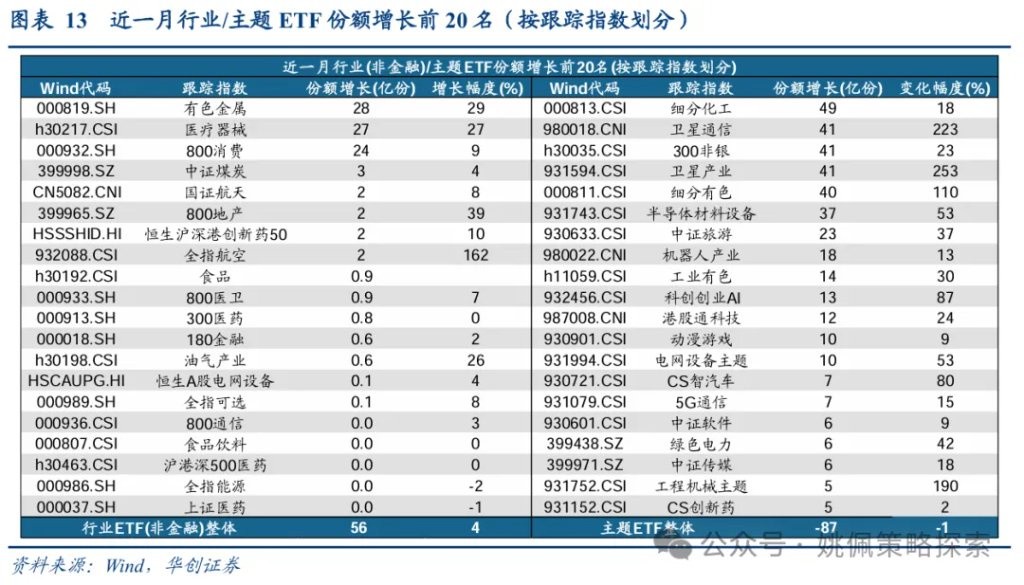
1. In terms of popular themes, focus on thematic opportunities with relatively low trading heat under the spring excitement, where funds are still flowing in and there is performance support: non-ferrous metals/brain-computer interfaces/semiconductors/robotics/AI applications/insurance, etc. We consider the allocation direction of popular tracks from three perspectives: the current trading heat is not overheated and is still at historically low to mid-levels; Significant inflows have been observed in the corresponding theme or industry ETFs over the past month; the expected performance growth in the respective industry for 2026 is relatively high. Considering the above conditions, we summarize that non-ferrous metals (rare metals transaction heat percentile 44%, segmented non-ferrous theme ETFs have seen an inflow of 4 billion shares in the past month, 2026 EPS year-on-year 35%, same below), brain-computer interfaces (71%, medical devices 2.7 billion shares), semiconductors (17%, 3.7 billion shares, electronics 2026 EPS year-on-year 42%), robotics (53%, 1.8 billion shares, machinery 2026 EPS year-on-year 19%), AI applications (39%, dual innovation AI 1.3 billion shares, CSI Software 600 million shares), and insurance (49%, 300 non-bank 4.1 billion shares, non-bank 2026 EPS year-on-year 53%) have performance support while still having trading space.
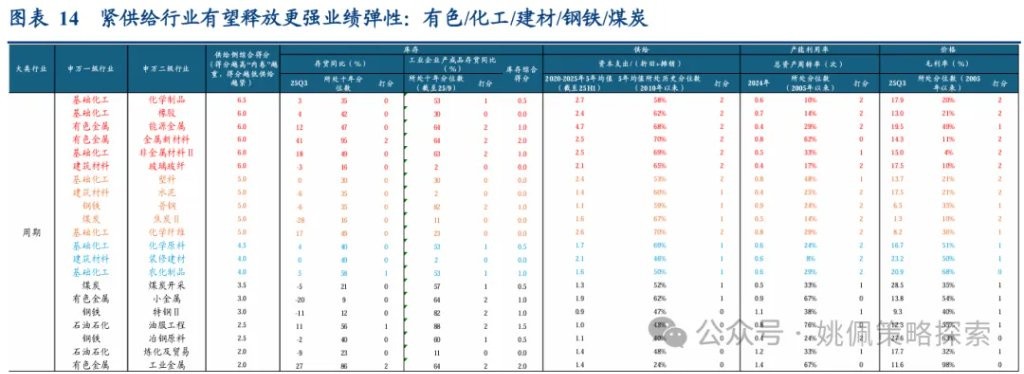
2. From the perspective of fundamentals and policies, focus on non-banking sectors with improved performance expectations, cyclical sectors (coal, non-ferrous), real estate chain, and consumer electronics. ① Non-banking: Emphasize the short-term premium growth in insurance and the mid-term investment income enhancement of performance. With fixed deposits maturing, the migration of residents' deposits is expected to bring premium increments for a strong start; investment income from insurance funds is expected to continue improving, driving strong performance in the insurance industry. On one hand, a strong stock market may enhance investment income from insurance equities; on the other hand, with inflation returning, rising interest rates are expected to enhance insurance coupon income. ② Cyclical: The economic work conference has set the tone & the first year of the 14th Five-Year Plan, with fiscal efforts on infrastructure projects expected to increase, focusing on tight supply in non-ferrous/chemical/building materials/steel/coal. As inflation expectations rise, with the central economic work conference setting the tone, market expectations for fiscal efforts and demand-side stimulus for next year continue to improve, enhancing the consensus on inflation return, reinforcing expectations for price and performance increases in cyclical resource products (see "Reserve Hot Varieties - Strategy Weekly Focus"). ③ Real estate chain: Internally, although real estate is currently one of the main risk points, with the continuous introduction of policies to stabilize the real estate market recently, market expectations are improving. The focus will be on the progress of Vanke's two bonds, which will mature on 1/28 and 2/10 after a 30 trading day grace period, combined with fiscal efforts on infrastructure projects expected to increase, focusing on the recovery process of real estate/infrastructure. ④ Consumer electronics: On December 30, the National Development and Reform Commission and the Ministry of Finance jointly released the "Two New" policy for 2026, optimizing and adjusting the support scope, subsidy standards, and implementation mechanisms, issuing the first batch of 62.5 billion yuan in funding to support the replacement of old consumer goods. New smart products such as smart glasses and smart home devices have been added to the national subsidy objects, focusing on consumer electronics benefiting from national subsidies.
Risk Warning and Disclaimer
The market has risks, and investment should be cautious. This article does not constitute personal investment advice and does not take into account the specific investment objectives, financial situation, or needs of individual users. Users should consider whether any opinions, views, or conclusions in this article are suitable for their specific circumstances. Investment based on this is at one's own risk
