The AI Pet Toy Craze Has Arrived

Capital is rapidly flowing into the AI toy sector
Author | Huang Yu
Editor | Zhou Zhiyu
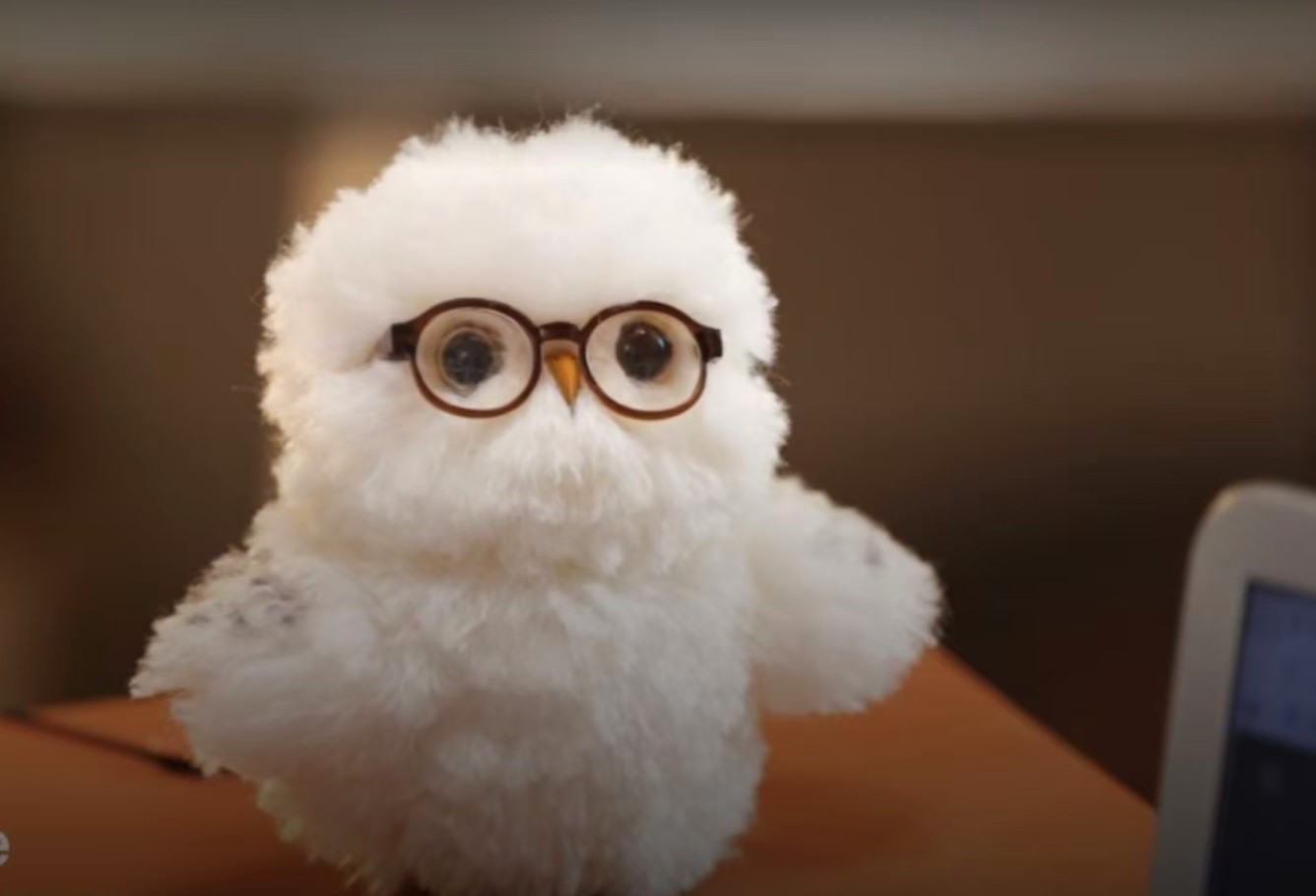
At the recent International Consumer Electronics Show CES 2026, a breathing, responsive, and personality-filled "owl" attracted a lot of attention. It is an AI pet toy called "Joobie Little Owl," from Hugbibi in Shenzhen, China.
A batch of "AI pets" like Joobie has become one of the most eye-catching presences at this year's CES. According to incomplete statistics, more than 30 Chinese companies showcased AI pet toys or AI companion robots, including TCL, Lingxi Intelligent, Hugbibi, Tuya Smart, and Machine Spirit.
From major exhibitions to product launch events of domestic and foreign tech companies, and to the shelves of offline malls and trendy toy stores, the presence of AI pet toys is becoming increasingly dense. They are no longer just electronic toys that can make sounds and walk; they are endowed with "personality," "emotions," and "growth curves," attempting to become a "long-term presence" accompanying users.
Against the backdrop of large-scale AI application deployment, AI pet toys are seen as one of the "minimum viable products" combining large models, sensors, low-power chips, and consumer-grade hardware. On one hand, their requirements for precision and reliability are lower than those for production or service robots; on the other hand, they naturally align with the long-term trends of emotional consumption and the companionship economy.
From startups to tech giants, from traditional toy manufacturers to internet behemoths, more and more players are entering this field. AI pet toys are becoming another consumer-grade AI entry point, following smart speakers and smart wearables, which are highly anticipated.
When Plush Toys Are Given "Soul"
Looking back at the product forms of AI pet toys over the past year, a noticeable change can be observed: "like toys" are giving way to "like life."
Early smart pets were more focused on mechanical interaction—preset actions, fixed voices, and simple remote control. However, in this new wave of products, "passive response" is being replaced by "continuous interaction," and "function aggregation" is being reshaped by "relationship building."
Taking Hugbibi's latest portable emotional companion product Joobie as an example, it does not position itself as a robot or smart device but emphasizes "a cute pet with personality."
The reason for launching such a product is that Hugbibi has observed that over the past decade, plush toys have transformed from "a small decoration placed on the bedside" to "a little companion that hangs on and is taken along." Young people have begun to use a character to express themselves, gain companionship, and establish connections, but there are issues at both ends: traditional plush toys, while cute, are not "alive" and have thin emotions; functional toys/small robots are powerful yet cold.
Hugbibi hopes to create a product that brings "cuteness and a sense of life" back to plush toys and injects "warmth and humanity" into tech products From an appearance perspective, Joobie continues the softness and friendliness of plush toys, but internally integrates multi-touch, pressure, balance, and sound perception modules, capable of sensing user behaviors such as hugging, walking, and shaking. Although it does not speak or solve problems, it can provide emotional feedback.
Hugbibi emphasizes: "The most remarkable thing about Joobie is that it grows into a unique form because of your companionship."
According to reports, Joobie does not have a fixed personality upon leaving the factory. The product introduces a "growth-type companionship" design logic, gradually forming differentiated behavior patterns by recording user interactions over a seven-day cycle. The official term for this is "MBTI for Pet"—the Joobie in different users' hands will exhibit different emotional expressions and behavioral preferences.
Behind this design is a trend where some brands hope to give plush toys both "cuteness and a sense of life" under the wave of AI, meeting consumers' emotional value needs.
This product design approach is one of the main routes in the current AI pet toy design.
In November last year, Huawei also launched the AI pet toy "Smart Hanhai," co-designed and developed by Luobo Intelligent and Huawei, which is Huawei's first AI emotional companionship product.
It is understood that Smart Hanhai connects to Huawei's "Xiao Yi" large model, capable of real-person voice conversations, positioned as an emotional "electronic partner." The product has also achieved good market performance, selling out immediately upon launch on the Huawei Mall and experiencing temporary shortages.
As Huawei's partner in this collaboration, Luobo Intelligent was established in early 2024, focusing on developing AI companionship robots. Its first product, Fuzozo, was officially launched in June last year.
Fuzozo comes in five colors, corresponding to the five elements of Chinese philosophy (metal, wood, water, fire, earth), which also relate to five basic personality settings. At the same time, Fuzozo innovatively designs AI products as modular, making AI products usable and combinable items; both Smart Hanhai and Joobie have chosen this approach.
Public information shows that within six months of its official online sale, Fuzozo sold 120,000 units, making it one of the few AI companionship hardware products to achieve real scale, and it is also the best-selling product in the industry.
In terms of form, this round of AI pet toys presents several common characteristics, such as a design that leans towards plush and decorative, low-aggression designs, not pursuing complex task execution but emphasizing response and companionship.
In terms of pricing, most products are concentrated in the range of hundreds to a thousand yuan, significantly lower than the mainstream price range of service robots or smart hardware. This pricing strategy also makes AI pet toys more accessible to ordinary consumers' decision-making.
The Driving Force Behind the Hot AI Toy Market
In the context of the explosive growth of AI applications, the AI toy market has remained hot over the past year, with many participants.
The first type of player includes innovative startups like Luobo Intelligent and Hugbibi; the second type consists of consumer electronics and hardware manufacturers, such as TCL, Huawei, UBTECH, and Honor; the third type includes major internet companies like JD.com, Alibaba, and ByteDance; and another type consists of traditional toy companies In addition, IP parties, trendy toy brands, and content companies are beginning to experiment with integrating AI technology, transforming originally static IP images into interactive and evolving "living characters" to extend the IP lifecycle.
At the same time, capital is rapidly flowing into the AI toy sector.
According to incomplete statistics, nearly a hundred investment institutions are currently involved, including top-tier investment firms and internet giants such as Sequoia, Shunwei, Wuyuan, ByteDance, and JD.com.
Data from IT Juzi shows that in 2025, there were 19 investment and financing events in the domestic AI toy sector, up from 14 in 2024 and 3 in 2023.
LuoBo Intelligent is one of the star startups of 2025, founded by Sun ZhaoZhi, who previously served as the head of product design at XPeng Robotics (PengXing Intelligent).
In June 2025, LuoBo Intelligent announced the completion of tens of millions of RMB in angel round financing, co-led by Shanghai New Horizons Fund and GSR Ventures, with Zero One Ventures participating; in September, it announced the completion of tens of millions in "angel+" round financing, led by Sequoia China, with existing shareholders GSR Ventures and Zero One Ventures participating.
In addition to LuoBo Intelligent, GSR Ventures also invested in YueRan Innovation in 2025. It is reported that YueRan Innovation, which also promotes AI toys, completed a Series A financing of 200 million RMB last year. Its AI interactive dialogue pendant toy, BubblePal, allows plush toys that children love to speak.
The enthusiasm of capital is driven by the commercial validation of the emotional value of AI toys. The popularity of POP MART has led many investors to reassess the potential of emotional value consumption.
On one hand, emotional consumption is being continuously amplified. In a high-pressure, fragmented life, some consumers do not need "smarter tools," but rather a presence that "always responds." AI pet toys provide a low-burden, non-asymmetrical companionship.
On the other hand, AI technology has reached a suitable node. Voice recognition, multimodal perception, and lightweight models make "sufficiently realistic but imperfect" interactions possible, and this "imperfection" aligns more closely with the expectations of companionship scenarios.
From an industrial perspective, AI pet toys have a practical advantage: a relatively clear commercialization path. Compared to general-purpose robots, they do not need to enter complex scenarios; compared to AI assistants, they are easier to establish emotional stickiness; compared to pure software products, they have premium space brought by physical existence.
The AI toy craze is gradually evolving into a major upgrade of the toy industry. Since last year, several toy industry cities across the country have introduced policies to promote the deep integration of AI and the toy industry, seizing future market heights.
On November 19 last year, the Ministry of Industry and Information Technology explicitly positioned "AI toys" as a new growth engine driving industrial upgrades in a related release, encouraging toy companies and AI technology companies to join forces.
The market space for AI toys is considerable. Statistics released by the Ministry of Industry and Information Technology show that in 2024, China's AI toy market size reached 24.6 billion RMB, and it is expected to grow to 29 billion RMB in 2025, with a year-on-year increase of 18% Northeast Securities' research report predicts that by 2030, the penetration rate of AI toys in China will reach 47%, with the market size expected to approach 85 billion yuan, achieving nearly threefold growth compared to 2025.
According to data from market research firm Market Research Future, the global AI toy market size will exceed 11 billion USD in 2024 and is expected to soar to 58 billion USD by 2030, with a compound annual growth rate of nearly 30%.
Of course, this sector still faces challenges. How can AI toys provide a more natural and authentic emotional companionship experience? Can emotional companionship lead to long-term payments? How can product homogenization be avoided? These questions will be tested by the market in the next year or two.
However, it is certain that AI pet toys are no longer just "concept prototypes" at trade shows, but are moving towards the real consumer market.
Just as humanoid robots have opened the door to commercialization by lowering prices, AI pet toys are also exploring another path for AI to enter daily life in a softer way