What can we learn from experiencing a tech bubble?

This article explores the historical lessons of the tech bubble, especially in the context of current market skepticism regarding the sustainability of AI investments. By reviewing the tech bubble of the 1990s, it analyzes the dynamics of the market and the economy, pointing out that despite experiencing multiple declines, the NASDAQ has not entered a major bear market. The article draws on Dalio's analytical methods, aiming to provide investors with confidence or warnings regarding the current AI market
Standing at the current moment, when the market begins to question the sustainability of AI investments, there is always a sense of déjà vu. Many existing reports directly lead us to the point of the bubble's burst, trying to pinpoint the last straw that broke the camel's back, but this carries the risk of being overly simplistic. We believe that understanding the time and spatial scale of the bubble's occurrence will allow us to better grasp trading opportunities.
In Ray Dalio's book "Debt Crises," he uses a comprehensive approach to review various debt crises. This is an analytical method that I particularly appreciate, and in this article, we have borrowed this practice for investors' reference.
So if we go back to the 1990s and "experience" the internet bubble of that time again, considering the grandeur and the undercurrents of that era, should we maintain confidence in the current AI market or exit? We attempt to provide some clues to the market.
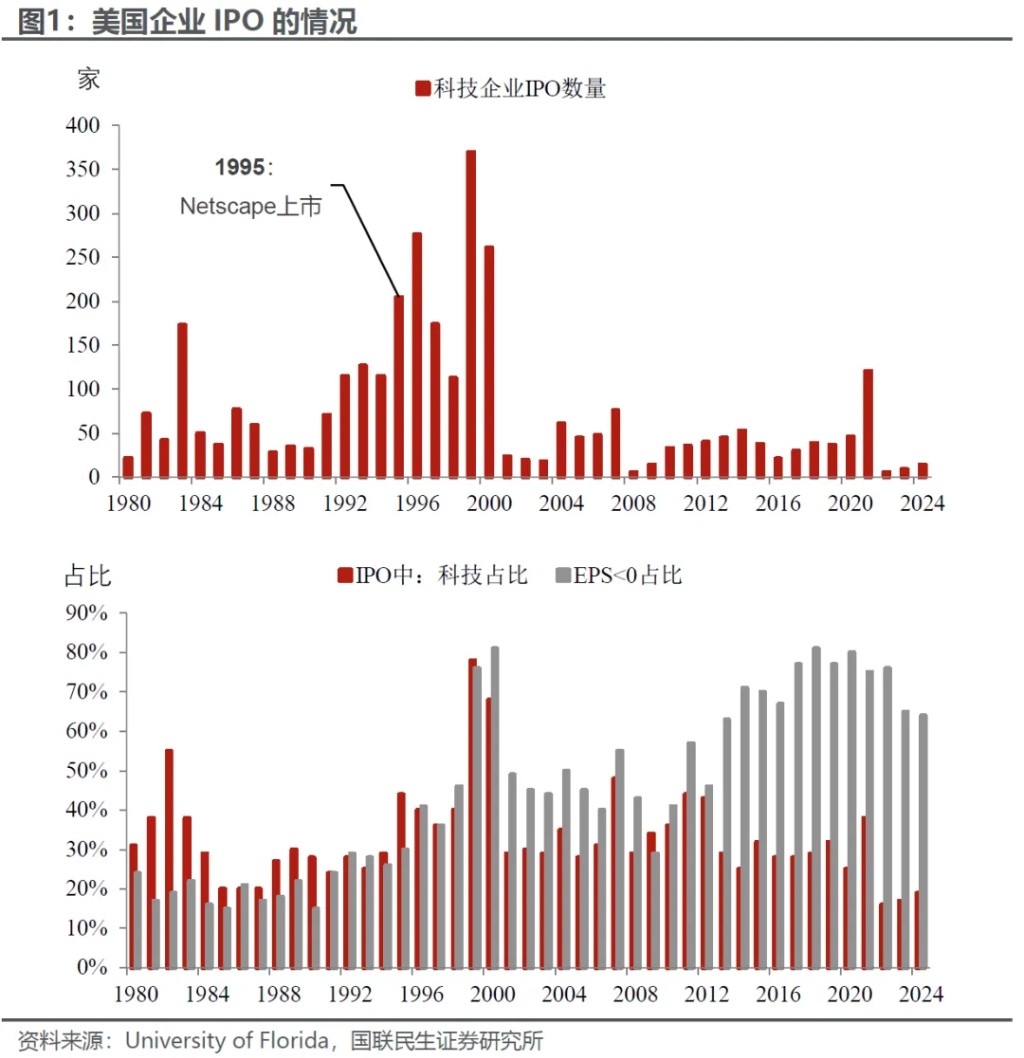
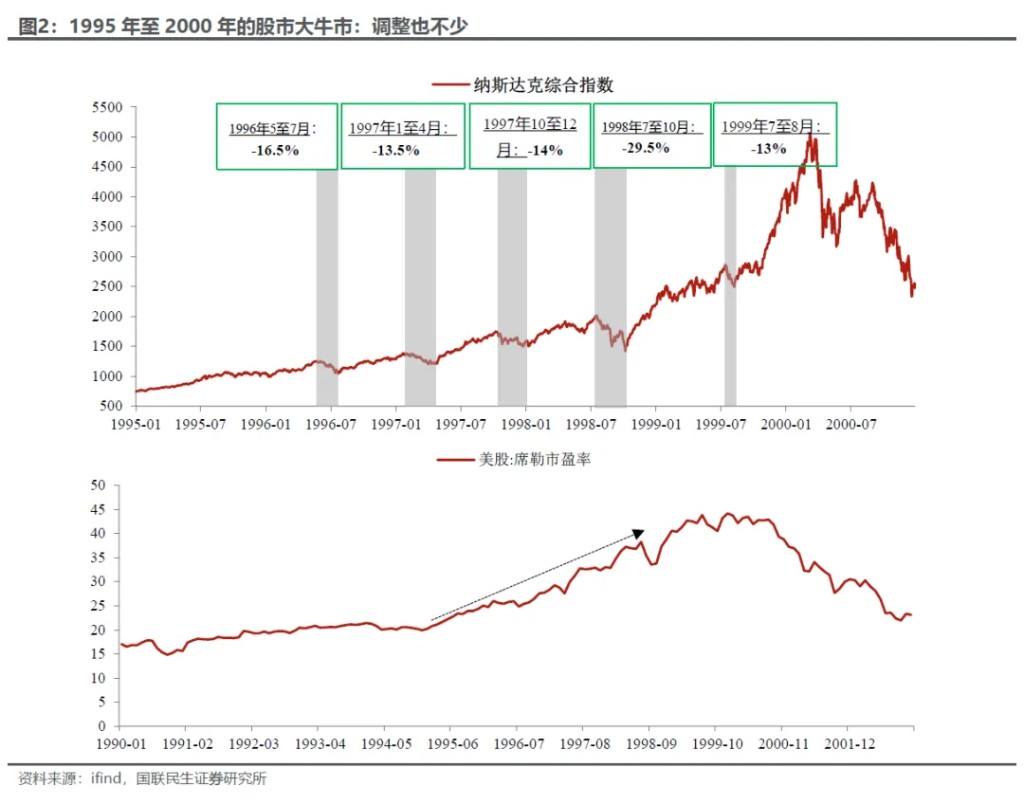
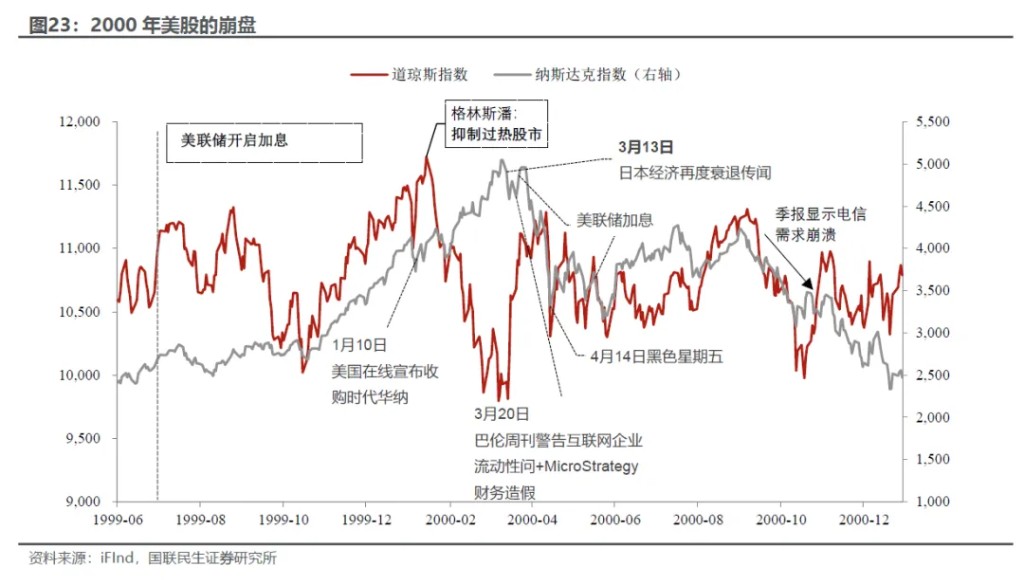
It is generally believed that the internet bubble began with the IPO of the web browser development company Netscape on August 9, 1995. From the data of the IPO, starting in 1995, the number and proportion of technology company IPOs significantly increased, peaking in 1999. On March 10, 2000, a Friday, the NASDAQ Composite Index reached a peak of 5048.62 (a record that would not be surpassed until April 2015), and the following Monday, news of Japan's economic recession emerged, leading to a global sell-off that severely impacted the NASDAQ.

Overview: What Kind of Era?
Reflecting on this experience, we first need an overall understanding:
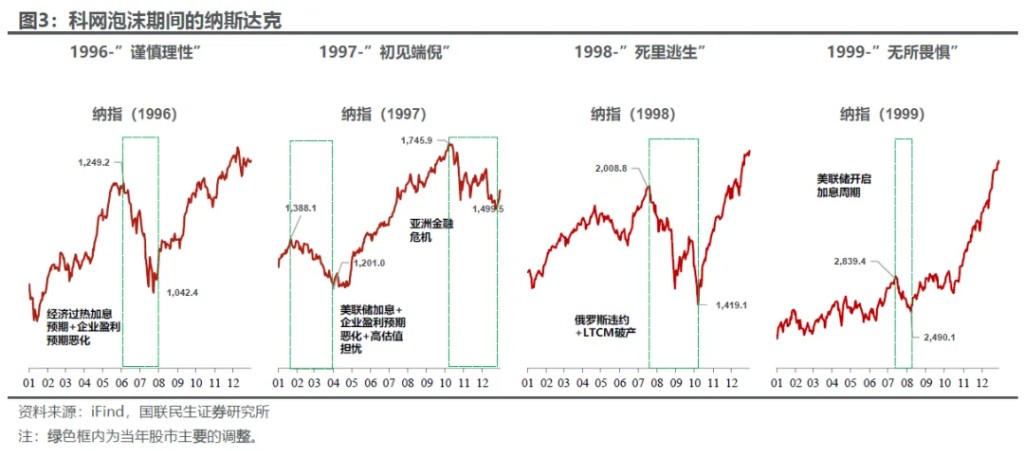
From the market perspective, it was not "smooth sailing." Taking the NASDAQ as an example, from 1995 to 2000, against the backdrop of rapidly rising valuations, there were basically annual declines exceeding 10%, even 20%, after 1995. Why did the market not enter a bear market as a result, but instead always manage to rebound?


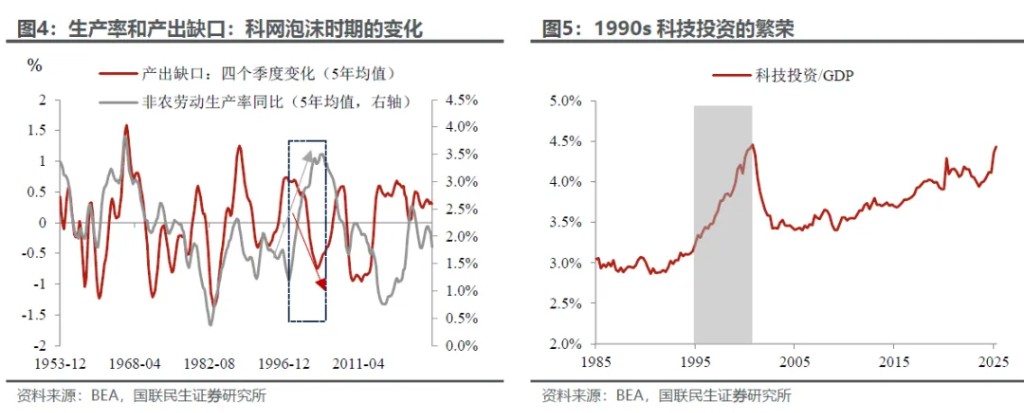
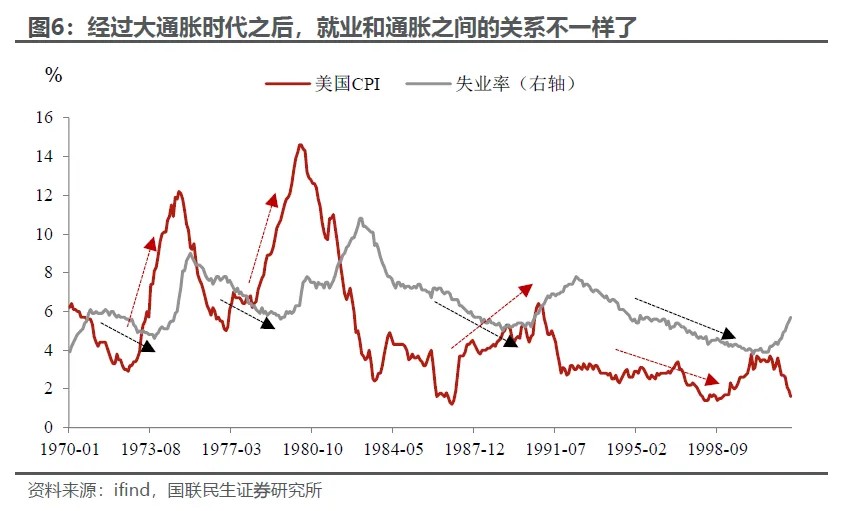
From the economic perspective, two important features: 1) The rapid increase in labor productivity led to a contraction of the output gap, even turning negative; 2) The prosperity of technology investment. A direct consequence of this was the failure of the Phillips curve: Despite the continuous decline in unemployment rates, inflation did not show the upward inertia seen in the previous decade. This is the basic macro foundation for the changes in Greenspan's monetary policy framework **


In terms of policy, the main change is in the monetary policy framework. In the 1980s, the Federal Reserve's monetary policy focused on controlling inflation, while in the 1990s, its goals and paradigms became broader and more flexible, or rather more ambiguous, leading to a generally accommodative monetary policy during this period:
-
Still focused on inflation and employment. However, Alan Greenspan was open to the economic acceleration and declining unemployment brought about by productivity improvements, not in a hurry to raise interest rates.
-
Focused on the stability of overseas economies, limiting the appreciation of the dollar. During this period, overseas financial events occurred frequently, while the U.S. economy remained resilient. Greenspan was concerned that tightening monetary policy would lead to further appreciation of the dollar, exacerbating overseas financial crises (capital outflows from non-U.S. markets).
-
Focused on financial markets, mainly financial stability and asset bubbles. A prominent event was the bankruptcy of Long-Term Capital Management, which caused significant market turmoil. To avoid systemic risk, the Federal Reserve cut interest rates three times in succession.
Regarding asset prices (bubbles), Greenspan's thinking was constantly evolving, and this shift became the last straw that broke the stock market:
Optimism in early 1995-1996 (technological advancements and productivity improvements supporting stock price increases);
In December 1996, he warned of "irrational exuberance" in asset prices but insisted that monetary policy should not intervene excessively;
By 1999, a "post-facto management" framework took shape. Unable to identify bubbles in advance, monetary policy should not attempt to "pop" bubbles but should focus on maintaining overall price stability and mitigating the consequences after a bubble bursts;
In 2000, suppressing excessive stock exuberance. This could lead to excess demand through the wealth effect, resulting in the risk of uncontrolled inflation.
Next, we will "travel back" to the beginning of the bubble, taking you through the mental journey of researchers and investors at that time. Specifically, we will review from several dimensions: the corporate dimension, the market dimension, the policy dimension, and others (some special factors).
1995 to 1997: The Prologue of the Internet Era
If we divide the entire "drama" into several parts, then 1995 to 1997 can be considered the prologue of the story, slowly unfolding and exciting the market while still retaining some rationality.
1996 is considered the inaugural year of the systematic rise of the internet wave. Both in terms of cognition and policy, it laid the foundation for the subsequent telecommunications - internet market.
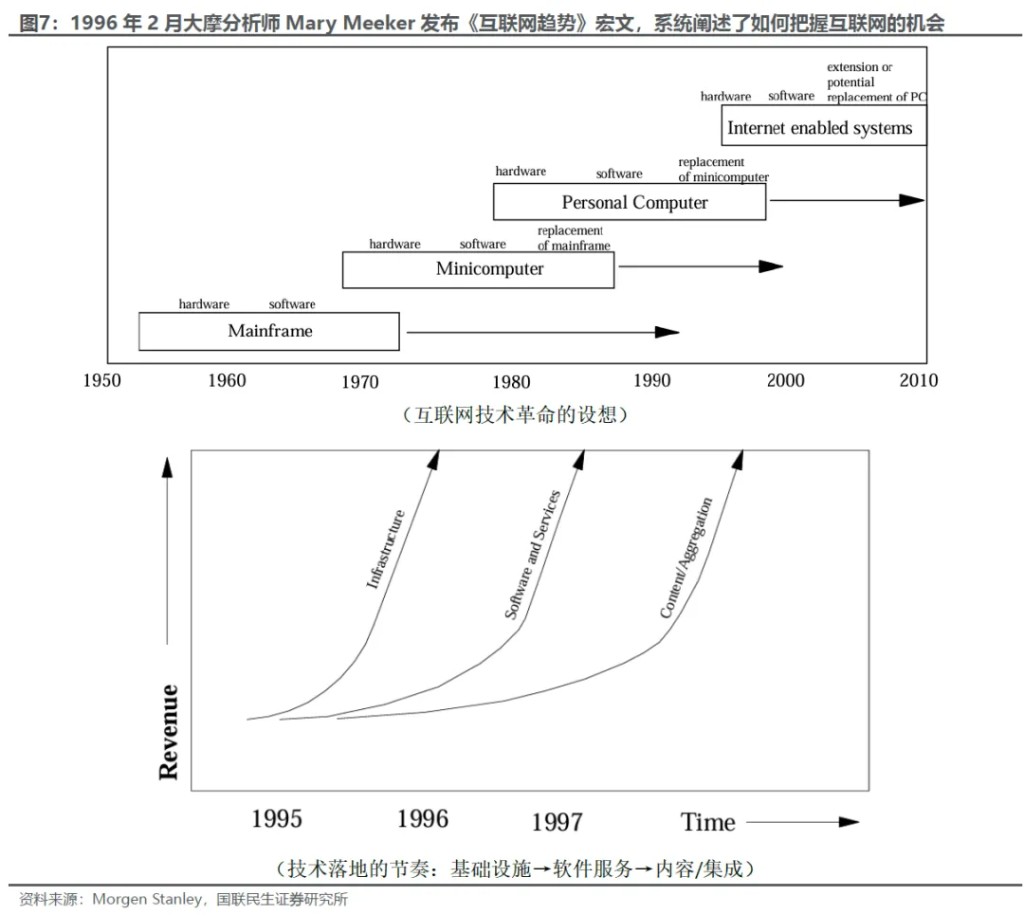
In February 1996, Morgan Stanley analyst Mary Meeker published a more than 300-page "Internet Trends" report, which became the most influential internet investment guide on Wall Street at the time: 1) comparing internet trends to the earlier "personal computer revolution"; 2) Proposed the landing and investment ideas from infrastructure/hardware → software services → content/integration.

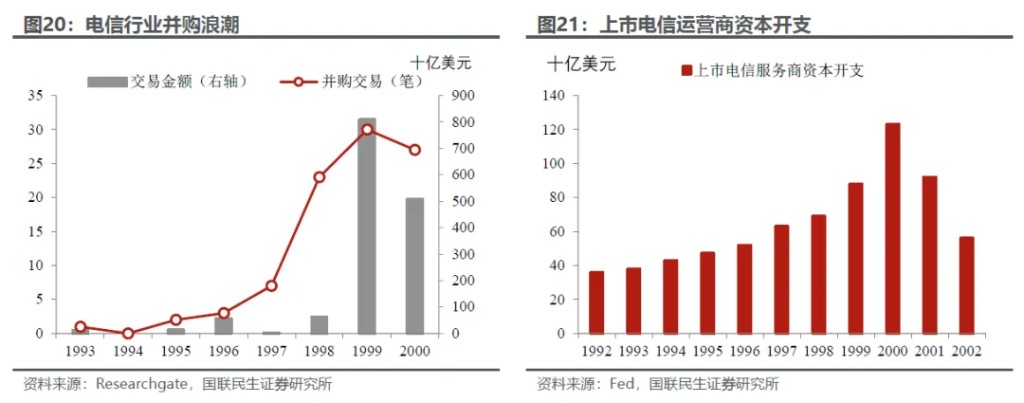
On the policy side, in 1996, a unified national internet market began to be established. In 1995, NSFnet (National Science Foundation Network) was decommissioned, and the commercialization process of the U.S. internet infrastructure began. Also in February 1996, President Clinton signed the Telecommunications Act of 1996, which broke regional and industry monopolies, triggering a wave of large-scale mergers and acquisitions: directly leading to a wave of telecommunications company IPOs and the subsequent telecommunications investment boom.
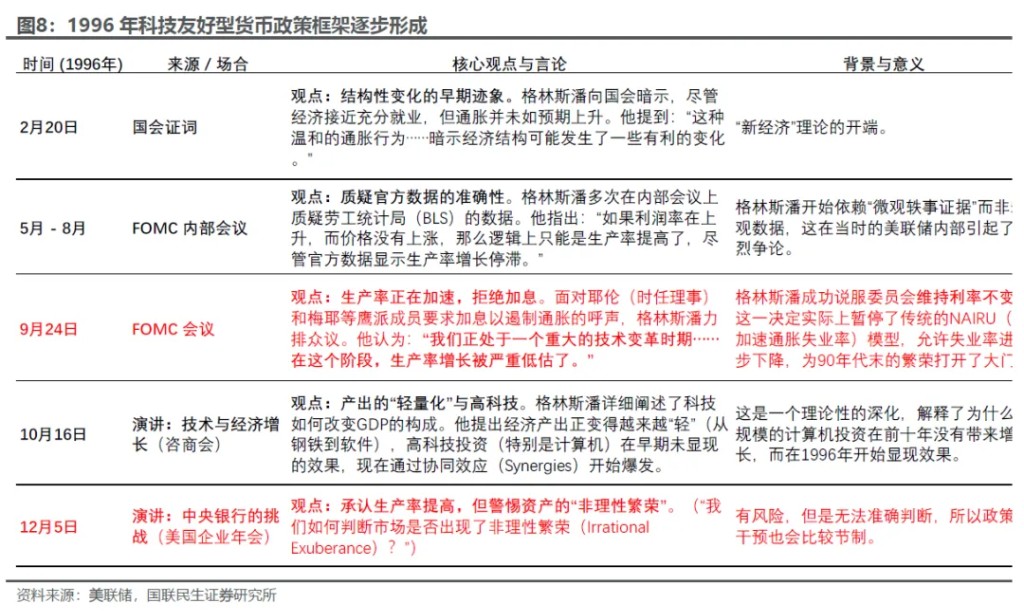
On the monetary policy front, a technology-friendly framework began to take shape. Alan Greenspan from the business consulting industry showed a very friendly attitude towards technology: 1) In the critical September 1996 FOMC meeting, he resisted the calls from hawkish members to maintain interest rates unchanged, arguing that the acceleration of productivity could lead to a decrease in the natural unemployment rate, thus limiting inflation. 2) Although he pointed out the risk of "irrational exuberance" in assets, he could not accurately determine it, so policy intervention would also be relatively restrained (Figure 8).

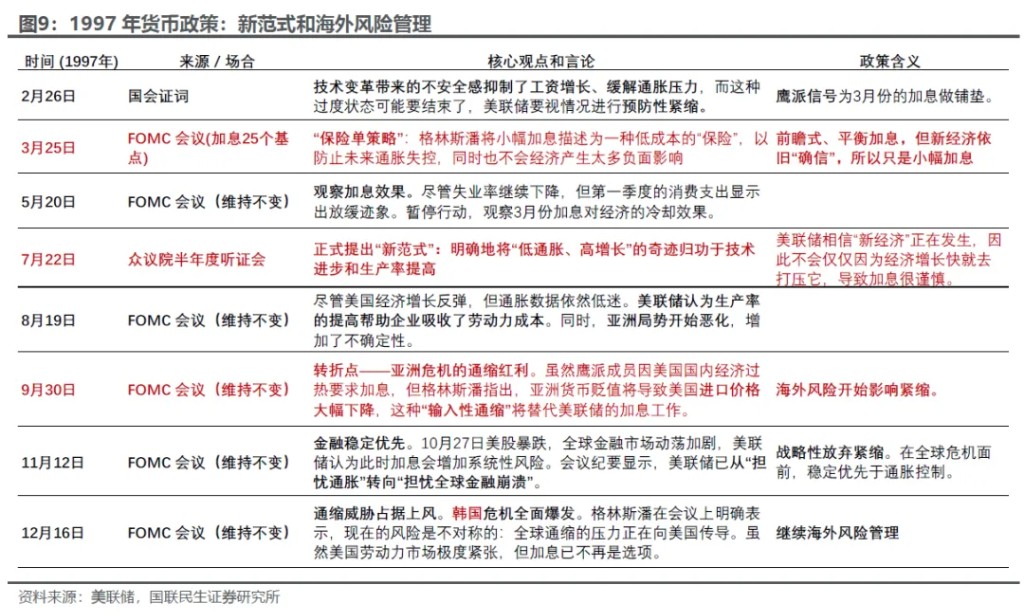
In addition, under the declining inflation pressure (from mid-1997 to mid-1998), Greenspan's monetary policy framework began to have risk management functions, especially concerning overseas and financial markets. In 1997, the Federal Reserve under Greenspan was likely to start a rate hike cycle (albeit slowly), but due to the outbreak of the Asian financial crisis, the rate hike was put on hold:
-
Formally proposed a new paradigm that technological progress curbs inflation, which also established a cautious tone for the Federal Reserve's rate hikes.
-
Overseas crises and the appreciation of the dollar would lead to imported deflation, which was still considered to have achieved the effect of controlling inflation through rate hikes in a disguised manner.

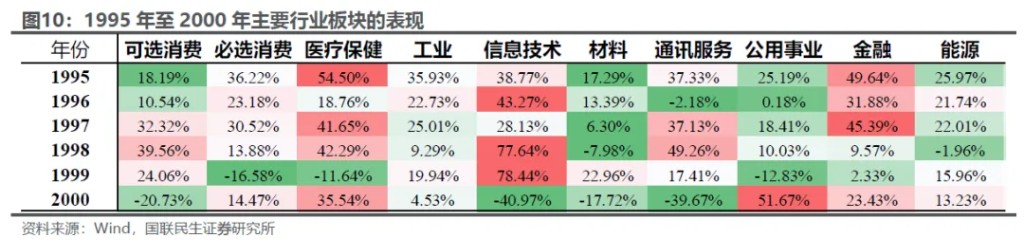
From the market perspective, from 1995 to 1997, the returns of the information technology sector were not "head and shoulders above the rest." The healthcare, finance, and other sectors also had bright or even better performances. Moreover, there were many rational optimists in the market, such as the famous Bill Miller, who, based on a positive outlook for the technology industry and adherence to fundamental judgment standards, purchased hardware companies like Dell and IBM and achieved good returns.

1998 to 1999: The "Fervent" Investment Boom
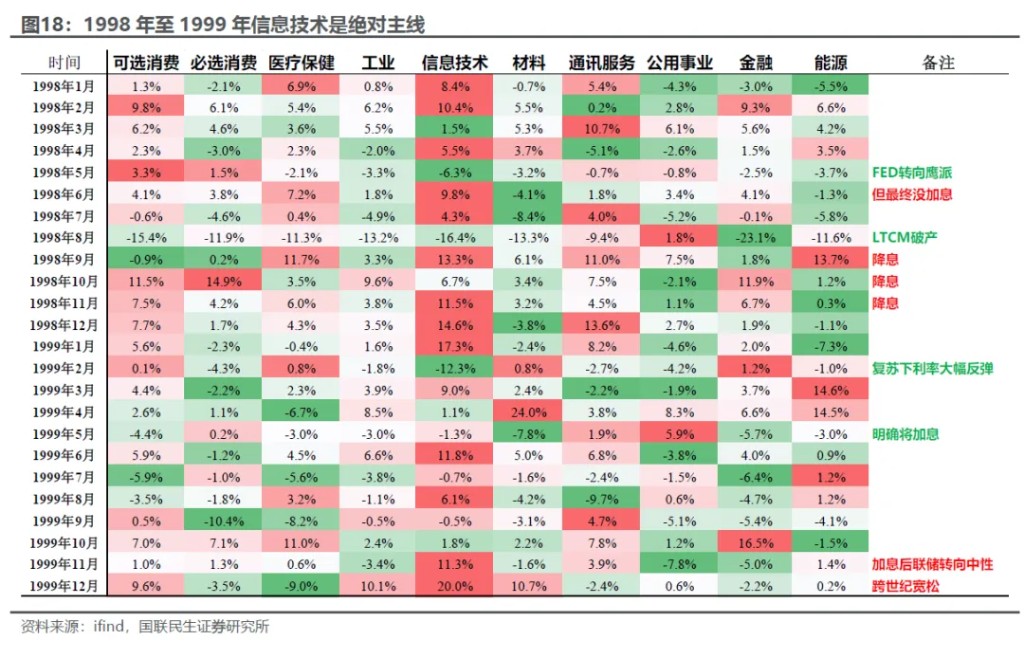
From the market performance perspective, technology stocks did not perform well in 1997 due to falling chip prices and declining profit margins, leading investors to worry about a technology bear market. In contrast, financial stocks performed very well. However, in 1998 and 1999, technology entered the fast lane: both investment and financing activities and stock prices surged.
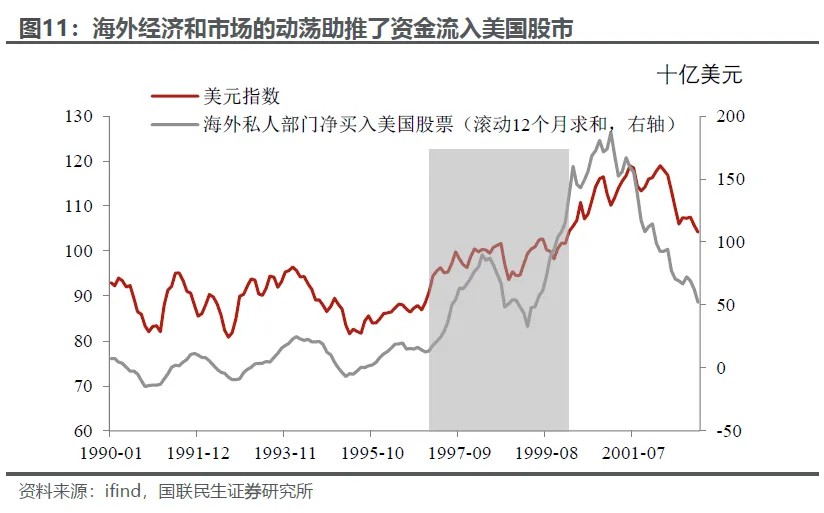
From a macro perspective, the loose liquidity seemed to be the backdrop for all accelerated markets: First, similar to the "exceptionalism" in the United States, there was turmoil overseas, but the U.S. economy and market showed resilience, resulting in foreign capital flowing out of emerging markets and into the U.S., leading to the appreciation of the dollar. Second, the entire monetary policy underwent a shift from further unexpected easing to normalization, with policies remaining loose but starting to focus on the impact of assets on the economy.

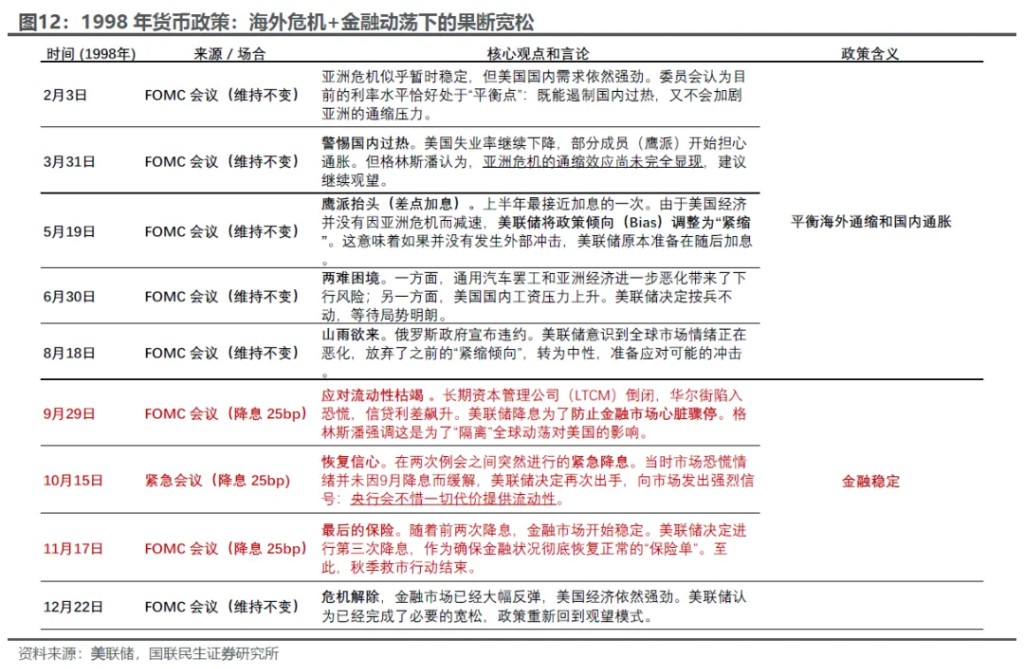
In terms of monetary policy, there were originally expectations of tightening in 1998, but due to overseas turmoil and extreme events in the capital market, the Federal Reserve urgently cut interest rates three times in the absence of significant inflation issues. On one hand, this highlighted the significant change in the policy framework under Alan Greenspan; on the other hand, the "Greenspan PUT" emerged (the prototype of the "Federal Reserve PUT"), which fueled the FOMO mentality in the capital market. This also led to the market experiencing almost no major adjustments in 1999.

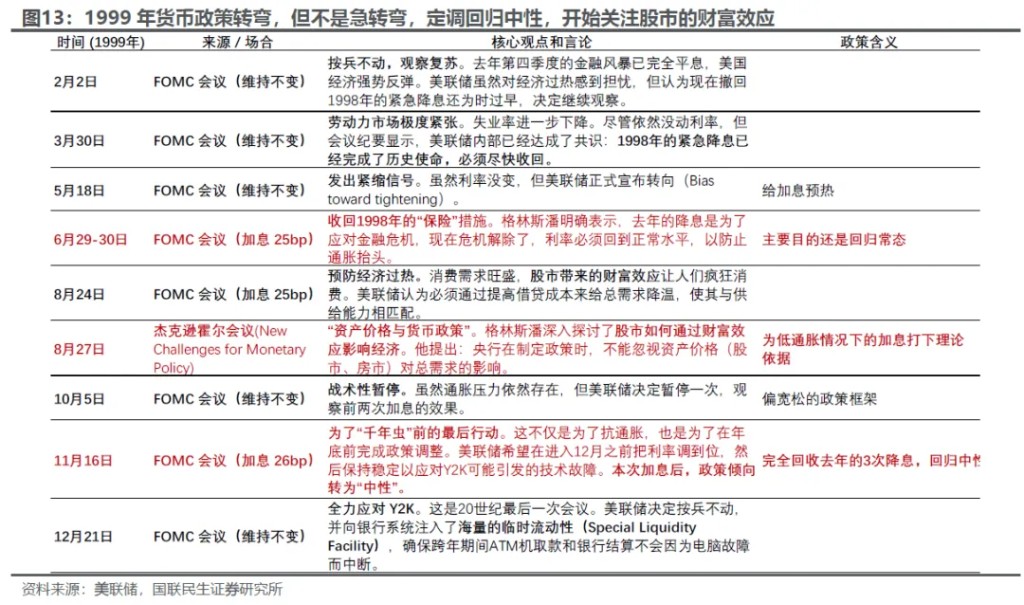
1999 still saw a loose rate hike. Although the Federal Reserve was concerned about overheating in the economy, it ultimately only slowly reversed the three emergency rate cuts from 1998.

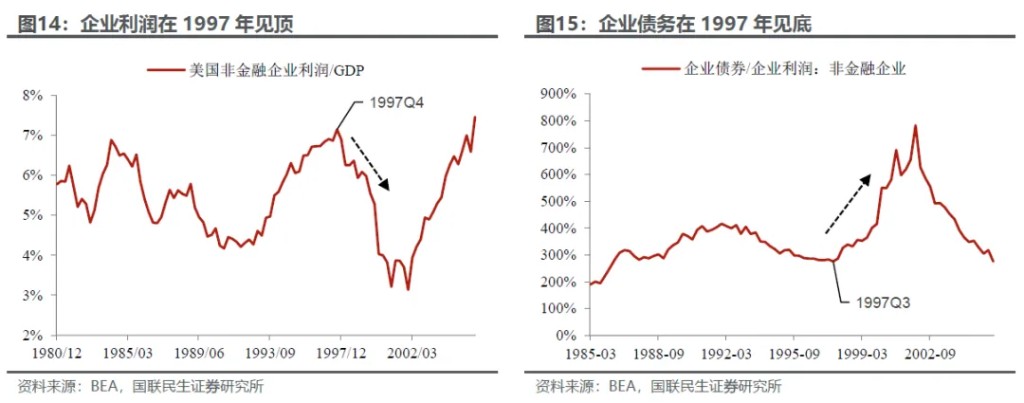
At the industry level, in this context, speculative activities naturally surged, and the operating conditions of enterprises reached a turning point. Overall, despite the surge in investment and financing activities, the share of profits at the enterprise level in GDP began to decline, while liabilities started to increase (Figures 14 and 15), mainly due to:

-
The uncertainty of technological shocks that suppressed wage growth began to dissipate, combined with the recovery logic after the overseas crisis, wage costs gradually began to accelerate (Figure 16);
-
Financial costs increased. In 1998, the credit spread widened due to overseas shocks/market turmoil, and in 1999, under the risk of economic overheating, the 10-year U.S. Treasury yield rose almost throughout the year, with an annual increase of 180 basis points (Figure 17), compounded by aggressive investment and financing activities later on These are all objective factors and conditions. Given such an environment (excess liquidity, and problems beginning to emerge), why did we ultimately move from an extreme "bubble" to a "collapse"? There are many smart people on Wall Street; is it really true that no one could see the underlying issues?

The fervor of tech stocks and the flourishing investment and financing activities in related sectors complement and promote each other. This is a common characteristic of the American bubble, except that 10 years later, it was real estate (housing prices and mortgages).
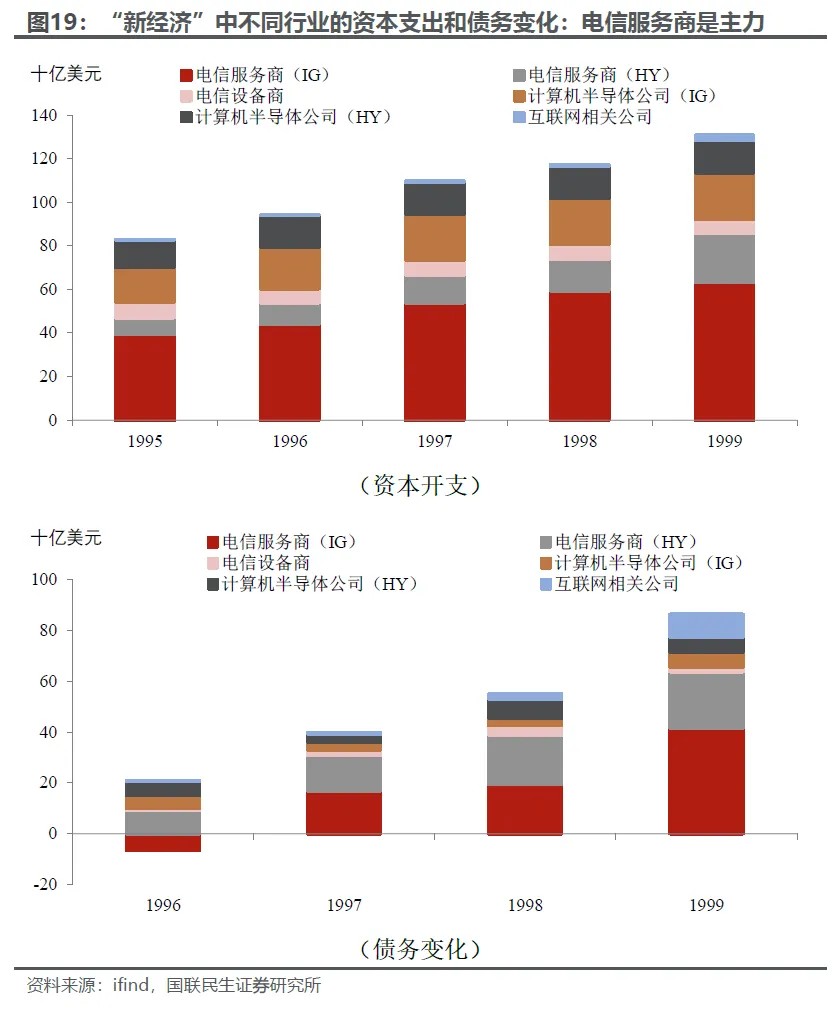
The performance of "new economy" stocks relies not on earnings, but on narratives built on investment and financing activities. The "new economy" generally includes four major industries: telecommunications service providers, telecommunications equipment manufacturers, computer semiconductor companies, and internet enterprises. Internet companies are responsible for envisioning new models and narratives, supporting these narratives through continuously expanding internet and IT investments. The reasons for the sustained acceleration of investments from 1997 to 1999 can be summarized in four aspects:

First, there is indeed an objective demand for unifying the national market and the internet revolution.
Second, it is part of the accelerating IPOs and market value management of listed companies. The telecommunications industry, driven by institutional liberation and industrial renewal, underwent large-scale mergers, reorganizations, and listings, with its internet infrastructure assets (such as laid fiber optic cable networks) serving as an important basis for valuation.
Third, the support of distorted financing business models. Telecommunications equipment manufacturers represented by Lucent and Cisco, based on market value and business competition, provided vendor financing to downstream telecommunications service providers to purchase equipment and conduct capital expenditures.
Fourth, the special issue of the "Y2K bug" brought about demand for computer hardware and software updates. According to estimates from the U.S. Department of Commerce, this scale is approximately $100 billion.
It is not difficult to see that the main force of investment is telecommunications service providers. According to data from the U.S. Census Bureau, 62% of the investment structure of telecommunications service providers is in communication equipment, 9% in computers, and 12% in software. This gradually formed a closed-loop mechanism where "the internet is responsible for the narrative, service providers are responsible for investment, equipment manufacturers are responsible for confirming revenue, and the capital market is responsible for acceleration."

The reasons for the subsequent acceleration lie in the continuously accelerating IPOs, mergers and acquisitions, and the upstream equipment manufacturers' short-sighted revenue recognition model, with supply chain financing being the most typical: lending money to telecommunications service providers to purchase equipment for capital expenditures and recognizing sales revenue (illegally) at the time of equipment delivery

An important condition for this closed loop is "the stock market is in a bull market/the lending market does not have problems." At least from 1998 to 1999, the operation of this chain was not problematic. However, telecom equipment manufacturers began to take more risky measures, massively lending money to poorly qualified telecom operators (similar to the subprime mortgage crisis).
From the performance of several major industries in the "new economy," most of the reported profits are steadily expanding , although the growth rate may not support excessively high valuations, it is unlikely to lead to a market crash (Figure 22). However, the hidden danger lies with the low-rated telecom operators—they continue to operate at a loss, with cash flow primarily relying on external financing.
According to data from CNET, by the end of 2000, the total amount of supplier financing for five North American telecom equipment giants was equivalent to 123% of their pre-tax profits in 1999, of which about 35% was lent to telecom and internet startups.
The subsequent content is very familiar, mirroring the subprime mortgage crisis; housing prices cannot keep rising, nor can stock prices (stock prices can easily transmit to the credit market). Once these clients cannot obtain sufficient external financing, a vicious cycle will ensue:
"Bankruptcy of financing clients → Bad debts for equipment manufacturers → Downgrade of equipment manufacturers' credit ratings → Banks refuse to arrange new financing → Restrictions on providing new financing to clients → Sales decline/bankruptcy of financing clients → More bad debts → Further downgrade of credit ratings."
This mechanism generally lays the groundwork for a downward spiral in the market, although it typically does not become the initial trigger for a stock market decline.

On a deeper level, why does such disordered capital "tumor" expansion occur? We believe there are several reasons:
First is the distorted corporate incentives. On one hand, executives of technology companies have a large number of stock option incentives linked to the company's stock; on the other hand, according to the accounting standards at the time, stock options were not accounted for as corporate expenses (starting in 2006, it became mandatory for listed companies to calculate the value of stock options as expenses and deduct them from profits).
Second is the relaxation and loopholes in financial regulation, with financial institutions fanning the flames.
On the policy level, the Riegle-Neal Interstate Banking and Branching Efficiency Act signed in 1994 broke regional restrictions, directly promoting a wave of large-scale mergers in the U.S. banking industry. In 1999, the Gramm-Leach-Bliley Act further ended the prohibition on financial conglomeration, but prior to this, a trend of conglomeration had already gradually formed, with a typical example being the merger announcement in April 1998 between Citigroup (bank) and Travelers Group (insurance, investment banking). The willingness for financial expansion surged, competition intensified, and financial innovations emerged. In terms of institutions, the aggressive ratings from investment bank analysts played an important role in "fanning the flames." According to Patricia C. O’Brien and Yao Tian (2006), since 1998, analysts have given higher recommendation ratings to internet stocks compared to other new stocks, and this relationship was particularly evident in the year of the internet stocks' initial public offerings (IPOs).
Thirdly, the lack of strict internal controls in companies has left significant room for financial operations. For example, telecom equipment companies like Lucent used vendor financing sales, recognizing revenue at the time of product delivery while deferring the credit and collection risks of customers. For instance:
Telecom equipment company L provides a dollar financing limit to a financially troubled service provider A → Service provider A uses the limit to purchase telecom equipment worth X dollars from L on credit → Equipment company L recognizes X dollars in revenue for the quarter (even though it has not received payment), EPS rises → Stock price increases, CEO bonuses rise, option values grow → Two years later, service provider A files for bankruptcy, and company L is unable to recover the funds → Company L is forced to set aside provisions for bad debts and reduce revenue.
2000: Who took the cup? Who added insult to injury?
The first shot was fired by the Federal Reserve. On January 13, 2000, Greenspan delivered a speech at the New York Economic Club (published on January 14), clearly shifting to suppress "overheating in the stock market," with the core logic being that the wealth effect from rising stock prices would lead to a surge in demand, threatening inflation stability. On the same day, the Dow Jones index peaked. Subsequently, the Federal Reserve raised interest rates consecutively in February, March, and May.
The peak of tech stocks and the subsequent crash unfolded against this backdrop. In a tightening liquidity environment, the impact of negative information is often magnified:
The Nasdaq reached its peak on March 10, Friday. The following Monday (March 13), news of Japan's economic recession spread, and the stock market began to plummet. But perhaps more importantly, Greenspan's monetary policy framework may have changed again, this time not pausing interest rate hikes or even cutting rates due to Japan's situation, but focusing more on addressing the inflation that had already emerged domestically.
Then, risks at the industry and company levels continued to surface, leading to the crash in April:
On March 20, Barron's published a cover story titled "Burning Up," which deeply analyzed the financial conditions of 207 internet companies. It sharply pointed out that at least 51 of these companies would run out of cash reserves within 12 months, and many companies had no hope of profitability. Coincidentally, on the same day, MicroStrategy, which was still an internet company at the time (now a cryptocurrency company), saw its stock price plummet 62% due to financial inflation of revenue.
April 3 is often regarded as an important event that burst the bubble: the Microsoft antitrust case. Microsoft's defeat began to raise legal doubts about the business model of the "new economy." As a weighted stock in the Nasdaq, Microsoft fell 14% on that day The overall negative sentiment ultimately culminated in the "Black Friday" on April 14, with the NASDAQ dropping 9% in a single day and 25% over the week.
Most importantly, the "Greenspan PUT" did not materialize, and as stock prices plummeted, the vicious cycle we previously mentioned began to take effect:
Starting in mid-2000, heavily indebted telecom service providers began to face widespread bankruptcies (such as Covad, Focal Communications, McLeod, Northpoint, and WinStar), and financial risks for companies like Lucent and Cisco began to surface. This led to a vicious cycle of impairment recognition, financing freezes, and credit downgrades.
Subsequent earnings reports gradually revealed a collapse in telecom demand, concerns over over-investment began to emerge, and corporate financial scandals became frequent.
At this point, telecom equipment manufacturers, which served as the "ballast" of the dot-com bubble, fell into losses and financial fraud, with Lucent, once a shining star, going bankrupt. Without the support of an investment expansion narrative, the cash flow issues of internet companies were also magnified.

Summary: Lessons and Insights from the Dot-Com Bubble
Loose liquidity is a common characteristic of bubbles, especially within a monetary policy framework that requires a relatively loose or discretionary approach.
Profit-seeking businessmen (this may be a biased statement, as the incentive functions of micro-entities contradict macroeconomic equilibrium; these companies face a "no investment means elimination" situation, which may compel them to appear greedy and profit-driven) and relaxed regulation are the driving forces behind bubbles.
Whether a bubble is extreme depends on the underlying acceleration mechanisms. The key is whether there is a chaotic leverage expansion driven by credit deterioration. If they are merely investing profits, the worst outcome would be the bankruptcy of the companies themselves; only when they engage in fierce battles with massive financing (underpinned by the savings of ordinary people) can it ferment into significant financial turmoil.
In the end, we know that the internet is one of humanity's greatest inventions, lowering the barriers and costs of communication and propelling almost all the well-known tech companies to their peaks. But this history also teaches us a profoundly simple lesson: the essence of technological progress is the enhancement of productivity—investing less cost to achieve greater output. However, during the frenzy of capital expenditure, costs are inflated indefinitely, making it extremely difficult to improve efficiency (the speed of output must exceed the speed of capital goods price increases, which is nearly absurd considering the growth rate of capital expenditure). Therefore, only after the cost of inputs begins to decline can new technologies start to replace old ones. Thus, before total factor productivity improves, the costs of new technologies must significantly decrease.
Chuan Yue Global Macro
Risk Warning and Disclaimer
The market carries risks, and investments should be made cautiously. This article does not constitute personal investment advice and does not take into account the specific investment objectives, financial conditions, or needs of individual users. Users should consider whether any opinions, views, or conclusions in this article align with their specific circumstances Based on this investment, the responsibility lies with the investor.