SK Hynix invests $13 billion to build a factory to address HBM shortage

SK Hynix has invested nearly $13 billion to build an advanced packaging plant, aiming to seize the high ground in high-bandwidth memory (HBM) during the AI era. The facility is located in Cheongju, South Korea, focusing on enhancing chip efficiency through high-density integration technology to meet the surging order demand from AI giants like NVIDIA. Institutions expect the HBM market to have a compound annual growth rate exceeding 33% over the next five years, directly driving DRAM prices to rise by more than 50% quarterly
South Korean chip manufacturer SK Hynix announced on Tuesday that it plans to invest 19 trillion won (approximately 12.9 billion USD) to build a new advanced packaging factory to meet the surging demand for high bandwidth memory (HBM) driven by the rapid development of artificial intelligence technology.
According to the statement, the new factory will primarily focus on advanced packaging technology, which is a key link in enhancing chip performance and energy efficiency. The facility will be located in Cheongju, South Korea, and will expand on the company's existing production layout. SK Hynix stated that the construction plan will start in April this year and is expected to be completed and put into production by the end of 2027, significantly enhancing its ability to integrate multiple memory chips into a single high-density unit.
As a leading global producer of memory chips, SK Hynix currently dominates the HBM market, which is a core component of AI processors from companies like NVIDIA. With the intensifying global AI race, the demand for high-performance memory chips continues to rise, driving up product prices and prompting major memory giants to accelerate capacity expansion. SK Hynix's substantial investment is aimed at meeting this long-term growth trend.
Market analysis indicates that this move not only strengthens SK Hynix's competitiveness in the high-end memory sector but also reflects a shift in capital expenditure focus within the semiconductor industry towards AI-related infrastructure. This strategic expansion occurs against the backdrop of its main competitor Samsung Electronics also announcing an increase in HBM production, signaling that industry competition will further intensify and could have profound impacts on global electronic supply chain costs.
Betting on AI-Driven Market Growth
The core logic behind SK Hynix's investment lies in its optimistic expectations for future market demand. The company cited industry forecast data in its statement, indicating that the compound annual growth rate of the HBM market is expected to reach 33% between 2025 and 2030. This explosive growth is primarily driven by the proliferation of AI applications, making high-performance memory one of the most profitable segments in the semiconductor industry.
The new factory will focus on advanced packaging processes, which combine multiple memory chips into a high-density unit, significantly enhancing data processing speed and energy efficiency while reducing the overall chip size. This technological route is crucial for meeting the stringent bandwidth and energy consumption requirements of next-generation AI processors.
Supply Tightening and Price Increase Pressure
Despite the promising outlook for the HBM market, its production process is far more complex and demanding than that of traditional memory used in most consumer electronics. As chip manufacturers shift their capacity to meet AI-driven high-end demand, signs of supply tightening for traditional memory chips have emerged.
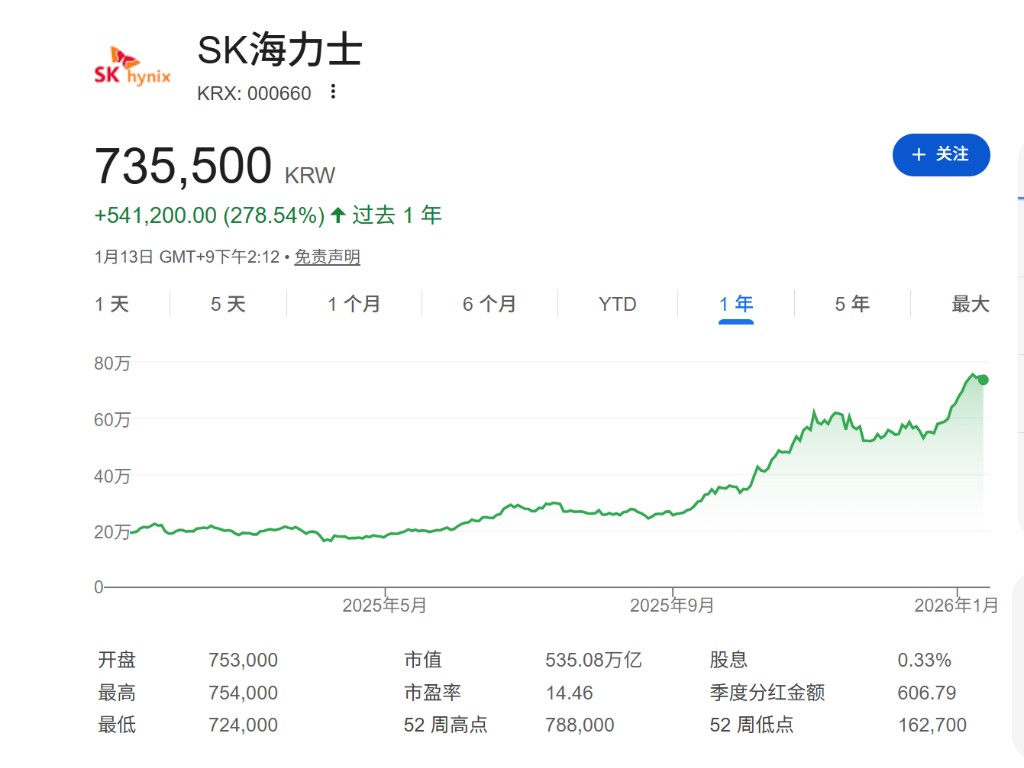
Research firm TrendForce released a report last week stating that the average price of dynamic random-access memory (DRAM), including HBM, is expected to rise by 50% to 55% compared to the fourth quarter of 2025. DRAM typically refers to the main volatile memory used for temporary data storage in most computers. While higher memory prices pose cost challenges for electronics manufacturers, they have also significantly boosted the profitability of memory chip producers. For example, Samsung Electronics stated last week that it expects its operating profit for the December quarter of last year to nearly double compared to the same period last year After experiencing a strong performance in the South Korean stock market in 2025, SK Hynix is currently evaluating potential plans for a U.S. listing. Since the beginning of this year, the company's stock price has risen by about 12%, although it fell by approximately 2.5% in Tuesday's trading. As a key supplier to U.S. tech giants like NVIDIA, SK Hynix's movements in the capital markets are being closely watched by global investors.