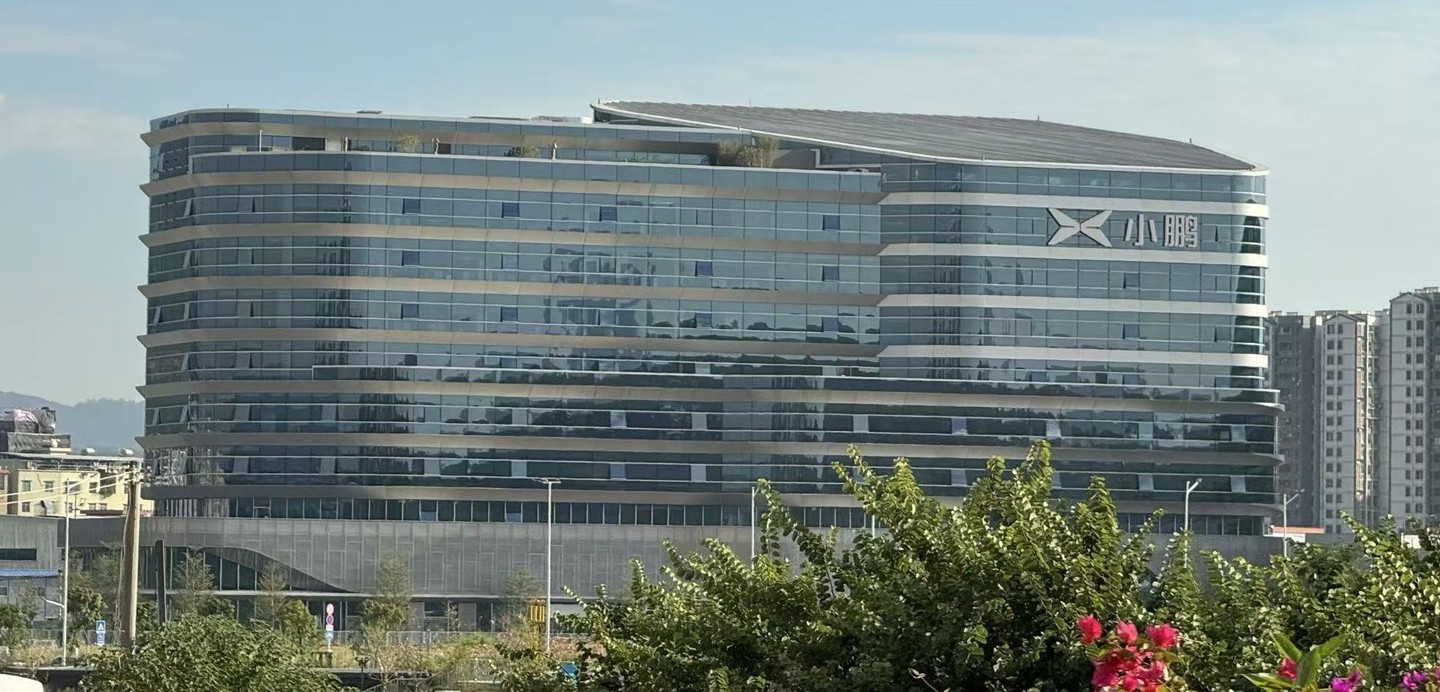
XPeng accelerates globalization again

Wallstreetcn
2026.01.13 13:39
portai
I'm PortAI, I can summarize articles.

Establish a localized supply chain team

Author | Wang Xiaojun

Editor | Zhou Zhiyu

"I expect that in the next three, five, and ten years, XPeng's sales, cooperation, and empowerment overseas can reach a 1:1 ratio with the Chinese market, or even higher."

This is the clear goal set by He Xiaopeng, Chairman and CEO of XPeng Motors, for the company's globalization process. In his view, 2026 will be a year of rapid growth for XPeng Motors, with overseas market growth exceeding that of the domestic market.

To achieve all of this, XPeng needs to comprehensively strengthen its construction in overseas markets.

On January 13, XPeng announced that the company plans to establish an independently operating localized supply chain team in Europe and the ASEAN market by 2026 to support and deepen the layout and operation of overseas supply resources, enhancing supply chain response speed.

After laying out the supply chain, XPeng will form a comprehensive localized layout covering production, supply chain, and after-sales in Europe. The benefits of this deep layout are evident. It can significantly shorten vehicle delivery cycles, allowing local consumers to pick up their cars faster; it can also effectively reduce import tariff costs, enhancing product price competitiveness.

Prior to this, XPeng's globalization layout showed a clear "Southeast Asia-Europe" dual-track progress pattern. The year 2025 will be a critical watershed in its overseas expansion process: from Indonesia to Austria, and then to Malaysia, three major overseas production bases were successively established within just six months.

Indonesia, as XPeng's first overseas production base, has certain exploratory significance. In July 2025, the right-hand drive version of the XPeng X9 officially began production in Jakarta, Indonesia, with a starting price of 990 million Indonesian rupiah (approximately 440,000 RMB), targeting Southeast Asia's largest automotive market.

The European market is also progressing rapidly. In September 2025, XPeng collaborated with the Magna factory located in Graz, Austria, leveraging the existing mature production lines of the factory to promote the localization of electric vehicle production in Europe. The first batch of XPeng G6 and G9 models produced locally in Europe has successfully rolled off the production line.

The Malaysia project carries even more far-reaching strategic intentions. Malaysia has a mature automotive industry chain and a convenient regional logistics network, as well as experience in producing right-hand drive vehicles suitable for multiple ASEAN countries, making it an ideal pivot for XPeng to radiate throughout the Southeast Asian market.

At the end of last year, XPeng officially announced that it had signed a contract with Malaysia's EPMB Group to officially launch its localized production project in Malaysia. According to the plan, the XPeng G6 is scheduled to begin production in Malaysia by the end of March 2026, and the X9 model (including the X9 extended range version) is planned to begin production in May 2026.

Localized production directly addresses two major pain points: high tariffs and long supply chain cycles. For example, in the ASEAN market, the tariff on an imported car can be as high as 30%-50%, while localized production can significantly reduce this cost. At the same time, a shorter supply chain means faster market response speed, allowing for quick adjustments to products based on local demand At the same time, XPeng's globalization is also reflected in its R&D efforts. In September 2025, XPeng Motors' research and development center in Munich, Germany, will officially be put into operation. This is its first R&D center in Europe and the ninth largest R&D center globally.

The synergy between R&D and production has already become evident. Taking the European market as an example, XPeng Motors leverages the Munich R&D center to understand local user demands, and then conducts localized production at its Graz factory in Austria, forming a "R&D + production" strategic closed loop in Europe. This model ensures that products better adapt to local market needs.

Recently, He Xiaopeng also traveled to the United States to experience intelligent driving and engaged in a bet with the local R&D team. He Xiaopeng previously stated in an interview that in the second half of 2026, XPeng will bring its autonomous driving capabilities to the global market.

Currently, XPeng is accelerating the launch of extended-range models worldwide. After entering the "pure electric + extended-range" dual technology route, XPeng can focus on pure electric models in markets with well-developed charging infrastructure; while in Southeast Asian markets where charging infrastructure is still developing, extended-range models will become a strategic priority.

With the deepening of its localization strategy, XPeng Motors' overseas sales have shown explosive growth. From January to December 2025, XPeng Motors delivered 45,008 units in overseas markets, a year-on-year increase of 96%. This data demonstrates XPeng Motors' strong expansion momentum in overseas markets.

Since last year, new force car manufacturers like XPeng have reached a sales level of 30,000 units per month, but industry competition requires these companies to continue expanding their markets to reach the final table, rather than being satisfied with their current scale. The vast overseas market is a common choice for these car manufacturers.

He Xiaopeng's goal of "more than half of sales coming from overseas in the next decade" is gradually becoming a reality. With the deepening of localized production overseas, XPeng Motors' global competitiveness will be further enhanced.

With the mass production of the Malaysian factory in 2026 and the establishment of the European supply chain team, XPeng's globalization strategy will enter a new phase. At the same time, the overseas story of Chinese automobiles is upgrading from the old script of "selling products" to a grand narrative of "global manufacturing" with deep participation in the global industrial chain.

This journey is still long, but the direction is already clear