


今天美国最高法院的关税裁决中有什么利害关系?

The US Supreme Court is set to rule on the legality of President Trump's tariffs, imposed in April 2025, which could significantly impact global markets. The case, initiated by small businesses and 12 states, questions whether the tariffs were legally justified under the International Emergency Economic Powers Act (IEEPA). Analysts predict the court may rule the tariffs unconstitutional, potentially complicating legal battles over refunds for importers. A ruling against the tariffs could challenge Trump's economic policies, while a ruling in favor would provide clarity but maintain the status quo.
[SINGAPORE] The fate of US President Donald Trump’s tariff regime could face a major test on Wednesday (Jan 14) in the US Supreme Court.
Jan 14 was scheduled as an “opinion day”, marking the date as one the court could make a decision on whether Trump’s tariffs – first imposed in April 2025 on most global economies – were issued illegally.
The session, scheduled to take place on Wednesday morning (Eastern Time), has left firms worldwide awaiting the decision – which is likely to send ripples through global markets regardless of the outcome.
What are the potential outcomes of the ruling, and how could they affect firms worldwide? The Business Times explains the background behind the case and the possible scenarios.
What is the case about?
The challenges to the tariffs were first brought against Trump by a number of small businesses impacted by his tariffs – including five facing potential bankruptcy – in April, along with lawsuits filed by 12 US states.
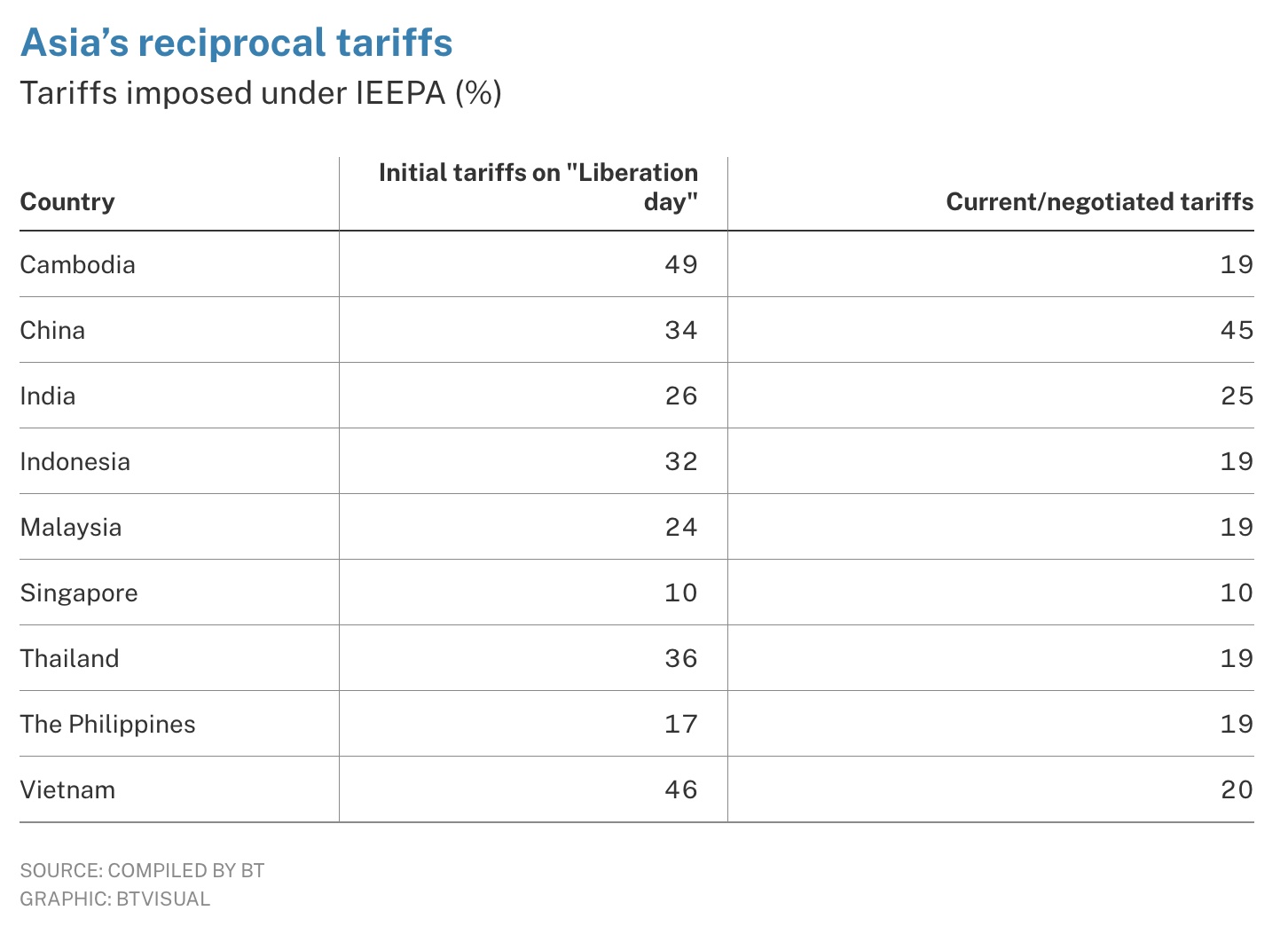
At issue are Trump’s Apr 2 “Liberation Day” tariffs, which placed levies of between 10 and 50 per cent on most imports.
The lawsuits were originally filed in the lower courts including the US Court of International Trade and the District Court for the District of Columbia. The lower courts ruled in 2025 that the president had overstepped his constitutional authority. The import taxes remained in place as it faced appeals by the Trump administration, giving the administration time to make its case before the Supreme Court.
These lawsuits were eventually consolidated and argued before the Supreme Court in November 2025, following a request by the Trump administration that the hearing be expedited given its “enormous importance”.
During the arguments, conservative and liberal justices appeared to question whether the tariffs – which Trump imposed by invoking a 1977 law meant for use during national emergencies – were constitutionally legal.
Under the International Emergency Economic Powers Act (IEEPA) of the US federal law, a US president is authorised to regulate international commerce in response to an “unusual and extraordinary threat” to the US – but the law contains no references to tariffs.
Trump has also invoked the law to impose tariffs on China, Canada and Mexico, citing the trafficking of the often-abused painkiller fentanyl and illicit drugs into the US as a national emergency.
Will the tariffs be ruled illegal?
Analysts that BT spoke to believed that the tariffs would be ruled unconstitutional, at least in part.
“It is clear that there is no basis for them, such as a national emergency that justifies the imposition of these tariffs under the IEEPA emergency powers,” said Dr Jayant Menon of the Iseas-Yusof Ishak Institute.
Stephen Dover, chief market strategist and head of the Franklin Templeton Institute, said that the Supreme Court could potentially invalidate Trump’s powers to broadly impose tariffs for national emergency reasons.
“Even if the court stops short of wiping everything out, it can still narrow the playbook by requiring a tighter link between the claimed emergency and the specific tariff remedy,” he said.
Meanwhile, prediction markets picked the courts to rule against the tariffs, with Polymarket traders assigning a 29 per cent chance for a decision in favour of Trump’s administration.
Scenario 1: The tariffs are ruled illegal
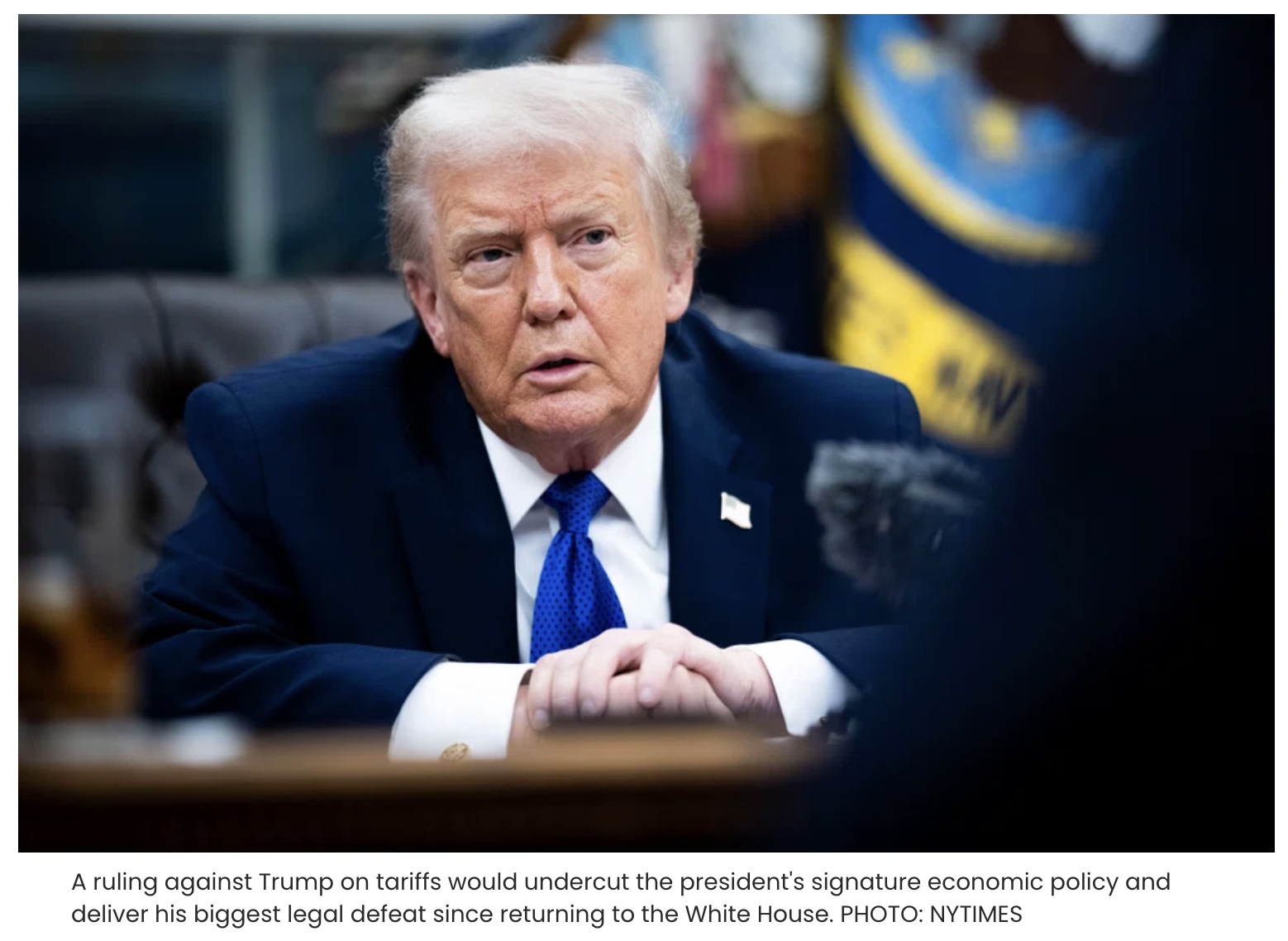
A ruling against Trump on tariffs would undercut the president’s signature economic policy and deliver his biggest legal defeat since returning to the White House.
It also would set the stage for potentially complicated legal fights over refunds of billions of dollars in tariffs paid so far by US importers, with more than 1,000 companies already lined up in court.
But analysts believe that such a ruling would far from spell an end to Trump’s tariff regime, which could look to avenues apart from IEEPA to impose tariffs.
“He will likely pursue other alternatives to impose these tariffs, since it is a critical part of his overall economic programme,” said Dr Menon.
Dr Menon noted that the US president could continue to impose tariffs under sections 232 and 301 of the US Trade Expansion Act – which grant the president authority to modify imports on the basis of national security or retaliate against unfair trade practices.
Trump’s administration has already implemented sector-specific tariffs under Section 232 – which are not under scrutiny in the Supreme Court case – including duties on steel and aluminium, copper and solar panels from South-east Asian countries.
However, ruling against the use of IEEPA would remove the administration’s ability to impose such duties with the same speed as before.
“It means the White House would have to use slower, more process-bound tools that require investigations and records,” Dover said.
Scenario 2: The tariffs are ruled legal
If the Supreme Court upholds the use of IEEPA to impose the tariffs, experts noted that this would still provide markets with clarity after months of uncertainty towards the tariff regime.
“If we get a decision Wednesday morning, businesses can start pricing a real tariff regime again – either a durable one if upheld, or a wind-down plan if struck (down),” said Dover.
This could offer crucial planning clarity for firms worldwide, including those pondering moving their supply chains into South-east Asia to sidestep tariffs on other nations.
“Firms deciding whether to allocate incremental capacity to Asean have been forced to treat tariffs as a moving target,” said Dover.
However, such a ruling would effectively validate wider executive powers for the president in US trade policy, introducing new elements of uncertainty into global investment decisions.
“This creates more reason for firms to diversify supply chains, hold extra inventory and delay some cross-border capex,” Dover noted.
A ruling in favour of Trump’s regime could further embolden the administration to use tariffs as a key foreign policy tool, noted Michael Langham, emerging markets economist at Aberdeen Investments.
This follows the president’s imposition of 25 percent tariffs on countries “doing business” with Iran earlier this week, in a move to back nationwide protests against its government.
“Markets may also become more concerned over the independence of the Supreme Court, with significant rulings due on the Federal Reserve, immigration and election processes,” said Langham.
Scenario 3: No decision is made
As the court does not say in advance when it will hand down a decision, it remains a possibility that no decision is made regarding the tariffs case on Jan 14.
Dover noted that the consequent uncertainty may deal the largest damage yet, if the court does not make a decision. “Firms don’t know whether today’s tariff schedule is durable, temporary or refundable.”
“Markets can live with bad news; they struggle with unpriced legal tail risks,” he said. “The longer the ruling is delayed, the more firms behave as if they must plan for both outcomes at once.”
Article Source : Businesstimes
