


"Sell America" trades make a comeback, smart money quietly flows north into Canada

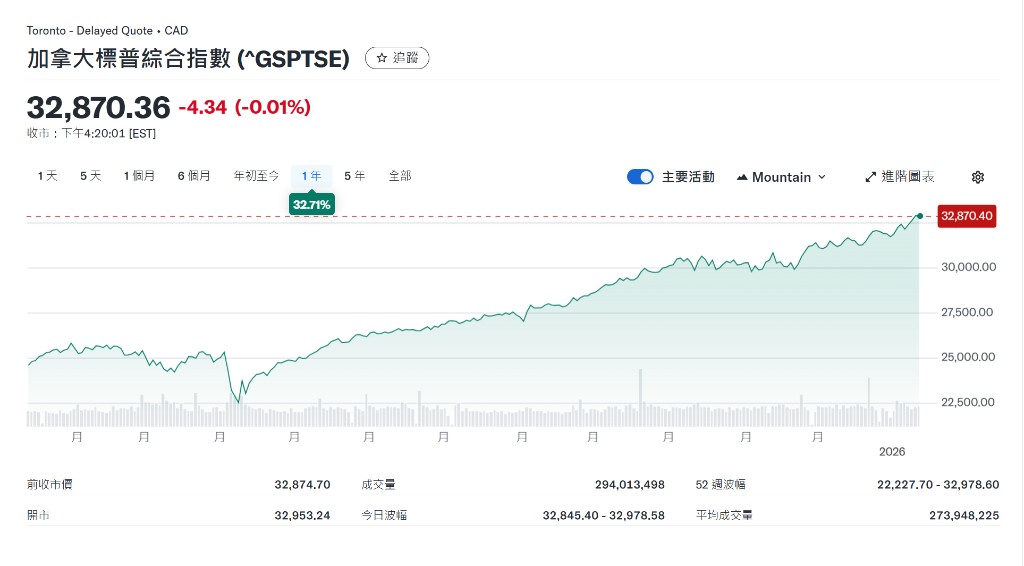
As concerns among investors about volatility in the U.S. market intensify, the trend of "selling America" has emerged again, with capital flowing into the Canadian stock market. The Canadian stock market has outperformed U.S. stocks, with the S&P/TSX Composite Index rising 28% last year and 3.7% so far this year. Market observers point out that the Trump administration's attacks on the Federal Reserve may exacerbate this trend, leading to a depreciation of the dollar and poor performance of U.S. stocks. Canadian assets are seen as a safe haven, and the undervaluation of the Canadian dollar has also strengthened the rationale for hedging against dollar risks
As concerns about volatility in the U.S. market grow among investors, a wave of trading known as "Sell America" is quietly emerging, prompting capital to seek more stable havens, with the Canadian stock market showing relative advantages not seen in two decades.
The Canadian stock market has just recorded its best annual performance relative to U.S. stocks in twenty years, with the S&P/TSX Composite Index soaring 28% last year, far exceeding the S&P 500 Index's 16% increase. This trend has continued into the start of 2026, with the Canadian benchmark index rising 3.7% so far, outperforming the U.S. stock market's 1.7% gain. Fund managers are betting that this strong performance will persist, leading investors to turn to lower-volatility alternative markets amid turmoil in the U.S. market.
Market observers believe that the Trump administration's escalating attacks on the Federal Reserve and Chairman Jerome Powell represent the most significant potential disruption facing U.S. assets. Strategists Hugo Ste-Marie and Jean-Michel Gauthier from Canadian Imperial Bank of Commerce point out that this situation could reignite the mild "Sell America" trades that emerged last April, leading to rising U.S. Treasury yields, poor performance of U.S. stocks, and a depreciation of the dollar.
The resurgence of this "Sell America" trading trend could put new pressure on the dollar and further suppress U.S. stock performance. Seth Meyer, head of global client portfolio management at Janus Henderson Investors, warns that global investors are beginning to demand a higher risk premium for holding U.S. assets, and recent market volatility will depend on whether Congress or the Treasury can once again calm the administration's aggressive rhetoric.
Canadian Market Becomes the Preferred Safe Haven
Amid market turmoil, Canadian assets are increasingly becoming a safe haven in the eyes of investors. Brian Madden, Chief Investment Officer at First Avenue Investment Counsel, points out that the Canadian dollar is structurally undervalued against the U.S. dollar, which strengthens the case for hedging dollar exposure. He emphasizes that the U.S. administration seems intent on undermining the credibility and independence of the central bank, making the logic of buying into Canada even more compelling.
Laura Lau, Chief Investment Officer at Brompton Funds, states that while the U.S. remains the most competitive economy globally, its competitiveness is declining. She notes that other countries are beginning to realize they have allowed the U.S. to maintain an advantage and are catching up. Lau is particularly optimistic about Canadian gold mining stocks like Agnico Eagle Mines Ltd. and European defense stocks like Rheinmetall AG.
Erosion of Federal Reserve Independence Triggers Risk Premium Reevaluation
The increasingly tense relationship between the Trump administration and the Federal Reserve is at the core of current market anxiety. Seth Meyer of Janus Henderson wrote in a report on Monday that as the rhetoric from the administration escalates, the risk premium demanded by global capital for U.S. assets is rising.
The uncertainty brought about by this political risk is directly fueling capital outflows. Analysts at Scotiabank explicitly mentioned in a report to clients that this political interference could trigger a chain reaction of rising U.S. Treasury yields and underperformance of the stock market, thereby reinforcing the logic of "selling America."
Despite the rising risk aversion, not all strategists are pessimistic about the U.S. market. Sadiq Adatia of the Bank of Montreal remains constructive on U.S. stocks. He believes that resilient consumer spending will drive stronger-than-expected economic growth in the coming quarters. Additionally, he opposes the view that AI-related stocks are generally overvalued and will face a bubble burst, indicating that there are still differing opinions on the outlook for U.S. stocks.
Risk Warning and Disclaimer
The market carries risks, and investment should be approached with caution. This article does not constitute personal investment advice and does not take into account the specific investment objectives, financial situation, or needs of individual users. Users should consider whether any opinions, views, or conclusions in this article are suitable for their specific circumstances. Investment based on this is at one's own risk.
