


Breakfast | The three major indices have declined for two consecutive days, with technology stocks leading the drop

The three major indices fell for two consecutive days, with technology stocks leading the decline. Meta dropped over 2%, and Broadcom fell over 4%; precious metals resumed their rally, with gold and silver hitting intraday historical highs for three consecutive days
Market Overview
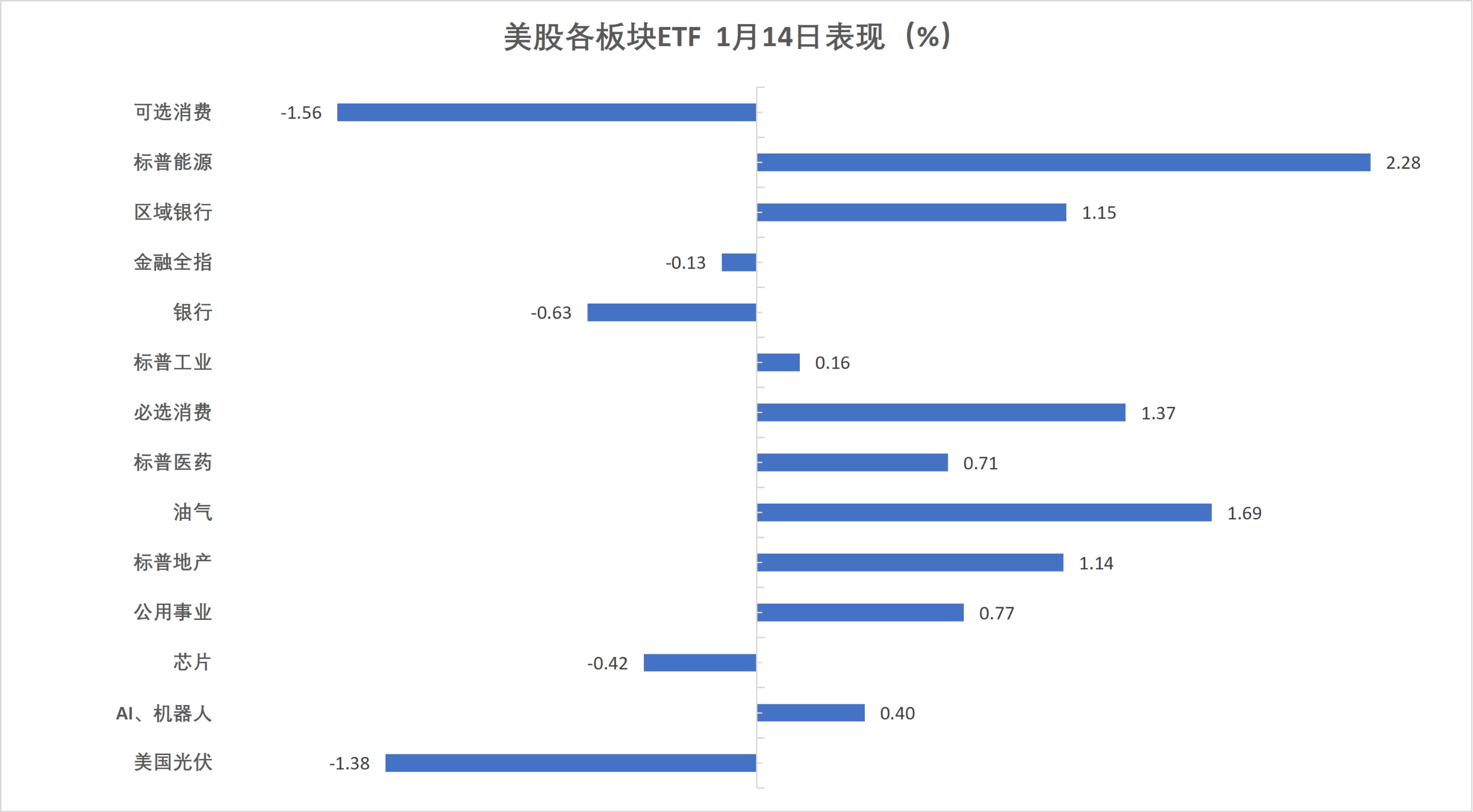
The three major U.S. stock indices have experienced their first consecutive declines since 2026, with the Nasdaq down 1%, marking its largest drop in nearly a month; tech stocks dragged down the market, with the "Big Seven" tech giants all closing lower, including Microsoft, Amazon, and Meta, which fell over 2%; the chip index halted its three-day rise, with Broadcom dropping over 4%; despite better-than-expected fourth-quarter earnings, Bank of America and Citigroup both closed down nearly 4% and over 3% respectively, while Wells Fargo, with disappointing fourth-quarter profits, fell over 4%. Chinese concept stock Trip.com dropped 17%.
Bond prices in Europe and the U.S. rose, with the yield on ten-year British bonds hitting a 13-month low, and the yield on ten-year U.S. bonds refreshing a one-week low. The dollar index turned down after approaching a four-week high; after Japan's finance minister warned that no measures to intervene in the currency market could be ruled out, the yen, which had hit a one-and-a-half-year low, turned up; the offshore yuan rebounded slightly, briefly rising above 6.97 during trading; cryptocurrencies continued to rise, with Bitcoin surging nearly 4% from its daily low, breaking $97,000 to reach a nearly two-month high.
Metals restart the frenzy: Gold and silver hit intraday historical highs for three consecutive days, with gold rising over 1% and silver futures up nearly 8%; London tin surged 11% at one point, and both London copper and tin reached historical highs during trading, while London nickel closed up nearly 6%, hitting a one-and-a-half-year high. Crude oil plunged during trading: Trump's remarks seemed to signal a de-escalation in U.S.-Iran tensions, with crude oil, which had risen about 2%, once dropping over 3%.
In the Asian session, the financing margin ratio was raised for the first time in ten years, with A-shares trading volume approaching 4 trillion throughout the day, AI applications surged, with Hong Kong's Alibaba rising over 5%, and Shanghai tin hitting the daily limit while Shanghai silver rose over 8%.
Key News
China's foreign trade is accelerating its recovery, with December exports in U.S. dollars up 6.6% year-on-year and imports up 5.7% year-on-year. Steel exports hit a new high, and rare earths surged 32% year-on-year, with annual imports of soybeans, iron ore, and crude oil all breaking records, while coal imports saw the largest decline in ten years.
The Shanghai and Shenzhen Stock Exchanges have raised the minimum financing margin ratio from 80% to 100%; on Wednesday night, several popular stocks, including Weiqi New Materials, announced that they might apply for a trading suspension for verification, while AI and GEO concept stocks such as Yidian Tianxia intensified risk warnings; regulatory "cooling" measures are being implemented, with experts stating that policy adjustments aim to "cool down" the market rather than "shut it down."
The U.S. Supreme Court again failed to make a ruling on the Trump tariff policy case, with the Nasdaq maintaining a 1% decline.
U.S. retail sales unexpectedly strengthened in November, rising 0.6% month-on-month, significantly driven by automotive and holiday spending; rising energy costs pushed the U.S. November PPI year-on-year back up to 3%, while core PPI month-on-month was below expectations; U.S. December existing home sales were the strongest since 2023, significantly exceeding expectations, with the increase in home prices being the weakest in two and a half years.
Federal Reserve 2026 voting member Kashkari supports Powell, advocating for maintaining interest rates in January, while 2026 voting member Paulson maintains a cautious stance, and 2025 voting member Goolsbee emphasizes that independence is crucial in combating inflation; Federal Reserve Governor Milan finds new reason for interest rate cuts: deregulation under the Trump administration.
Federal Reserve Beige Book: Overall economy has improved, employment levels remain basically unchanged in most regions, and prices have risen moderately in most areas.
Trump states he will "watch" the developments in Iran, and the U.S. government has received "very positive statements" from Iran, causing U.S. oil to drop 3% during trading.
U.S. media: The United States will suspend all visas for 75 countries.
Xinhua News Agency: The U.S. White House announces a 25% tariff on certain semiconductors and other goods.
Alibaba Qianwen officially announces: APP launch conference on January 15, AI will "open the era of handling affairs".
Welcoming an IPO super cycle in 2026: OpenAI and Anthropic reportedly taking preliminary actions, SpaceX has negotiated with multiple banks.
OpenAI spends $10 billion, partnering with Cerebras to deploy 750 megawatts of computing power over three years.
Market Report
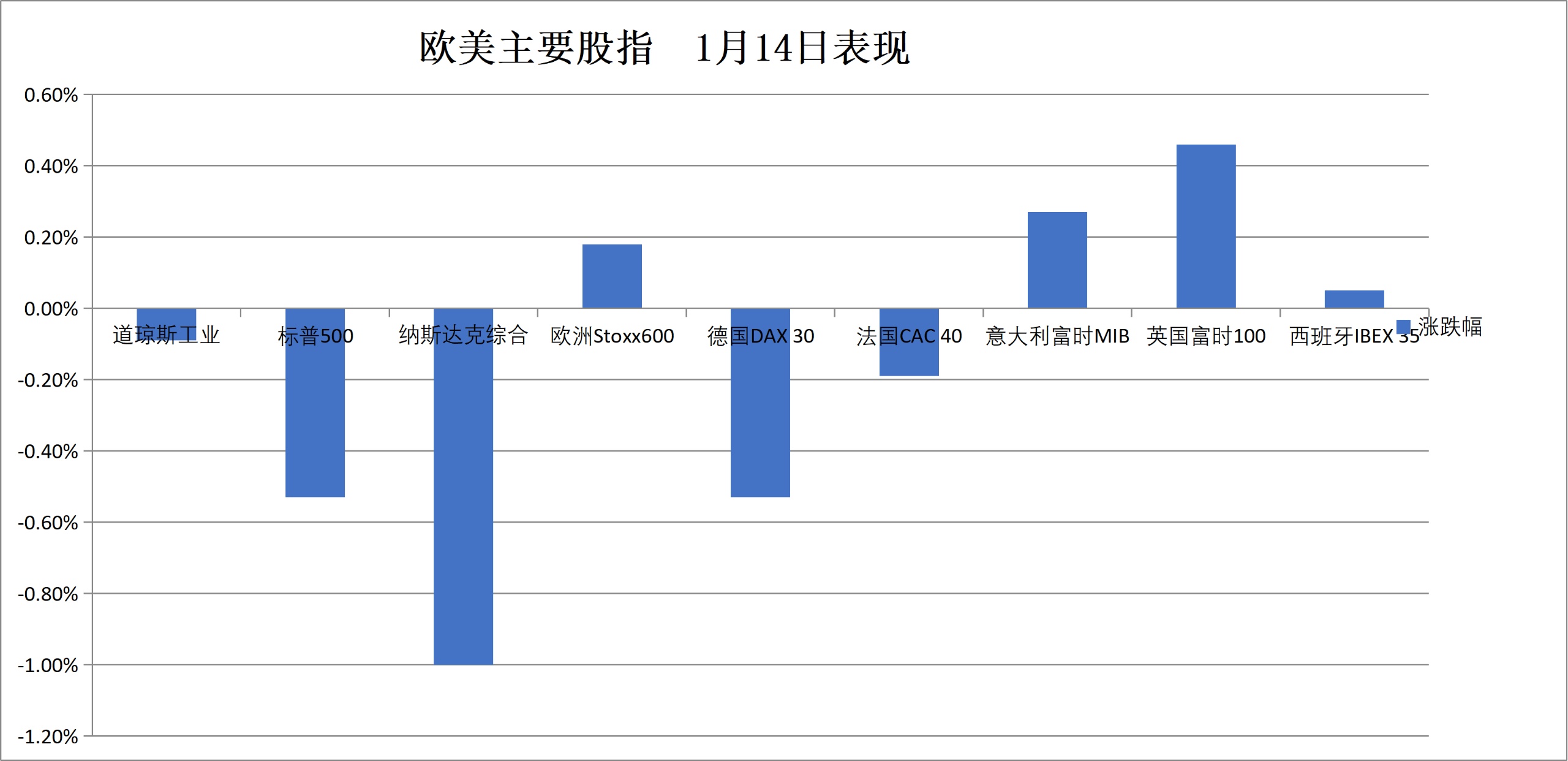
U.S. and European Stock Markets: S&P 500 down 0.53%, at 6926.60 points; Dow Jones down 0.09%, at 49149.63 points; Nasdaq down 1.00%, at 23471.749 points. European STOXX 600 index up 0.18%, at 611.56 points.
A-shares: Shanghai Composite Index down 0.31%, at 4126.09 points. Shenzhen Component Index up 0.56%, at 14248.60 points. ChiNext Index up 0.82%, at 3349.14 points.
Bond Market: By the end of the bond market, the yield on the U.S. ten-year benchmark Treasury bond was about 4.13%, down about 5 basis points during the day; the two-year U.S. Treasury yield was about 3.51%, down about 2 basis points during the day.
Commodities: WTI February crude oil futures closed up 1.42%, at $62.02 per barrel; Brent March crude oil futures closed up 1.6%, at $66.52 per barrel. COMEX February gold futures closed up about 0.8%, at $4635.7 per ounce. COMEX March silver futures closed up 5.85%, at $91.385 per ounce. LME copper futures closed up nearly 0.2%, at $13188 per ton. LME tin futures closed up over 7.9%, at $53462 per ton. LME nickel futures closed up over 5.7%, at $18694 per ton.
Key News Details
Global Highlights
China's foreign trade accelerates recovery, with December exports in USD up 6.6% year-on-year and imports up 5.7% year-on-year. Steel exports hit a record high, rare earths up 32% year-on-year, and annual imports of soybeans, iron ore, and crude oil all set records, while coal imports saw the largest decline in a decade.
- In December, China's exports in USD surged 6.6% year-on-year; the year-on-year growth rate of imports expanded to 5.7%, up from a previous value of only 1.9%. In 2025, China's total goods trade import and export value is expected to exceed 45 trillion yuan for the first time, with an estimated annual trade surplus of USD 1.2 trillion. The General Administration of Customs stated that in 2025, China will become a net exporter of industrial robots, with strong demand for artificial intelligence computing power, and last year, imports of computer components grew by 20%.
- Soybean imports are expected to reach 112 million tons in 2025, while iron ore and crude oil imports both hit historical highs of 1.26 billion tons and 578 million tons, respectively, marking three consecutive years of growth. Coal imports, however, saw a significant decline of 9.6%, the largest drop in a decade. In December, rare earth exports surged 32% year-on-year, with total exports reaching 62,585 tons, the highest level in at least 11 years.
- Guolian Minsheng Macro stated that the resilience of exports is expected to continue in the short term, while the recovery process for imports is relatively slow. Under the dual effects, the high trade surplus will continue to be an important support for economic growth in the first quarter. Among them, the easing of tariff disturbances combined with marginal improvements in external demand is gradually alleviating the cyclical pressures that previously constrained exports, and the structural support for export growth is expected to be further solidified.
Shanghai, Shenzhen, and Beijing Stock Exchanges raise the minimum margin ratio for financing from 80% to 100%. On January 14, the Shanghai, Shenzhen, and Beijing Stock Exchanges issued a notice, approved by the China Securities Regulatory Commission, to raise the minimum margin ratio for investors financing the purchase of securities from 80% to 100%, aiming to reduce market leverage levels through counter-cyclical adjustments. This adjustment only applies to new financing contracts, and existing contracts are not affected.
- On Wednesday night, popular A-share stocks made concentrated announcements. Several listed companies, including Shangwei New Materials, Zhuoyi Information, Tianlong Group, Tianxiashow, Yili Media, and BlueFocus, responded intensively, with Shangwei New Materials and several other popular stocks announcing: may apply for a trading halt for verification, while AI and GEO concept stocks like Yidian Tianxia intensively warned of risks.
- Regulatory "cooling" measures are in place, experts say: policy adjustments aim to "cool down" the market, not "shut it down". On the 14th, the Shanghai, Shenzhen, and Beijing Stock Exchanges issued a notice to moderately adjust the financing margin ratio for new financing contracts from 80% to 100% Tian Lihui, director of the Financial Development Research Institute of Nankai University, stated that the adjustment of financing policies combined with the efficient regulation of popular concept stocks indicates that the "combination punch" of A-share regulation has been launched. The purpose of policy regulation is to "cool down" the market rather than "turn it off," and in the future, the market will place greater emphasis on fundamentals and compliance. Short-term fluctuations are inevitable, but the "slow bull" and "long bull" patterns are gradually solidifying.
Precious metals restart the carnival, spot silver has historically crossed the $92 mark, copper and tin hit new highs! Spot silver stands at $92/ounce, up nearly 6% for the day; New York silver's intraday increase reached 6.0%, reported at $91.57/ounce. Major Wall Street banks are launching a new wave of bullish sentiment on precious metals, with Citigroup recently significantly raising its short-term precious metals price targets, increasing the silver price expectation for the next 0-3 months from $62 per ounce to $100, an increase of over 60%.
The U.S. Supreme Court again failed to rule on Trump's tariff policy lawsuit, Nasdaq maintains a 1% decline. The U.S. Supreme Court did not rule on the challenge to President Trump's tariff policy on Wednesday, meaning the world will have to wait at least until next week to know the final fate of this landmark economic policy. The Supreme Court has not announced a specific time for its next ruling, but it may schedule more decisions on Tuesday or Wednesday, when the justices will convene again.
U.S. November retail sales unexpectedly strengthened, up 0.6% month-on-month, driven significantly by automotive and holiday spending. U.S. November retail sales increased by 0.6% month-on-month, exceeding the market expectation of 0.5%. Among the 13 categories surveyed, 10 categories achieved month-on-month growth, with a notable rebound in automotive sales, while gas stations, sporting goods, and clothing categories also performed well, highlighting the strong pull of holiday season promotions on consumption. Overall consumption data shows resilience, continuously supporting the market's positive expectations for GDP growth in the fourth quarter.
Driven by rising energy costs, U.S. November PPI year-on-year rebounded to 3%, core PPI month-on-month below expectations. U.S. November PPI rose 0.2% month-on-month and increased to 3% year-on-year, with soaring energy prices being the main driver. However, the core PPI, excluding the volatile food and energy prices, remained flat month-on-month, indicating that underlying inflationary pressures remain moderate.
U.S. December existing home sales hit the strongest level of 2023, significantly exceeding expectations, with the weakest price increase in two and a half years. U.S. December existing home sales totaled an annualized 4.35 million units, the highest level since February 2023, with expectations of 4.22 million units and a previous value of 4.13 million units. The median price of existing homes in December rose only 0.4% year-on-year, to $405,400, marking the weakest increase in two and a half years However, in December, inventory only increased by 3.5% year-on-year.
Federal Reserve 2026 voting committee supports Powell: advocates keeping interest rates unchanged in January, firmly opposes administrative intervention in monetary policy. Minneapolis Fed President Kashkari strongly supports Powell, pointing out that the government's investigation is essentially an intervention in monetary policy. Regarding the January interest rate meeting, he sent a strong hawkish signal, advocating for keeping interest rates unchanged. The Supreme Court is currently engaged in a critical debate on whether the president has the authority to replace Fed officials. Kashkari emphasized that regardless of who the next chair is, policy must be based on data rather than political directives, and the collective decision-making mechanism is a defense against intervention.
Federal Reserve 2026 voting committee maintains a cautious stance, 2025 voting committee emphasizes that independence is crucial in combating inflation. This year's voting committee, Philadelphia Fed President Harker, feels "cautiously optimistic" about inflation, expecting it to approach 2% by the end of the year, reiterating that if inflation cools and the labor market stabilizes, the Fed may further slightly cut interest rates later this year. Last year's voting committee, Chicago Fed President Evans, stated that inflation will resurge in any place where there is no central bank independence.
Federal Reserve Governor Mian findsnew reasons for continued rate cuts: Trump administration deregulation. Mian believes that according to the deregulation pace of the Trump administration in early 2025, by 2030, 30% of federal regulations will be eliminated, which will be "a significant positive impact on productivity and will exert downward pressure on prices," thus "supporting a more accommodative monetary policy stance." Last week he stated that he hopes for a total rate cut of 150 basis points by 2026.
Federal Reserve Beige Book: Overall economy has improved, employment levels remain basically unchanged in most regions, and prices have risen moderately in most areas. The Federal Reserve Beige Book states that since mid-November, economic activity in most regions of the United States has rebounded at a "slight to moderate" pace, marking an improvement compared to the previous three reporting periods—during which most regions reported little change in economic activity. In the 12 Fed districts, employment levels remained basically unchanged in 8 districts. Price levels in most regions have risen at a "moderate" pace.
Trump says will "wait and see" on Iran situation, U.S. oil drops 3% during trading. On the afternoon of January 14 local time, U.S. President Trump commented on the Iran situation at the White House, stating, "We want to wait and see how the situation develops." He also noted that the U.S. government has received "very positive statements from Iran." However, he did not rule out the possibility of the U.S. taking military action U.S. Media: The U.S. Will Suspend All Visas for 75 Countries. According to Xinhua News Agency, U.S. Fox News reported on the 14th that the U.S. Department of State will suspend all visa processing for 75 countries "to combat applicants who may become public burdens." The report disclosed that the affected countries include Somalia, Russia, Afghanistan, Brazil, Iran, Iraq, Egypt, Nigeria, Thailand, Yemen, and others.
Xinhua News Agency: The U.S. White House Announces a 25% Tariff on Certain Semiconductors. According to Xinhua News Agency, the U.S. White House announced on the 14th that starting from the 15th, a 25% import tariff will be imposed on certain imported semiconductors, semiconductor manufacturing equipment, and derivatives.
The "Sell America" Trade is Back, Smart Money Quietly Flows into Canada. The "Sell America" trading wave has emerged, as the damaged independence of the Federal Reserve has pushed up risk premiums, accelerating capital flight to safe havens. The Canadian stock market has achieved its best performance against U.S. stocks in twenty years, with the benchmark index jumping 28% last year. Institutions point out that the valuation advantage of the Canadian dollar and lower political volatility make it the preferred alternative to U.S. stocks, while U.S. stocks face dual pressures from dollar depreciation and rising yields.
Two Extremes: U.S. Electricity Prices Are Set to Explode, While China's Electricity Prices Have Started to Decline. U.S. electricity prices have peaked, with the largest grid PJM recently reaching a price cap of $333.4 in grid capacity auctions. Without regulation, the true costs could be 60% higher, and Goldman Sachs warns that electricity prices face a risk of doubling. Trump has pressured tech giants like Microsoft to fully bear infrastructure costs to stabilize electricity prices for the public. In contrast, Bank of America believes that driven by high growth in wind and solar installations and weak demand for thermal power, the January proxy purchase electricity price has decreased by 10% year-on-year, with long-term contract electricity prices declining across the board this year.
- Goldman Sachs: The Aging U.S. Power Grid is Providing Historic Opportunities for China's Power Industry Chain. The core contradiction in AI construction is shifting from GPUs to electricity, with delivery speed becoming the key to victory. Goldman Sachs' research report points out that the aging power grids in the U.S. and Europe are facing capacity shortages, and grid connection may take nearly five years. Chinese power suppliers, leveraging short delivery cycles, HVDC technology, and 800V DC architecture advantages, are reshaping global supply chain pricing power. Goldman Sachs believes that a clear preference ranking has been given among categories of products related to Chinese power supply: gas turbine blades, power transformers, electrical components, uninterruptible power supplies/power racks, liquid cooling systems, and server power supplies.
Alibaba Qianwen Officially Announces: APP Launch Event on January 15; AI Will "Open the Era of Action Execution". Alibaba Qianwen will hold a product launch event for "Ask and You Shall Receive" at 10 a.m. on the 15th, marking the official transition of AI large models from a single "Q&A tool" to a new era of "action execution." Backed by Alibaba Cloud, which holds an absolute advantage with a 35.8% share of the Chinese AI cloud market, this strategic upgrade not only signifies the beginning of the intelligent agent era but is also a key move for Alibaba Cloud to seize 80% of the incremental AI cloud market by 2026.
U.S. law enforcement takes action against Grok for “inappropriate content”: Musk's xAI under investigation in California. The California investigation focuses on xAI's AI model Grok's "mass production" of deepfake intimate images without consent, which have been used to harass women and girls online. Previously, governments in multiple countries, including the EU, the UK, France, India, and Brazil, have taken action or issued warnings against Grok. Musk stated on Wednesday that he was unaware of any instances of generating "nude images of minors."
2026 welcomes an IPO super cycle! OpenAI and Anthropic reportedly taking preliminary actions, SpaceX in talks with multiple banks. Media reports indicate that OpenAI is in discussions with several top law firms, including Cooley, regarding IPO preparations; Anthropic hired the law firm Wilson Sonsini last month to assist with its listing preparations; SpaceX has interviewed and is preparing to finalize the lead banks for its IPO, with executives telling investors that it plans to go public within the next 12 months unless there is a significant market disruption. All three companies are currently valued at historical highs, with Anthropic's current financing discussions valuing it at $350 billion, OpenAI's valuation reaching $500 billion last October, and SpaceX's latest valuation at $800 billion.
- OpenAI spends $10 billion, partners with Cerebras to deploy 750 megawatts of computing power over three years. OpenAI and Cerebras have announced a three-year agreement to procure up to 750 megawatts of computing power, all using Cerebras' wafer-scale chips. According to the agreement, the deployment will be phased starting in 2026. The Wall Street Journal cited informed sources stating that the total transaction amount exceeds $10 billion.
Research Report Highlights
When “TACO” becomes “Big MAC,” how Wall Street seeks a safe haven amid policy “chaos” and the eve of midterm elections. Wall Street is shifting towards the “Big MAC” (the midterm election drama is about to unfold) trading theme to cope with the policy turbulence triggered by the 2026 midterm elections. Trump's intensive "Twitter governance" has severely impacted the banking and defense sectors and has challenged the independence of the Federal Reserve. Historical data shows that the average drawdown in midterm election years reaches 18%, and individual stock volatility has soared to more than twice that of the index. Facing high valuations and risks of administrative intervention, institutions like JP Morgan warn that U.S. stocks may perform poorly in the near term AI Data Center Power Supply Chain, Goldman Sachs Prefers "Gas Turbine Blades and Transformers," A Great Opportunity for These Chinese Companies. Goldman Sachs believes that the pricing premium driven by supply shortages allows Chinese suppliers to sell at prices 10% to 80% higher in overseas markets compared to domestic prices. Even accounting for increased tariffs and logistics costs, profit margins have significantly improved. In terms of product category preferences, Goldman Sachs ranks them as follows: gas turbine blades, power transformers, electrical components, UPS/power racks, liquid cooling, and server power supplies (PSU).
How Long Can the Copper Bull Market Last? Goldman Sachs: $13,000 High Price Unsustainable, Turning Point May Be After Tariffs Land in Q2. Goldman Sachs warns that the recent surge in copper prices above $13,000 is severely disconnected from fundamentals, primarily due to a stockpiling frenzy triggered by expectations of U.S. tariffs and speculative funds. Although the short-term forecast for the first half of 2026 has been raised to $12,750, it is expected that as the tariff situation stabilizes in Q2, the market will return to the reality of severe global oversupply, posing significant risks of a price correction for copper.
Supply and Demand Imbalance, Is Aluminum Replacing Copper Inevitable for the Industry? Against the backdrop of historical highs in the copper-aluminum price ratio and long-term lack of elasticity in copper supply, "aluminum replacing copper" is accelerating from a technical alternative to an industrial reality. With systematic breakthroughs in materials, processes, and structures, aluminum's alternative applications in electricity, air conditioning, and automobiles (especially in new energy vehicle wiring harnesses and connectors) are on the brink of large-scale implementation. This industry trend, which possesses cross-cycle attributes, not only alleviates the tension on copper resources but also brings new growth logic and value reassessment opportunities for the aluminum industry.
Domestic Macro
Housing Tax Refund Policy Continues, 2026 to 2027 Fiscal Year to Continue Supporting "Sell Old Buy New" Individual Income Tax Preferences. According to the Ministry of Finance, from January 1, 2026, to December 31, 2027, taxpayers who sell their own housing and purchase housing in the market within one year after selling their current housing will receive a tax refund on the individual income tax already paid on the sale of their current housing. If the amount of the newly purchased housing is greater than or equal to the transfer amount of the current housing, the entire amount of individual income tax paid will be refunded; if the amount of the newly purchased housing is less than the transfer amount of the current housing, the refund will be based on the proportion of the new purchase amount to the transfer amount of the current housing.
Three Departments: Firmly Resist Disorderly "Price Wars" in the New Energy Vehicle Industry, Promote the Establishment of a Market Order of Quality and Fair Competition. The meeting called for in-depth implementation of the decisions and deployments of the Party Central Committee and the State Council, adhering to innovation-driven and quality-first principles, firmly resisting disorderly "price wars," and promoting the establishment of a market order of quality and fair competition Three departments will further strengthen work coordination, enhance cost investigation and price monitoring, increase regulatory and law enforcement efforts, reinforce supervision and inspection of product production consistency, and seriously deal with violations of laws and regulations by enterprises to maintain a fair and orderly market environment and promote high-quality development of the automotive industry.
Global Times Editorial: The U.S. "releases" H200, reflecting China's technological self-reliance and strength. The U.S. past actions of cutting off chip supplies to China did not stifle China's high-tech development but instead stimulated strong breakthroughs under the new national system advantages. From the iteration of Huawei's Ascend chips to breakthroughs in the application of domestic GPUs in specific scenarios, and to the strengthening of the entire industrial chain, China has demonstrated strong R&D potential and a clear technological iteration path. The relaxation of H200 export policies indicates that the U.S. has acknowledged through actions that "blocking" and "sealing" are no longer sufficient to hinder China's technological rise.
Shanghai releases "Mosu Zhixing" plan to mass-produce L4 level autonomous vehicles and orderly expand open areas. According to The Paper, by 2027, high-level autonomous driving application scenarios will achieve large-scale implementation, with public service platforms strongly supporting industry innovation, key technologies and industrial scale reaching international leading levels, forming an internationally competitive and influential intelligent connected vehicle industry cluster, and basically establishing a globally leading high-level autonomous driving leading area.
After "Zhong Caiwen," the People's Daily new column publishes again: In the new year, strive to "boost the economy"! The column article states that seizing the time window and taking proactive measures, the policy heat continues to rise. The "two new" initiatives lead the way, with the first batch of 62.5 billion yuan in "national subsidies" already allocated; the "two heavy" initiatives continue to exert force, with the National Development and Reform Commission organizing the issuance of the early batch of "two heavy" construction project lists and central budget investment plans for 2026; the National Venture Capital Guidance Fund has launched, the "Buy in China" and new spring consumption season has started, and 114 new drugs have been included in the national medical insurance drug list... With greater efforts to promote consumption, stabilize investment, and benefit people's livelihoods, we aim to achieve a good start in the first quarter and lay a solid foundation for "continuously consolidating and expanding the economic stability and improvement momentum."
"Life Insurance Leader" China Life internal report: Continue to increase allocation of Chinese equity assets! As an important long-term fund manager in the capital market, the insurance asset management industry needs to continuously improve the system and capability framework that supports long-term investment and value investment.
How much incremental capital will there be in A-shares this year? Huatai: Net inflow may reach 1.6 trillion yuan, with household deposits and retail funds accounting for 40%. Huatai Securities estimates that the A-share market is expected to welcome about 1.6 trillion yuan in net incremental capital inflow in 2026, with a total capital inflow expectation of 2.6 trillion yuan, deducting about 1 trillion yuan in capital demand The increase in the supply of funds mainly comes from the accelerated "migration" of household savings and the policy-driven entry of long-term funds into the market. The entry of household deposits into the market could bring approximately 650 billion yuan in incremental funds to the A-shares. It is expected that by 2026, the net inflow of retail investor funds will be around 400 billion yuan, with financing funds and private equity expected to contribute 500 billion yuan in increments. It is anticipated that insurance funds will bring about 800 billion yuan in substantial incremental funds, while foreign capital is expected to have a net inflow of about 100 billion yuan for the year.
Domestic Companies
A-shares rebound boosts performance, CITIC Securities' net profit expected to exceed 30 billion yuan with a 38% year-on-year increase in 2025.
Report: Baidu plans to apply for dual primary listing in Hong Kong to open up access for mainland investors. Baidu is considering upgrading its second listing in Hong Kong to a "dual primary listing," aiming to obtain the Hong Kong Stock Connect qualification to further attract mainland capital. If the adjustment is completed, although the company will face higher compliance costs, it will enhance its listing structure's ability to withstand risks in a complex geopolitical environment while introducing support from mainland funds.
Undervalued data center seller? Report: Lattice Semiconductor's Hong Kong IPO secures cornerstone investments from top institutions like Alibaba and JP Morgan Asset Management. It is reported that Lattice Semiconductor's Hong Kong IPO aims to raise $900 million and has secured heavyweight cornerstone investors such as Alibaba, JP Morgan, and UBS. Driven by demand for AI infrastructure, the company's valuation has reached $22 billion, with profits expected to increase to 3.3 billion yuan by 2026. This marks a strong rebound in Hong Kong's new stock market, with financing exceeding $4 billion in January.
Overseas Macro
Trump shifts focus for the election? Wall Street has gone from a former "darling" to a policy "punching bag". Trump has introduced several restrictions targeting the financial industry, including preventing large investors from purchasing residential properties, calling for a cap on credit card interest rates, and announcing limits on executive compensation and stock buybacks. Now, the midterm elections are more important than bank profitability and market stability, as Trump prioritizes the interests of ordinary consumers.
On the eve of the Federal Reserve's "subpoena," Trump publicly criticizes the Justice Department prosecutor as "weak and incompetent," saying they "dare not prosecute targets". Trump openly criticized federal prosecutors as "weak and incompetent" during an event at the White House last Thursday, claiming to feel "betrayed." Just one day after the White House event, prosecutors issued a subpoena to the Federal Reserve to investigate Powell's testimony regarding the building renovation. This highlights the tense relationship between Trump and the judicial system, raising concerns about political interference in judicial independence Compared to Powell's "subpoena," next week's court hearing is "more important" for the independence of the Federal Reserve and has "significant implications" for the market. Next Tuesday, the U.S. Supreme Court hearing regarding Trump's dismissal of Federal Reserve Governor Lisa Cook will become a critical turning point in the battle to defend the independence of the Federal Reserve. Analysts warn that if the White House wins, it will open a legal loophole for Trump to remove Powell. Once the independence of the Federal Reserve is compromised, it could trigger severe asset repricing and market turmoil. "This month could mark the beginning of the next bear market, or even a market crash."
JPMorgan's Dimon warns: Trump's administration's attack on the Federal Reserve will trigger inflation. JPMorgan CEO Dimon warns that the Trump administration's attack on the independence of the Federal Reserve will backfire, leading to rising inflation expectations and higher interest rates. As global central bank governors express support for Powell, Dimon emphasizes that political interference will undermine economic stability. Executives also warn that Trump's proposed credit card interest rate cap will restrict credit supply.
How to understand "Trump's version of QE"? Investors: The era of liquidity has arrived, "all disguises of fiscal/monetary tightening have disappeared". From Trump's order to purchase $200 billion in mortgage-backed securities to the Federal Reserve restarting balance sheet expansion and relaxing bank capital requirements, a series of policy combinations are creating a liquidity feast, with excessive liquidity pushing up valuation risks. Although officials deny that MBS purchases and the Federal Reserve's purchase of short-term debt constitute QE, in reality, it is merely exchanging one type of liquid asset for another.
Unusual details under the weak U.S. December CPI data. Citigroup states that the core CPI in the U.S. for December increased by only 0.24% month-on-month, indicating an initial trend of slowing inflation. Due to the government shutdown, there were significant estimation errors in data collection, leading to extremely high volatility in subcategories such as entertainment and communication, resulting in a "mechanical rebound" and abnormal lag that make the overall details difficult to interpret. Citigroup predicts that the Federal Reserve will begin to cut interest rates in March as a result.
The yen falls to an 18-month low! Japan's Finance Minister warns: "No means will be ruled out" to save the market. News of Japan's plans for an early election has intensified downward pressure on the yen, with the dollar-yen exchange rate briefly falling to 159.45, the lowest level since July 2024. Japan's Finance Minister Shunichi Suzuki again warned that "no measures will be ruled out" to intervene in the currency market, clearly signaling policy intentions. Historical data shows that the 160 level is a key intervention line for Japanese authorities, who had previously entered the market to support the yen four times near this level last year. On the same day, Bank of Japan Governor Kazuo Ueda reiterated that interest rate hikes will continue "High Market Trading" Ignites the Market, Ueda Kazuo Sticks to His Guns: Will Continue to Raise Interest Rates as Long as Inflation Meets Targets. Ueda Kazuo stated that wages and inflation may continue to rise gradually, and noted that a moderate adjustment of monetary easing would help achieve price targets smoothly and promote long-term economic growth. Although most observers expect Japan to raise interest rates about once every six months, some analysts believe that a weak yen may prompt the central bank to act sooner.
Upon Hearing the Death Penalty, Yoon Suk-yeol's Face Turned Red, Grabbing the Microphone to Speak for 89 Minutes, His Voice Hoarse, Slamming the Table in Court: "How Could a Fool Like Me Stage a Coup?" Yoon Suk-yeol refused to plead guilty and defended his issuance of an emergency martial law order, stating that it was a necessary action to supervise and curb malicious threats to the nation. "I announced (the martial law) to the world on the broadcast, and after two or three hours, the National Assembly called it off, so I stopped. Have you ever seen such internal chaos?" "How could a fool (idiot) like me stage a coup? That would require political insight to be very quick (smart)!" At the end of his statement, Yoon Suk-yeol said, "All of this is due to my lack of virtue," and asked rhetorically, "Am I too naive?"
Overseas Companies
"At the 'Pharmaceutical Annual Conference', NVIDIA Detailed 'How to Do AI in Healthcare'. JP Morgan stated that NVIDIA is making a "full-stack" layout in AI healthcare, building a closed loop from chips to tools to domain models, known as the "dry lab - wet lab" flywheel, while AI is transitioning from "pilot" to "employed." The speed of commercial AI deployment in the U.S. healthcare industry is three times that of the overall economy. At the physical laboratory level, NVIDIA is collaborating with Thermo Fisher Scientific, and the industrialization process of drug discovery is also accelerating.
Report: SK Hynix Halts Production of Consumer Storage Devices, Resources Shift to B2B and AI Server Markets. According to media reports, following Micron, South Korean chip manufacturer SK Hynix is planning to stop production of certain consumer-grade DRAM and NAND Flash products, concentrating core resources on the B2B and AI server markets.
From Selling Cars to Selling Services: Tesla's FSD Completely Shifts to Subscription Model, $99 Monthly Subscription Becomes the Only Option. Tesla announced that it will stop selling the FSD system after February 14 and fully transition to a monthly subscription model. This move eliminates the high upfront cost of $8,000, instead attracting users with a low price of $99 per month. Amidst sluggish sales, Tesla is accelerating its shift to a technology revenue model centered on FSD and robotics The code for Anthropic's latest intelligent agent Cowork was actually written by Claude. The latest intelligent tool Cowork launched by Anthropic was autonomously completed by Claude Code in just 10 days. This tool allows ordinary users to directly handle daily tasks such as file management and document generation through natural language commands, achieving a leap in efficiency.
Today's News Preview
The State Council Information Office holds a press conference to introduce the effectiveness of monetary and financial policies in supporting the high-quality development of the real economy.
Taiwan Semiconductor Manufacturing Company (TSMC) earnings conference.
Alibaba Qianwen APP launch conference, witnessing how AI "opens the era of handling affairs."
The Bank of Korea announces its interest rate decision.
UK November GDP.
France December CPI.
US December retail sales.
US November net long-term capital inflows.
The number of first-time unemployment claims in the US last week.
US November import and export price index.
Federal Reserve Governor Barr, Atlanta Fed President Bostic, Richmond Fed President Barkin, and Kansas Fed President George will deliver speeches
