The battle for physical assets has begun: Amazon will acquire the first new copper production in the United States in over a decade for data center construction

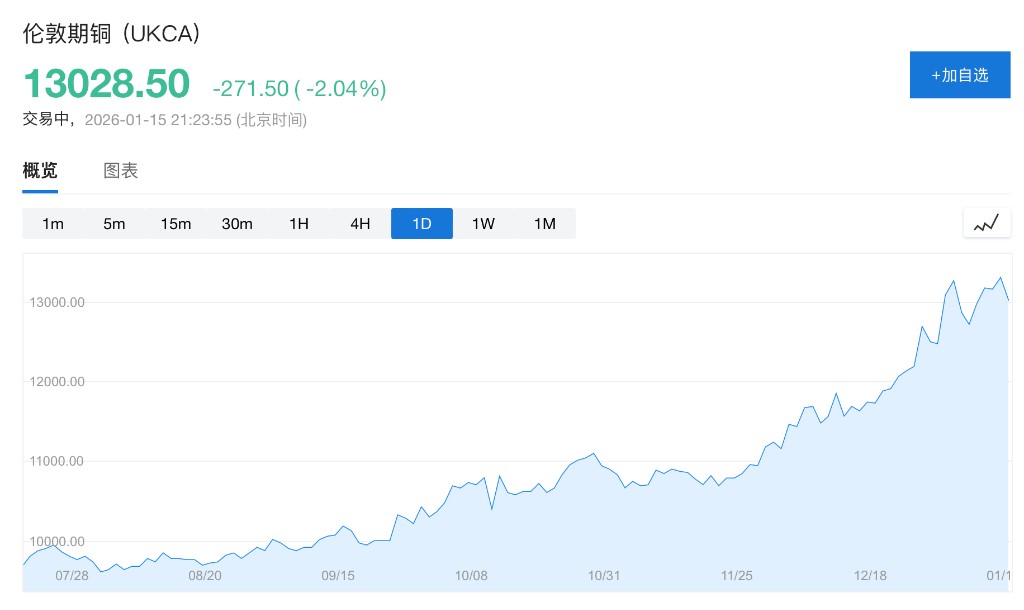
Amazon has signed a two-year copper supply agreement with Rio Tinto Group to purchase additional copper production capacity generated by the latter's bioleaching technology in Arizona, USA, to meet the explosive demand brought about by the construction of AI data centers. Currently, copper prices have reached an all-time high, and the rapid growth of the AI industry may continue to intensify the competition for resources
Amazon Web Services has reached a two-year copper supply agreement with Rio Tinto's Nuton project to meet the strong demand for copper materials in the construction of artificial intelligence data centers. This is also the first new copper mining capacity added in the United States in over a decade, reflecting that tech giants are actively extending their layout upstream in the supply chain of key industrial raw materials.
According to The Wall Street Journal, the mine that Rio Tinto has restarted in Arizona uses advanced bioleaching technology (which utilizes bacteria and acid to extract metals from ore) and can efficiently process previously economically unviable low-grade ores. The mine is expected to produce about 14,000 tons of copper cathodes within four years.
This deal comes at a time when international copper prices have reached historic highs, with copper prices in both the London and New York markets hitting record levels this month. The growth in copper consumption driven by data center construction, grid upgrades, electric vehicles, and renewable energy facilities has significantly offset the impact of slowing demand from traditional manufacturing and construction industries.

S&P Global released research last week further indicating that by 2040, artificial intelligence applications will drive global copper demand to grow by about 50% compared to current levels. If mining output cannot be increased in tandem, there may be a supply gap of up to 25% at that time. This potential supply-demand imbalance poses systemic risks to the global industrial landscape, technological evolution, and economic growth.
Bioleaching Technology Breaks the Bottleneck of Global Copper Resources
Rio Tinto's Nuton project employs innovative bioleaching technology to restart a previously closed mine east of Tucson, Arizona. The original operator of the mine ceased open-pit mining operations in 2010 due to encountering low-grade ore and deemed it economically unviable.
Katie Jackson, CEO of Rio Tinto's copper business, pointed out that this technology can efficiently process low-grade ores that are difficult to profit from using traditional methods, while also having lower carbon emissions and water intensity. At the Johnson Camp mining area, ore treated with bacteria and acid is piled into heaps, and the copper-containing solution leached out is collected and directly used in the plant to produce usable cathode copper through electroplating. The first batch of Nuton cathode copper successfully rolled off the production line last December.
Rio Tinto's assessment indicates that about 70% of the world's copper resources are found in such primary sulfide ores, but their grades are usually insufficient to support traditional beneficiation processes—namely, economic recovery through grinding, overseas transportation, smelting, and refining. The commercial application of this technology is an important strategy for Rio Tinto to address the long development cycle of new mines, which currently averages over 20 years from resource discovery to production. Bioleaching technology provides a new technical path to activate existing resources and shorten supply chain response times.
Surge in Copper Demand from Data Centers
As the construction boom of data centers sweeps across the globe, their enormous demand for copper resources is triggering a deep restructuring of the supply chain. A single large data center can require tens of thousands of tons of copper, covering key electrical components such as wires, busbars, circuit boards, and transformers. In contrast, the 14,000 tons of cathode copper planned for production by the Rio Tinto Nuton project over four years may barely meet the total demand of such a data center Amazon's Global Carbon Emissions Director Chris Roe pointed out that the company is systematically advancing low-carbon solutions from the commodity level to support sustainable business growth. He stated:
"We are starting from the commodity level, looking for low-carbon solutions to drive business growth. This means that steel, concrete, and copper, which is essential for data centers, cannot be overlooked."
As part of the cooperation agreement, Amazon will provide Rio Tinto with cloud computing and data analysis services to optimize the metal recovery rate of the Nuton project and assist miners in increasing production capacity. It is worth noting that despite fluctuations in the current U.S. policy environment, several tech giants, including Amazon, continue to invest in clean energy and carbon reduction processes.
Supply Shortages Threaten AI Prosperity
Mining executives, industry analysts, and economic forecasting institutions unanimously warn that copper resource shortages could pose a substantial constraint on the rapid development of artificial intelligence, which is currently the core driver of the U.S. stock market and economic growth.
Although rising copper prices may incentivize the development of recycling technologies and encourage engineers to optimize copper efficiency, a structural supply gap is still approaching. The demand for copper driven by data center construction, grid upgrades, electric vehicles, and renewable energy installations has clearly surpassed the impact of the cyclical slowdown in traditional manufacturing and construction industries.
Rio Tinto has actively promoted its bioleaching technology through partnerships with multiple mines in the Americas. The company's strategy is clear: to enhance production by activating low-grade ore resources left behind in old mines to address the structural challenges of increasingly difficult new mine discoveries and long production cycles, while copper demand is rapidly growing