


中断两年多后,马士基恢复红海航行,分析称 “如果红海航线恢复,全球 6% 到 8% 集装箱船队将不再需要”

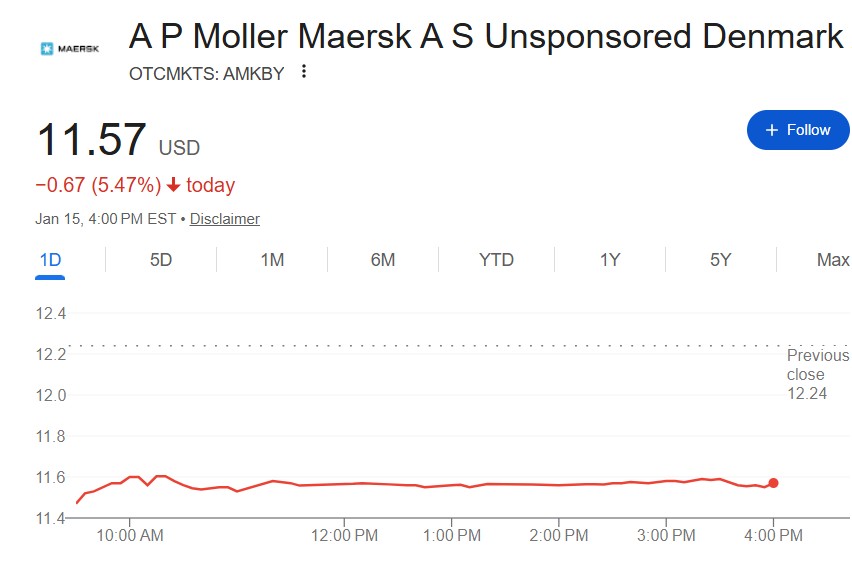
A.P. Moller - Maersk announced the official resumption of the Middle East - India to East Coast of the United States route via the Suez Canal, becoming another shipping giant to return to the Red Sea route after CMA CGM. This move is based on the improved stability in the Red Sea region and will shorten shipping times between Asia and Europe by two weeks. However, analysts warn that the increase in capacity may lead to a decrease in freight rates, and on Thursday, Maersk's ADR stock price fell over 5%
After more than two years of interruption, the maritime passage through the Red Sea and the Suez Canal may fully restart.
On Thursday, January 15, the world's second-largest container shipping company, A.P. Moller - Maersk, announced that it will officially resume the Middle East-India to East Coast of the United States (MECL) route via the Suez Canal.
The company stated that this move is based on the "improvement of stability in the Red Sea region." Previously, Maersk had indicated that it would only fully resume navigation if safety conditions were guaranteed.
Earlier this week, Maersk announced that one of its vessels on the MECL route successfully passed through the Bab-el-Mandeb Strait—previously a focal area of attacks by the Houthi armed group—marking the second successful trial since December of last year.
Peter Sand, chief analyst at shipping market tracking agency Xeneta, pointed out:
If the Red Sea route is fully restored, 6% to 8% of the global container fleet will no longer be needed, and the market balance will shift unfavorably for carriers.
The market reacted cautiously to this news. Maersk's ADR stock price fell more than 5% on Thursday, reflecting investors' concerns that increased capacity could lead to lower freight rates.
Shipping Giants Return One After Another
Maersk is not the first shipping company to return to this route.
Earlier this month, the world's third-largest container shipping group, CMA CGM, had already resumed navigation through this waterway in its India-America Express service.
Since the Houthi armed group announced last November that it would cease attacks on passing vessels following a ceasefire agreement in Gaza, container shipping companies have been weighing whether to return to the Suez Canal.
The large-scale restart of the Red Sea route will end more than two years of shipping interruption, shortening transport times between Asia and Europe by up to two weeks and reducing the number of vessels needed to meet demand, thereby lowering the freight rates that shipping companies can charge.
Jon Gahagan, president of the maritime risk consulting firm Sedna Global, stated:
The threat from the Houthi armed group still exists, but with the implementation of the Gaza ceasefire agreement, Maersk's choice to return to the Red Sea may be a natural progression.
Geopolitical Risks Remain
Analysts warn that the situation in the Middle East remains volatile.
Earlier this week, U.S. President Trump’s comments on military intervention in Iran raised new concerns.
Peter Cook, former head of the maritime industry safety association, stated:
It's very difficult because we have no idea what actions the Trump administration will take.
This uncertainty adds complexity to the decision-making of shipping companies, and the market is still watching to see if more shipping companies will follow suit in restoring the Red Sea route
