


The myth of luxury cars shatters, Porsche sales hit the largest decline in 16 years

Porsche's global deliveries in 2025 are expected to decline by 10%, marking the largest annual sales drop in 16 years, with its stock price experiencing the biggest weekly decline since its IPO. This indicates the end of its high-growth myth, as the company enters a challenging period of restructuring and transformation, reflecting the common difficulties faced by the European luxury car industry
The global luxury sports car market leader Porsche is facing its most severe challenge since the 2009 financial crisis, with its "mythical" high-growth aura suddenly dimming in 2025. The latest data shows that this German manufacturer has experienced the largest annual sales decline in 16 years, marking a break in its long-standing market resilience, as the company enters a difficult period of transformation and restructuring.
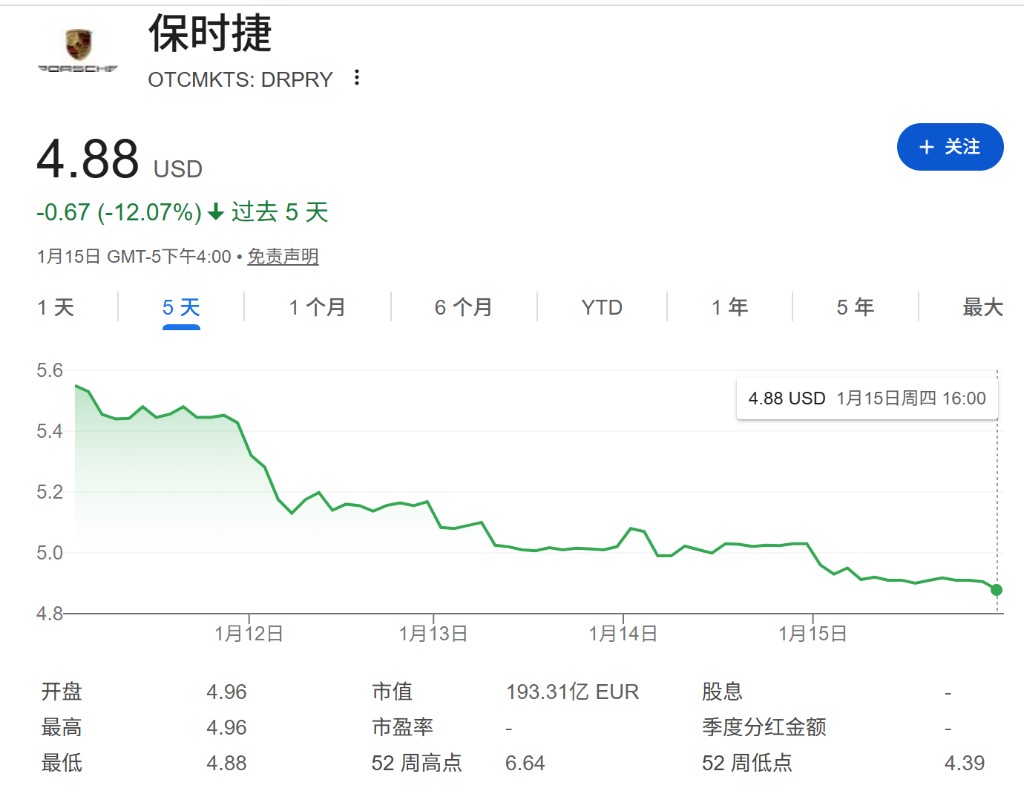
Affected by the sharp decline in sales data, Porsche's stock price has come under pressure in the German market. As of this Friday, the company's stock recorded its largest weekly drop since its initial public offering (IPO) in 2022, with a weekly decline of over 10%. This market reaction highlights investors' deep concerns about the luxury carmaker's short-term profitability and long-term competitive advantages.
Official data released by Porsche shows that its global deliveries in 2025 will be 279,449 units, a decrease of 10% from 310,718 units in 2024. This marks the largest annual delivery decline the company has recorded since the global financial crisis in 2009 severely impacted consumer confidence. Management attributes this to supply gaps for specific fuel models, the continued weakness in demand for high-end products in the Chinese market, and the company's "value-oriented" supply management strategy.
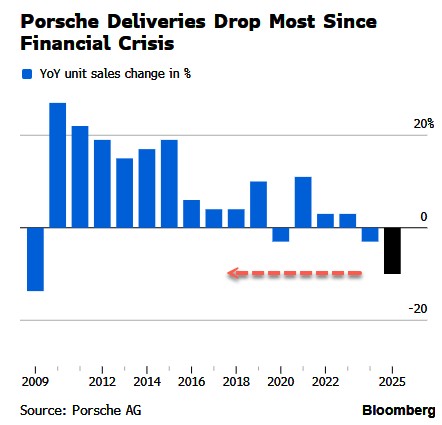
This performance decline is not only a dilemma for Porsche itself but also reflects a systemic crisis in the entire European automotive industry. Faced with declining sales, profit warnings, fierce competition from Chinese brands, and weak demand for electric vehicles, market uncertainties are expected to persist into the second half of this year. Analysts generally hold a pessimistic view of Porsche's prospects, believing that the company will be in a prolonged transition period over the next one to two years.
Supply Chain Gaps and Strategic Adjustments Hit Deliveries Hard
Matthias Becker, a member of Porsche's executive board responsible for sales and marketing, admitted in a statement that after several years of record growth, the delivery volume for 2025 failed to reach the previous year's level. He pointed out that this result aligns with the company's internal expectations, primarily due to supply gaps for certain models.
Specifically, Becker explained that the supply shortages of the 718 model and the Macan fuel version directly impacted sales data. Additionally, the company's implementation of a "value-oriented supply management" strategy—prioritizing per-vehicle profit over merely pursuing sales volume—has also somewhat limited overall delivery numbers. While this reflects Porsche's intention to maintain brand premium, in the context of weak market demand, this strategy has exacerbated the decline in sales data.
Analysts' Pessimism Intensifies
The capital market shows a clear cautious attitude towards Porsche's prospects. According to Bloomberg data, analysts currently have a predominantly pessimistic view of Porsche, with only 5 "buy" ratings, while "neutral" and "sell" ratings reach 13 and 11, respectively. This reflects the market's lack of confidence in the company's ability to turn around its fortunes in the short term.
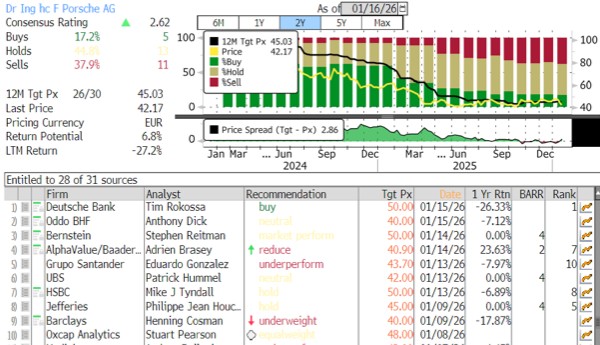
Earlier this week, Oddo BHF analyst Anthony Dick spoke with Porsche CFO Jochen Breckner at a German investment seminar held in New York. According to Bloomberg, Breckner revealed to analysts that his attitude is "more conservative" than ever. Based on this, Dick lowered his expectations for Porsche and pointed out that the company is undergoing a continuous "significant restructuring." He emphasized that Porsche's profitability has been under pressure since its IPO and predicted that the next two years will be challenging "transitional years" for the company.
"Uncertainty" Amid Industry Headwinds
The troubles currently facing Porsche bear a striking resemblance to those of other European automotive brands. The entire European automotive industry is mired in difficulties, constrained by declining sales, pressure on profit margins, and the growing pains of transitioning to electric vehicles. Intense market competition and weak demand for electric vehicles have created significant uncertainty, which is expected to persist into the second half of this year.
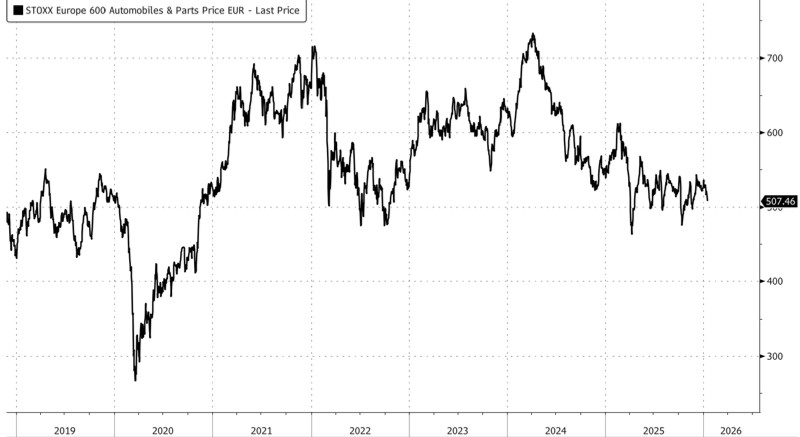
However, some market observers are still trying to find positive signals. Bernstein analyst Stephen Reitman's team referred to Porsche as their "wild card." They noted that the company's shift to a full-time CEO with experience at Ferrari and McLaren Automotive provides a sense of urgency and "optimistic space" for performance improvement. Nevertheless, overall, Porsche will still face a long transformation period in the next one to two years, while the entire European automotive industry continues to navigate a foggy path under the heavy burden of weak demand and pressured profits.
