


Breakfast | Precious metals rebound across the board, with gold and silver both reaching intraday historical highs

The cryptocurrency market experienced a mid-session plunge, with Bitcoin's decline exceeding 3% from its daily high, and Ethereum's drop surpassing 5%; the metal market rebounded across the board, with both gold and silver reaching intraday historical highs. China's GDP is expected to grow by 5% year-on-year in 2025; in February, the year-on-year growth rate of total retail sales of consumer goods slowed to 0.9%, while the year-on-year increase in industrial added value above designated size grew by 5.2%
Market Overview
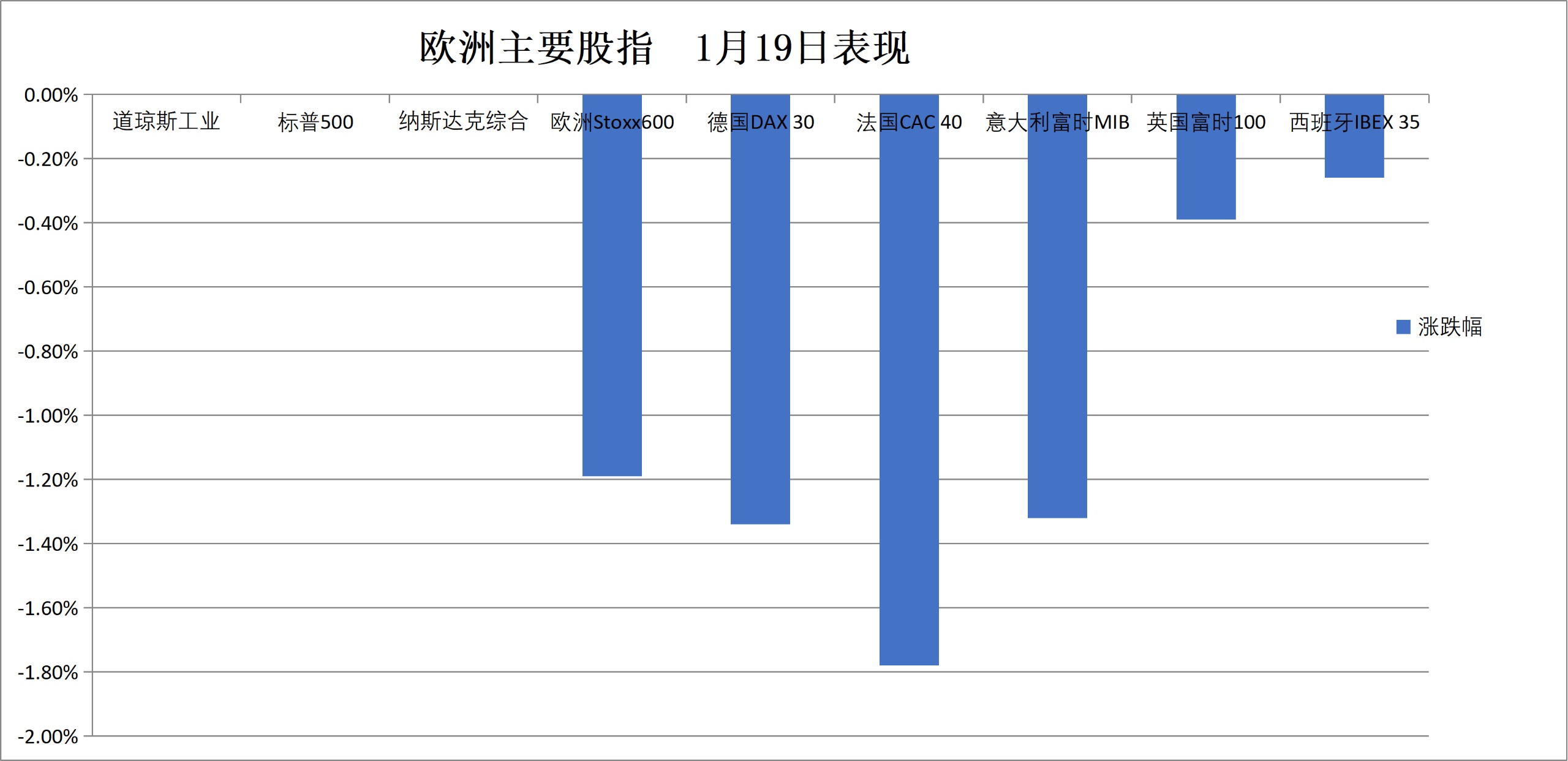
The tariff war threatens to severely impact European stocks. The pan-European index fell over 1%, marking the largest decline in two months, with technology and luxury goods sectors leading the drop. The technology sector fell over 3%, with chip giant ASML down 4%, and luxury giants LVMH and Kering both down over 4%. The automotive sector fell over 2%; U.S. markets are closed, and U.S. stock index futures are down.
The dollar halted its two-day rise, retreating from a six-week high; the offshore yuan rose over 100 points during the day, breaking 6.96 for the first time in 20 months; cryptocurrencies plunged, with Bitcoin dropping over 3% from its daily high, approaching $92,000, and Ethereum falling over 5%.
Metals rebounded across the board: Gold and silver both hit intraday historical highs, with spot gold rising over 2% and silver futures up nearly 7%; London copper closed up over 1%, and London nickel rose over 3%, recovering more than half of last Friday's losses. Crude oil fell over 1% during the day, although Brent crude closed down but turned up after hours.
In the Asian session, A-shares fluctuated and consolidated, with total trading volume in the two markets shrinking to over 300 billion. Power grid equipment surged, the Hang Seng Index fell 1%, and the pharmaceutical and biotechnology sectors broadly declined, with Shanghai tin down nearly 6%.
Key News
China's economic report card for 2025: High-tech manufacturing leads, GDP growth target of 5% achieved on schedule; December retail sales year-on-year growth slowed to 0.9%, and industrial added value above designated size increased by 5.2% year-on-year; annual fixed asset investment fell by 3.8%, and real estate development investment dropped by 17.2%; December housing prices in 70 cities: overall decline in first, second, and third-tier cities month-on-month, with year-on-year decline expanding. National Bureau of Statistics: Since the beginning of the year, production price expectations have shown positive changes, and the economy continues to show steady progress.
The European Union will hold an emergency summit on Thursday, the 22nd, to respond to Trump's "island grabbing" tariffs; the German Vice Chancellor stated that Europe will respond clearly to U.S. threats, and Chancellor Merz said the EU will respond cautiously to avoid tariff escalation.
Trump reportedly "privately messaged" the European side threatening to no longer consider "peace," stating that the U.S. must control Greenland; during public remarks, he refused to clarify whether he would use force, stating that if no agreement is reached on the island issue, tariffs on Europe will be "100% implemented."
The Chinese Ministry of Foreign Affairs responded to the U.S. tariffs imposed on eight European countries: It is necessary to uphold international law based on the purposes and principles of the United Nations Charter.
Trump's new target? Following military and real estate developers, Wall Street giants may face buyback bans.
Powell made a rare appearance at a U.S. Supreme Court hearing, supporting Federal Reserve Governor Cook on Wednesday.
Takahashi Saema announced that the Japanese House of Representatives election will be held on February 8: This will end the excessively tight fiscal policy.
OpenAI CFO disclosed that by 2025, computing power will reach 1.9GW, with annual revenue exceeding $20 billion for the first time, aiming for a tenfold increase in revenue and a 9.5-fold increase in computing power within three years. Reports indicate that OpenAI plans to release its first device in 2026
Apple disrupts the communication landscape? Report: iPhone 18 Pro may debut 5G satellite communication.
Micron warns: The storage chip shortage caused by AI is "unprecedented" and will last until after 2026.
Market Report
US and European Stock Markets: US stock market is closed. The European STOXX 600 index fell 1.19%, closing at 607.06 points.
A-shares: The Shanghai Composite Index rose 0.29%, closing at 4114.00 points. The Shenzhen Component Index rose 0.09%, closing at 14294.05 points. The ChiNext Index fell 0.70%, closing at 3337.61 points.
Bond Market: US Treasuries are closed.
Commodities: Brent crude oil futures for March fell about 0.3%, closing at $63.94 per barrel. LME copper futures rose nearly 1.3%, closing at $12,966 per ton. LME nickel futures rose nearly 3.2%, closing at $18,133 per ton. Due to the US holiday on Monday, there were no closing quotes for US oil and New York gold and silver futures.
Key News Details
Global Highlights
China's economic report card for 2025: High-tech manufacturing leads, GDP growth target of 5% achieved on schedule, with a promising "good start" in 2026. In 2025, China's GDP is expected to exceed 140 trillion yuan, with high-tech manufacturing and strong exports becoming key engines. Fiscal funds are being "reserved" to create space for a good start in 2026. The supply-side "anti-involution" is showing effects, with capacity expansion becoming more rational, and market focus is shifting towards the implementation of structural policies and the restoration of endogenous momentum.
- In 2025, China's GDP is expected to grow by 5% year-on-year, exceeding 140 trillion yuan, with a 4.5% GDP growth in the fourth quarter. The total GDP for 2025 is projected to be 140.1879 trillion yuan, a 5.0% increase at constant prices compared to the previous year. In terms of quarters, the GDP grew by 5.4% year-on-year in the first quarter, and by 5.2% and 4.8% in the second and third quarters, respectively. The fourth quarter GDP grew by 1.2% quarter-on-quarter.
- China's retail sales of consumer goods in December slowed to a year-on-year growth of 0.9%, with retail under pressure in home appliances and construction decoration. The annual growth rate of social retail sales was 3.7%, with the total retail sales of services growing by 5.5% compared to the previous year. Among them, retail sales in cultural, sports, and leisure services, communication information services, tourism consulting and leasing services, and transportation services grew rapidly
- China's industrial added value above designated size increased by 5.2% year-on-year in December, with good growth in high-tech manufacturing, and a 52.5% increase in 3D printing equipment for the whole year. In December, among 41 major industries, 33 industries maintained year-on-year growth in added value. The added value of equipment manufacturing increased by 9.2%, and the added value of high-tech manufacturing increased by 9.4%. For the whole year, by product, the output of 3D printing equipment, industrial robots, and new energy vehicles increased by 52.5%, 28.0%, and 25.1%, respectively.
- China's fixed asset investment in 2025 decreased by 3.8% year-on-year, with mining investment growing by 2.5% and manufacturing growing by 0.6%. By industry, investment in the primary industry was 957 billion yuan, an increase of 2.3% over the previous year; investment in the secondary industry was 17.7368 trillion yuan, an increase of 2.5%; investment in the tertiary industry was 29.8248 trillion yuan, a decrease of 7.4%. Among them, mining investment grew by 2.5%, manufacturing investment grew by 0.6%, and investment in electricity, heat, gas, and water production and supply grew by 9.1%.
- China's real estate development investment in 2025 was 827.88 billion yuan, a decrease of 17.2% from the previous year, with the real estate development prosperity index continuing to decline. China's real estate development investment was 827.88 billion yuan, a decrease of 17.2% from the previous year, with the previous value decreasing by 15.9%; the sales area of newly built commercial housing was 88.101 million square meters, a decrease of 8.7% from the previous year; the funds in place for real estate development enterprises were 931.17 billion yuan, a decrease of 13.4% from the previous year; in December 2025, the real estate development prosperity index (referred to as the "National Real Estate Prosperity Index") was 91.45.
- December housing prices in 70 cities: Overall decline in first, second, and third-tier cities month-on-month, with an expanded year-on-year decline. Data shows that the sales price of second-hand residential properties in first-tier cities decreased by 0.9% month-on-month, with the decline narrowing by 0.2 percentage points compared to the previous month. Year-on-year, it decreased by 7.0%, with the decline expanding by 1.2 percentage points compared to the previous month. The sales prices of second-hand residential properties in second and third-tier cities both decreased by 0.7% month-on-month, with the decline expanding by 0.1 percentage points. Year-on-year, both decreased by 6.0%, with the declines expanding by 0.4 and 0.2 percentage points, respectively.
- National Bureau of Statistics: Since the beginning of the year, there have been positive changes in production price expectations, and the economy continues to show a steady improvement. The current low operation of the CPI is related to the complex changes in the domestic and international macroeconomic situation, as well as to China's stage of development. The current slowdown in growth in some traditional sectors also affects the prices of certain industries, and changes in the external environment have increased the pressure for domestic price adjustments However, to see the effects of expanding domestic demand and related policies, the core CPI is gently rebounding, the old-for-new policy for consumer goods is driving demand, the effectiveness of capacity management in some industries is becoming apparent, and the supply-demand relationship in certain areas is improving, leading to a rise in the prices of related products.
- Shenwan Hongyuan believes that the economic data for December, despite an overall weak appearance, hides three positive changes: improvement in service consumption, marginal easing of the "crowding out effect" from debt reduction, and accelerated production in new momentum sectors. Although retail sales and fixed asset investment readings have weakened, service retail sales are steadily increasing, infrastructure investment has improved, and production in new momentum areas such as high-tech manufacturing is expanding rapidly, indicating that the economic structure is optimizing and transforming in line with policy guidance.
The EU reportedly plans to impose tariffs on $93 billion worth of U.S. goods in retaliation for Trump's agreement to "completely and thoroughly purchase Greenland" which will impose tariffs on eight European countries that opposed his acquisition of Greenland. The retaliatory tariffs being considered by the EU will target U.S. industrial products, including Boeing aircraft, American-made cars, and bourbon whiskey. The EU may activate its most powerful trade retaliation tool—the Anti-Coercion Instrument (ACI), which includes tariffs, new taxes on tech companies, targeted restrictions on EU investments, and may also involve limiting access to certain parts of the EU market or restricting companies from bidding on European public contracts.
-
In response to Trump's "tariff war," Europe is brewing a "capital war," Deutsche Bank: $8 trillion in U.S. assets could become a "trump card". Trump has turned tariffs into "island ransom," and Deutsche Bank warns that the situation could escalate into "weaponization of capital." As the largest "creditor" of the U.S., Europe holds $8 trillion in asset leverage. If the EU activates the ACI to cut off capital flows, it would directly hit the U.S. soft spot of relying on external deficits. Currently, Europe is reassessing institutional countermeasures, potentially extending the game from tariffs to investments, rules, and capital.
-
Trump's "private message" shocks Europe: "Because I did not receive the Nobel Peace Prize, I will no longer only consider 'peace', the U.S. must fully control Greenland". In a text message sent to the Norwegian Prime Minister, Trump directly linked his failure to receive the Nobel Peace Prize with his territorial claims over Greenland. He questioned Denmark's legitimacy over the island's sovereignty while demanding NATO "do something for the U.S." This message was subsequently forwarded to "multiple" European embassies in Washington. Norway explained that the Nobel Prize selection is independent of the government.
-
The EU will hold an emergency summit on Thursday the 22nd to respond to Trump's "island seizure" tariffs European Commission spokesperson Olov Gill stated that the EU's engagement and communication with the United States regarding Trump's tariff threats are ongoing at "various levels." The EU's top priority is "engagement rather than escalation." However, he mentioned that if the U.S. implements the aforementioned tariffs, "the EU has tools at its disposal and is prepared to respond." The EU will "make every necessary effort" to protect its own interests.
-
Chinese Foreign Ministry responds to U.S. tariffs on eight European countries. According to Xinhua News Agency, China has repeatedly clarified its position on the Greenland issue. International law based on the purposes and principles of the United Nations Charter is the foundation of the current international order and must be upheld.
-
Trump refuses to clarify whether he will use force to seize Greenland. According to CCTV News, in an interview, Trump also accused some European leaders of opposing the U.S. seizing Greenland, stating that Europe should focus on the conflict between Russia and Ukraine rather than the Greenland issue. He also made it clear that if no agreement is reached on the Greenland issue, he will "100%" implement tariff measures against European countries.
-
German Vice Chancellor and Finance Minister states Europe will respond clearly to U.S. tariff threats. In response to U.S. tariff threats, Germany is preparing countermeasures with its European partners. German Chancellor Merz states the EU will respond cautiously to the latest U.S. tariff threats and will strive to persuade French President Macron to moderate the response to the U.S. tariff threats. Germany and its EU allies are determined to avoid tariff escalation. The EU and Germany will defend their interests if necessary. The EU does not wish to see a trade war, but will take action if needed.
-
Why does Trump want to seize Greenland? Bessent: Because Europe is "weak". Last Sunday, U.S. Treasury Secretary Bessent publicly supported Trump's decision to impose tariffs on eight European countries, claiming that Europe is too "weak" and that the U.S. must take over Greenland to ensure Arctic security. According to CCTV News, due to the Greenland issue, the U.S. has imposed tariffs on eight European countries, and many countries have responded that this is completely "unacceptable."
-
Ahead of Trump's threat to impose tariffs on Europe, hedge funds have already shorted the euro. Before the escalation of geopolitical risks, hedge funds have preemptively shifted their euro positions from long to short, demonstrating their keen anticipation of potential policy risks. This move not only resonates with the deteriorating technical outlook but also highlights the market's deep concerns about the European economy and the euro's trajectory under Trump's tariff threats However, if it evolves into a broader issue of trust in the dollar, it may trigger a capital return to Europe, thereby providing unexpected support for the euro.
Trump's new target? Following military and real estate developers, Wall Street giants may face a buyback ban. The Trump administration is turning its regulatory focus toward Wall Street's major banks, potentially limiting their stock buybacks through pressure or intervention. Since the core return mechanism for bank stocks heavily relies on buybacks, this policy direction has raised widespread concerns in the market about the industry's capital return capabilities and forced investors to reassess the associated risks.
A watershed moment for the Federal Reserve's independence! The U.S. Supreme Court hears the "Trump vs. Cook case". UBS bluntly stated that this trial concerns the life and death of the Federal Reserve's independence. If the court rules that the White House can "for cause" dismiss Federal Reserve Governor Cook, it would completely open the legal door for the dismissal of Fed Chair Powell. The data-driven logic of monetary policy could collapse instantly, and investors must prepare for a complete takeover of monetary policy by executive power. The market's reaction direction is already very clear—dollar down, U.S. stocks down, U.S. bonds down.
- Powell rarely attends U.S. Supreme Court hearing, will support Fed Governor Cook on Wednesday. Multiple media outlets reported that Powell plans to attend the oral arguments in this case at the Supreme Court on Wednesday, January 21. It is considered extremely rare for the Fed Chair to personally attend oral arguments in such cases.
Takaichi Sanae announces House of Representatives election on February 8: Will end excessive tightening of fiscal policy. Takaichi Sanae announced that she will dissolve the House of Representatives on January 23 and hold elections on February 8, clearly stating that this election is a referendum on her governing legitimacy, and her position as Prime Minister depends on whether the ruling coalition can maintain a majority. She also proposed a shift in fiscal policy to end excessive tightening, increase strategic spending, and consider abolishing the food consumption tax. Currently, the market response is cautious, with limited fluctuations in the yen exchange rate, as investors closely monitor the election results and subsequent policy directions.
OpenAI's money printing machine has gone crazy, first annual revenue exceeds $20 billion, the end of AGI is selling ads. OpenAI's CFO announced that computing power will reach 1.9GW by 2025, achieving a tenfold revenue growth and a 9.5-fold increase in computing power within three years. Its growth is driven by a flywheel of "computing power investment—model capability—product adoption—commercial revenue," and its business model has extended from subscriptions to advertising and transaction loops. In the face of massive computing power investments, OpenAI has officially launched advertising monetization, aiming for $1 billion in advertising revenue by 2026, and is building a new advertising ecosystem based on high-intent query scenarios
- Report: OpenAI plans to launch its first device in 2026. OpenAI's policy director Chris Lehane stated at Davos that the company plans to launch its first hardware device in 2026. The product is likely to be a screenless wearable device, designed by former Apple design chief Jony Ive. He did not disclose specific product details, only mentioning that the release time is "most likely" in the second half of 2026, with the actual schedule subject to adjustments based on R&D progress.
Is Apple disrupting the communication landscape? Report: iPhone 18 Pro may debut 5G satellite communication. Apple plans to introduce 5G satellite communication capabilities in the iPhone 18 Pro series, enabling a leap from emergency calls to real-time voice and data connections. This technology will break bandwidth limitations and may be commercialized through a new operator collaboration model, marking the official entry of smartphone competition into the "integrated terrestrial and space" connectivity era.
Micron warns: AI-induced shortage of storage chips is "unprecedented" and will last until after 2026. Micron Technology warned that the shortage of high-end storage chips caused by AI is "unprecedented." HBM capacity is being heavily occupied by AI accelerators, impacting shipments of traditional consumer electronics such as smartphones and PCs, leading several manufacturers to lower their targets for next year. To ensure supply for strategic customers like NVIDIA, Micron has halted production of consumer-grade memory brands and accelerated expansion.
Research Report Highlights
Goldman Sachs on China's Internet in 2026: The battle for the AI super gateway is fully underway, with three major themes locking in alpha opportunities. Goldman Sachs believes that ByteDance's comprehensive breakthroughs in AI, e-commerce, and local services are forcing giants like Alibaba and Tencent to ramp up their To-C AI efforts, engaging in direct competition around the "AI super gateway," while fiercely defending their core markets. The industry logic is shifting from broad increases to differentiation, with profit delivery, AI applications, overseas expansion, and shareholder returns becoming new mainlines. Valuations still hold advantages, but alpha opportunities are concentrated in companies that can convert AI into EPS.
Sequoia Capital: This is AGI! Sequoia Capital believes that 2026 will be the year of AGI, with its core hallmark being the maturity of "long-term intelligent agents." AI has evolved from simple conversationalists to executors with autonomous reasoning and iterative capabilities, able to solve complex problems in ambiguous environments like humans. The business paradigm will shift from "selling software" to "selling work outcomes," with intelligent agents becoming "digital employees" that can work around the clock. Driven by reinforcement learning and agent architecture, their capabilities double every seven months, fundamentally reshaping productivity boundaries Why is Microsoft the best target for "bottom-fishing" in AI right now? Goldman Sachs: AI profit margins will replicate the miracle of cloud era expansion. After research, Goldman Sachs strongly recommends Microsoft, believing that its stock price correction presents a good opportunity to position itself as a leader in the AI era. The report emphasizes that Microsoft is replicating the high-profit conversion path of the cloud era, leveraging its unique advantages from collaboration with OpenAI, strict infrastructure control, and the accelerated expansion of enterprise AI demand, with the potential for long-term stable profit growth.
Domestic Macro
Li Qiang presides over a symposium with experts, entrepreneurs, and representatives from the fields of education, culture, health, and sports to hear opinions and suggestions on the government work report and the 14th Five-Year Plan outline. According to Xinhua News Agency, Li Qiang emphasized the need to implement a more proactive fiscal policy and moderately loose monetary policy, focusing on the combined efforts of various policy measures, and strengthening the synergy between reform measures and macro policies. He stressed the importance of innovation-driven development, deepening reform and opening up, placing the strategic focus of development on expanding domestic demand, and continuously enhancing the endogenous driving force of development. He also highlighted the need to closely integrate improving people's livelihoods and promoting consumption, investing in goods and investing in people, cultivating new economic growth points, and continuously enhancing the well-being of the people.
The EU is brewing a forced "de-risking" against China? Experts say practical implementation will face many real challenges. According to Global Times, informed sources indicate that the specific timetable for equipment elimination will depend on the "risk level" posed by suppliers to the EU and the industry they belong to, while also considering related costs and the availability of alternative suppliers. Some opinions suggest that a complete ban would be quite difficult. Telecom operators warn that a direct ban could increase consumer spending.
China successfully searches for the Shenzhou spacecraft return capsule using an unmanned mode for the first time. The Shenzhou 20 return capsule successfully landed at the Dongfeng landing site, marking China's first use of an unmanned search mode combining "drones + unmanned vehicles + ground teams" to complete the spacecraft recovery mission. This new system performed excellently in harsh conditions, achieving rapid discovery, tracking, and arrival at the return capsule, marking a key step towards intelligent and unmanned recovery technology in China's manned spaceflight.
Domestic Companies
The AI network supercycle will arrive by 2026, with the biggest winner shifting from "Yi Zhongtian" to "Zhongtian Tai Chang"? Nomura states that the global AI infrastructure is entering a new round of supercycle, with optical modules, optical fiber cables, and high-speed copper cables becoming the strongest resilience tracks. The shipment volume of 800G and 1.6T optical modules is expected to double significantly by 2026, with silicon photonics penetration increasing to 50%-70%. Global AI giants are advancing multiple network technology routes, including SiPh, CPO, and OCS, extending the upward cycle to 2026-2027 Zhongji Xuchuang, Tianfu Communication, Taichengguang, and Changfei Fiber are increasingly prominent in the core connection segment.
Cloud Leopard Intelligence officially launches A-share IPO process, aiming to become the "first domestic DPU stock"! Cloud Leopard Intelligence has officially started the A-share IPO counseling, aiming to become the "first domestic DPU stock." The company was established in 2020 by former Broadcom executive Dr. Xiao Qiyang, focusing on the research and development of data center DPU chips. Since its establishment, it has received multiple rounds of investment from Tencent, Sequoia China, Shenzhen Capital Group, IDG Capital, and others, with the latest valuation exceeding 14 billion yuan.
"Hong Kong Buffett" invests a quarter of his wealth in gold, only buying and not selling! Xie Qinghai manages approximately $1.4 billion in family office assets, with precious metals accounting for about 25%. He started small investments in precious metals in 2008 and made significant purchases of physical gold ETFs ten years later, with these investments yielding a total return of $251.1 million, an increase of 167%. He views precious metals as part of his lifelong savings, does not engage in trading, nor does he use derivatives or structured products, and never borrows money to invest.
Benefiting from investment improvements and tax policy dividends, China Taiping's net profit is expected to increase by over 215% in 2025.
Overseas Macro
Powell's "historical sins"! The Federal Reserve releases the minutes of the September 2020 meeting, Powell advocates for "the Fed to tolerate rising inflation". The minutes of the September 2020 meeting show that Powell advocated for a strong and specific interest rate guidance, clearly stating that the Federal Reserve would keep interest rates near zero until the labor market reached full employment and inflation rose to 2% and was expected to moderately exceed that level for some time. Despite several colleagues expressing opposition, Powell won this debate. However, inflation actually began to soar the following year, peaking at 7.2% in mid-2022.
The U.S. economy is experiencing a "dangerous prosperity," heavily reliant on AI! UBS stated that the foundation of the U.S. economic expansion is rapidly narrowing: the marginal improvements in investment, consumption, and employment are almost entirely dependent on the single theme of artificial intelligence. This also means that it is an expansion with a very low margin for error; if the AI investment boom cools down, the U.S. economy will quickly lose its core support, with a recession probability of about 50% in the next 12 months.
Concerning $350 billion in U.S.-Korea investment, South Korea fears "massive capital outflow," and the U.S. threatens 100% tariffs. According to Global Times, the U.S. has warned South Korean semiconductor companies that if they do not invest in factories in the U.S., they may face tariffs of up to 100% However, against the backdrop of unstable tariff expectations and the current sharp decline of the Korean won, the South Korean finance department stated that large-scale investments in the U.S. are "unlikely to start in the first half of this year."
Overseas Companies
Withstanding chip price pressure, Apple's iPhone Q4 shipments surged 28%, regaining the top spot in the Chinese smartphone market. According to data from Counterpoint Research, Apple phones accounted for one-fifth of the total shipment volume in the Chinese market for the quarter ending in December. For the full year of 2025, Apple's shipments in China grew by 7.5%, closely following the top-ranked Huawei with approximately 17% market share, with a very small gap between the two.
Sequoia to invest heavily, Anthropic raises over $25 billion, with a valuation of up to $350 billion. Reports indicate that Anthropic's current financing target is as high as $25 billion or even more, with GIC and Coatue each leading with $1.5 billion, and Microsoft and Nvidia committing a total of $15 billion. The remaining funding gap of over $10 billion will be filled by venture capital firms and other investors, including Sequoia Capital. Sequoia's significant investment in this OpenAI competitor marks a strategic shift towards "full coverage" in its AI track.
U.S. software stocks crash as Claude Code becomes too popular. The explosive popularity of Claude Code has intensified market fears of disruption in the software industry, with a basket of SaaS stocks tracked by Morgan Stanley having fallen 15% since the beginning of the year, marking the worst start to a year since 2022. Many buy-side institutions believe there is currently "no reason to hold" software stocks, and they do not see any catalysts for a revaluation in the short term.
Today's News Preview
China's January one-year and five-year Loan Prime Rate (LPR).
Germany's December PPI.
Walmart will be included in the Nasdaq 100 index.
The U.S. Supreme Court has set Tuesday as the next opinion announcement day, possibly releasing a ruling on the Trump tariff case.
Trump calls for a credit card interest rate cap of 10% starting January 20, 2026, for one year.
