Trump "Make Global Stock Markets Great Again"? Non-US markets surged 30%, US stocks posted the worst performance in 33 years

Wallstreetcn
2026.01.20 12:04
portai
I'm PortAI, I can summarize articles.

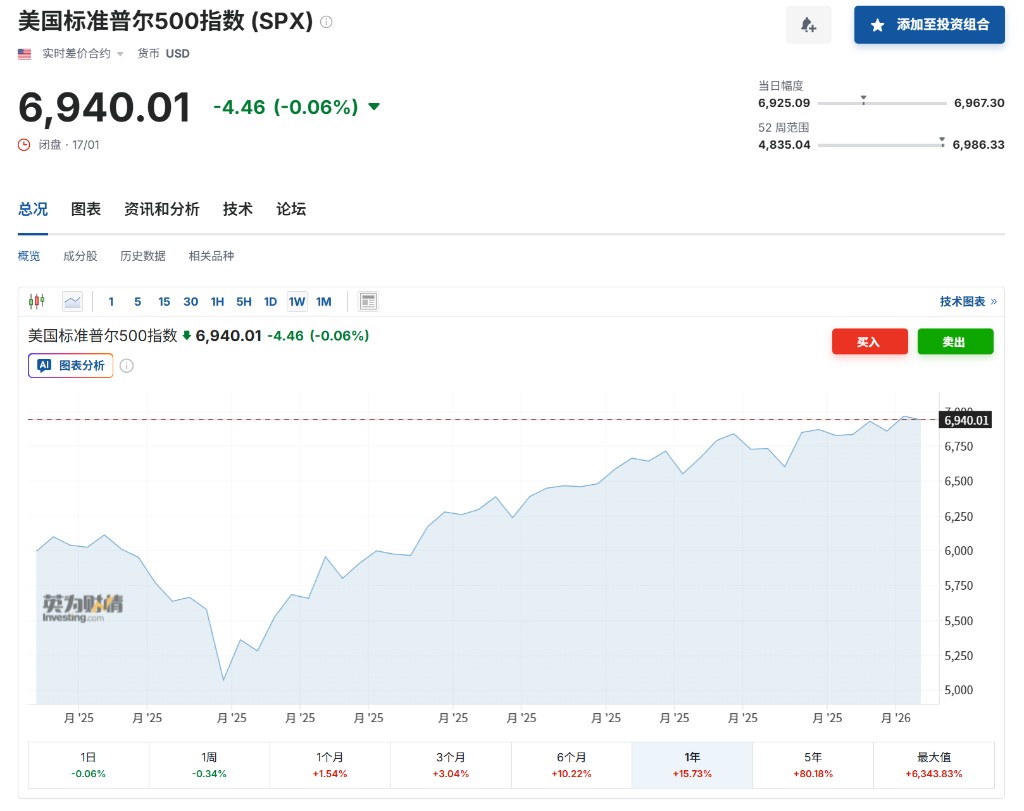
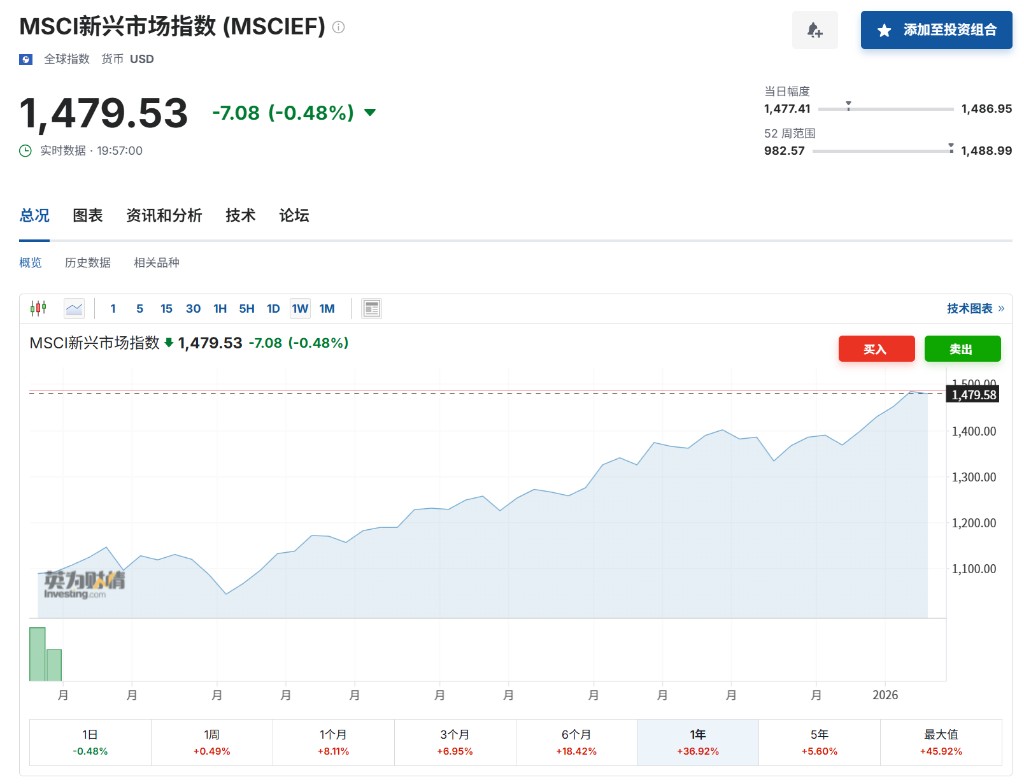
In the first year of Trump's return to the White House, global stock markets (excluding the U.S.) rose by about 30%, which is twice the increase of the S&P 500 index, indicating that U.S. stocks performed the worst in 33 years. Although U.S. stocks did not fall into a bear market, their increase ranked only ninth among all past presidents, lower than several predecessors. Market analysis indicates that the uncertainty of Trump's policies led capital to flow to other markets, with investors' expectations and realities regarding his tax cuts and deregulation being complexly intertwined

Despite Donald Trump's claim that the U.S. has become the world's "hottest" country in his first year back in the White House, the actual performance of financial markets presents a starkly different picture: In the first year of his term, global stock markets significantly outperformed Wall Street.

According to Bloomberg, since Trump took office a year ago, global stock markets (excluding the U.S., as measured by the MSCI index) have risen by about 30%, which is roughly twice the increase of the S&P 500 index during the same period. This marks the most severe underperformance of U.S. stocks relative to global markets in the first year of a presidential term since 1993.

Although the S&P 500 index has not entered a bear market and has repeatedly set new highs, according to CFRA data, the stock market gains in the first year of Trump's second term rank only ninth among all presidents since World War II. This performance is not only worse than that of Reagan, George H.W. Bush, Clinton, Obama, and Biden, but also lags behind Trump's own first term.

Market analysts point out that while the AI boom and a resilient economy have supported U.S. stocks, a series of uncertainties brought about by the Trump administration's trade, foreign policy, and challenges to the independence of the Federal Reserve have left investors uneasy. This policy turbulence is prompting capital to accelerate its flow into recovering markets in Asia, Europe, and Latin America.

Policy Interventions Trigger Severe Volatility

Investors had anticipated that Trump's tax cuts and deregulation agenda would further stimulate the economy by the end of 2024, but the reality is more complex. Trump's early presidency triggered significant market volatility: he authorized billionaire Elon Musk to cut federal spending and broke with previous policies.

Additionally, Trump's attempts to exert broader control over key industries caught the market off guard. Reports indicate that this includes claiming sovereignty over Venezuelan oil, attempting to order banks to limit credit card interest rates, criticizing defense contractors, and directing the federal government to invest in companies like Intel. Unexpected foreign policy moves, such as pushing for the U.S. to purchase Greenland, have also heightened market unease. In April of this year, his tariff policies briefly threw the market into chaos until a subsequent correction.

Rob Haworth, Senior Investment Strategy Director at Bank of America, stated: “Winners and losers change quite rapidly, making it difficult for investors to remain flexible.” Data from Balyasny shows that this turbulence is particularly evident: in 2025, the largest 100 components of the S&P 500 experienced 47 instances of declines exceeding 5 standard deviations, the highest since 1998

Capital Flows to Non-US Markets

Against the backdrop of a weakening dollar in the first half of the year, a cooling U.S. job market, and Trump pressuring European allies to increase defense spending, stock markets in other parts of the world have begun to gain momentum. According to Bloomberg data, the MSCI Emerging Markets Index rose over 30% last year, marking its largest increase since 2017.

Craig Basinger, Chief Strategist at Purpose Investments, pointed out that the view that non-US stock markets will continue to outperform US stocks is no longer contrarian thinking; "capital is chasing performance."

Although U.S. stocks have lagged relatively, their absolute returns remain substantial. The S&P 500 Index has achieved double-digit growth for the third consecutive year, and Wall Street forecasters remain optimistic about 2026. Rhys Williams, Chief Strategist at Wayve Capital Management LLC, believes that despite the turmoil brought by policy makers, as long as one ignores the noise and focuses on prices, the long-term benefits brought by AI will continue to drive the economy in the right direction.

Midterm Elections and Uncertainty Surrounding the Federal Reserve

As the 2026 midterm elections approach, the market is facing new risks. Historical data shows that midterm election years are typically weaker for the stock market, partly due to the risk that a victory for the opposition party could obstruct the president's agenda.

In light of low approval ratings and voter dissatisfaction with inflation and high interest rates, Trump has recently turned his attention to mortgage rates, credit card rates, and the rising electricity costs due to the surge in AI data centers. Additionally, Trump has exerted unprecedented pressure on the Federal Reserve, with his administration even initiating a criminal investigation against current Chairman Jerome Powell, exacerbating investor concerns about the central bank's independence. With Powell's term ending in May, Trump will nominate a successor.

Mark Hackett, Chief Strategist at Nationwide Funds Group, summarized:

Midterm election years have historically been the worst-performing years on the calendar. Generally, midterm elections tend to be contentious, and the market dislikes uncertainty.”

Risk Warning and Disclaimer

The market carries risks, and investments should be made cautiously. This article does not constitute personal investment advice and does not take into account the specific investment goals, financial situation, or needs of individual users. Users should consider whether any opinions, views, or conclusions in this article align with their specific circumstances. Investment decisions made based on this are at their own risk.