


The tides of fortune turn! European tech stocks surge 10% at the start of the year, crushing U.S. stocks, with the "three chip giants" contributing 90% of the gains

European technology stocks have shown strong performance at the beginning of the year, with the Stoxx 600 Technology Index rising 10% in January, significantly outperforming the nearly flat U.S. information technology sector. This was primarily driven by semiconductor equipment stocks, with ASML, ASM International, and BE Semiconductor contributing approximately 90% of the sector's gains. The catalyst came from TSMC significantly raising its capital expenditure guidance, expecting to substantially expand capacity over the next three years, which directly benefits its European equipment suppliers
Since the beginning of this year, European technology stocks have unexpectedly outperformed their American counterparts significantly. The Stoxx 600 Technology Index rose by 10% in a single month, becoming the second strongest sector in the region; meanwhile, the S&P 500 Information Technology Index was nearly flat. 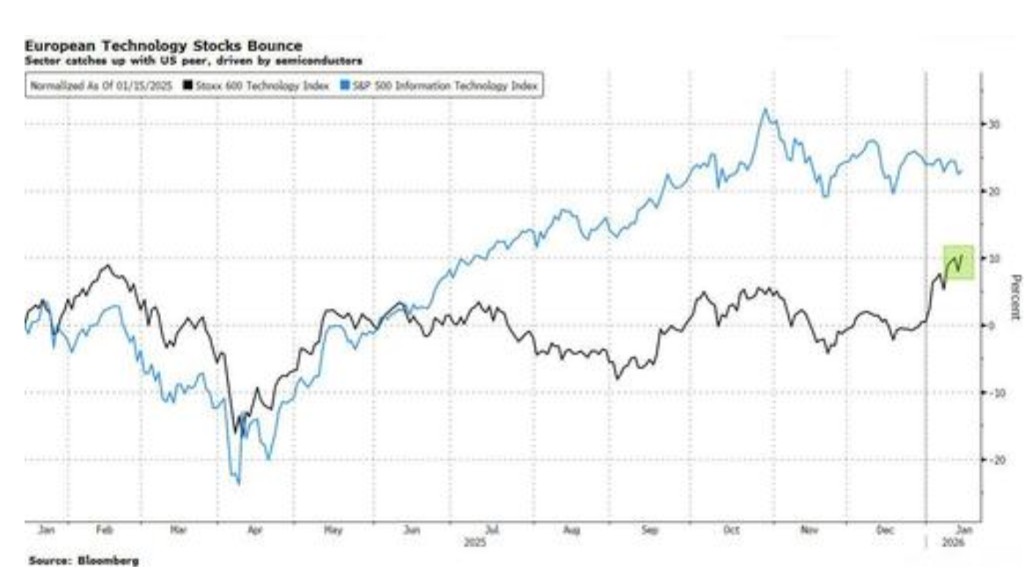
This strong performance was mainly driven by the semiconductor equipment sector, with the catalyst being TSMC's significant increase in capital expenditure outlook. TSMC expects its capital expenditure to grow by about 30% by 2026 and announced plans to "substantially" increase spending over the next three years to accelerate capacity expansion in Taiwan and the United States. This unexpected capital expenditure plan directly benefits its supply chain partners.
The European "chip trio," represented by ASML, ASM International, and BE Semiconductor, accounts for nearly 40% of the Stoxx 600 Technology Index's weight and has contributed about 90% of the sector's gains this year. Citigroup analyst Andrew Gardiner pointed out that TSMC's latest developments constitute a "substantial benefit" for European semiconductor equipment manufacturers. Morgan Stanley has raised its target price for ASML to €1,400, one of the highest among Wall Street firms, citing expectations of stronger orders in the next two to three quarters and more robust growth in 2027.
TSMC's Capital Expenditure Leads Industry Shift
TSMC's capital expenditure guidance has effectively alleviated market concerns about capacity expansion bottlenecks. Although strong demand for AI chips has been confirmed by the recent surge in memory prices, investors were once worried that chip manufacturers lacked sufficient physical space to install equipment and start production lines.
Before TSMC's earnings report, the stock prices of the three Dutch equipment companies, ASML, ASM International, and BE Semiconductor, had already achieved double-digit increases this month, as market expectations had been pushed higher in advance.
Ken Hui, director of Bakewell Alpha Fund, pointed out that given the higher capital intensity required for AI chip production, other chip manufacturers, including Intel, are likely to follow TSMC in raising their capital expenditure targets. He believes that the rebound in the semiconductor equipment sector "still has further room to grow." Citigroup analysts added that strong demand for semiconductor equipment is expected to continue into next year, when more new wafer fabs will gradually come online, and the physical space bottlenecks currently limiting capacity expansion will also be gradually alleviated.
Previously, Micron Technology had stated last December that it was "doing everything possible" to enhance short-term capacity, which has already shown initial signs of industry demand translating into capacity.
Traditional Chip Manufacturers Welcome Recovery
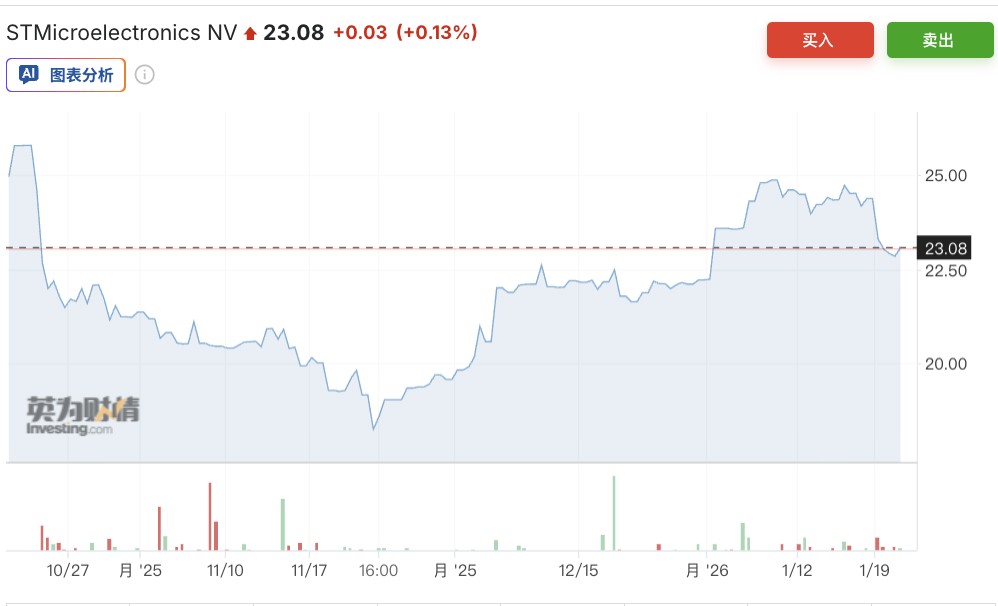
The rebound in European tech stocks is not limited to the equipment manufacturing sector. Traditional chip manufacturers, which have underperformed in recent years, such as Infineon and STMicroelectronics, also recorded about a 10% increase by early 2026, reflecting rising investor expectations that demand for automotive and industrial chips is emerging from years of stagnation. After Infineon's earnings per share expectations for fiscal year 2026 were revised down by more than 20% last year, the lower earnings expectations also leave room for positive market surprises The recent financial report released by the American peer company Microchip has further strengthened the market's confidence in the cyclical recovery of the industry.
JP Morgan strategist Mislav Matejka and his team stated:
“In high-beta areas, we are optimistic about semiconductor stocks in the technology sector, which not only includes companies like ASML that are directly related to AI, but also more traditional cyclical semiconductor companies like Infineon, as well as companies involved in intellectual property, automotive, and consumer sectors, which have lagged behind for some time.”
For Europe's top chip equipment manufacturers, this represents a significant market shift. Since the AI boom sparked by ChatGPT at the beginning of 2023, these stocks have long underperformed the Philadelphia Semiconductor Index, as investors favored chip manufacturers that directly benefit from the AI wave, rather than upstream equipment suppliers acting as "shovel sellers." However, since the end of last year, market sentiment has begun to change, with signs indicating that the demand for AI chips has become so strong that both logic chip and memory chip manufacturers need to increase equipment procurement, thus bringing a new wave of growth momentum to the equipment sector
