


"De-dollarization transactions" make a comeback

The foreign exchange market has recently seen increased volatility, with the US dollar index falling by 0.6%, while currencies such as the euro and Swiss franc have risen. Trump threatened to impose tariffs on Europe, raising market concerns that Europe might sell off US Treasury bonds in retaliation, which has driven up the euro. The Danish pension fund announced its withdrawal from the US Treasury market; although the impact is limited, it may prompt other European funds to follow suit. Analysts believe that the euro's rise is supported by technical factors, and the market is cautiously approaching the prospect of large-scale sell-offs in the short term regarding "de-dollarization."
The long-silent foreign exchange market finally broke the calm on Tuesday, with the US dollar index falling 0.6% and European currencies such as the Swiss franc and euro surging. On one hand, Trump threatened to impose tariffs on eight European countries, raising market concerns that Europe might sell off US Treasury bonds and other American assets in retaliation, leading to a significant rise in the euro exchange rate; on the other hand, Prime Minister Kishi Sanae's remarks about lowering the food consumption tax sparked worries about Japan's fiscal deterioration, causing Japanese bond yields to soar and subsequently triggering a global sell-off of long-term bonds.
Euro: "De-dollarization Trade" Reemerges
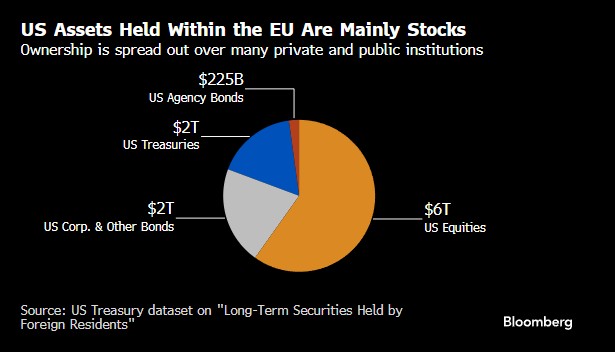
Trump's pressure on Europe regarding Greenland has a dual impact on the euro: 1) The threat of tariffs on Europe will affect European corporate profits, which is bearish for the euro; 2) Europe may sell off its trillion-dollar holdings of US assets as a countermeasure, known as "de-dollarization." From the market's reaction over the past two days, funds are clearly betting on the latter, with the financial market experiencing a triple whammy of declines in stocks, bonds, and currencies in the US.
In the evening, the Danish pension fund Akademiker Pension announced it would exit the US Treasury market. Although this fund only holds $100 million in US bonds, its symbolic significance outweighs its actual impact. However, the entire Danish pension system holds about $210 billion in US assets, which may continue to be sold off as ammunition. Additionally, attention should be paid to whether larger European sovereign funds in Norway and Sweden will follow suit.
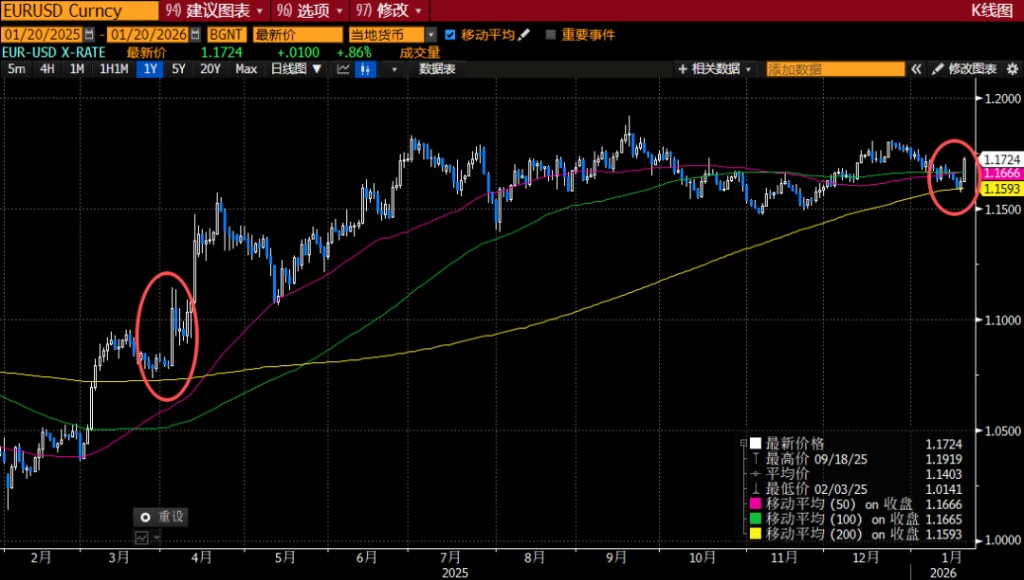
I believe that a large-scale "de-dollarization" sell-off is difficult to achieve quickly in the short term, and the euro's surge is more due to technical resonance: EURUSD found support at the 200-day moving average on Monday, and during the active trading period on Tuesday, it strongly broke through the 50-day and 100-day moving averages, forming a perfect bullish engulfing pattern that triggered momentum strategies for buying.
From the daily chart, the current EURUSD trend is highly similar to that of last April—both stabilized near the 200-day moving average before closing with a large bullish candle, establishing the start of a new bullish trend.
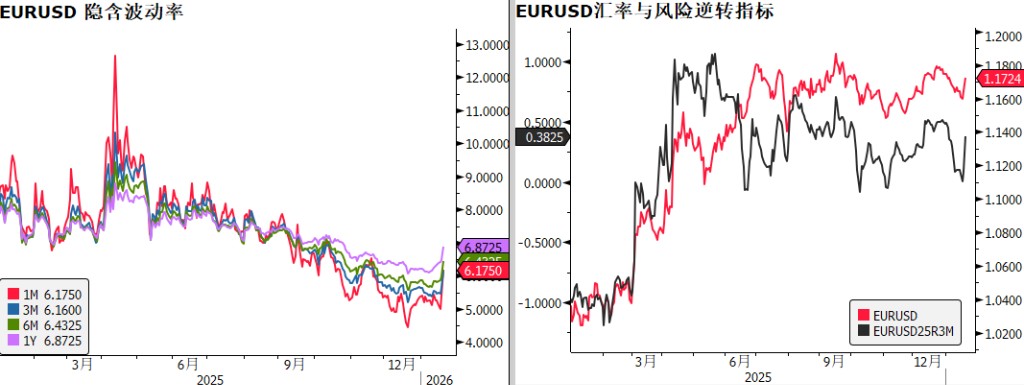
From the perspective of implied volatility in options, after a prolonged period of low volatility, there has been a noticeable rebound in implied volatility across various maturities, which is also an important signal for price breakout. The EURUSD 3M 25D RR rose by 0.4%, indicating that the options market is bullish on the euro.
Yen: Japan's "Truss Moment"
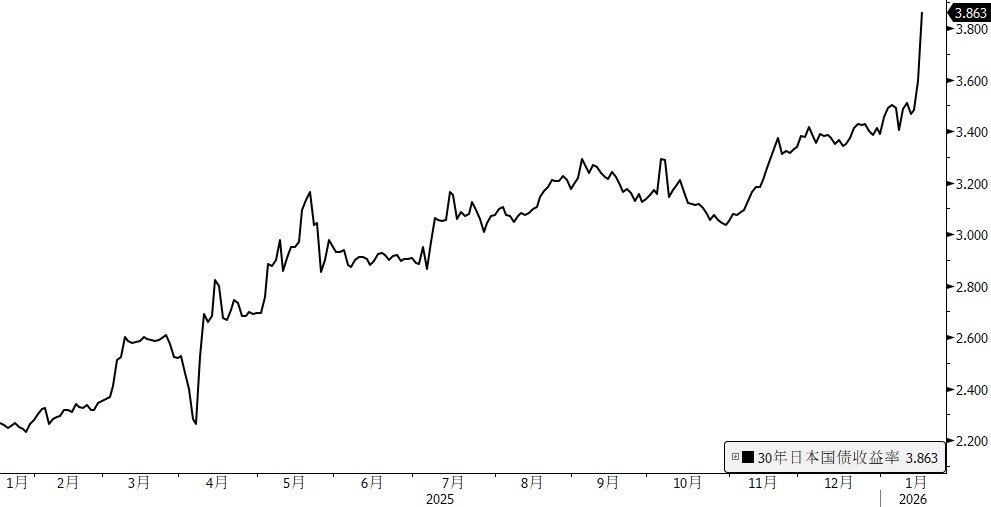
Misfortunes do not come singly, as the Japanese bond market also suffered a bloodbath on Tuesday. The trigger was Prime Minister Kishi Sanae's commitment to lower the food consumption tax to 0% within two years during her statement on dissolving the House of Representatives According to estimates by the Japanese Ministry of Finance, the suspension of the consumption tax on food and non-alcoholic beverages will result in an annual fiscal loss of approximately 5 trillion yen (31.6 billion USD).
The gap can only be filled by issuing more government bonds, exacerbating Japan's already strained finances and triggering a "Truss moment" for Japanese bonds: the yield on 30-year Japanese government bonds surged 27 basis points to 3.87%. Currently, the yield on Japanese government bonds, after foreign exchange hedging, has surpassed that of U.S. Treasuries and other major countries' bond markets, leading to a concentrated sell-off of global long-term bonds.
The next key event to watch is Trump's speech in Davos on Wednesday. If U.S. stocks and bonds continue to decline, he is likely to bring up the Greenland dispute again. The most certain trade at the moment remains to go long on the renminbi, as Trump's threats to U.S. allies may attract capital inflows into China, further benefiting the performance of Chinese assets.
Risk Warning and Disclaimer
The market carries risks, and investments should be made with caution. This article does not constitute personal investment advice and does not take into account the specific investment objectives, financial situation, or needs of individual users. Users should consider whether any opinions, views, or conclusions in this article are suitable for their specific circumstances. Investing based on this is at one's own risk.
