Is Trump fighting hard for the midterms? It may not necessarily be good news for the market

The 2026 midterm elections in the United States are crucial for Trump. Currently, the Republican Party has only a slight advantage in the House of Representatives, and losing the majority could weaken the government's ability to govern and increase the risk of impeachment. Voters are concerned about high prices, high interest rates, and high housing costs, making "affordability" a core issue, with policies likely leaning towards direct intervention. Trump has frequently intervened in housing and finance, pressuring the Federal Reserve to cut interest rates, leading to market concerns about policy risks, stock market volatility, and a steepening bond yield curve
Abstract
2026 is the midterm election year in the United States, which is a very important milestone for Trump. Currently, the Republican Party has only a slight advantage in the House of Representatives, and if they lose the majority, leading to a divided government, it will not only weaken the government's ability to govern but may also put Trump himself at risk of impeachment. Unlike previous elections, the public opinion focus in this round of elections has shifted to the real-life pressures brought about by high prices, high interest rates, and high housing costs, with "affordability" becoming the core source of dissatisfaction. In this context, merely pursuing economic growth or rising asset prices is no longer the highest priority; responding to the public's real feelings is more crucial.
In recent years, the high price level in the United States has exerted lasting pressure on low- and middle-income groups. The housing sector is particularly prominent: housing prices and mortgage rates have risen in tandem, leading to a significant decrease in housing affordability for families since 2022. At the same time, the pressure of debt repayment on residents has increased with rising interest rates, compounded by tariff policies and the impact of AI technology on the labor market, further amplifying the economic anxiety of ordinary families. This also means that even if macro data is robust, voters' subjective feelings may still perceive a heavy burden.
As affordability rises to the core goal, policy orientation also changes accordingly. Compared to traditional macro policies, administrative intervention measures that directly affect prices, interest rates, and corporate behavior are more likely to be included in policy options. Recently, Trump has frequently intervened in housing, finance, and electricity sectors, and has continued to pressure the Federal Reserve to cut interest rates, reflecting a clear logic: when corporate profits, financial capital returns, and voter sentiment conflict, the policy balance is more likely to tilt toward votes, forcing capital to "give way" in exchange for support.
The market often subconsciously believes that economic policies in an election year will inevitably be friendly to asset prices. However, this assumption does not always hold true. Historical experience shows that once affordability becomes the dominant issue, policies tend to be more aggressive and are more likely to disrupt the market. Since the beginning of the year, the aforementioned intervention measures have raised investor concerns: the stock market has been generally volatile, and the bond yield curve has steepened, reflecting the market's worries about related policy risks. Meanwhile, the Federal Reserve's stance has become more cautious, and interest rate cut expectations have been postponed. Against the backdrop of increasing external pressure, monetary policy not only needs to respond to economic conditions but also bears the consideration of defending its own independence.
Thus, the core theme of 2026 may not be "stimulating an overheated economy," but rather alleviating the pressure of living costs. This brings three insights for investment in the U.S. market: first, the expansion space for index valuations may be limited, with increased volatility; second, sectors with strong monopoly power, high pricing power, and rich profit margins face higher policy risks; third, cost-benefit industries are relatively advantageous and are more likely to become the direction of capital allocation.
The main text is as follows:
Governance Constraints: Why Trump Cannot Lose?
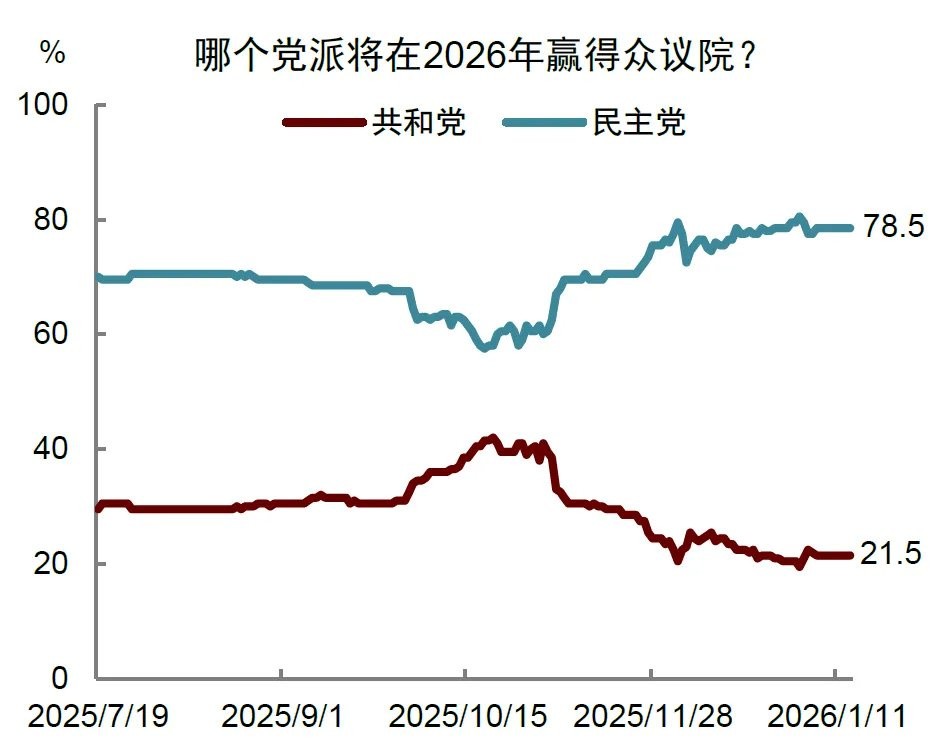
For Trump and the Republican Party, the most important thing in 2026 is the midterm elections. Although the Republican Party controls both the House of Representatives and the Senate after the 2024 election, the seat advantage in both chambers is relatively weak, especially the majority seats in the House of Representatives are the fewest in modern history [1]. According to the latest data from the betting market, the likelihood of the Republican Party losing the House of Representatives continues to rise (Chart 1), and historical experience also shows that the party of the sitting president often suffers losses in midterm elections This results in a divided governance between the two chambers of Congress [2].
Once the two chambers are divided, it will constrain the sitting president, limiting their government's capabilities in areas such as finance, regulation, and legislation [3]. Since the operation of the executive branch heavily relies on appropriations bills, a blockage in the legislative process will lead to significant bills on further tax cuts, immigration and healthcare reform, infrastructure construction, etc., being stalled due to the inability to secure a majority in both chambers. It will also be difficult for the president to solidify their governance legacy through legislative means. In this context, the Trump administration will not only struggle to advance grand plans during the remaining term but will also be burdened with threats such as debt ceiling negotiations and government shutdowns.
Additionally, Trump has expressed another concern: if the Republican Party loses in the midterm elections, he may face the risk of impeachment [4]. Trump has previously faced impeachment twice (in 2019 and 2021), making him the only president in U.S. history to face impeachment challenges twice. During the Republican control of the House of Representatives in 2023, an impeachment inquiry was initiated against Biden [5]. Several Democrats have recently stated that while they are not currently eager to impeach Trump, the situation may change if the Democrats regain a majority in the House after the midterm elections [6]. Therefore, the outcome of the midterm elections not only concerns policy execution but also directly affects Trump's future governance viability.
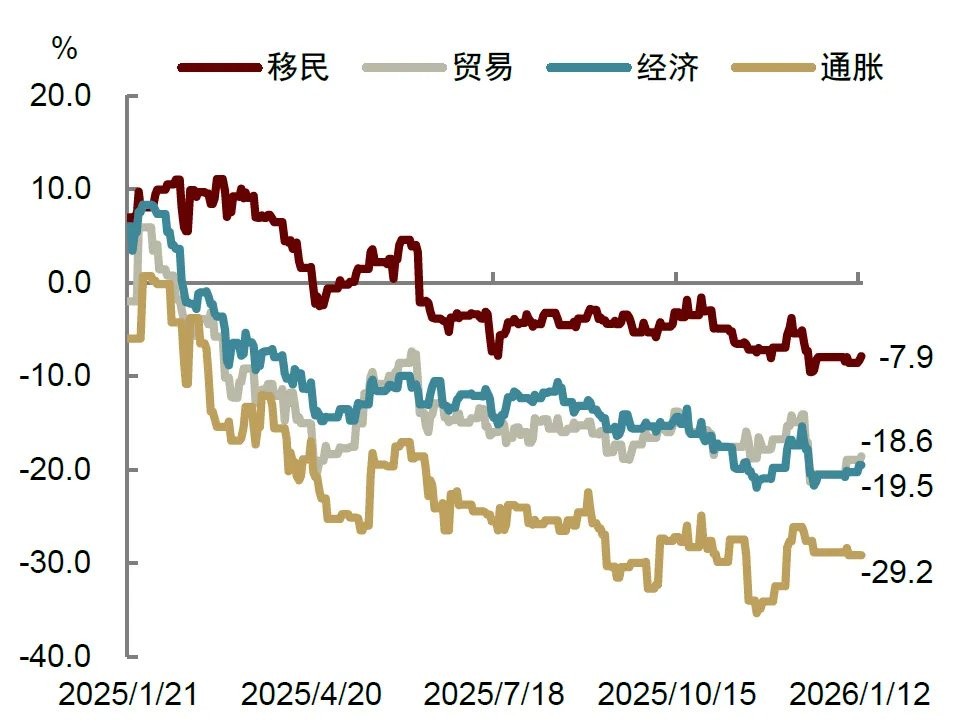
Compared to previous elections, the uniqueness of this round of elections lies in the fact that the American public has experienced nearly five years of high prices, high interest rates, and high housing costs, leading to a continuous accumulation of dissatisfaction with the economic situation. In November 2025, Republicans lost in several local elections in New York City, Virginia, and elsewhere, indicating that the public was not satisfied with the performance of the Trump administration in its first year. This dissatisfaction is partly due to the unresolved inflation issues [7]. Polls show that Trump's net approval rating on inflation is the lowest among all core issues (Chart 2). The Democrats have been able to achieve success in local elections by focusing their campaign issues on affordability, precisely hitting the pain points of the middle and lower-income groups [8].
This means that "the pressure of living under economic growth" is likely to be the core issue of this midterm election. Compared to robust macroeconomic data and high asset prices, voters are more concerned about their micro experiences, including confidence in job prospects, income distribution imbalance, and the personal pressure brought by high prices. In this context, responding to and alleviating the core concerns of voters is clearly a higher priority than merely pursuing economic growth or rising asset prices [9].
Chart 1: Betting websites predict a higher probability of the Democrats winning the House in the midterm elections

Source: Polymarket, CICC Research Department
Chart 2: Trump's polling support on different issues: lowest on inflation

Source: Silver Bulletin, CICC Research Department
The Real Concern of Voters: Affordability Pressure
Affordability pressure is a real difficulty faced by American households. From the data, although the CPI inflation rate has retreated from its peak in 2022, the overall price level in the United States remains significantly elevated compared to pre-pandemic levels. Meanwhile, the impact of inflation is more pronounced for low- and middle-income groups: due to a lack of asset appreciation and wealth effect buffers, their nominal income growth often fails to keep pace with rising prices, thus putting pressure on their real purchasing power.
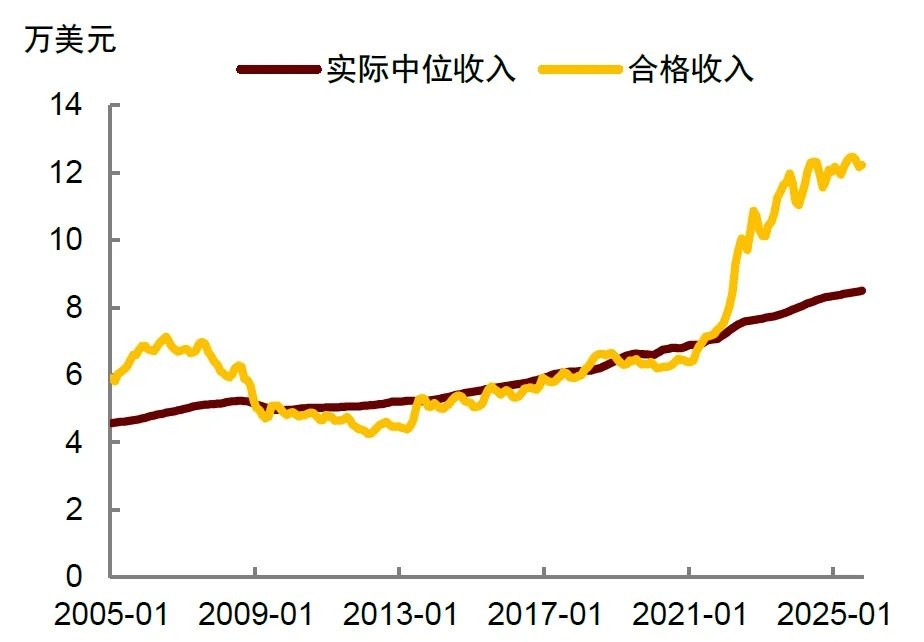
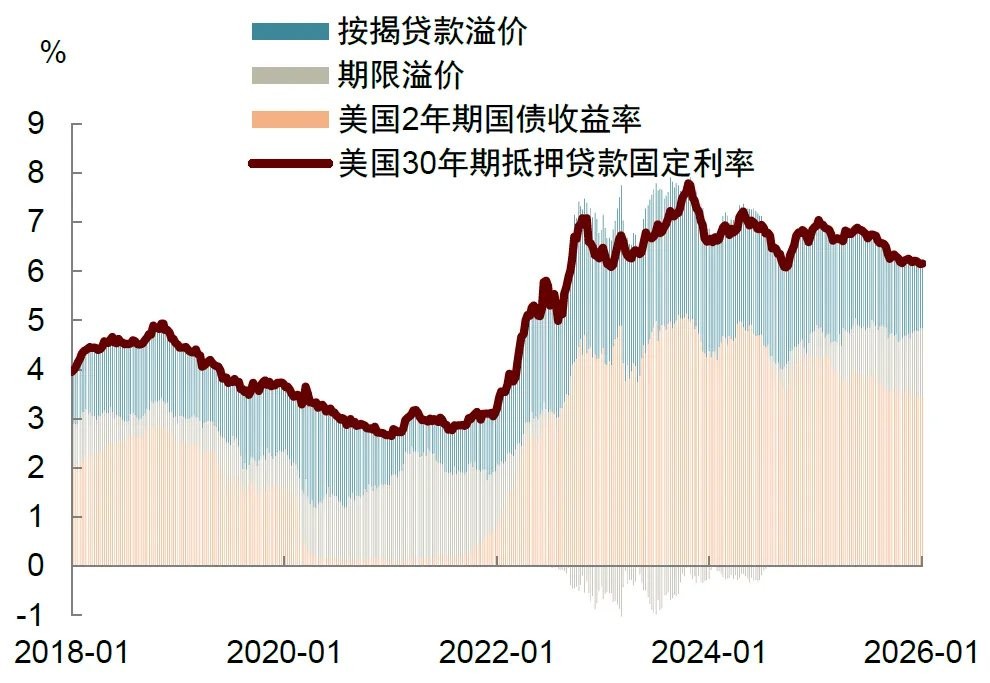
The housing sector is particularly prominent. Generally speaking, if the annual expenditure on housing exceeds 30% of a household's average annual income, it is considered unaffordable [10]. According to the 30% rule, the Atlanta Federal Reserve calculated the qualifying income for homebuyers (Chart 3). Before 2022, the actual median income of American households was roughly equivalent to the qualifying income, indicating that ordinary housing in most areas was affordable. However, now homebuyers need to earn 43% more than the median household income to afford an ordinary home. The decline in housing affordability is partly due to high home prices and also related to the rise in mortgage rates. From 2021 to now, mortgage rates have risen from about 3% to a peak of 7%, and although they have retreated somewhat after the Federal Reserve's interest rate cuts, they still stand at 6% (Chart 4).
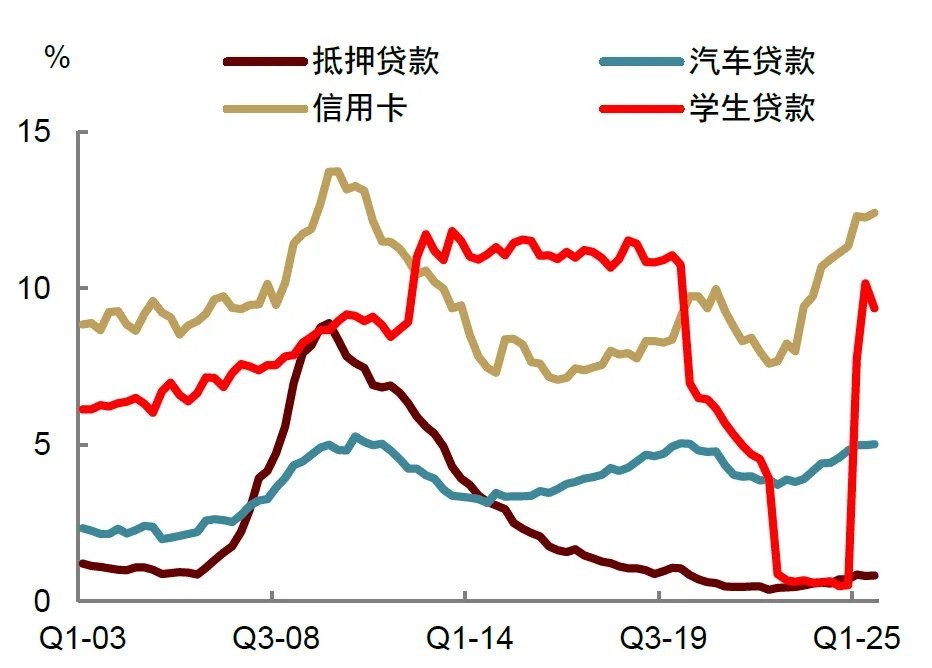
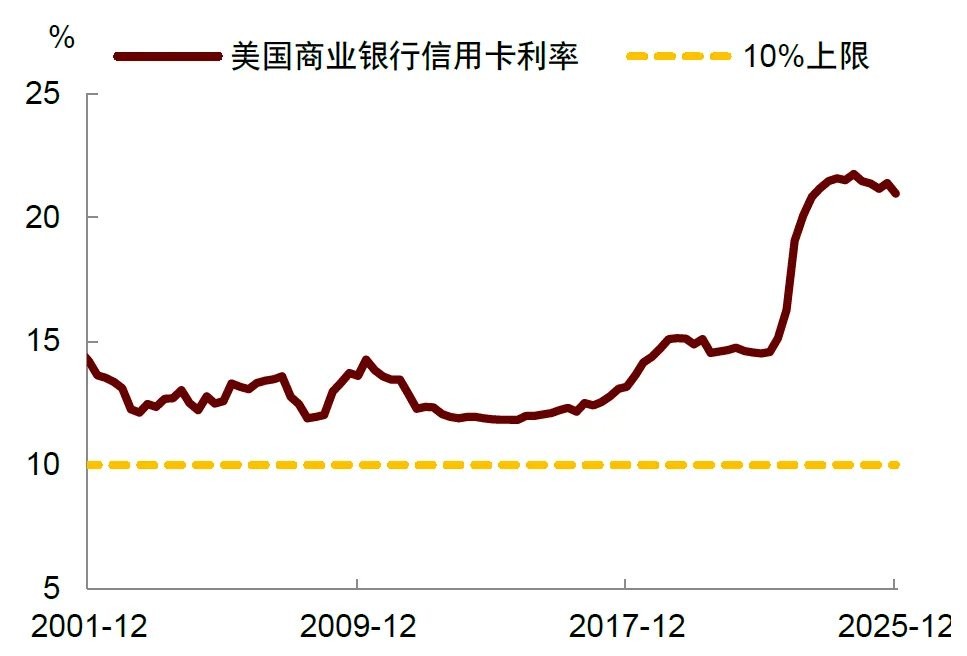
The repayment pressure of credit cards, auto loans, and student loans is also rising. During the pandemic, the Biden administration temporarily suspended student loan repayment obligations; at the same time, influenced by the low-interest-rate environment and the "you only live once" mentality, consumers turned to "buy now pay later" for their purchases. After 2022, as the Federal Reserve raised interest rates, the debt repayment pressure on households began to increase. Data from the New York Federal Reserve shows that the serious delinquency rate of credit cards, auto loans, and student loans overdue by 90 days or more is nearing previous highs (Chart 5). Although the Federal Reserve has begun to cut interest rates, the delinquency rate on credit cards at commercial banks remains above 20% and has not significantly decreased (Chart 6).
Weakening employment prospects further amplify economic anxiety for ordinary families. In the past, when inflation was high, workers typically demanded wage increases, but in the current context of rapid AI development, workers' bargaining power is weakening. As AI penetration continues to rise, companies are more inclined to replace labor with technology; under tariff shocks, companies also hope to further "reduce costs and increase efficiency." This makes it harder for workers to find jobs and lowers their confidence in employment prospects, while companies can maintain or even increase profit levels in a pressured environment by leveraging AI technology and layoffs.
This means that even if macro data is robust, voters' subjective feelings may still be that the burden is heavy. The improvement in the CPI inflation rate does not automatically translate into a rebound in approval ratings, which is a reality that Trump and the Republican Party must face before the midterm elections Chart 3: The gap between median household income and qualifying income for home purchases in the United States is widening

Note: Qualified Income is the income required to ensure that annual housing costs do not exceed 30% of annual income, which serves as a benchmark for affordability.
Source: Federal Reserve Bank of Atlanta, CICC Research Department
Chart 4: The 30-year mortgage rate in the United States is about 6%, with an expanding contribution from term premium

Source: Wind, CICC Research Department
Chart 5: The delinquency rate of U.S. households overdue by 90 days or more continues to rise

Source: Federal Reserve Bank of New York, CICC Research Department
Chart 6: U.S. credit card rates are about 20%, while Trump calls for a 10% cap

Source: Haver, CICC Research Department
Policy Direction: Reducing Costs and Restructuring Distribution
As the affordability of voters becomes a core policy goal, the choice of policy tools will also change. Beyond traditional fiscal stimulus and monetary easing, some administrative intervention measures that directly affect prices, interest rates, and corporate behavior are more likely to be included in policy options. Such measures are often viewed as "anti-market" from a market perspective, but in the context of elections, they are the most direct means to alleviate voter pressure and reshape distribution.
Recent policy initiatives by Trump have already reflected this trend: in the housing sector, Trump announced that he would take administrative measures and call on Congress to legislate to prohibit large institutional investors from purchasing single-family homes. Trump also instructed federal housing agencies "Fannie Mae" and "Freddie Mac" to purchase about $200 billion in mortgage-backed securities (MBS), aiming to drive down mortgage rates. In the financial sector, Trump plans to set a cap of 10% on the interest rates that credit card companies can charge within a year starting January 20. In the energy sector, the Trump administration plans to push the largest U.S. grid operator to hold auctions, requiring technology companies to fund new power generation facilities to address soaring electricity prices and potential power shortages caused by the expansion of AI data centers. Regarding the Federal Reserve, the U.S. Department of Justice has initiated a criminal investigation against Federal Reserve Chairman Powell under the pretext of the "Federal Reserve headquarters renovation project," attempting to force the Fed to lower interest rates Prior to this, the Trump administration attempted to remove Federal Reserve Governor Cook with accusations of "mortgage fraud" to pressure Federal Reserve officials [15].
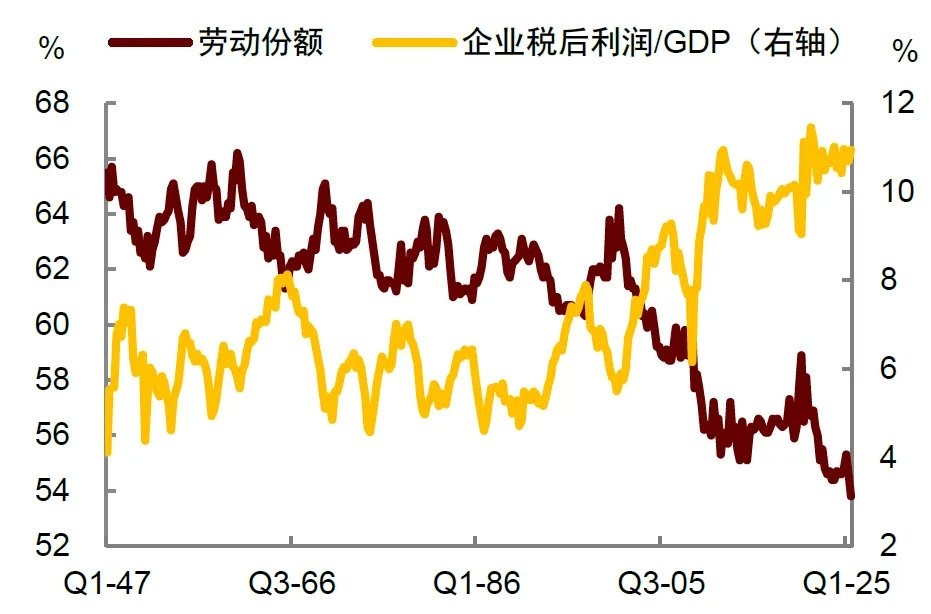
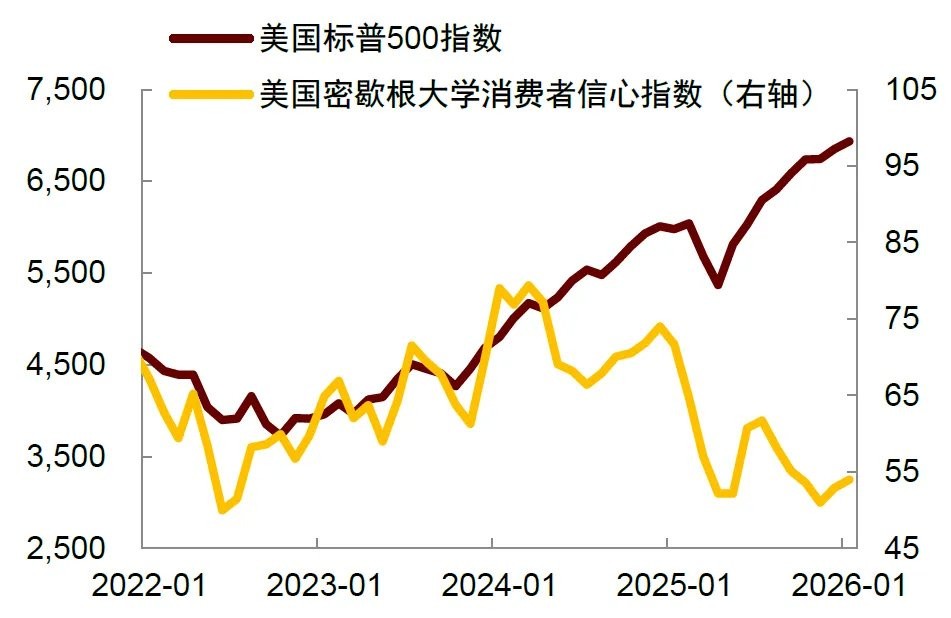
Recent White House documents indicate that more relief measures targeting "affordability" are forthcoming [16]. We believe that such administrative interventions may occur frequently, aiming to exchange capital "concessions" for voter support. Currently, U.S. corporate profits account for a historically high proportion of GDP, while labor's income share has dropped to its lowest point since World War II, providing a realistic basis for the government to adjust income distribution through administrative intervention (Chart 7). Meanwhile, the U.S. stock market has strengthened over the past two years, but consumer confidence has continued to weaken, creating space for the narrative of "capital concessions" (Chart 8).
Chart 7: Rising U.S. Corporate Profit Margins, Declining Labor Share

Source: Haver, China International Capital Corporation Research Department
Chart 8: Rising U.S. Stock Market, Declining Consumer Confidence

Source: Haver, China International Capital Corporation Research Department
Market Implications: Allocation Around "Affordability"
The capital market has long formed an inertia of thought: election years are often accompanied by loose policies, which benefit the stock market and risk assets. However, the implicit premise of this logic is that asset prices themselves are the core target of policy. The difference in this election cycle is that while the U.S. economy is robust, it is severely structurally divided, highlighting the characteristics of a "K-shaped economy." In this context, voters are more concerned about their own affordability pressures, and the government tends to respond to voter demands rather than simply pushing up asset prices.
Historical experience shows that once affordability pressure becomes a core issue, policies tend to become aggressive, making it easier to disrupt the market. A typical example is the early 1970s when then-President Nixon, in an effort to reverse the economic predicament and seek re-election, introduced a series of administrative intervention policies: 1) Pressured the Federal Reserve to lower interest rates, significantly reducing the federal funds rate from 8.98% in January 1970 to 3.51% in January 1972; 2) Frozen prices and wages in August 1971, gradually lifting them only in 1973; 3) Imposed a 10% tariff on all imported goods. These policies aimed to use monetary stimulus to lower unemployment and control inflation through price regulation, seeking short-term electoral advantages. However, these policies ultimately triggered negative effects, leading the economy into a "stagflation" crisis: inflation reached 11.8% in 1974, unemployment hit 9% in 1975, and the stock market experienced severe declines Administrative intervention has also weakened the credibility of the Federal Reserve, and it was not until Paul Volcker took office as Chairman of the Federal Reserve in 1979 that market trust was regained.
Painful memories will make the market behave more cautiously in similar environments. Investors are unwilling to "repeat past mistakes" and tend to remain vigilant about policy risks in election years based on the logic of "repeated games." The administrative intervention measures introduced by Trump have already raised market doubts. For example, setting a cap on credit card interest rates at 10% may seem to alleviate the debt burden on borrowers, but in reality, it could harm the earnings of financial institutions, thereby weakening their willingness to issue credit cards. If this leads to a reduction in credit card supply, consumers will find it difficult to obtain credit support, which may instead increase cash flow pressure. Following the announcement of this measure, U.S. bank stocks generally fell, indicating a rise in market concerns about policy risks, with investors avoiding industries or companies that may be impacted by policy shocks.
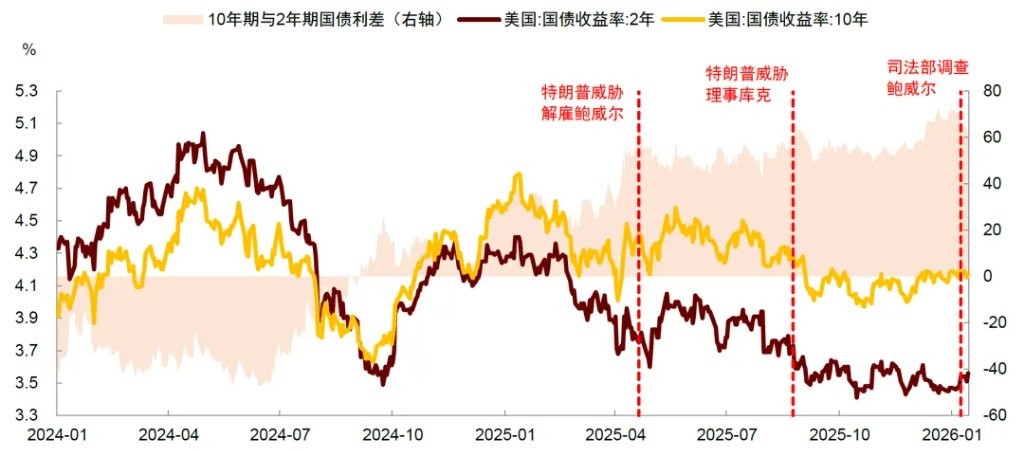
The bond market has also shown cautious pricing. Despite Trump's repeated attempts to challenge the independence of the Federal Reserve, he has not succeeded in lowering long-term interest rates; instead, the yields on U.S. 10-year and 30-year Treasury bonds have fluctuated upward, steepening the yield curve (Chart 9). One explanation we believe is that Trump's intervention methods evoke memories of the policy failures of the Nixon administration, thereby increasing pressure on long-term bonds.
The Federal Reserve will also be more cautious, as it faces increased external pressure, needing to respond not only to economic conditions but also to considerations of defending its own independence. Currently, with the slowdown in U.S. employment, there is theoretical support for easing monetary policy, but in the face of pressure to intervene and cut interest rates, Fed officials' sentiments are actually more hawkish than what the fundamental indicators suggest. Chicago Fed President Goolsbee [17] and Kansas Fed President George [18] have explicitly opposed cutting rates when independence is in question. Republican Senator Tillis has even used the obstruction of the nomination of the new Fed Chair as a counterattack [19], challenging the "dovish narrative" that the new Fed Chair would excessively cut rates. The capital markets have not factored in more easing expectations due to Trump's pressure; instead, they have reduced bets on rate cuts. According to the latest pricing, the interest rate swap market expects the next rate cut to be more likely in June rather than the previously predicted March.
Thus, the core theme for 2026 may not be "stimulating an overheating economy," but rather alleviating the cost of living pressures. This brings three insights to the capital markets: first, the expansion space for index valuations is limited, and volatility is rising. The repeated game between government, enterprises, and financial capital will elevate policy uncertainty, thereby increasing risk premiums. In this environment, investors' tolerance for "forward narratives" is decreasing; without strong certainty and significantly better-than-expected earnings realizations, high valuations may be difficult to maintain. Of course, once the market experiences a significant pullback, the intensity of policy intervention may also converge, providing support to the market (i.e., "TACO" trading). But overall, when capital returns are no longer a priority for policy, the space at the index level may face constraints.
Secondly, sectors with strong pricing power and high profit margins face rising risks. Under the narrative of alleviating affordability pressures, corporate profits are no longer seen as an "untouchable red line." On the contrary, industries with faster profit growth may be interpreted as "culprits" that squeeze the survival space of other industries and push up overall costs, needing to "give concessions" to other sectors Excess profits of capital may be seen as a capture of the interests of low- and middle-income groups, and the rapid expansion of the technology industry may also be viewed as a competition for limited resources, exacerbating structural imbalances. This shift in narrative may elevate the policy risks faced by related industries, driving capital out of these sectors.
Third, cost-benefit industries are relatively advantageous. In our view, Trump has planted the seed in voters' minds of "affordable housing, affordable food, affordable healthcare, affordable fuel, and affordable electricity." Under this guidance, the layout around "affordability" has a natural rationale: industries that were previously pressured by rising costs may instead welcome a phase of recovery. Meanwhile, compared to other high-valuation sectors, these industries have lower bubble risks and stronger defensive attributes, making them more likely to become the direction for capital allocation.
Chart 9: The widening of the spread between the 10-year and 2-year U.S. Treasury bonds

Source: Wind, CICC Research Department
Risk Warning and Disclaimer
The market has risks, and investment requires caution. This article does not constitute personal investment advice and does not take into account the specific investment objectives, financial conditions, or needs of individual users. Users should consider whether any opinions, views, or conclusions in this article are suitable for their specific circumstances. Investment based on this is at one's own risk.