JP Morgan: It is unlikely that Europe will significantly sell off U.S. Treasuries; the key variable in the next phase lies in the technical aspects

Wallstreetcn
2026.01.21 11:10
portai
I'm PortAI, I can summarize articles.

JP Morgan believes that the market's concerns about Europe retaliating by selling U.S. Treasuries due to trade disputes are overstated. The report points out that the U.S. Treasuries held by Europe are mainly private assets, making it difficult for governments to enforce a sell-off. Additionally, the current market duration positions are already very low, lacking the foundation for a surge in yields similar to last April's due to crowded liquidations. However, tactically, it is still necessary to remain vigilant about technical breakdowns

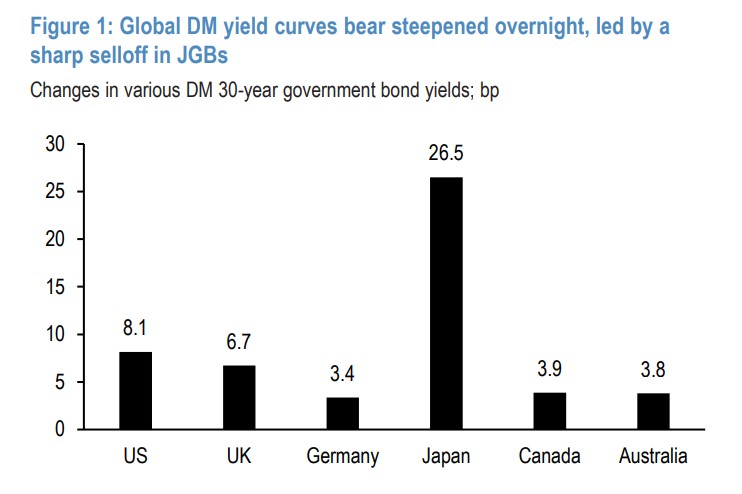
The global bond market is experiencing severe fluctuations. On one hand, the sudden changes in Japanese politics have led to a surge in Japanese bond yields, steepening the global yield curve; on the other hand, President Trump's tariff threats regarding Greenland have triggered market panic over "de-dollarization" and European retaliatory selling of U.S. Treasuries.

According to the Chase Trading Desk, on January 20th, JPMorgan issued a voice that is completely different from the market's panic sentiment in its latest report. The bank believes that despite the escalation of geopolitical tensions, the likelihood of European countries selling off U.S. Treasuries on a large scale as a form of retaliation, similar to Asian central banks, is extremely low.

The key logic behind this is the structural differences among U.S. Treasury holders and the currently healthier investor positions. For investors, this means there is no need to overly panic about a "doomsday sell-off" scenario, but tactical caution is necessary. JPMorgan advises investors to take profits on the flattening trade of the 10-year/30-year U.S. Treasury yield curve at this time and to be wary of the technical breakdown that has already occurred at this critical point for the 5-year U.S. Treasury yield.

Most U.S. Treasuries in Europe are "private property," making it difficult for governments to enforce sales

The biggest concern in the market currently stems from President Trump's threat over the weekend: to impose a 10% tariff on any country opposing the U.S. takeover of Greenland, gradually increasing to 25% by June 1. Such extreme trade protectionist rhetoric recalls the earlier "Liberation Day" statement, leading market participants to wildly speculate whether European countries would sell off their substantial holdings of U.S. Treasuries in retaliation.

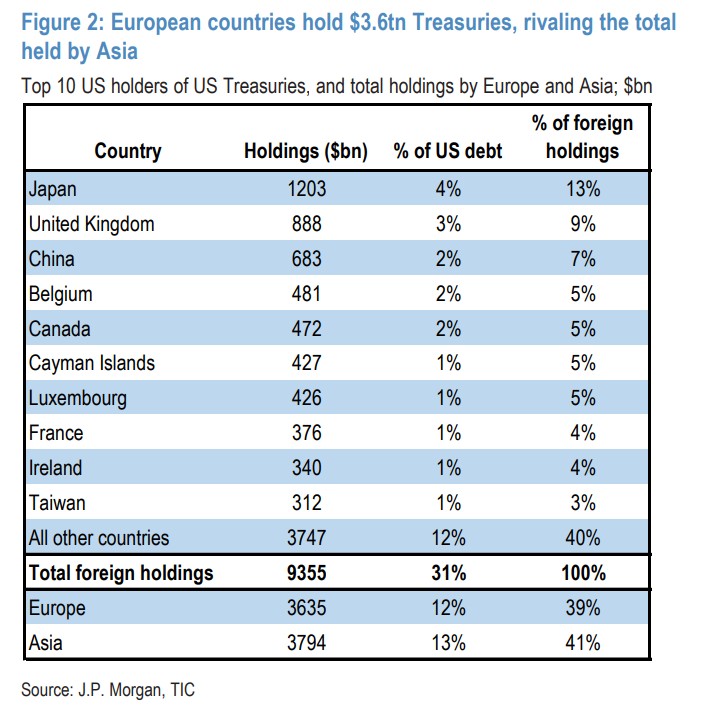
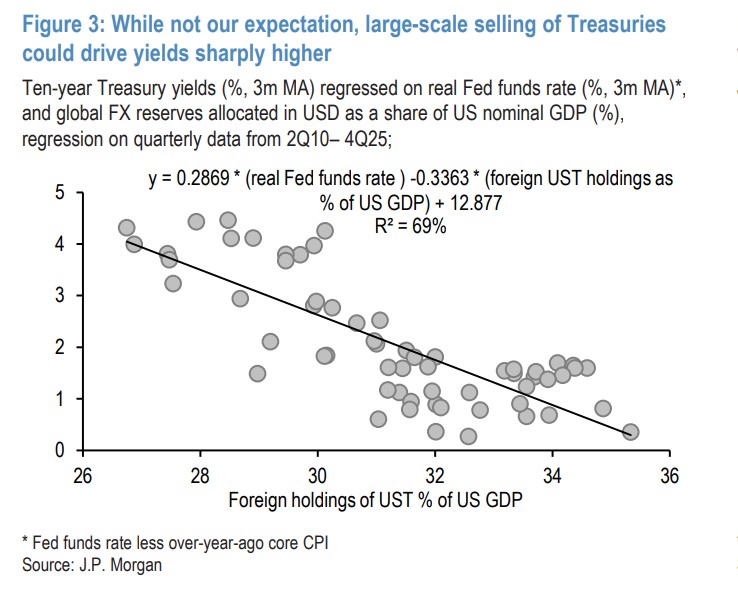
After all, data shows that European countries collectively hold $3.8 trillion in U.S. Treasuries, a scale that rivals that of Asian countries. JPMorgan's model indicates that if the proportion of U.S. Treasuries held by foreigners decreases by 1 percentage point (approximately $300 billion), the 5-year U.S. Treasury yield tends to rise by more than 33 basis points.

However, JPMorgan points out a fatal flaw in this panic logic in its analysis. The bank believes that the nature of U.S. Treasury holdings in Asia and Europe is fundamentally different. China and Japan together hold over $4.5 trillion in reserve assets, and their U.S. Treasury holdings primarily reflect official (government) will. In contrast, the official reserves in Europe are much smaller.

JPMorgan assesses that U.S. Treasuries held in Europe are mainly concentrated in private hands. Although countries like Belgium and Luxembourg show large holdings of U.S. Treasuries in data, these small countries, as global financial centers, have a significant portion of their holdings as custodial accounts for external entities. Therefore, European governments simply do not have the ability to force the private sector to reallocate assets and sell U.S. Treasuries through administrative orders, as Asian countries can. Based on this, JPMorgan believes that the market has overestimated the risk of a yield surge triggered by so-called "de-dollarization." **

Positioning Extremely "Light," Market Technicals Better Than Last April

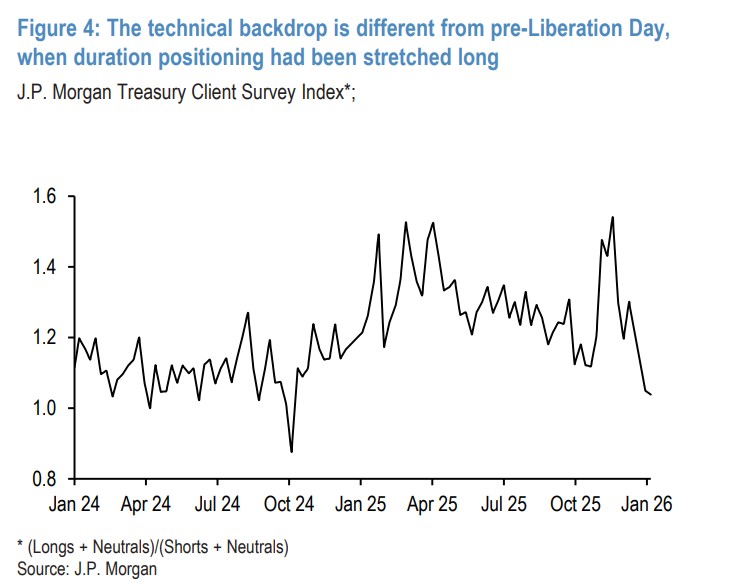
In addition to the holding structure, JP Morgan believes that the current technical backdrop also provides a cushion for the U.S. Treasury market. Prior to the "Liberation Day" shock, the market was generally worried about an economic recession, leading investors to excessively go long on duration, resulting in extremely crowded positions. When the sentiment shifted from recession fears to stagflation concerns, this crowded long position triggered a forced liquidation, causing long-end yields to soar.

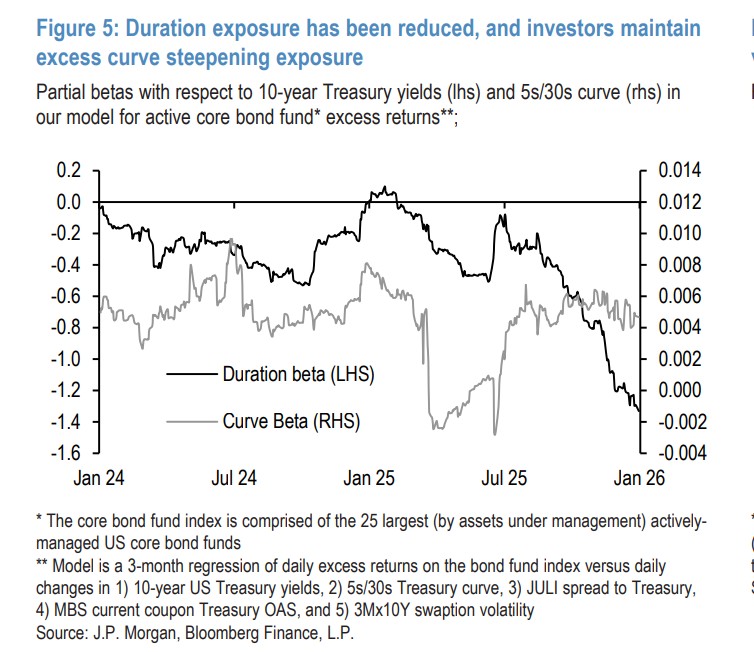
In the current environment, the situation is completely different. JP Morgan's Treasury client survey index shows that investors' duration positioning is near the lowest level in the past two years, more than two standard deviations below the one-year average.

The bank's core bond fund model has also sent similar signals, with the duration beta value close to -2 based on the Z-score of the one-year period. This means that the market currently does not have large-scale long positions that need to be liquidated. JP Morgan points out that actively managed core bond funds are currently maintaining a significant steepening exposure relative to the benchmark, further limiting the risk of investors reducing long-end exposure. In short, the market has already "defended" in advance, which weakens the momentum for yields to soar further.

Tactical Adjustment: Take Profits on Flattening Trades and Stay Vigilant Before 20-Year Treasury Auction

Although fundamental analysis does not support panic selling, JP Morgan has chosen a more cautious tactical approach in its trading strategy.

The bank announced the unwinding of its 10-year/30-year U.S. Treasury yield curve flattening trade, realizing a small profit. JP Morgan initiated this trade in early January, citing that the long-end curve was excessively steep. Although the curve has since experienced some mean reversion, it is still about 6 basis points higher than the bank's fair value model.

JP Morgan believes that considering the volatility in the Japanese government bond market may remain high ahead of the February 8 elections, coupled with the political risks surrounding Greenland that are unlikely to dissipate quickly, the risk-reward ratio of continuing to hold short exposure is no longer attractive, thus recommending a shift to neutral.

Additionally, JP Morgan holds a cautious stance on the upcoming $13 billion 20-year Treasury reissue auction. Although yields have risen with the market, from a relative value perspective, the 20-year U.S. Treasury remains expensive (over 1 standard deviation) after controlling for interest rate levels and curve shapes Given the significant decline in demand from investment managers during the December auction and the current unattractive valuations, JP Morgan expects the market will require some discount to smoothly digest this supply.

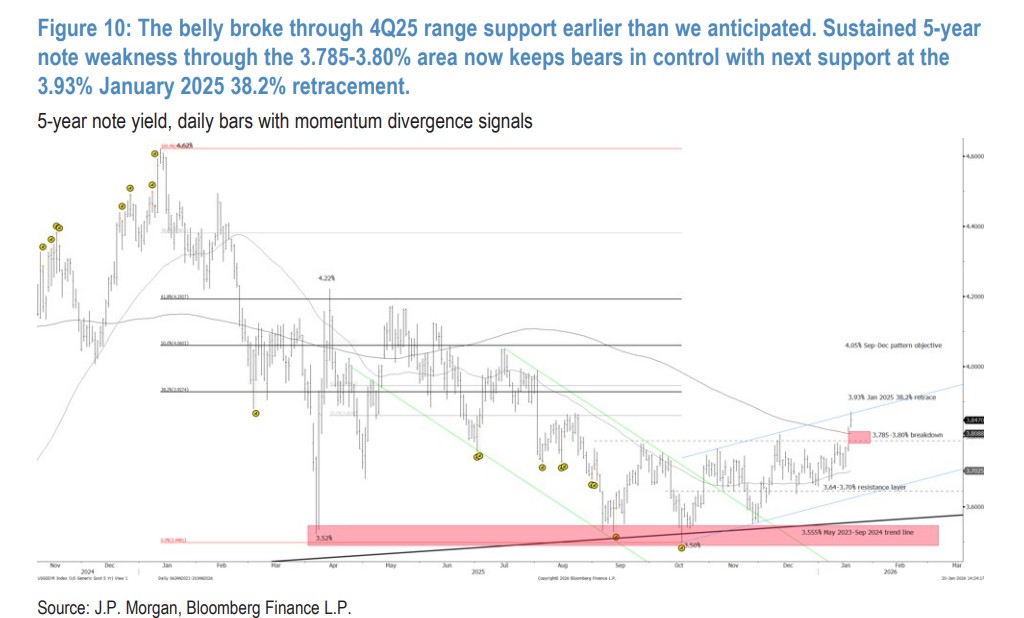
Finally, JP Morgan issued a stern warning regarding the technical patterns. The bank's technical analysis indicates that the 5-year U.S. Treasury yield has fallen below a critical support zone (3.785-3.80%), and this breakdown occurred earlier than the bank had anticipated. JP Morgan emphasized that this breakdown means that the bears have completely taken control of the situation. With this critical defense line breached, the next meaningful support level for the 5-year U.S. Treasury yield will directly point to 3.93%, which is the 38.2% retracement level of the January 2025 market. As long as market prices cannot reclaim the lost ground of 3.785-3.80%, the bearish trend momentum will remain intact.