"Wood Sister" Annual Heavyweight: ARK 2026 Big Idea

Wallstreetcn
2026.01.24 07:09
portai
I'm PortAI, I can summarize articles.

The "Wood Sister" team believes that the five major innovation platforms centered around artificial intelligence are accelerating their integration, which will trigger a leap in global economic growth by the end of this decade. It is expected that the global real GDP growth rate will reach 7.3% by 2030, and the market value of innovative assets will expand from $5 trillion to $28 trillion. Investment in AI infrastructure will increase from $500 billion to $1.4 trillion, with fields such as autonomous driving, AI drug development, and humanoid robots entering large-scale deployment

If you are paying attention to global technology investments, it is almost impossible to avoid one name—Cathie Wood, more familiar to Chinese investors as "Sister Wood."

For the past decade, she and her founded ARK Invest have been doing something that is not well-received on Wall Street: ignoring short-term noise and betting on long-term, extreme, non-linear technological changes.

ARK's annual research report "Big Ideas" has been published for ten consecutive years. It is not a simple industry outlook, but more like a "technology map for the next decade."

You may disagree with its conclusions, but it is hard to ignore the questions it raises.

This year's "ARK Big Ideas 2026" has a very striking main title: The Great Acceleration.

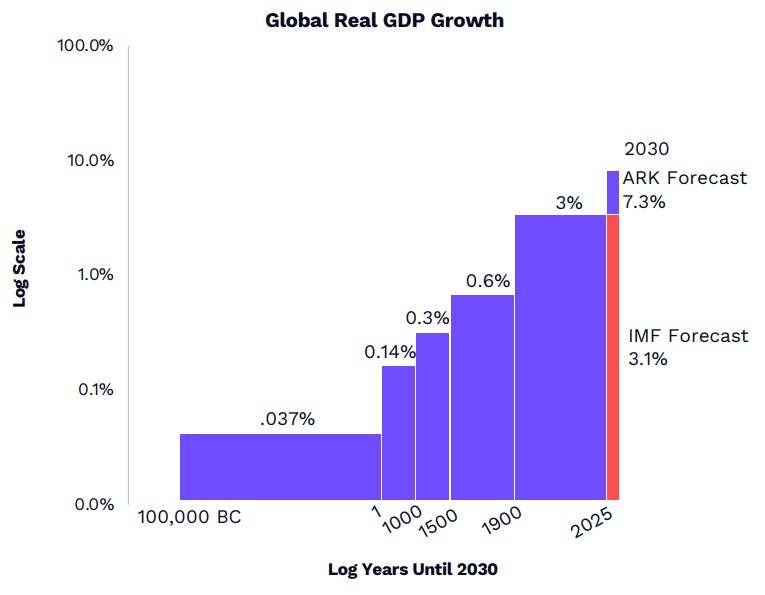
This report focuses on 13 major innovation areas, with the core assertion being: The five major innovation platforms centered around artificial intelligence are accelerating their integration, which will trigger a leap in global economic growth by the end of this decade, with the actual GDP growth rate expected to reach 7.3% by 2030, 4 percentage points higher than the 3.1% predicted by the International Monetary Fund.

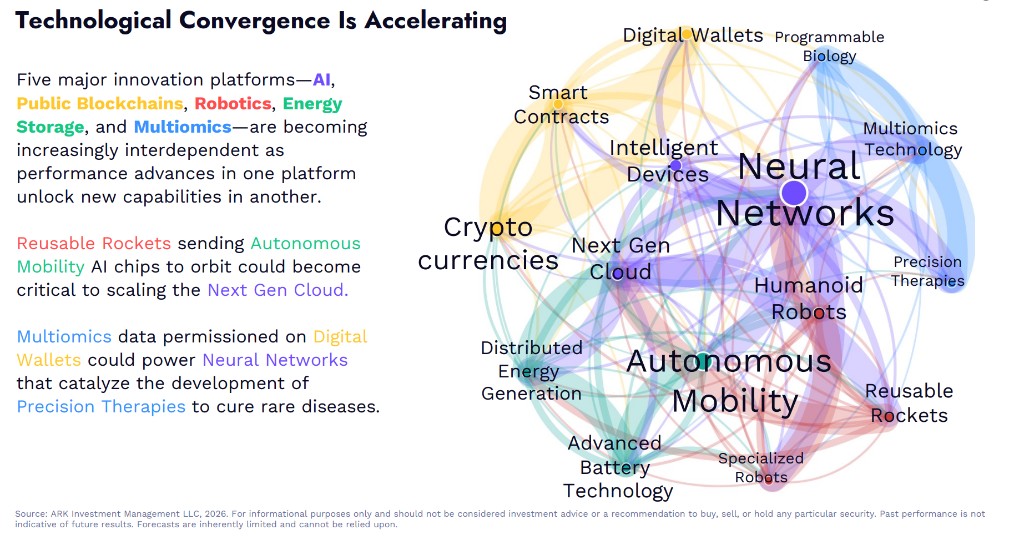
The most important judgment made in the report is that AI is not just another significant technological advancement, but a "Central Dynamo" that is simultaneously driving multiple technological curves to accelerate. For the past few decades, technological innovation has mostly exhibited a linear structure: one technology → one industry → one capital cycle. ARK believes this paradigm has become ineffective. At the current stage, technologies are no longer in parallel relationships but are highly coupled and unlocking each other:

The computational power demand of AI drives the next generation of cloud, energy storage, and data center revolutions; blockchain and digital wallets provide a trusted settlement and execution layer for AI Agents; robotics and autonomous driving push AI from the "digital world" into the "physical world"; multi-omics and programmable biology provide AI with high-dimensional life data, accelerating model capabilities in reverse.

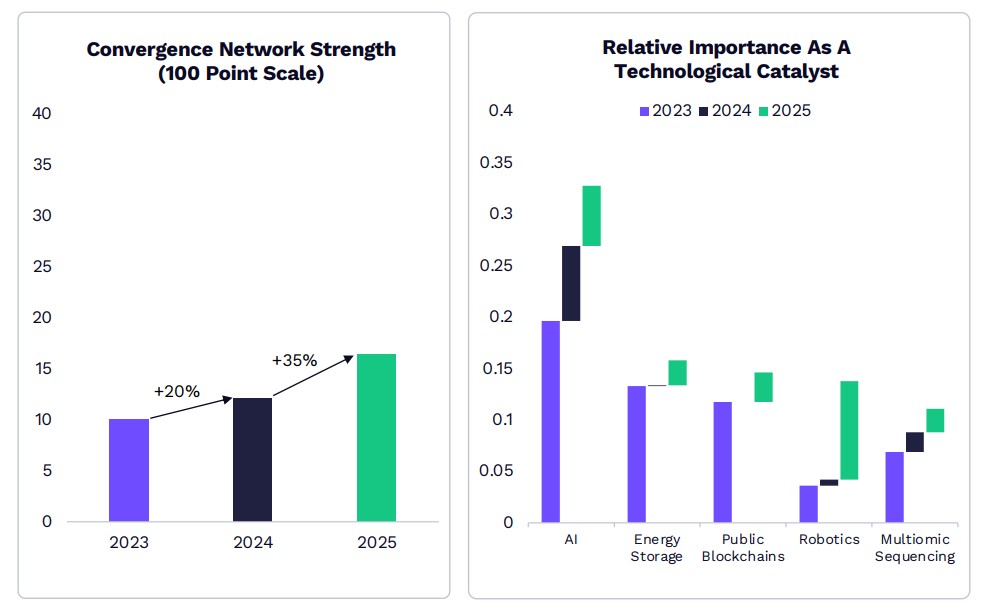
ARK uses a metric to describe this state: Convergence Network Strength. By 2025, this metric is expected to increase by 35% year-on-year—indicating that the mutual catalysis between different technologies is clearly accelerating. This is also why ARK refers to 2026 as: The Great Acceleration.

ARK research shows that reusable rockets launching AI chips into orbit, multi-omics data driving the development of precision therapies, and smart contracts supporting AI agents coordinating real-world resources—these seemingly independent innovations are forming an unprecedented synergy. The importance of robotics as a catalyst will reach a turning point in 2025, while energy storage and distributed energy systems have become key drivers for the construction of next-generation cloud infrastructure.

The report states that the direct impact of this technological revolution is:

The market share of innovative assets is expected to grow from about 20% in 2025 to about 50% in 2030, with a market capitalization potentially expanding from the current approximately $50 trillion to around $28 trillion.

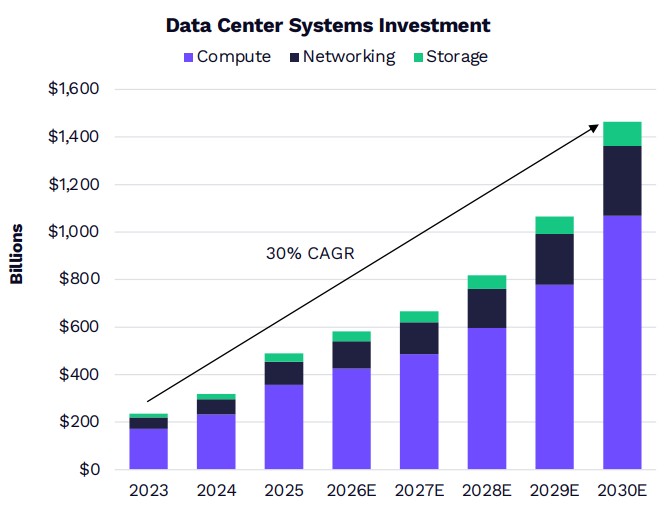
Investment in data center systems is projected to increase from about $500 billion in 2025 to about $1.4 trillion in 2030, with a compound annual growth rate of 30%.

The commercialization process in areas such as autonomous taxis, AI drug development, and household humanoid robots is accelerating, with some fields already entering the stage of large-scale deployment.

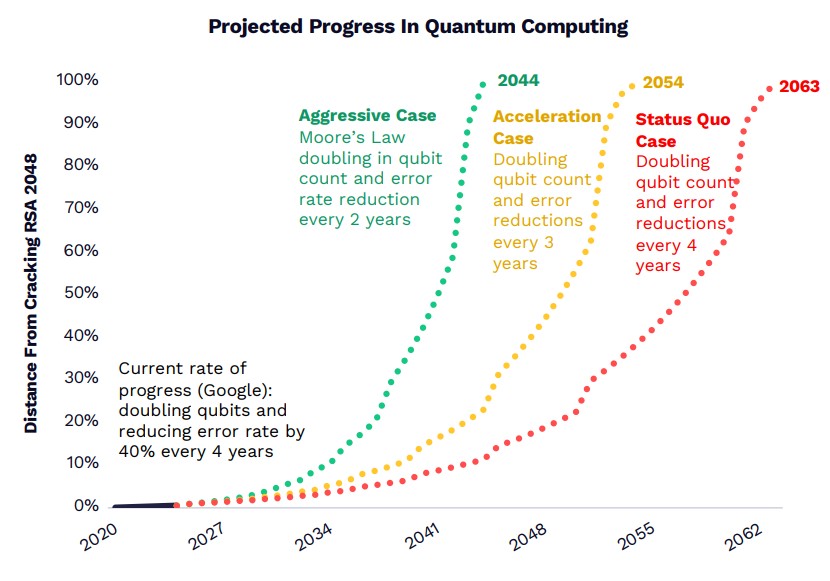
However, ARK also clearly points out that not all eye-catching technologies are disruptive. The report cites quantum computing as an example, believing that even at the most aggressive development pace, the practicality of this technology in cryptographic decryption will not be realized until the 2040s. Truly disruptive technologies must meet conditions such as a sharp decline in costs, compelling unit economics across multiple industries, and the ability to serve as platforms for other technological innovations.

AI Leads the "Great Acceleration" Era

The report states that ARK names this round of technological revolution "The Great Acceleration," believing that the interdependence of five major innovation platforms—AI, public blockchain, robotics, energy storage, and multi-omics—is increasing, and the performance improvement of one platform will unlock new capabilities for another platform.

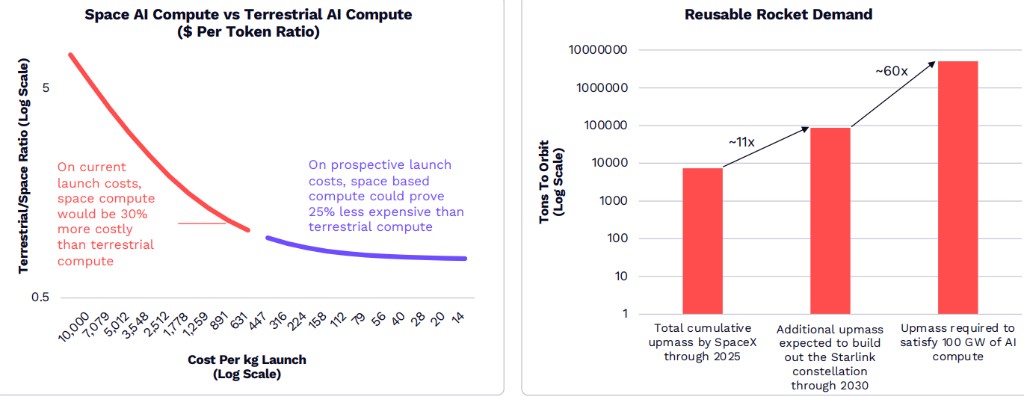
The most striking case in the report is the combination of reusable rockets and AI computing power. The demand for next-generation cloud computing capabilities driven by neural networks is encountering ground expansion limitations, and reusable rockets may become the solution.

At competitive costs, space-based AI computing power can provide cloud computing capabilities that are not constrained by ground electricity and cooling limitations.

ARK's analysis shows that the growth of AI chips could increase the demand for reusable rockets relative to existing models by about 60 times. If expected launch costs are considered, space-based computing costs could be 25% lower than ground computing.

According to the report, this technological integration is giving rise to an unprecedented investment cycle. ARK research indicates that capital investment alone could contribute 1.9 percentage points to annualized real GDP growth in this decade. The new capital base—autonomous taxis, next-generation data centers, and corporate investments in AI agents—should enhance the return on invested capital As other innovations begin to impact growth trajectories, the actual growth achieved may exceed consensus expectations by more than 4 percentage points each year.

Historically, paradigm shifts in technology have often triggered structural changes in GDP growth rates. According to ARK, the global real GDP growth rate has gradually increased from 0.037% 100,000 years ago, through stages such as the Agricultural Revolution and the Industrial Revolution, to the current level of around 3%. The current technology revolution centered on AI may push this growth rate above 7%.

Surge in AI Infrastructure Investment

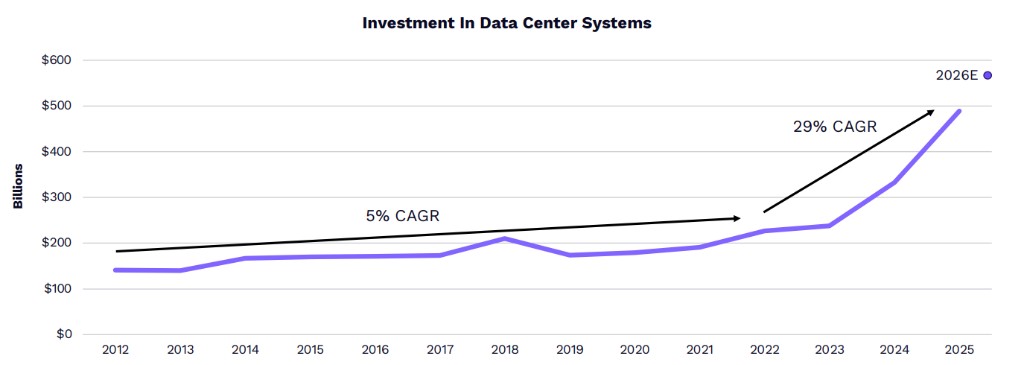
The growth rate of investment in data center systems is accelerating. Since the release of ChatGPT, the annualized growth rate of such investments has jumped from 5% to 29%.

By 2025, global investment in data center systems is expected to reach approximately $500 billion, nearly 2.5 times the average level from 2012 to 2023. ARK predicts that this investment scale may grow to about $1.4 trillion by 2030.

The core factor driving the surge in investment is the explosive growth in AI demand. The cost of inference has decreased by over 99% in the past year, leading to exponential growth in the usage of AI by developers, businesses, and consumers. For example, on the OpenRouter platform, the computational demand for large language models has increased by about 25 times since December 2024.

However, compared to the internet bubble period, the current valuations in the tech industry are much more rational. Although capital expenditures in the information technology and communication services sectors have reached the highest level since 1998 as a percentage of GDP, the price-to-earnings ratios in the tech sector are far below the peaks seen during the internet bubble.

The average price-to-earnings ratio of six companies—Nvidia, Alphabet (Google's parent company), Apple, Amazon, Meta, and Microsoft—is only a small fraction of their historical highs, indicating that the current investment boom is more based on actual application demand rather than speculative bubbles.

The competitive landscape is also changing. Nvidia's early investments in AI chip design, software, and networks have allowed it to capture 85% of the GPU sales share, with gross margins as high as 75%. However, competitors like AMD and Google have caught up in certain areas, particularly in small language model inference.

According to ARK, AMD's MI355X can handle about 38 million tokens per TCO (total cost of ownership) dollar in small model performance, surpassing Nvidia's B200. Nevertheless, Nvidia's Grace Blackwell rack-mounted system still leads in large model inference, powering the most advanced foundational models

AI Consumer Operating Systems Reshaping Business Models

AI models are merging into a new consumer operating system, fundamentally changing the way people interact with the digital world. The speed at which consumers are adopting AI far exceeds the adoption rate of the internet in its early days—AI chatbots have reached a penetration rate of about 25% among smartphone users within 7 years of launch, while the internet took much longer to achieve the same penetration rate among PC users.

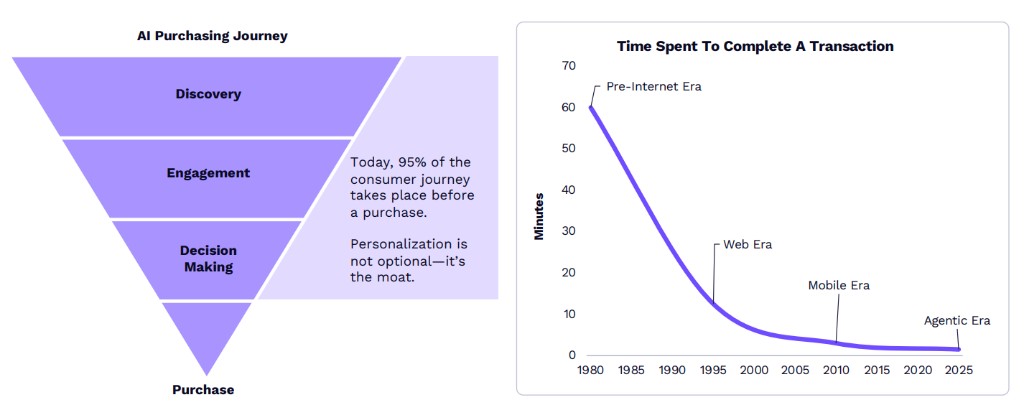
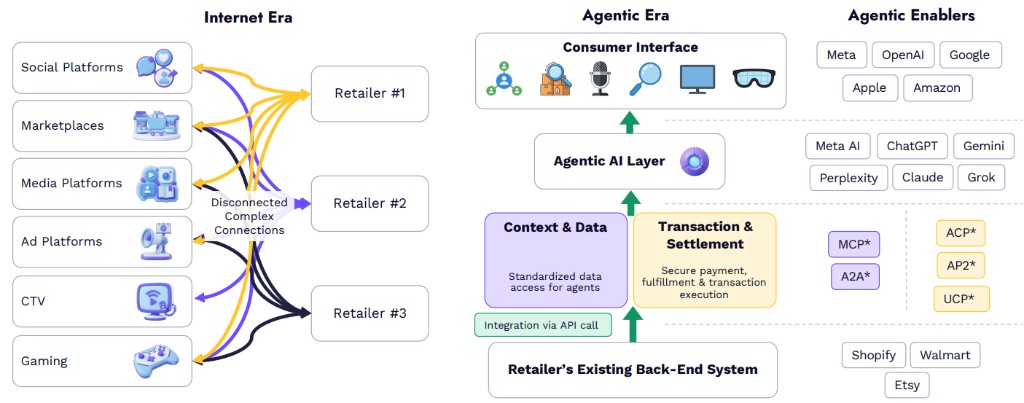
This shift is compressing the shopping funnel. Completing a purchase took about 1 hour in the pre-internet era, reduced to a few minutes in the mobile era, and further compressed to about 90 seconds in the AI agent era. AI shopping agents are transforming the purchase funnel with unprecedented personalization and speed, with 95% of the consumer journey now occurring before the purchase, making personalization no longer optional but a competitive moat.

Supporting this transformation are new protocol standards. Anthropic's open-source model context protocol (MCP) enables agents to seamlessly access real-time information across the internet, while OpenAI's agent commerce protocol (ACP) secures end-to-end transactions. These protocols are simplifying and driving transactions in the AI era.

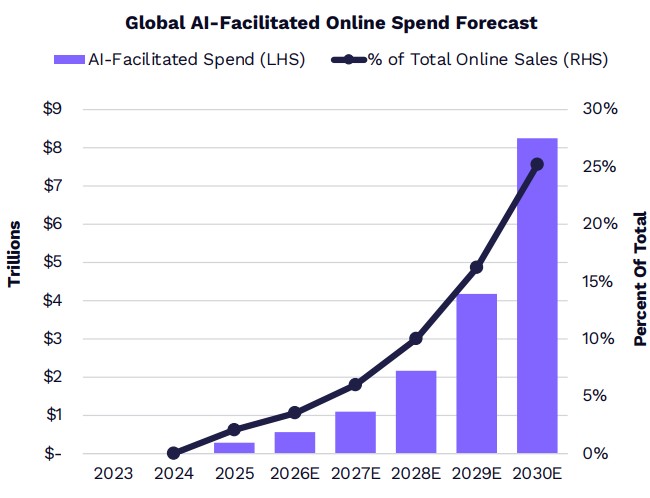
The market opportunity is staggering. ARK predicts that global online consumer spending facilitated by AI agents will grow from about 2% of online sales in 2025 to about 25% in 2030, potentially exceeding $8 trillion in scale.

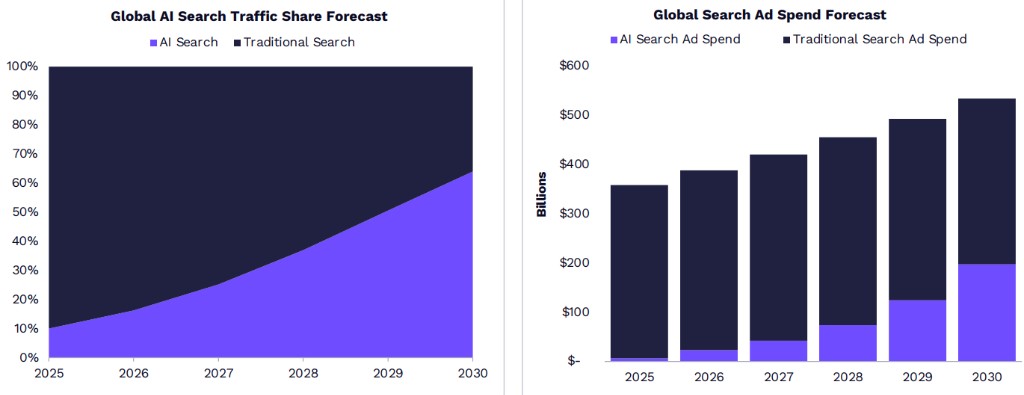
AI search traffic share is expected to grow from 10% in 2025 to 65% in 2030, with an annual growth rate of about 50% for AI-related search advertising spending.

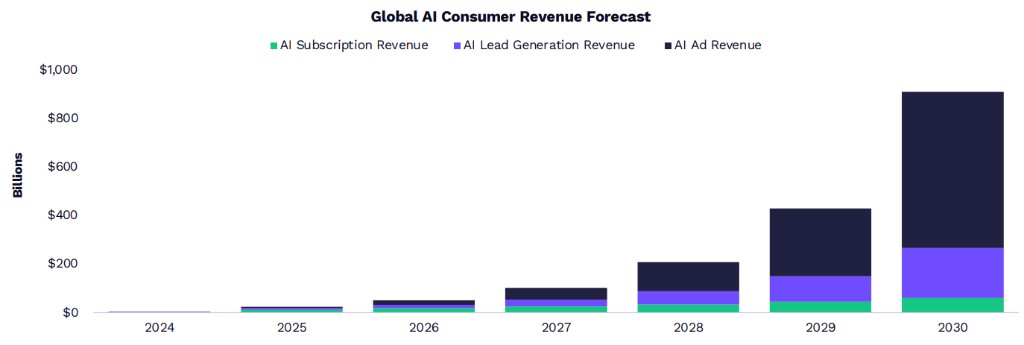
By 2030, AI agents could generate about $900 billion in business and advertising revenue, with lead generation and advertising being the dominant growth factors, far exceeding the contribution from consumer subscription revenue.

Robots: A Severely Underestimated GDP Engine

If AI is the main engine of the digital world, then robots are its most important "physical export."

The report emphasizes that the rapid advancement of AI is transforming robots from dedicated devices for fixed tasks into relatively open general-purpose platforms, which is key to unlocking the potential of industrial and household markets.

ARK estimates that the global robotics market presents a revenue opportunity of approximately $26 trillion, divided into two major sectors: manufacturing and household services.

In the manufacturing sector, global manufacturing GDP is expected to reach $32 trillion by 2030. If robotic technology can achieve a 100% increase in labor productivity, with a 35% service provider revenue share, it could create approximately $13 trillion in revenue opportunities.

In the household services sector, approximately 2.8 billion workers globally engage in 2.3 hours of unpaid household labor daily. Based on a global average hourly wage of $12 and a 50% time value conversion, this also corresponds to a market space of approximately $13 trillion.

ARK particularly emphasizes the macro significance of humanoid robots.

One easily overlooked fact is that today, a large amount of household maintenance, care, cleaning, and management labor is not counted in GDP.

ARK's calculations show: a single household humanoid robot → can convert approximately $62,000 of implicit labor into explicit GDP annually; if 80% of American households adopt it within 5 years → the annual GDP growth rate could jump from 2–3% to 5–6%.

The report argues that this is not a story of "job replacement," but rather transforming non-market activities into market activities, freeing time as productivity.

Autonomous Driving Reaches a Turning Point

ARK assesses that the complexity of humanoid robots is about 200,000 times higher than that of autonomous vehicles. This complexity ratio defines the theoretical capability required to achieve full autonomy. Nevertheless, by mapping the relationship between the computational requirements and performance improvements needed for Tesla's Full Self-Driving (FSD), ARK predicts that under continuous AI computing power expansion and hardware advancements, the Optimus humanoid robot may achieve human-level task execution capabilities around 2028.

Autonomous taxis are beginning to eat into the ride-hailing market share. In the San Francisco operating area, Waymo's market share has already put pressure on Uber and Lyft. The cumulative autonomous driving mileage of companies like Waymo, Baidu's Apollo Go, and Pony.ai has reached billions of miles, with daily autonomous driving mileage rapidly increasing.

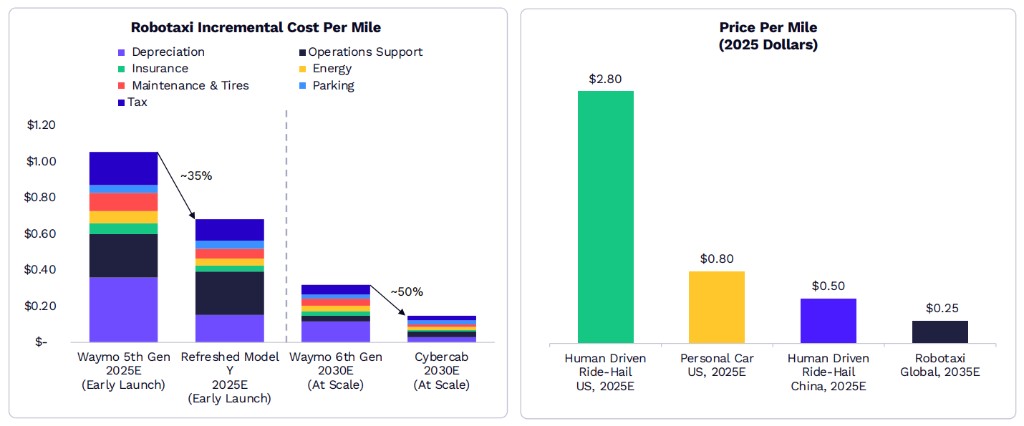
Cost reduction will be key to driving demand. ARK predicts that by 2035, the price per mile for global autonomous taxis could drop to $0.25, far below the $2.80 for human-driven ride-hailing in the U.S. in 2025 and $0.80 for private cars. In the early commercialization stage, vehicle costs will dominate unit economics, while after scaling, vehicle utilization will drive down the cost per mile

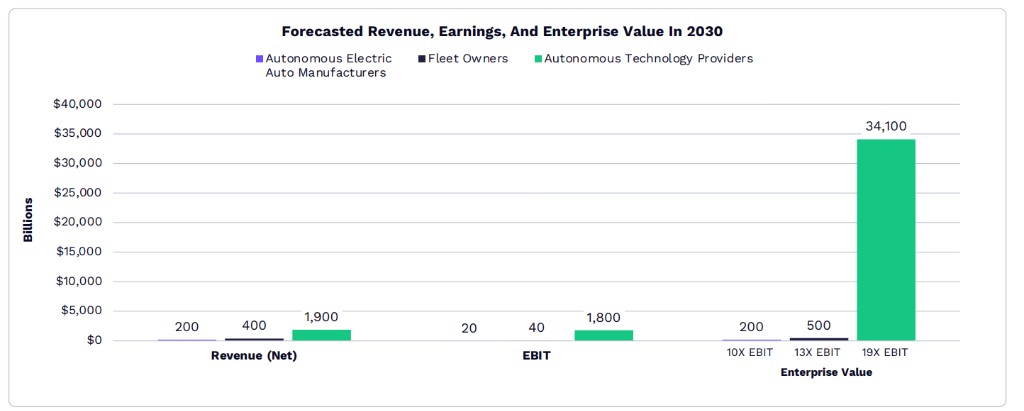
The market value potential is enormous. ARK estimates that by 2030, autonomous taxis could create approximately $34 trillion in enterprise value, with autonomous technology providers capturing about 98% of the EBIT (earnings before interest and taxes) and enterprise value, while the shares of automobile manufacturers and fleet operators are relatively small. The main risk of this forecast lies in whether automobile manufacturers, other than Tesla, can scale their autonomous taxi fleets quickly enough.

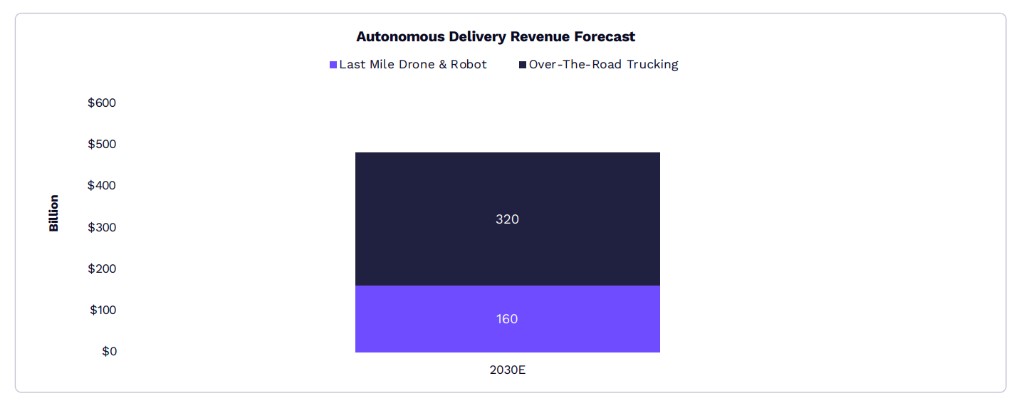
Autonomous logistics also has a bright future. Fully automated last-mile delivery—whether through drones or ground robots—has already exceeded 4 million annual occurrences globally. Autonomous long-haul trucking has been initiated in the United States, and operators are planning to rapidly expand routes. ARK predicts that by 2030, global autonomous delivery revenue could reach $480 billion, with regulation and automation of backend loading operations being significant limiting factors.

Multiomics and AI-Driven Biological Breakthroughs

Multiomics—which encompasses genomics, epigenomics, transcriptomics, proteomics, and metabolomics—combined with AI is creating a flywheel effect of biological innovation. This flywheel includes: generating richer and cheaper biological data, conducting more accurate tests, producing better biological insights, developing AI-driven drugs, and ultimately achieving cures for diseases.

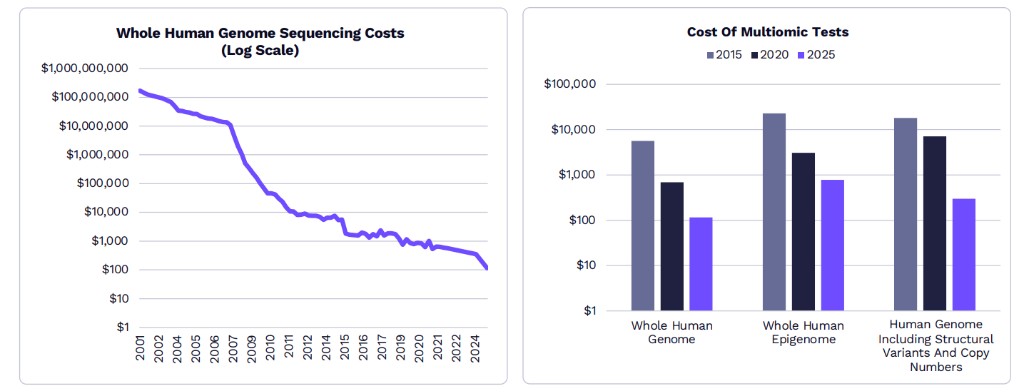
The cost of data generation is plummeting. The cost of whole genome sequencing could drop to $10 by 2030, a reduction of about 10 times from 2015.

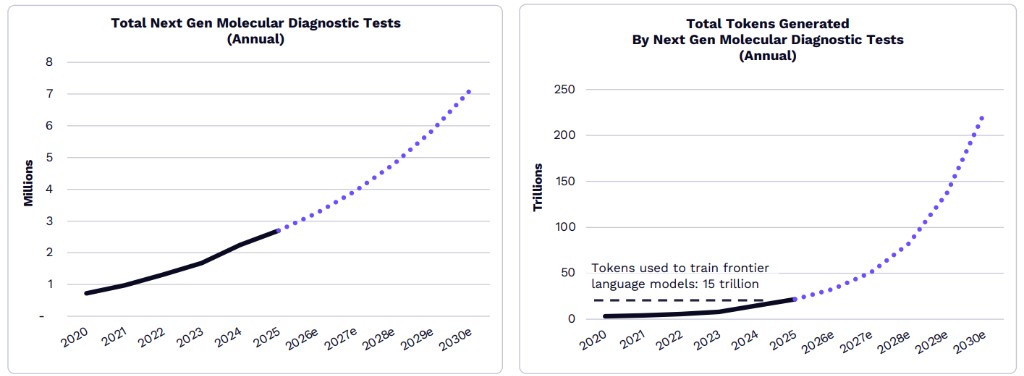
This will drive a surge in sequencing demand, with the number of next-generation molecular diagnostic tests expected to grow from less than 1 million in 2020 to about 7 million by 2030, and the annual volume of token data generated could reach approximately 20 billion, surpassing the 150 trillion tokens used to train cutting-edge language models like OpenAI, Gemini, Anthropic, and xAI.

AI-enabled diagnostic capabilities are reaching a turning point. After the launch of ChatGPT, the success rate of FDA-approved AI-driven tests and devices has turned from single-digit percentage levels. ARK's best-fit model shows that the share of AI-driven diagnostics and devices could expand to about 30% by 2030, ultimately reaching nearly 100%.

The economics of drug development are being reshaped. AI-driven drug development could shorten the time to market by about 40%, reducing it from 13 years to 8 years, while lowering total drug costs by about 4 times, from $2.4 billion to $700 million. Combining AI acceleration and disease curing factors, the value of AI-designed drugs in clinical phase I could exceed $2 billion, whereas traditional drug assets typically only recover capital costs.

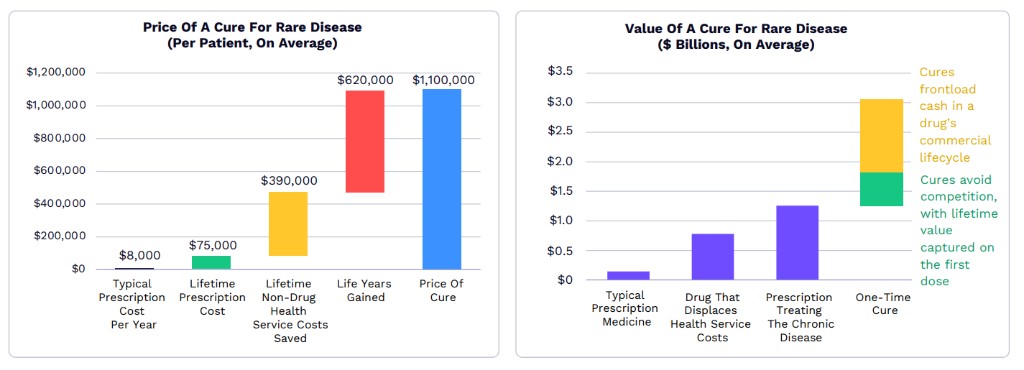
The market potential for biological cures is particularly astonishing. ARK research shows that the average price for curing rare diseases may currently exceed $1 million, nearly 15 times the lifetime prescription costs required to manage the disease. Curing drugs can generate revenue from most patient populations before patent expiration, potentially worth 20 times more than typical drugs and 2.4 times more than prescription drugs for chronic diseases.

A more macro perspective is the extension of healthy lifespan. If the U.S. population could live to the theoretical maximum lifespan of 120 years in perfect health, but with the risk of accidental death still present, this would yield a gain of 11.9 billion quality-adjusted life years (QALYs). Valued at $100,000 per healthy life year, the potential market opportunity for lifespan gains is about $12 trillion. The current global biotechnology market only accounts for about 0.1% of this potential market.

Reusable rockets open up the space economy

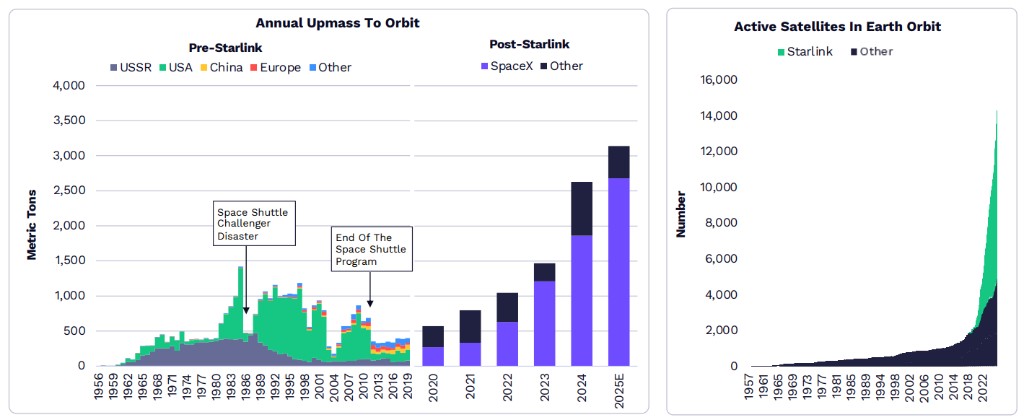
SpaceX's reusable rocket technology is propelling the economy into the space age. By 2025, the mass sent into orbit annually will reach a historical high, with SpaceX dominating the market. The company has over 9,000 active Starlink satellites, accounting for about 66% of all active satellites in Earth's orbit.

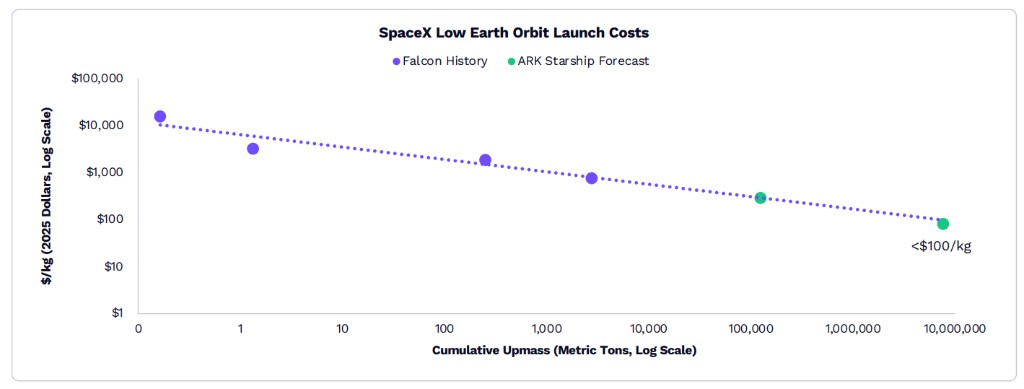
Launch costs continue to decline. According to Wright's Law, for every doubling of cumulative launch mass, launch costs should decrease by about 17%. Over the past 17 years since 2008, leveraging the partial reusability of Falcon 9, SpaceX has reduced costs by about 95%, from approximately $15,600 per kilogram to less than $1,000. ARK research indicates that Starship could extend this trajectory to below $100 per kilogram at scale.

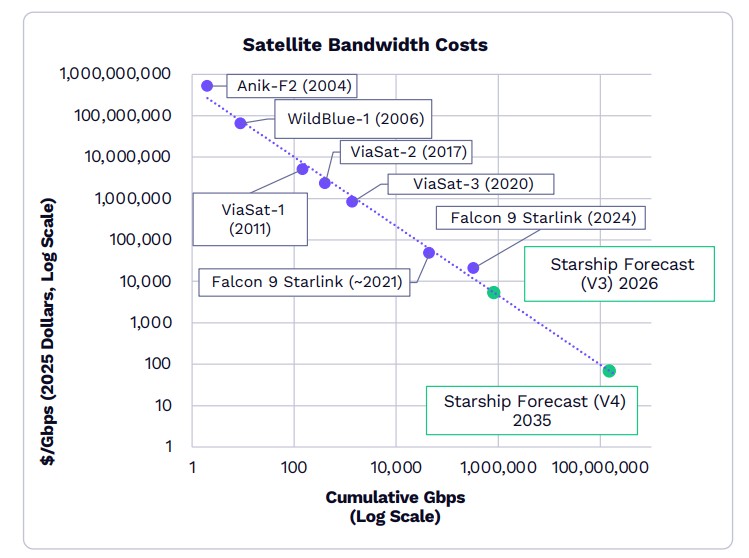
Satellite bandwidth costs are also declining. According to Wright's Law, the cost of satellite bandwidth is expected to decrease by approximately 44% for every doubling of cumulative orbital gigabits per second (Gbps), enabling satellite connections to complement cellular towers and provide ubiquitous mobile coverage across the United States.

Comparatively, in 2001, the monthly fee for mobile connections for U.S. consumers was about $90 (in 2025 dollars), which included only 0.001GB of data and covered about 1% of the U.S. land area; by 2025, the monthly fee is expected to be around $100, providing unlimited high-speed internet and covering about 86% of the land; by 2030, it is anticipated to achieve 100% coverage at the same price.

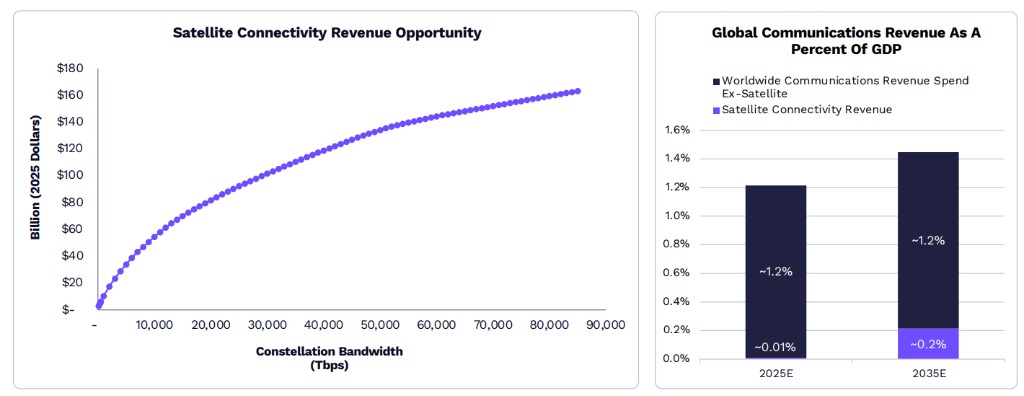
The market opportunity is substantial. Thanks to declining costs and improved performance, scaled satellite connections could generate over $160 billion in revenue annually, accounting for about 15% of ARK's global communications revenue forecast. This prediction is based on the relationship between constellation bandwidth capacity and revenue opportunities, demonstrating exponential growth potential.

Distributed Energy Supports AI Computing Demand

Energy is increasingly driving economic growth more efficiently. Despite concerns about energy intensity during the internet boom, economies have actually become more energy-efficient, and a similar dynamic may re-emerge in the AI era. The energy intensity (kilowatt-hours required per dollar of GDP) of major economies such as China, the United States, Japan, India, and Germany has continued to decline over the past thirty years.

The cost of multi-omics data has plummeted. The costs of solar energy and batteries continue to follow Wright's Law in decline, while the decrease in nuclear energy costs was interrupted in the 1970s due to regulatory changes; however, recent executive orders in the U.S. are expected to push nuclear energy back onto its previous cost decline trajectory. Historically, the costs of solar and nuclear energy (measured in megawatts) and battery costs (measured in megawatt-hours) have significantly decreased with each doubling of cumulative capacity.

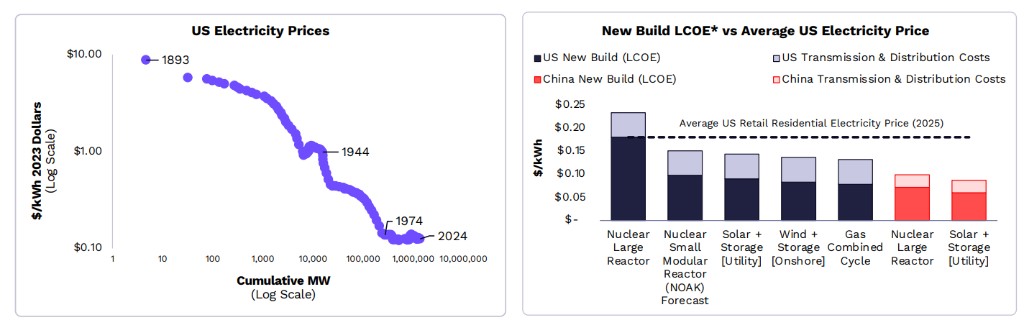
Electricity prices are expected to resume their downward trend. According to Wright's Law, ARK research shows that, except during World War II, U.S. electricity prices steadily declined from the late 19th century until 1974, after which regulatory tightening led to increased nuclear construction costs and interrupted this trend. If regulations had not tightened, ARK research suggests that today's electricity prices could be about 40% lower than current levels. As low-cost power generation scales up to serve energy-intensive AI data centers, retail electricity prices should begin to decline again after stagnating for 50 years.

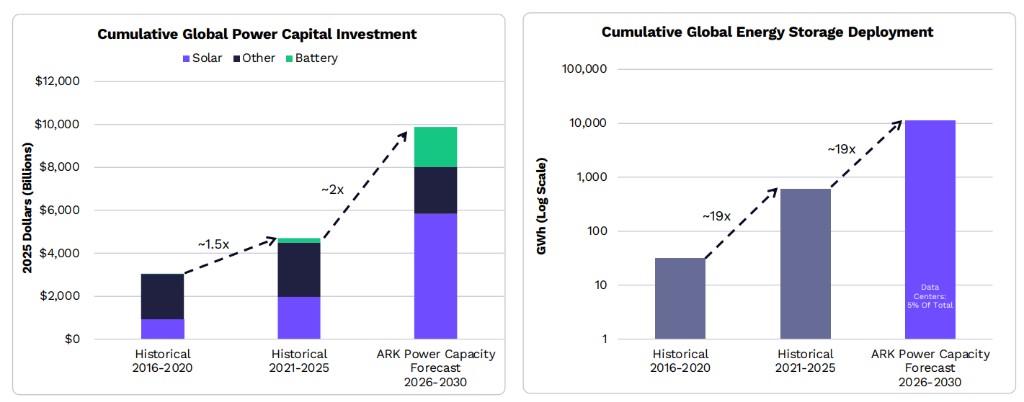
Investment demand is enormous. Given ARK's rapid GDP growth forecast, cumulative capital expenditure in the global power generation sector must expand approximately twofold to about $10 trillion by 2030 to meet global electricity demand. Therefore, fixed energy storage deployment needs to increase by about 19 times. During the period from 2026 to 2030, data centers are expected to account for approximately 5% of total power generation investment.

The digital asset market shows an evolutionary trend

Influenced by the regulatory framework potentially brought by the GENIUS Act, stablecoin activity is expected to see significant growth in 2025. Some companies and institutions have announced stablecoin-related plans, and BlackRock has disclosed that it is preparing an internal tokenization platform. Stablecoin issuers and fintech companies such as Tether, Circle, and Stripe have launched or supported Layer 1 blockchains optimized for stablecoins.

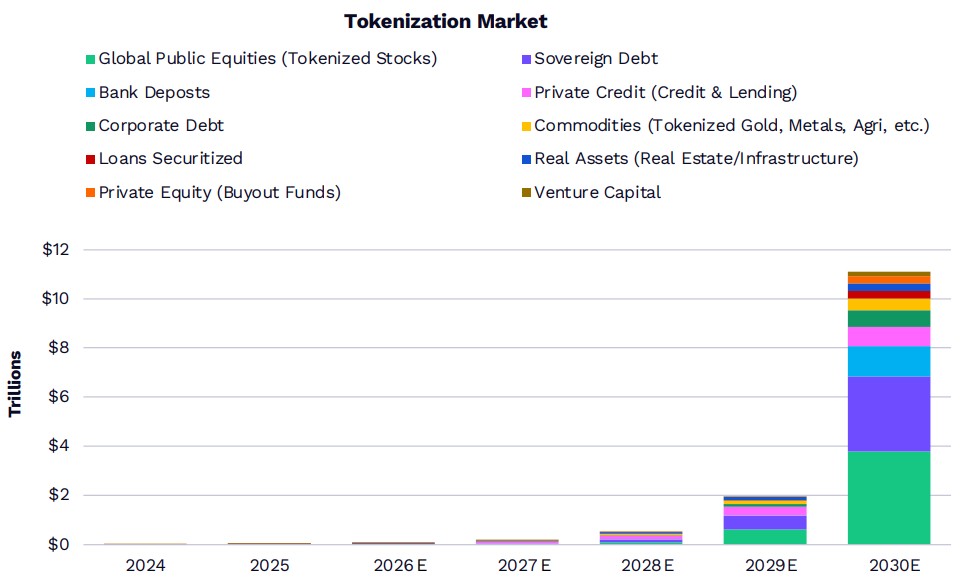
Data shows that the market value of tokenized real-world assets (RWA) is expected to grow by approximately 208% in 2025, reaching about $18.9 billion. BlackRock's BUIDL money market fund is approximately $1.7 billion in size, reportedly accounting for about 20% of the $9 billion tokenized U.S. Treasury market. Tether's XAUT and Paxos' PAXG have reached approximately $1.8 billion and $1.6 billion, respectively, in the tokenized commodity market.

ARK predicts that by 2030, the scale of tokenized assets could grow from $19 billion to around $11 trillion, but this forecast carries significant uncertainty. While sovereign debt currently occupies a major share of the tokenized market, the future development path remains to be observed.