


Dialogue with Ge Jin, founder of Dialogue Universe: The cost of embodied intelligent products may decrease by 50% in the next three years

Landing becomes the key to competition
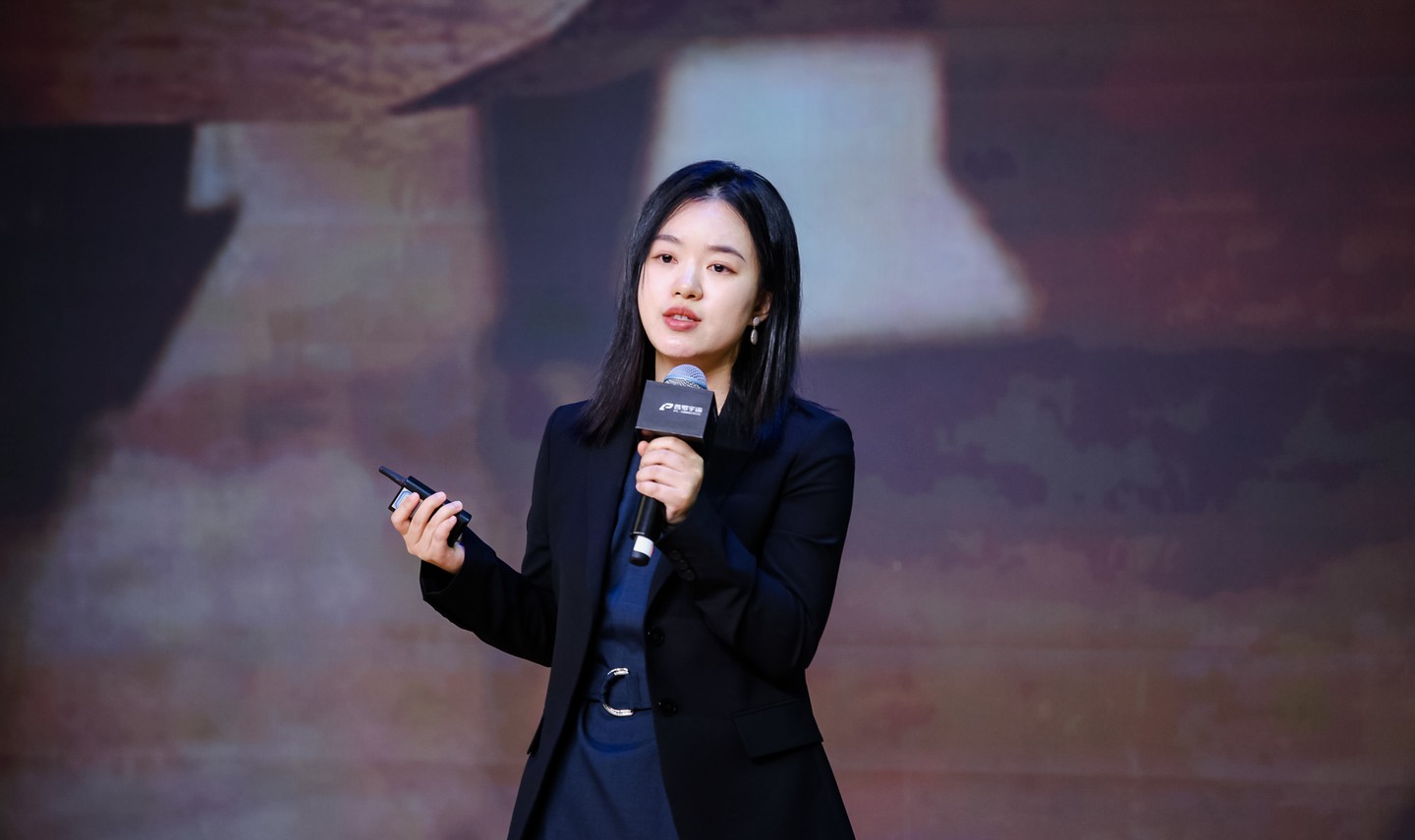
Author | Wang Xiaojun
Editor | Huang Yu
Currently, the embodied intelligence industry is in a period of vigorous growth, with the heat of the sector continuing to rise and the investment and financing market maintaining high attention, but industry competition is also becoming increasingly fierce. "If you don't run fast, you will be eliminated" has become a consensus in the industry— the speed of technological iteration, the ability to implement scenarios, and product adaptability directly determine the survival space of enterprises.
As we enter 2026, embodied intelligence companies need to transition from laboratory demonstrations to industrial selection and implementation stages. Therefore, 2026 is considered the year of "clearing" and "landing" for the industry. Companies will undergo real market testing through the validation of business models. Enterprises are gradually forming a tiered development path from the laboratory to real-world scenarios.
Those companies that have achieved stable delivery and replication belong to the first tier. These companies typically operate robots in real scenarios for the long term, rather than short-term pilots. In specific application scenarios, many embodied robots have already been applied in performance displays, education, and research.
Last year, XPeng's IRON humanoid robot sparked heated discussions due to its human-like appearance. At the launch event, XPeng Motors Chairman and CEO He Xiaopeng introduced that if IRON were to work in a factory tightening screws, the high wear and tear from frequent operations would require changing hands every few months, and the cost of a replacement "could hire a human for several years." At that time, XPeng offered IRON the role of a spokesperson for new cars and planned to have it enter application scenarios such as guiding, shopping assistance, and patrolling.
However, some embodied robot companies have focused on industrial manufacturing scenarios since their inception.
Ge Jin, founder and COO of Pro Universe Robotics, explained that unlike companies that initially saw potential in the embodied intelligence sector but were still exploring specific application scenarios, she and her co-founder first targeted flexible manufacturing scenarios in industry before deciding to enter the embodied intelligence sector.
Prior to this, Ge Jin worked as a strategic consulting advisor at Accenture, serving high-tech companies such as Huawei and Lenovo. She then moved to a leading home appliance manufacturing company, where she served as the head of strategic operations, responsible for the group's manufacturing strategy planning. "During this process, I found that the pain points of flexible manufacturing in the manufacturing industry were very prominent, with a high proportion of labor on production lines, and existing intelligent technologies and products were difficult to meet factory needs."
Riding the wave of industry trends, Ge Jin and her technical partners surged into the booming embodied intelligence industry.
Among the many players, Pro Universe, established in January 2025, is still considered a newcomer in the industry, but it has completed iterations of two generations of core products in less than a year and has built a complete product matrix covering robot bodies, end effectors, and core algorithms, becoming a representative player of "scenario-driven" in the industrial embodied intelligence sector.
However, as the first scene to test robots, industrial robots have long been present in manufacturing, and the new value that current embodied robots can bring has become the focus of industry attention Ge Jin believes that the competitiveness of Pro Universe Robotics lies in its understanding of scenarios and its ability to continuously upgrade and iterate in terms of intelligence.
In her view, embodied robots solve existing problems in factories based on traditional robotic arms: first, they must be user-friendly, meet production requirements, and not affect capacity and quality; second, they should incorporate embodied technological attributes, including data collection and large model technology, allowing robots to continuously iterate and upgrade in the future. "In addition, customers also value the data value-added aspect. After our robots are applied on industrial assembly lines, they can continuously accumulate data and become smarter to adapt to changing production modes, which is an advantage that traditional robotic arms do not possess."
On the other hand, a key constraint to the widespread adoption of embodied robots in the industry is cost. Ge Jin predicts that costs across the industry will continue to decline in the future. As industry output increases and the supply chain reaches a scale breakeven point, the speed of cost reduction will be rapid, with an expected decrease of 50% in the next three years.
At the same time, Ge Jin also revealed that Pro Universe will enter overseas markets in 2026. Before that, Pro Universe has reached a cooperation agreement with JD.com. According to the agreement, JD.com will become the global online exclusive sales channel for Pro Universe, and both parties will engage in deep collaboration in areas such as product sales, overseas expansion, and technical services.
Currently, in the field of embodied intelligent robots, which is filled with technological ambition and commercial reality, the industry is collectively experiencing a profound shift from pursuing "technological showcases" to seeking "business closed loops." All companies share the booming opportunities in the industry while facing practical considerations.
Whether it is companies continuously updating cool products or those focusing on application scenarios, they point to the same core: technology must cross the "valley of death" from laboratory demos to stable and reliable operation in reality, proving itself in terms of cost, efficiency, and robustness.
The future is promising, but the elimination rounds are also brutal; for now, the race continues.
Below is the full dialogue between Wall Street Insights and Ge Jin, founder and COO of Pro Universe Robotics (edited without altering the original meaning):
01 Entrepreneurship is Based on Insights into Scenarios
Wall Street Insights: What was the opportunity for you to start a business in the field of embodied intelligence?
Ge Jin: I studied at the Diplomatic Academy for my undergraduate degree, majoring in diplomacy; for my master's degree, I went to Johns Hopkins University in the United States to study economics. After returning to China, I first joined Accenture as a strategic consulting advisor, mainly serving the high-tech industry, collaborating with major companies like Huawei and Lenovo, so I have a good understanding of the internal management, operations, and business models of high-tech enterprises.
Later, I switched to a leading home appliance manufacturing company as the head of strategic operations, responsible for the group's manufacturing strategic planning. During this process, I discovered the broad application prospects of robots in the manufacturing industry, while the pain points of flexible manufacturing in the manufacturing sector were quite prominent, with a high proportion of manual labor on production lines and existing intelligent technologies and products failing to meet factory needs, indicating a significant gap in this area. I have been thinking about what kind of robotic products or intelligent technologies can solve these flexible manufacturing pain points, and coincidentally, I met the technical co-founder of Pro Universe, and together we founded Pro Universe Wall Street Insights: Pro Universe was established in January 2025 and has iterated two generations of products in less than a year. How was such rapid iteration achieved?
Ge Jin: This is mainly because we spent a lot of time on market research during the product development process. From the beginning, we had clear segmentation directions and scenarios we wanted to implement, which is equivalent to having targeted demands before designing product features. This greatly accelerated product iteration. For the iteration of the second-generation product, we also collected over 300 feature points based on customer feedback, and timely feedback from first-hand information is also an important foundation for product innovation.
Wall Street Insights: Did you come up with the name "Pro Universe" by yourself or was it conceived together with your co-founders? Is there a story behind it?
Ge Jin: I came up with it. At that time, we were thinking about the company's vision. We hope to truly bring technology into scenarios, so we borrowed the concept of Prometheus—he spread the fire of technology among humans, and we want to implement technology in the places that need it most, which is the origin of "Pro." "Universe" is because we are a technology company, with many R&D personnel in the team, and everyone loves robotics technology. We hope to embody the geek spirit, continuously explore, and have a universe-level exploration sentiment.
Wall Street Insights: Pro Universe was established in Suzhou. What was the reason for choosing Suzhou?
Ge Jin: Suzhou has a very solid manufacturing foundation. Among the manufacturing industries in East China, Suzhou is one of the cities with the best soil. There are rich downstream application scenarios, a mature upstream supply chain, and a certain attraction for talent. Overall, it is very suitable for startups like us.
02 "Costs and Prices Will Further Decrease"
Wall Street Insights: Which industries are Pro Universe's customers mainly involved in?
Ge Jin: Mainly the home appliance industry, which also benefits from my previous work experience, as well as the automotive parts industry, semiconductor industry, and others.
Wall Street Insights: Which specific customers are they? What is the current shipment situation?
Ge Jin: Specific customers cannot be disclosed for the time being. The overall order volume of the company is quite considerable, but currently, it is delivered in small batches.
Wall Street Insights: What is the current selling price of Pro Universe's robots? What is the cost level? What cost reduction measures are in place? Are there plans for further price reductions in the future?
Ge Jin: Currently, our big white robot is sold on JD.com for 360,000. The gross profit on pure hardware is acceptable, but the main value-added part of the company lies in algorithms, software, innovative design, and project services provided to customers. Since the establishment, we have adopted domestic hardware construction, with a high proportion of domestically produced components and very few imported parts. The costs in the entire industry will continue to decrease in the future. As industry output increases and the supply chain reaches a scale of breakeven, the speed of cost reduction will be rapid, with an expected decrease of 50% in the next three years. However, our industrial robots use industrial-grade core components, which are relatively mature, so the cost reduction space may be smaller than that of consumer robots, but we will continue to promote cost reduction.
Wall Street Insights: What is the current business model? What does the ideal future business model look like?
Ge Jin: Currently, we deliver in a project-based format, and the business model is quite diverse, mainly project buyouts. In the future, we prefer a model of deep co-creation with customers, exploring data assets together, iterating large model technology, enabling robots to solve more problems, and deeply sharing the results of technological iterations with customers The cooperation model can also be flexibly adjusted to software licensing, joint technology research and development, etc.
We provide clients with "1+3+1" project services: the delivery team is equipped with more than three senior engineers and offers one year of maintenance services. We maintain a long-term cooperative relationship with clients and can provide training at any time. Most of our partners are B-end industrial clients, many factories and manufacturing enterprises possess certain technical capabilities, and their own equipment teams can handle hardware maintenance tasks.
03 "Competitiveness Lies in Scene Adaptation"
Wall Street Insights: Many factories have already popularized robotic arms, and some even refer to them as robots. What is the core difference between Pro Universe robots and traditional robotic arms? Where does the core competitiveness lie?
Ge Jin: Traditional robotic arms are mainly suitable for large-scale manufacturing scenarios, but consumer demand is now flexible and diverse, with a clear trend towards customization and personalization. Manufacturing enterprises need to shift to small-batch, multi-variety production models, making the input-output ratio of traditional robotic arms very low. At the same time, there is a shortage of labor supply, and factories face difficulties in hiring, which necessitates robots that can meet flexible manufacturing needs. Our robots are designed to solve existing problems in factories based on traditional robotic arms: first, they ensure usability, meet production requirements, and do not affect capacity and quality; second, they incorporate embodied technology attributes, including data collection and large model technology, allowing the robots to continuously iterate and upgrade in the future. Additionally, clients value the data value-added aspect; after our robots are applied on industrial assembly lines, they can continuously accumulate data and become smarter to adapt to the ever-changing production models, which is an advantage that traditional robotic arms do not possess.
Wall Street Insights: In your opinion, what are the main aspects of Pro Universe's competitiveness in the industry? What capabilities are crucial for achieving greater shipment volumes?
Ge Jin: The core competitiveness lies in a deep understanding of the scene, which is also the main reason many clients choose us. We can intuitively explain product precision and related indicators to clients, and we are the only company that can do this based on client feedback. Furthermore, we are customer value-oriented; our products are designed starting from the scene, allowing us to quickly complete the on-site debugging of client scenarios with high compatibility. To achieve greater shipment volumes, understanding the scene, a customer value-oriented service philosophy, and the scene adaptability of products are all key.
Wall Street Insights: Some manufacturers' humanoid robots have attempted to enter factories to screw in bolts, but they have also reported that the hands are prone to damage and the costs are not justified, leading them to shift to display scenarios in stores. How does Pro Universe's robot solve such issues while frequently working on assembly lines?
Ge Jin: Our development path differs from that of such products. Many humanoid robot companies first developed the concept and product form of humanoid robots and then explored application scenarios. When they encountered landing issues in industrial settings, they turned to more suitable display scenarios, which is reasonable as their products are aesthetically pleasing and have ornamental value. In contrast, we start from the scene, addressing the needs for flexible manufacturing upgrades in the manufacturing industry and the actual problems faced by factories, developing corresponding robotic products. Our robots are born to solve practical problems, so their durability and cost control for frequent work on assembly lines have undergone scenario-based optimization design
04 "The Market is Very Optimistic About the Embodied Intelligence Industry"
Wall Street Insights: What is the current investment and financing environment for the embodied intelligence industry? What is the competitive edge of Pro Universe in terms of capital?
Ge Jin: The market is currently very optimistic about the embodied intelligence industry. Although the industry has gone through a period of explosive growth, it is still in a stage of vigorous development and has not yet entered a convergence phase. Many investors are still optimistic and betting on this industry.
Wall Street Insights: Many robot-related companies are preparing for IPOs in the capital market. Does Pro Universe have any long-term plans in this regard?
Ge Jin: In the long run, the company will definitely aim for an IPO. However, at this stage, we want to solidify our business first, maintain a healthy and steady financial situation, and consider the IPO when the timing is right. We have not set a specific timeline for the IPO at the moment.
Wall Street Insights: Is the positioning of Pro Universe robots mainly in industrial scenarios? How do you view the prospects of humanoid robots that are very human-like versus those that are not so human-like?
Ge Jin: Our positioning is indeed mainly in industrial scenarios. The robot industry has developed for many years, and various forms of robots have their significance. Humanoid robots have advantages in aesthetics and long-term versatility. If they can achieve capabilities similar to humans in the future, their applicability in the real world will be excellent, and their appearance itself has unique value. However, from a practical perspective, different scenarios have the most suitable robot forms. For example, in factory scenarios, workers often work while sitting and use tools, rather than relying solely on standing and operating with their hands. Therefore, we start from industrial scenarios and choose the most suitable robot form—focusing on the "brain" level, enabling robots to have intelligence and autonomous decision-making capabilities, and flexibly switch processes to meet industrial needs; the form adopts standardized bodies + replaceable ends + wheeled design, which is highly practical in factories, has good process versatility, is easy to implement in the short term, and can adapt to the development of industrial brains in the long term.
Wall Street Insights: What do you think the future development trend of embodied intelligence will be? Where are the boundaries of industrial general-purpose robots?
Ge Jin: Personally, I believe that robot technology will develop along two paths in the future: one is the research and development of the "brain," which is a long-term and most promising direction that many companies will adhere to; the second is practical applications. This year will be a year of intense competition for practical applications, with industrial scenarios being one of the most promising fields. However, the implementation of embodied robots in industrial scenarios is still relatively limited, mostly concentrated on high-repetitive actions, which also have other alternative implementation methods. The niche track we have chosen—using robots for assembly actions on production lines—currently has few implementation cases, and in the future, we will continue to deepen our efforts in this field as our foundation. The boundaries of industrial general-purpose robots will continue to extend with technological iterations and scenario expansions, with the core being the continuous adaptation to more flexible manufacturing needs in industrial scenarios.
05 "Planning for Overseas Expansion This Year"
Wall Street Insights: Many companies are now expanding into overseas markets. Does Pro Universe have plans in this regard? Which markets and customers will you specifically target? Ge Jin: This year, we will focus on expanding overseas markets and will participate in the Hannover Messe in Germany in April. We plan to cover regions as comprehensively as possible, with layouts planned in Europe, North America, and Southeast Asia, mainly targeting manufacturing companies with flexible manufacturing needs.
Wall Street Insights: Pro Universe has not been established for long; what is the background of the team members? What is your specific role in the company?
Ge Jin: In terms of team building, we focus on discovering talents with senior industry backgrounds while also seeking innovative technical experts within the industry. When attracting talent, we mainly rely on the company's philosophy, vision, implementation methods, segmented track planning, and the goal of using technology to assist in the intelligent upgrade of industry to impress them.
Wall Street Insights: What is the current size of the company's workforce?
Ge Jin: About several dozen people.
Wall Street Insights: What is the current composition of the company's personnel? Will there be large-scale recruitment for overseas business expansion?
Ge Jin: The company has been continuously recruiting. The personnel composition is mainly focused on R&D, with R&D staff accounting for about 90%, while the proportion of market and sales personnel is not high. As we expand overseas business, we will continue to supplement relevant talents.
Wall Street Insights: In various industry discussion occasions, what directions do people mainly focus on regarding industrial scenario robots?
Ge Jin: People mainly focus on what robots can actually do in the industrial field and the value they can bring.
06 "No Limits, Focus on Getting Things Done"
Wall Street Insights: The proportion of male practitioners in the industrial robot field is relatively high. As a female entrepreneur among them, what are your feelings, and what advice do you have for women who want to enter male-dominated industries?
Ge Jin: The male ratio in this industry is indeed relatively high, which is a common phenomenon in high-tech industries. However, since I entered the industry, I have not set limits on myself because I am a woman, nor have I considered that I would be treated differently. I focus more on developing the company, doing business well, and solving practical problems. I hope to have better career development and encourage more women to enter this industry. My advice is that women should not impose too many restrictions on themselves; entering any industry is not a problem, and the focus should be on getting the work done.
Wall Street Insights: Many entrepreneurs are now building personal IPs; do you operate a Xiaohongshu account to bring more attention to the company through personal influence?
Ge Jin: I think building an entrepreneur IP is a great way. Many outstanding entrepreneurs' IPs can lead social development and are very meaningful. For our company, the application of embodied robots in factories is still a relatively emerging phenomenon, with few cases. We hope to use social platforms like Xiaohongshu to let more people pay attention to our brand, products, and what we are doing. Now is the era of active media, and many industrial clients also use social platforms, which is a great channel for expression
