


Metal and memory price increases "double whammy"! UBS: Auto companies' profits will be completely devoured

UBS warns that automakers are facing a "perfect storm" of rising costs, expecting profits to be completely consumed. With the rebound in commodity prices (copper, aluminum, lithium) and storage chip prices, the typical cost of a medium-sized electric vehicle will increase by 4,000 to 7,000 yuan. The price increases of aluminum, copper, and lithium directly affect the cost per vehicle, especially with lithium prices soaring by 109%. Additionally, DRAM prices have also surged by 180%
UBS warns that a "perfect storm" regarding automaker costs is forming.
On January 27, according to the news from the Chasing Wind Trading Desk, UBS stated in its latest research report that with the comprehensive withdrawal of stimulus policies in early 2026 and the imposition of a 5% purchase tax, the demand side is already weak. However, the supply side has seen a sharp rebound in the prices of commodities (copper, aluminum, lithium) and key components (storage chips DRAM).
According to the bank's calculations, the cost inflation for a typical mid-sized smart electric vehicle is as high as RMB 4,000 to 7,000. UBS stated that in the current fiercely competitive and low-margin market environment, it is difficult for automakers to pass this cost onto consumers, and this wave of cost increases is enough to fully erode carmakers' margins.
Metal Inflation Bill: Lithium, Copper, and Aluminum All Rebound
The research report states that UBS has established a standardized cost model for mid-sized electric vehicles (assuming a vehicle weight of 1,850 kg) based on its past disassembly data. In the past three months, the rise in commodity prices has directly translated into an increase in the bill of materials (BOM) per vehicle.
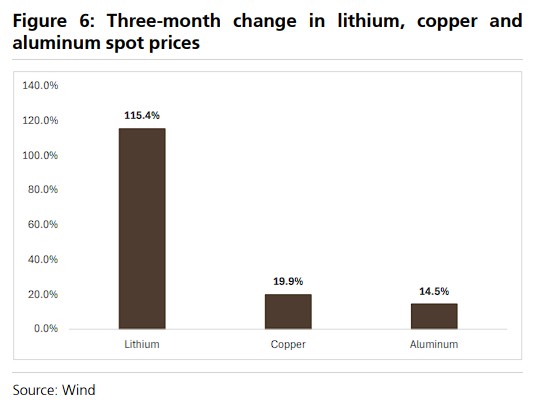
Specific calculations are as follows:
Aluminum: Approximately 200 kg per vehicle. The rise in aluminum prices over the past three months has led to an increase in vehicle costs of about RMB 600.
Copper: Approximately 80 kg per vehicle. The rise in copper prices has led to an increase in vehicle costs of about RMB 1,200.
Lithium: This is the most volatile part. Based on the assumption that 600 grams of lithium carbonate is consumed per 1 kWh battery, different types of vehicles are impacted differently:
- Battery Electric Vehicle (BEV, 80 kWh battery): Lithium costs increased by about RMB 3,800.
- Extended Range Electric Vehicle (EREV, 40 kWh battery): Lithium costs increased by about RMB 1,900.
- Plug-in Hybrid Electric Vehicle (PHEV, 20 kWh battery): Lithium costs increased by about RMB 1,000.
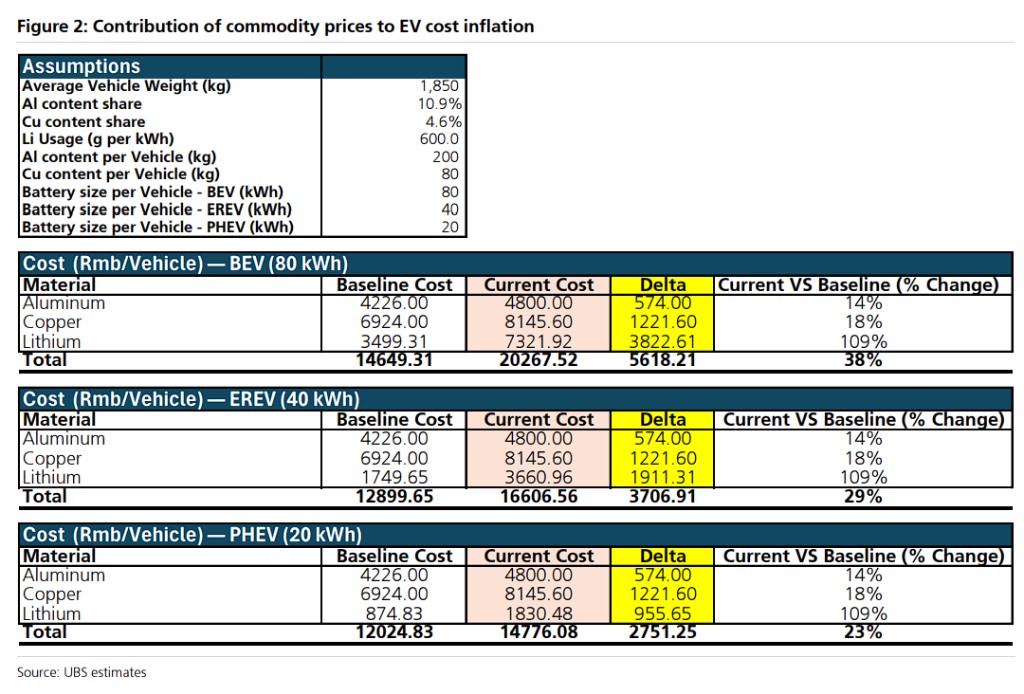
UBS stated that, when calculated comprehensively, the cost inflation for a pure electric vehicle (BEV) due to metal raw materials alone is as high as RMB 5,600 (with lithium contributing the majority of the increase, with a price rebound of up to 109%).
Overlooked Source of Inflation: DRAM Prices Soar by 180%
The research report also indicates that, in addition to traditional metal materials, the "brain" of smart vehicles—storage chips—are becoming a new source of inflation. With the proliferation of Advanced Driver Assistance Systems (ADAS) and centralized computing, the demand for memory in vehicles is growing exponentially UBS has learned from industry professionals that a modern car with a considerable level of intelligence typically contains about $100 (approximately RMB 700) worth of DRAM. However, in the past three months, DRAM spot prices have skyrocketed by 180%. This means:
The DRAM cost per vehicle has surged from RMB 700 to RMB 2000.
This alone adds an additional cost burden of RMB 1300 per vehicle.
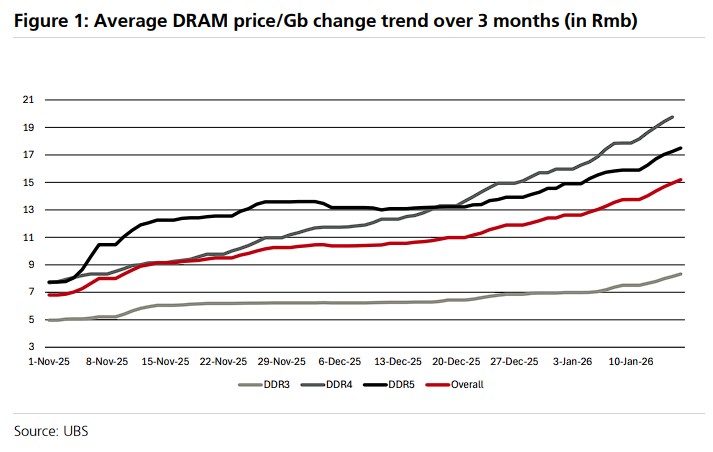
UBS used a weighted model (40% entry-level 8GB memory, 20% mid-range 16GB memory, 20% high-end 32GB memory) for calculations and confirmed that this RMB 1300 mixed cost increase is widespread.
UBS pointed out that historically, if the entire industry faces the same raw material price increases, automakers can usually pass on costs to consumers through price hikes. However, this time is different; under the backdrop of the resumption of purchase tax and the withdrawal of stimulus policies, end demand is weak.
UBS believes it is currently unclear how the additional cost of up to RMB 4,000-7,000 will be shared among suppliers, OEMs, and consumers.
The most pessimistic yet realistic scenario is: Given that fierce market competition has already led to thin profit margins for automakers, if this wave of cost inflation is entirely borne by automakers, it will be enough to fully erode carmakers' margin.
The above exciting content comes from the Wind Trading Platform.
For more detailed interpretations, including real-time analysis and frontline research, please join the【 **Wind Trading Platform ▪ Annual Membership**】

Risk Warning and Disclaimer
The market has risks, and investment requires caution. This article does not constitute personal investment advice and does not take into account individual users' specific investment goals, financial conditions, or needs. Users should consider whether any opinions, views, or conclusions in this article align with their specific circumstances. Investing based on this is at your own risk.
