


Is Oracle about to collapse? Banks won't lend money, stock price halved, refinancing 50 billion on Sunday to "extend life"
Oracle is being dragged into the abyss by investments in AI infrastructure and OpenAI's "bills." The company urgently launched a financing plan of up to $50 billion on Sunday to address its dwindling cash flow and Wall Street's harsh warnings. Under the pressure of a halved stock price, soaring credit default swaps (CDS), and Bank of America halting loans, this financing may determine whether Oracle can avoid an imminent liquidity crisis
Oracle is facing a liquidity crisis. It announced on Sunday that it plans to raise $45 billion to $50 billion this year to expand its AI data centers, while several investment banks have previously warned that it could run out of cash as early as the end of 2026. Meanwhile, its stock price has halved from its peak in September last year, and the price of credit default swaps (CDS) has surged to the highest level since the 2008 financial crisis.
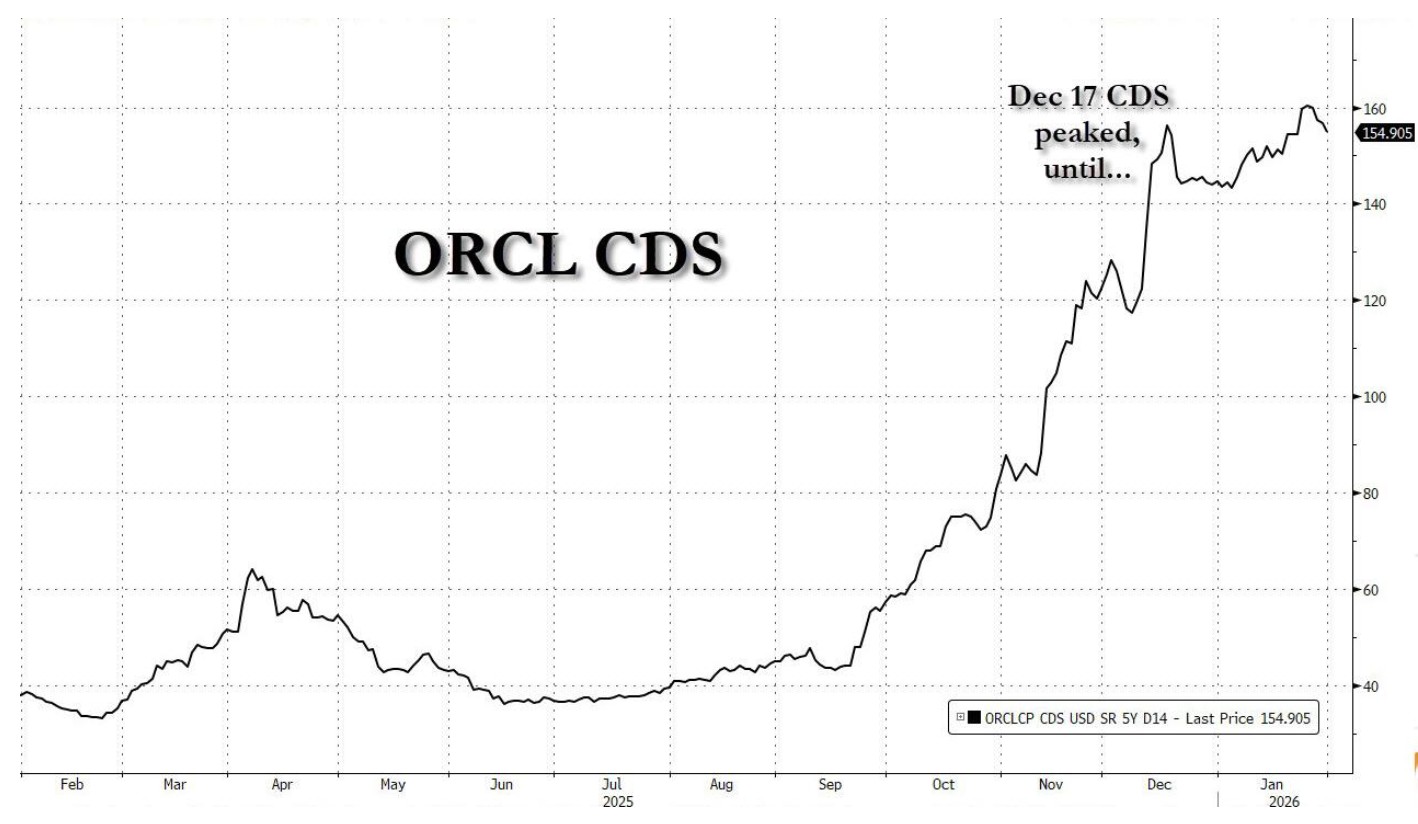
This financing by Oracle is seen by the market as a matter of life and death. Oracle plans to raise half of the funds through mandatory convertible preferred stock and a market issuance plan of up to $20 billion. The remaining funds are expected to be completed through a one-time bond issuance in early 2026.
Several banks in the U.S. have begun to withdraw financing support for Oracle-related projects. According to Bloomberg, a channel survey by TD Cowen shows that due to concerns about Oracle's financing capabilities, several U.S. banks have stopped providing loans for its data center projects.
Banks still willing to provide financing have raised interest rates to non-investment grade levels, expanding from SOFR + 225-250 basis points in September last year to SOFR + 300-450 basis points.
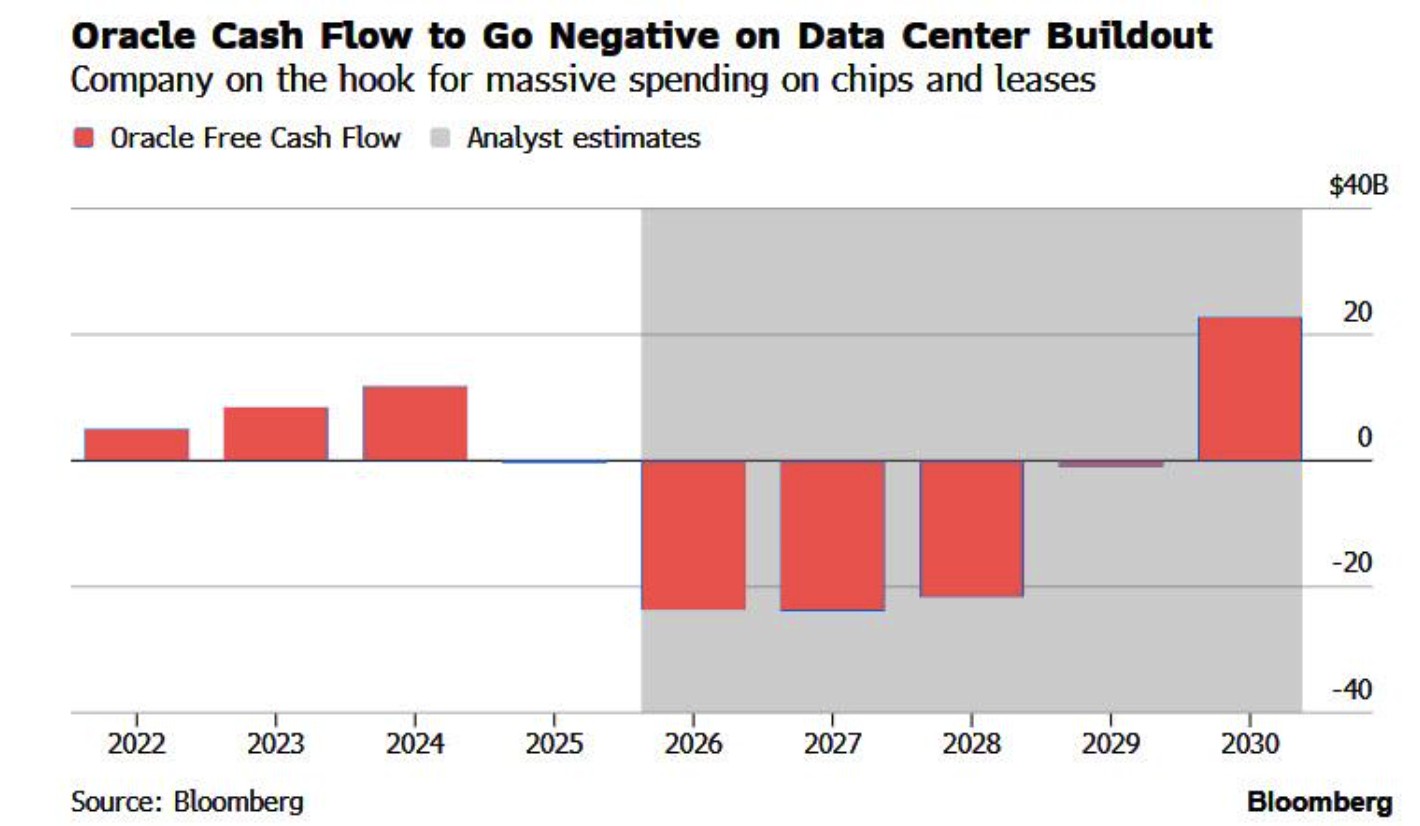
The demand for funds to build AI data centers is outpacing Oracle's cash inflow speed, with the company's free cash flow turning negative, a situation expected to persist until 2030.
According to TD Cowen's analysis, to support its existing agreements with OpenAI, Oracle needs to procure about 3 million GPUs and other IT equipment, with a conservative estimate of $30 million per megawatt for IT configuration costs, which means a capital expenditure requirement of about $156 billion.
Moreover, OpenAI itself is not yet profitable and has approximately $1.4 trillion in long-term commitments to other companies, further exacerbating market concerns about the sustainability of this deal.
Urgent Financing Plan
In its statement on Sunday, Oracle indicated that the funds are needed to build additional capacity to meet contract demands from major cloud customers such as AMD, Meta Platforms, NVIDIA, OpenAI, TikTok, and xAI.
The company plans to raise about half of the funds through mandatory convertible preferred stock and a market issuance plan of up to $20 billion, with the other half to be completed through a one-time bond issuance in early 2026.
This is Oracle's second large-scale financing following the issuance of $18 billion in bonds in 2025, which was one of the largest corporate bond issuances of that year.
However, the market is not optimistic about the prospects of this financing. Luria pointed out that given Oracle's existing commitments and the trading situation of its credit default swaps, the bond market cannot accommodate such a large-scale investment-grade debt. ** Issuing equity may further depress the company's stock price, which in turn could affect its bonds.
Wall Street Issues Stern Warnings
Analysts from Morgan Stanley and TD Cowen released reports in late January, raising serious doubts about Oracle's financial condition.
Morgan Stanley significantly lowered Oracle's target price, stating that "GPU as a Service (GPUaaS) is a substantial revenue opportunity, but joint in-depth research by the equity, credit, and GVAT teams indicates that infrastructure construction will result in earnings per share falling below targets and lead to a significant increase in financing needs."
According to Bloomberg, TD Cowen's Michael Elias noted in a report on January 26 that Oracle is considering laying off 20,000 to 30,000 employees and selling off parts of its business to cope with U.S. banks withdrawing financing for its AI data center expansion. The layoffs would free up $8 billion to $10 billion in cash flow.
Sanchit Vir Gogia, chief analyst at Greyhound Research, stated that the $300 billion OpenAI deal may seem impressive, but "when you look closely, it is built on backlogged orders with no guaranteed revenue, yet has huge capital expenditure requirements."
Diminishing Financing Channels
Oracle's financing predicament stems from its aggressive data center expansion plans. According to TD Cowen's channel survey, by the end of the third quarter of 2025, Oracle had leased approximately 5.2 gigawatts of data center capacity in the U.S. to support OpenAI's workloads.
Within two months, private operators raised approximately $58 billion in debt for Oracle/OpenAI data center projects. However, as stock and bond investors increasingly questioned Oracle's financing capabilities, reflected in widening CDS spreads and a double whammy for stocks and bonds, several U.S. banks began to withdraw loans for Oracle-related data center projects.
TD Cowen's channel survey revealed that several Oracle data center leasing projects currently negotiating with private operators failed to secure financing, preventing Oracle from obtaining data center capacity through leasing.
Faced with surging capital demands, TD's latest channel survey indicates that Oracle is currently requiring customers to pay a 40% upfront deposit to alleviate the incremental capital expenditures required for revenue growth (RPO). Additionally, Oracle is evaluating various paths to mitigate funding pressures, including layoffs, asset divestitures, vendor financing, and a "Bring Your Own Chip (BYOC)" model.
Cash Flow Black Hole and OpenAI Risks
The core issue facing Oracle is the cash flow mismatch caused by its transaction structure. Building AI data centers while being unable to simultaneously collect cash from customers has turned Oracle's free cash flow negative, a situation expected to persist until 2030. The company will need to bear hundreds of billions of dollars in expenditures over the next few years, primarily for semiconductor procurement and leasing.
The contract with OpenAI is a key part of Oracle's cloud investment. OpenAI has committed to paying approximately $300 billion to lease servers from Oracle, but OpenAI itself has yet to turn a profit, exacerbating market concerns about when the massive capital expenditures will yield meaningful returns Gogia believes that companies need to fundamentally rethink how they view Oracle's cloud contracts. "Oracle's cloud infrastructure should be seen as shared infrastructure risk, rather than a service agreement."
Luria from DA Davidson stated, "If Oracle can successfully complete the financing, it will begin to rescue itself from the huge predicament it is currently in." However, even if the financing is successful, the company still faces a significant funding gap; if it fails, it could mean the end
