


Is Waller really "hawkish"? Analysts: Nomination indicates a tendency for rate cuts, with the Federal Reserve potentially cutting rates up to five times by 2026
Renowned bond analyst Steven Major believes that the interest rate cuts led by the Federal Reserve under Powell may far exceed current market expectations. "If he were not part of the rate-cutting camp, he would not be considered for this position. The market is currently pricing in about two rate cuts, but we may see four or five instead of just two."
Renowned bond analyst, former global head of fixed income research at HSBC Holdings, and global macro advisor at broker Tradition Dubai, Steven Major stated that the rate cuts led by Kevin Warsh at the Federal Reserve may far exceed current market expectations.
After U.S. President Trump announced last week that he would nominate Warsh to serve as the Fed Chair, the market was somewhat confused about the potential impact of this appointment on interest rates. Warsh has served as a decision-maker at the Fed and is known for his concerns about inflation, while Trump has been advocating for significant rate cuts.
Major said in an interview with Bloomberg Television on Tuesday, "I think a fairly reasonable assumption is: if he were not part of the rate-cutting camp, he would not be considered for this position. The market is currently pricing in about two rate cuts, but we might see four or five instead of just two."
The current pricing in the money market indicates that the probability of a second rate cut occurring in 2026 is about 80%, and last week the market briefly considered the possibility of a third rate cut. This is because, compared to other candidates previously considered by Trump, the market views Warsh as more hawkish. His nomination still requires Senate confirmation.
Major is not optimistic about steepening trades
In the bond market, U.S. Treasury yields were basically stable on Tuesday, with the two-year yield at 3.58% and the ten-year yield at 4.29%.
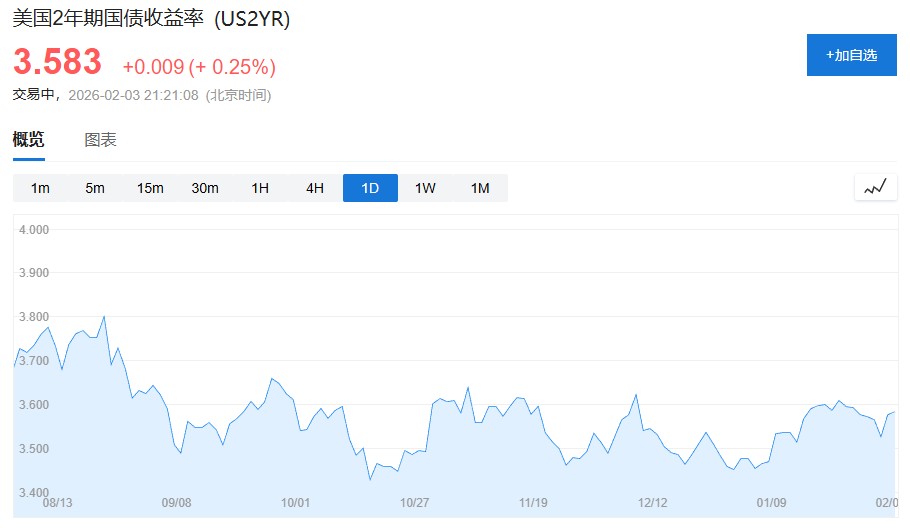
Expectations of rate cuts have led to the prospect of a potential warming of the U.S. economy and a resurgence of inflation, prompting investors to favor short-term bonds over long-term Treasuries, which has steepened the yield curve.
Major, who previously served as the global head of fixed income research at HSBC and is known for his bullish stance on bonds, expressed skepticism about steepening trades and recommended directly buying short-term Treasuries.
"If you are so confident that front-end yields will decline and believe the curve will steepen, then just buy the market directly and go long," Major said:
"I am not very confident about steepening trades; I think a better trade is to go long the middle of the curve directly."
