


Uber's pre-market once plummeted 10%! Q4 bookings surge but profit concerns loom, new CFO signals "focus on Robotaxi" | Earnings report insights
Uber's net profit for the fourth quarter was $296 million, a significant decrease of 96% year-on-year. For the current quarter, the company expects adjusted earnings per share to be between $0.65 and $0.72, lower than the average analyst expectation of $0.77 compiled by Bloomberg, and the median forecast for adjusted EBITDA also fell short. Despite concerns over profit outlook, the booking guidance released by Uber is quite optimistic. The company expects bookings for this quarter to be between $52 billion and $53.5 billion, exceeding market expectations
Uber released a mixed financial report. Despite strong growth in total bookings for the fourth quarter that exceeded expectations, concerns arose in the market due to weak profit guidance and a sharp year-on-year decline in net profit. Meanwhile, the company appointed a staunch supporter of autonomous driving technology as the new Chief Financial Officer, clearly signaling a further commitment to its Robotaxi business strategy.
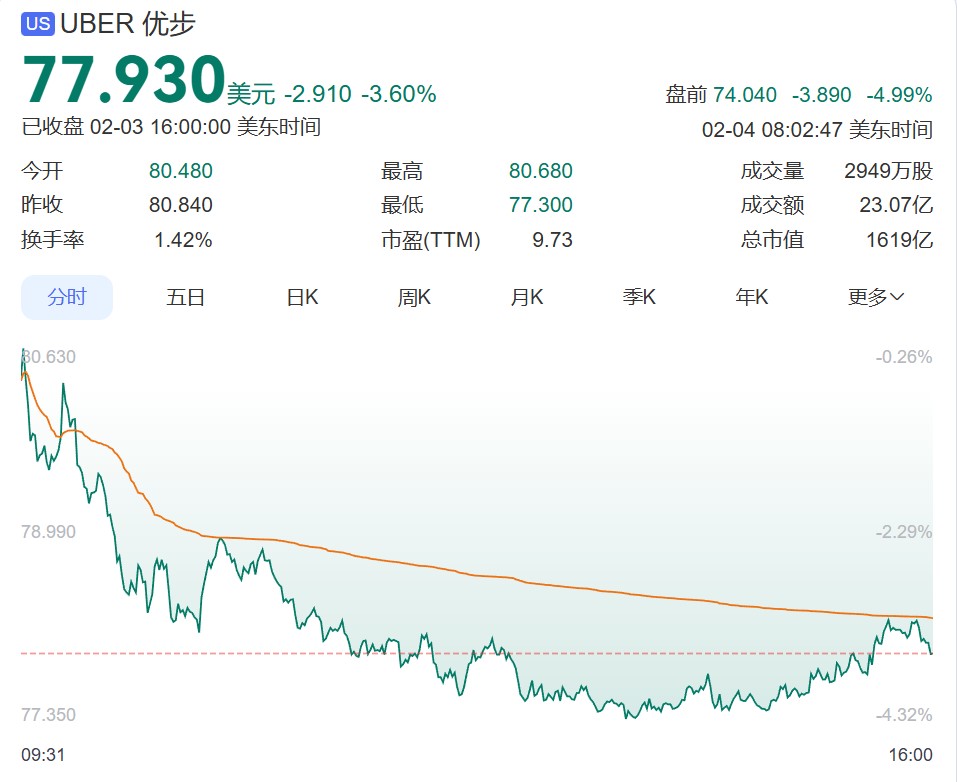
The financial report showed that the company's net profit for the fourth quarter was $296 million, a significant year-on-year decline of 96%. For the current quarter, the company expects adjusted earnings per share to be between $0.65 and $0.72, below the average analyst expectation of $0.77 compiled by Bloomberg, and the median forecast for adjusted EBITDA also fell short. As a result, Uber's stock price dropped by as much as 10% in pre-market trading in New York.
At the same time as the financial report was released, Uber announced that the current Vice President of Strategic Finance and Investor Relations, Balaji Krishnamurthy, would succeed Prashanth Mahendra-Rajah as CFO. As an executive who has long defended Uber's autonomous driving strategy on social media, Krishnamurthy's appointment marks the company's intention to increase investment in the highly watched autonomous driving sector.
Despite concerns over profit prospects, Uber's booking guidance is quite optimistic. The company expects bookings for this quarter to be between $52 billion and $53.5 billion, exceeding market expectations. CEO Dara Khosrowshahi emphasized that thanks to lower insurance costs and the launch of new products, the pricing environment is healthier, laying the foundation for revenue growth and margin expansion over the next year. As of now, Uber's stock price decline has narrowed to 5%.
Weak Profit Guidance, Strong Core Business Growth
Although profit forecasts put pressure on the stock price, Uber's core business metrics remain robust. In the fourth quarter, the company's total bookings (including ride-hailing, food delivery, and driver and merchant revenue, excluding tips) grew by 22% year-on-year, reaching $54.1 billion, surpassing analyst expectations.
This growth was driven by several new product initiatives launched by the company during the quarter. The Uber One paid membership contributed to more transaction volume, and the high-end reservation service targeting ski resorts capitalized on the holiday travel peak. Additionally, the company expanded more affordable options, including extending lower-priced shuttle services to all major airports in New York. The food delivery business also saw strong growth during the holiday season, setting sales records on "Black Friday." By increasing non-food merchants and offering more regular discounts, Uber is working to capture customers from competitors like DoorDash and Instacart.
CFO Change Signals Autonomous Driving Strategy
Uber disclosed an important personnel change in its financial report. Balaji Krishnamurthy, who has worked at Uber for over six years, will be promoted to Chief Financial Officer. According to regulatory documents released on Wednesday, the current CFO Prashanth Mahendra-Rajah will step down on February 16 and remain as a senior financial advisor until July 1.
The new CFO Krishnamurthy is known for actively advocating Uber's autonomous driving strategy on social media. In the face of skeptics questioning Uber's competitiveness against rivals like Waymo and Tesla Inc., he often defends the company's autonomous driving plans. Uber has invested hundreds of millions of dollars in autonomous driving technology partners and agreed to purchase a Robotaxi fleet. This management change indicates that Uber is betting on its experience in operating a profitable ride-sharing platform to secure a key position in the increasingly crowded autonomous driving ecosystem.
Expanding the Robotaxi Landscape, Countering the "Zero-Sum Game" Argument
To further advance the commercialization of autonomous driving, Uber announced the expansion of its Robotaxi service to several new markets, including Houston, Hong Kong, Madrid, and Zurich. Among these, Hong Kong will become Uber's first Robotaxi market in Asia. The company plans to roll out autonomous vehicle services to over 10 markets worldwide in the coming years.
In the financial report presentation, Uber specifically dedicated space to refute Wall Street skeptics' "misunderstanding" that autonomous driving technology will impact Uber's business. The company reiterated that Robotaxis can stimulate growth across the entire ride-hailing industry, and this is not a zero-sum game. Uber pointed out that in Austin and Atlanta, where Waymo is integrated into the Uber app, the growth rate of rides has exceeded that of its top 20 cities.
Uber also subtly highlighted the limitations of its competitor Waymo. Uber stated that due to regulatory restrictions, most rides and profits in cities like New York, Boston, and Chicago cannot be achieved through autonomous vehicles in the foreseeable future. Additionally, Robotaxi operators typically do not serve less affluent areas like Oakland. Uber particularly emphasized the flexibility of human drivers, noting that during the power outage in San Francisco last December and the recent winter storm, human drivers were able to quickly meet demand when autonomous vehicles were hindered or removed from the platform, ensuring customer experience
