


The historical peaks of silver have never been "expensive to come out."
The historical peaks of silver are often the inevitable result of high volatility, high leverage, and regulatory "heavy braking" colliding. In the past month, silver's volatility once exceeded 1800%, and the exchange raised margin requirements five times, reminiscent of the forced deleveraging patterns before the bubbles burst in 1980 and 2011. Moreover, the silver-to-oil ratio breaking above 1.8 indicates that it has detached from its commodity attributes and has become a tool for capital speculation. History is echoing its rhymes, and the silver market has entered the most dangerous stage of speculation
In the past eight months, silver has experienced a crazy market trend that is enough to be recorded in history: the increase once reached 179%, with prices breaking through the $100/ounce mark. Faced with such a dizzying trend, the market often tends to explain the peak with the intuition that "too much increase means risk."
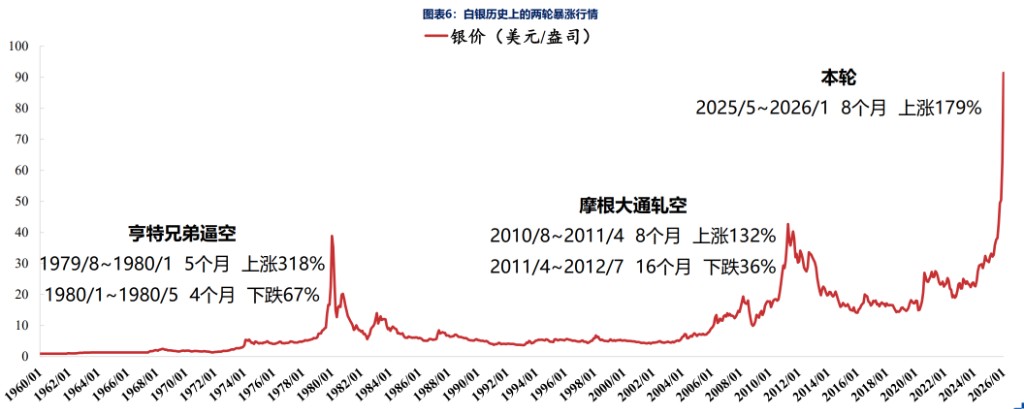
Recently, silver has shown a "roller coaster" trend, touching an all-time high of about $121.8/ounce on January 29, then plummeting sharply, dropping over 35% to around $73 on January 31, creating the largest single-day decline on record. After a violent rebound, it turned down again, with another drop of over 13% during intraday trading on February 5. In just a few days, the silver price retraced about 40% from its peak, nearly erasing the year's gains, with extreme market volatility.
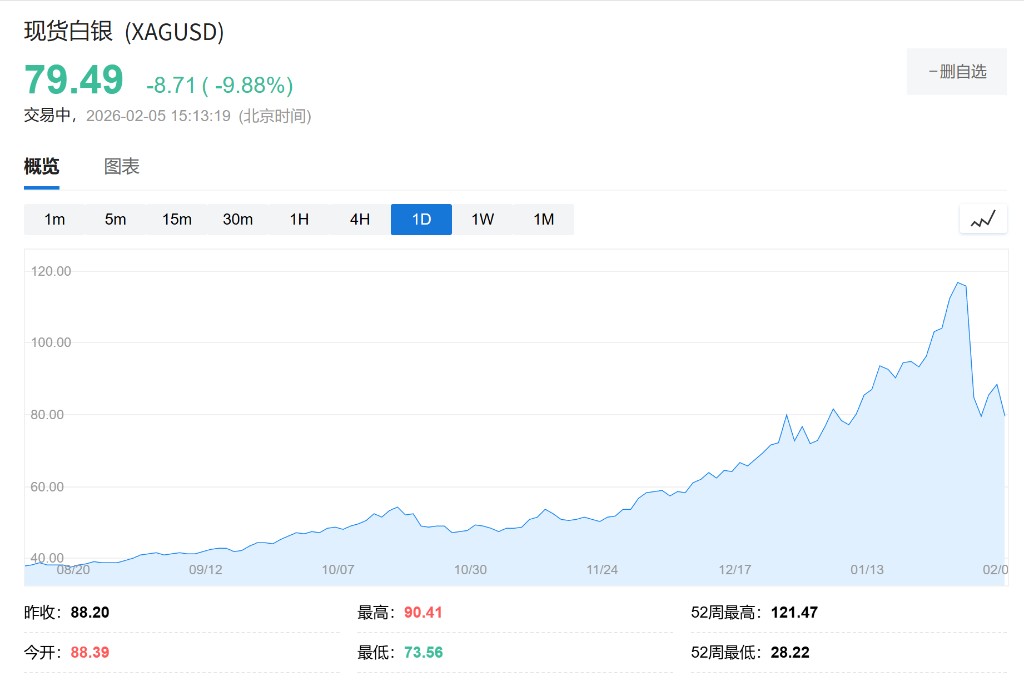
On February 1, the latest research report from the Xu Chenyin team at Caitong Securities pointed out that historical peaks in silver have never been naturally traded by the market but are the result of "forced brakes." The peak in silver is essentially a leveraged clearing process. Currently, the volatility in the silver market has reached historical extremes (over 1800%), and exchanges are frantically raising margin requirements (five consecutive increases within the month), with the silver-oil price ratio severely distorted (breaking 1.8).
For investors, the core risk at present lies not in the fundamental supply and demand but in changes to exchange rules and the return of extreme volatility. History is echoing, and the silver market has entered the most dangerous stage of speculation.
Volatility Alert: From Normalcy to Out of Control at 1800%
If the price increase is the manifestation of frenzy, then volatility is the thermometer measuring whether the market is out of control.
Historical data shows that since 1978, the 60-day standard deviation of silver (a measure of volatility) has remained below 200% 93% of the time. This represents the market's normal state. However, the volatility before the silver crash had soared to an astonishing 1800% or more.
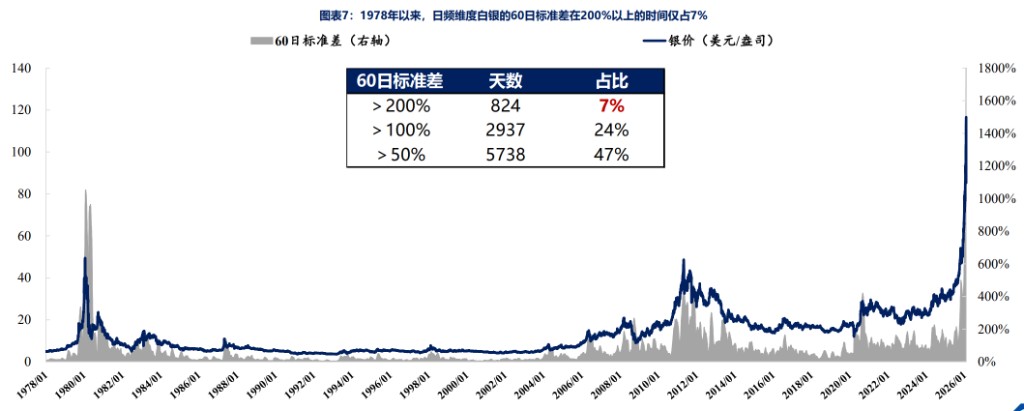
This is not just a numerical jump but an extreme manifestation of market structural fragility. The report points out that extreme high volatility in silver is usually difficult to maintain, and the process of "volatility reduction" (return of volatility) has historically almost always been accompanied by severe price adjustments. When the market shifts from orderly increases to a chaotic casino, a crash often follows closely.
Deadly "Brake Pads": Continuous Margin Increases by Exchanges
The two famous bubbles in silver history—the Hunt brothers' short squeeze in 1980 and the JP Morgan squeeze in 2011—were ultimately ended by intervention from exchanges without exception.
- 1980 Lesson: COMEX implemented the infamous "liquidation only" rule and prohibited new positions, directly cutting off liquidity for the bulls.
- 2011 Script: The Chicago Mercantile Exchange (CME) raised margin requirements five times in nine days, a "boiling frog" style of deleveraging that caused silver prices to collapse in a short time.
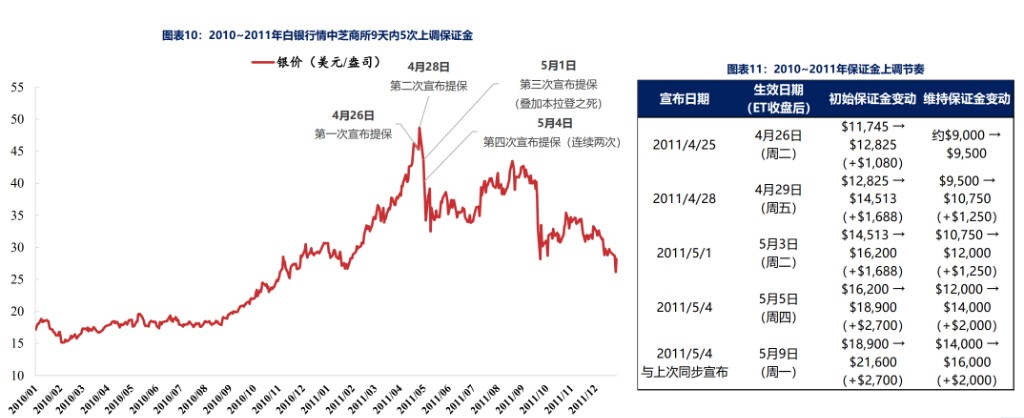
Returning to the present in 2026, the script is being replayed. CME has raised margin requirements five times in the past month. The recent pace has been particularly aggressive:
December 12, 2025: Initial margin raised from 22,000 to 22,000 to 24,200.
December 29, 2025: Initial margin raised from 24,200 to 24,200 to 25,000.
December 31, 2025: Initial margin significantly raised from 25,000 to 25,000 to 32,500.
January 28: Margin ratio raised from 9% to 11% (high risk raised from 9.9% to 12.1%).
January 31: Just three days later, announced another increase from 11% to 15% (high risk raised to 16.5%).
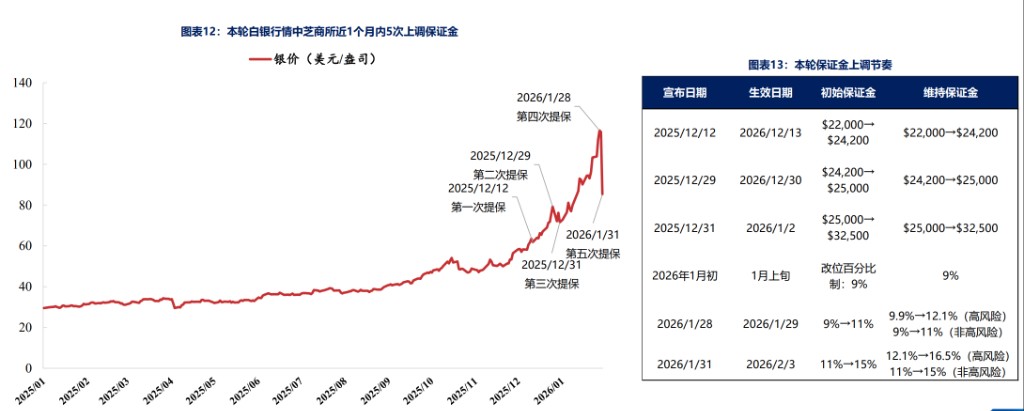
The exchange's willingness to cool silver prices is now completely unmasked. This method of forcing deleveraging by increasing holding costs is the sharpest needle in history that has burst silver bubbles.
Collapse of Pricing Logic: Extreme Deviation of Price Ratios
When the price of an asset completely detaches from its reference point, it is no longer determined by value but by emotion. The research report reveals the current madness of silver through two key price ratios:
- Gold-Silver Ratio: Currently has dropped to around 42, approaching the lower end of the historical range. Although it has not yet reached the extreme value of 15 in 1980, it is close to the level of 31 in 2011, indicating that silver's premium relative to gold is extremely high.
- Silver to Oil Ratio (The Most Critical Distortion): This may be the craziest data currently. Historically, the silver to oil ratio has fluctuated between 0.2 and 0.5. Currently, this ratio has surpassed 1.8.
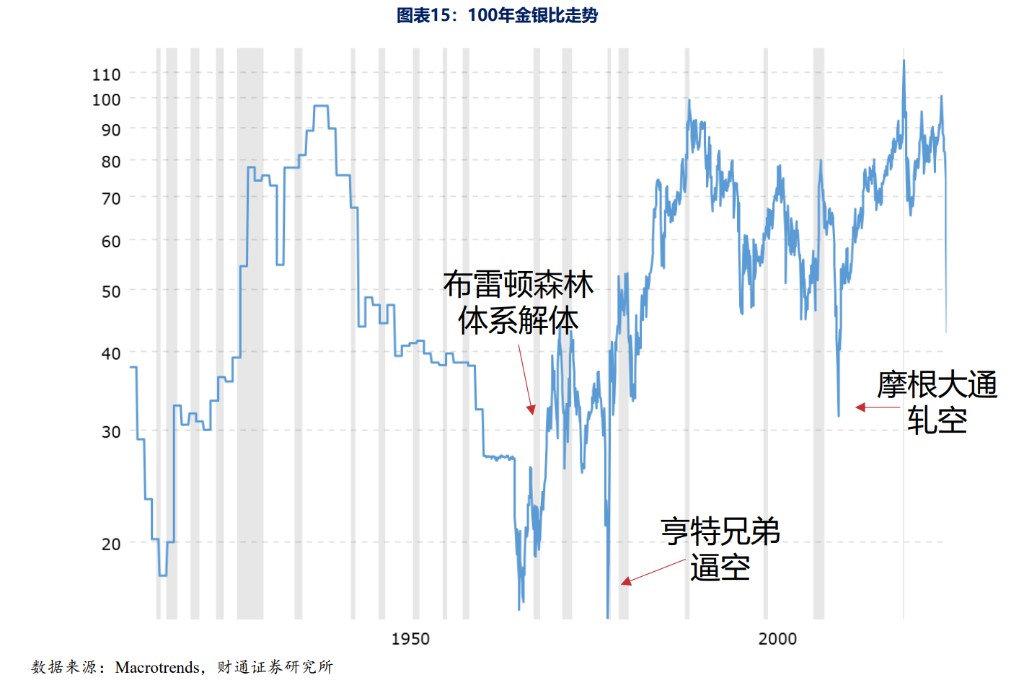
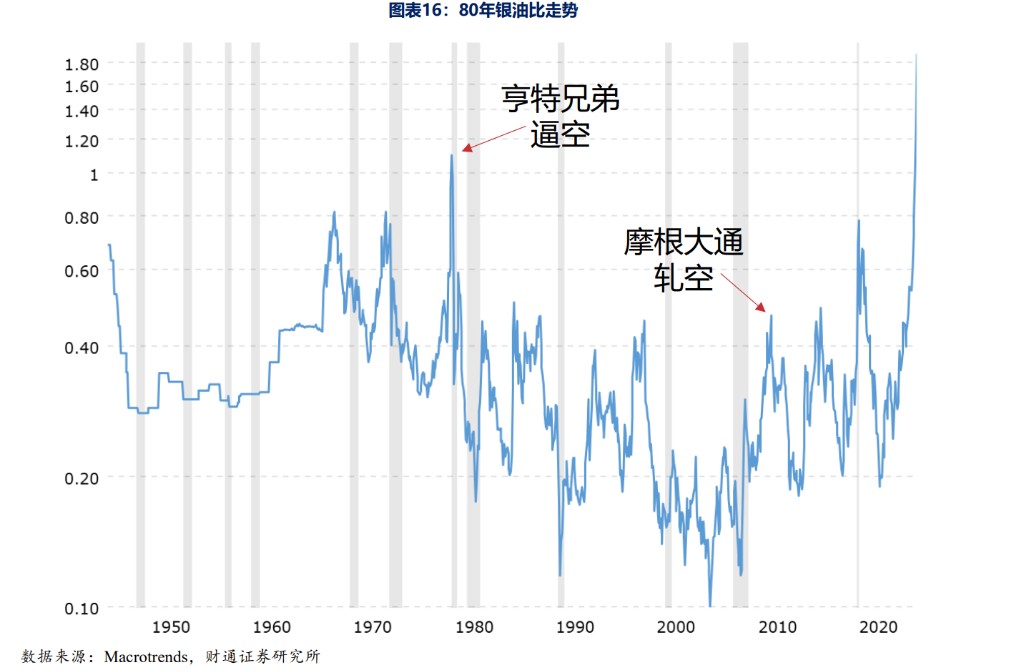
This means that the price of silver has completely detached from the industrial attributes of commodities and has turned into a pure capital speculation game. When the ratio breaks through the historical volatility range so dramatically, the odds have been exhausted.
Headwinds in the Macroeconomic Narrative: Strong Dollar and Liquidity Contraction
In addition to the structural risks within the market, the external macro environment is also undergoing subtle changes.
The research report specifically mentioned the impact of Trump's nomination of Kevin Warsh to succeed the Federal Reserve Chairman. Warsh's policy inclinations, combined with the current stagflation environment in the U.S., mean that balance sheet reduction and the restoration of dollar credit will become the main theme. This directly leads to a potential rebound after a significant decline in the dollar index and a tightening of liquidity, which is a significant negative for precious metals that rely on liquidity excess for support.
Moreover, although the situation in the Middle East (such as potential conflicts with Iran) may provide a short-term safe-haven impulse, the expected easing of U.S.-China relations during Trump's visit to China in April will further weaken the safe-haven premium of precious metals
