Morgan Stanley Quantitative Warning: Momentum Collapse, Leveraged ETFs Massively Sell Off U.S. Stocks, Few Retail Investors Taking Over!

Wallstreetcn
2026.02.05 13:13
portai
I'm PortAI, I can summarize articles.

Morgan Stanley warned that momentum trading collapsed on February 5, as long positions were reduced and passive selling from leveraged ETFs intensified the market decline. The lack of retail buying led to insufficient support, with the main selling pressure concentrated on the NASDAQ and tech stocks. Although a technical rebound may occur in the short term, Morgan Stanley tends to favor selling on the rebound, believing that the deleveraging chain is not over, retail funds are weak, and future selling pressure will be difficult to absorb. Goldman Sachs pointed out that market volatility is concentrated on a few momentum trades, reflecting structural characteristics

Momentum consensus trading encountered a "collapse" reversal on February 5th. Morgan Stanley believes that the concentrated reduction of crowded long positions combined with passive selling from leveraged ETF rebalancing rapidly amplified the decline, while retail buying, which should have provided a buffer during the downturn, was clearly lacking, leading to insufficient marginal support.

This decline exhibited a structural characteristic of "relative restraint in the index, but severe internal fluctuations": selling pressure was highly concentrated in the NASDAQ, technology, and semiconductor sectors, which had previously led the gains and had crowded high-beta themes (AI, national security, Bitcoin mining stocks, etc.). In contrast, sectors such as cyclicals, chemicals, and banks performed stronger, showing clear rotation.

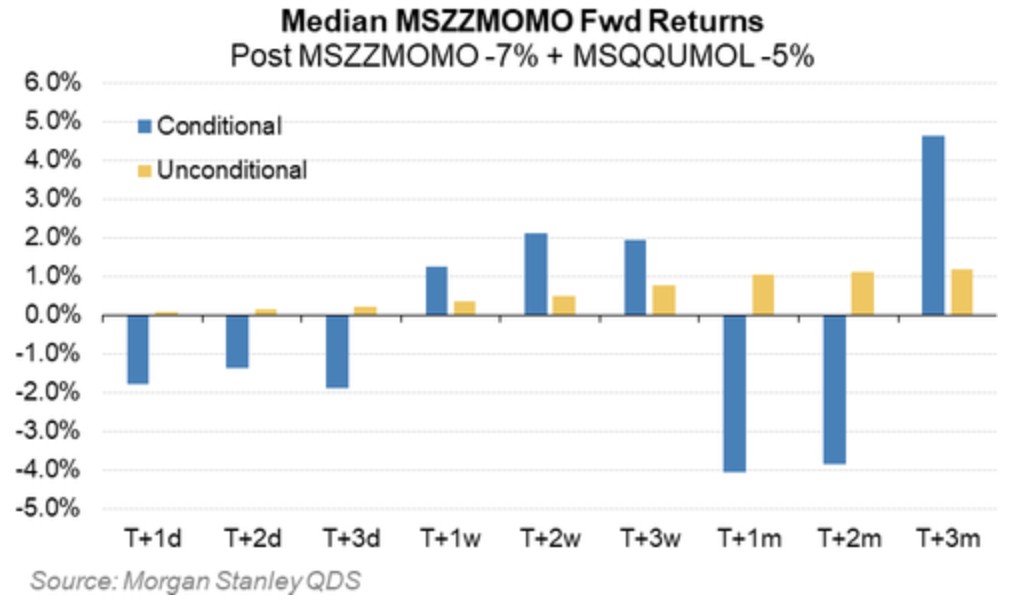
Looking ahead, short-term technical rebounds may occur, but Morgan Stanley is more inclined towards "selling on the rebound": the reason being that the deleveraging/rebalancing chain may not be over, while retail funds continue to be weak ahead of the tax season, making it harder for the next round of selling pressure to be absorbed; historical statistics also show that after a similar intensity of momentum's single-day plunge, stock prices are likely to decline over the next 1-2 months.

Index volatility is relatively restrained, but internal sectors experience severe fluctuations

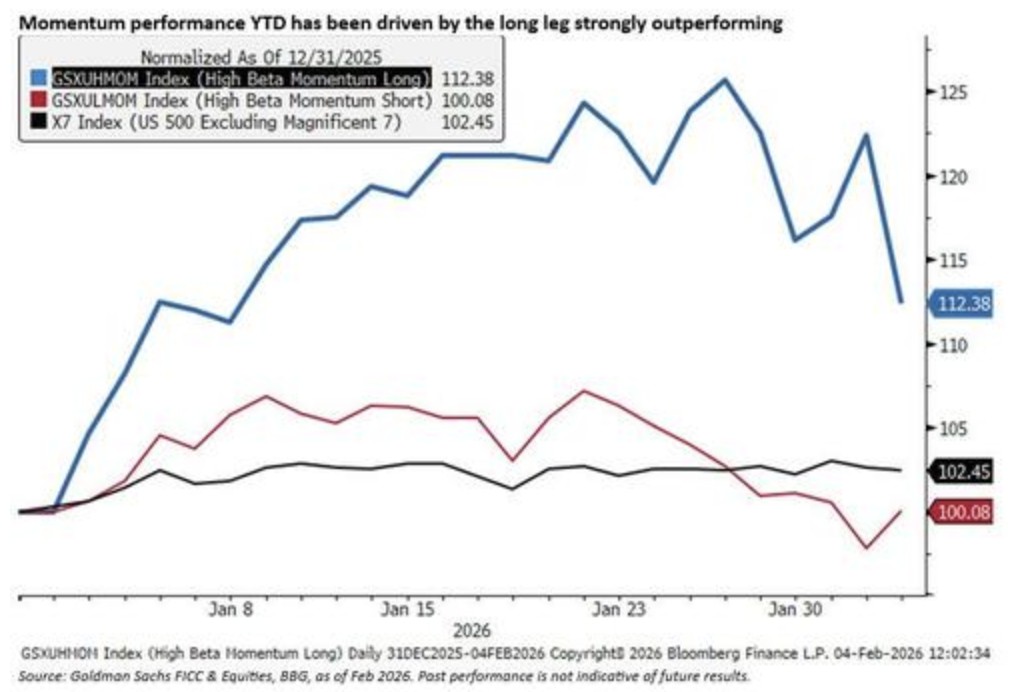
A significant feature of this round of decline is the "separation between the index and internal components." Goldman Sachs pointed out that at one point during the day, nearly three-quarters of stocks outperformed the S&P 500, even as the index continued to decline, reflecting that the pain points were concentrated in a few crowded momentum trades (believing that trends will continue, i.e., buying rising assets and selling falling assets).

Goldman Sachs' trading desk attributed this to a reversal driven by increased volatility and technical deviations, rather than a single fundamental "trigger."

Morgan Stanley trader Bryson Williams also noted in his closing remarks that the day resembled a position rebalancing triggered by a VaR shock, with selling primarily coming from concentrated reductions in stocks that had surged significantly at the beginning of the year, rather than a symmetrical deleveraging of both long and short positions.

Momentum collapse: Crowded targets face concentrated reductions, AI and high-beta themes under pressure

Morgan Stanley data shows that the long-short momentum index MSZZMOMO fell approximately 7.7% in a single day, representing an extreme volatility of 4 standard deviations, primarily dragged down by the long side. The momentum long MSQQUMOL dropped about 5.7%, while the momentum short MSQQUMOS only rose about 1.9%, reflecting a one-sided adjustment of "cutting longs without cutting shorts."

From a thematic perspective, selling pressure was highly concentrated in previously leading and crowded sectors: AI, national security, and Bitcoin mining stocks became the core of the decline, while cyclical stocks, chemicals, and banks outperformed, forming a "reverse AI" rotation.

Leveraged ETF rebalancing amplifies selling pressure and poses ongoing selling risks

According to Morgan Stanley's quantitative team, the approximately $18 billion selling pressure from leveraged ETF rebalancing was one of the key drivers of the decline that day (when stocks fall, leveraged ETFs need to sell stocks to maintain their multiples), with supply concentrated in the NASDAQ, technology, and semiconductors, causing over $100 million in single-day selling impacts on several popular stocks More importantly, this type of selling pressure has not ended. Morgan Stanley pointed out that with volatility remaining high and stock leverage still at the upper end of historical ranges, the risk of selling due to leveraged ETF rebalancing in the coming week remains, estimated at around $10 billion. Once deleveraging continues, the volatility of high-leverage stocks will continue to amplify.

At the same time, although options market makers are still in a positive gamma position (buying puts and selling calls), this exposure has clearly declined. Coupled with the negative gamma effect of leveraged ETFs (buying high and selling low), the market overall is approaching a "net negative gamma", which will exacerbate volatility and selling pressure feedback.

Retail Buying Absence: Marginal Buyer Vacuum and Tax Season Demand Concerns

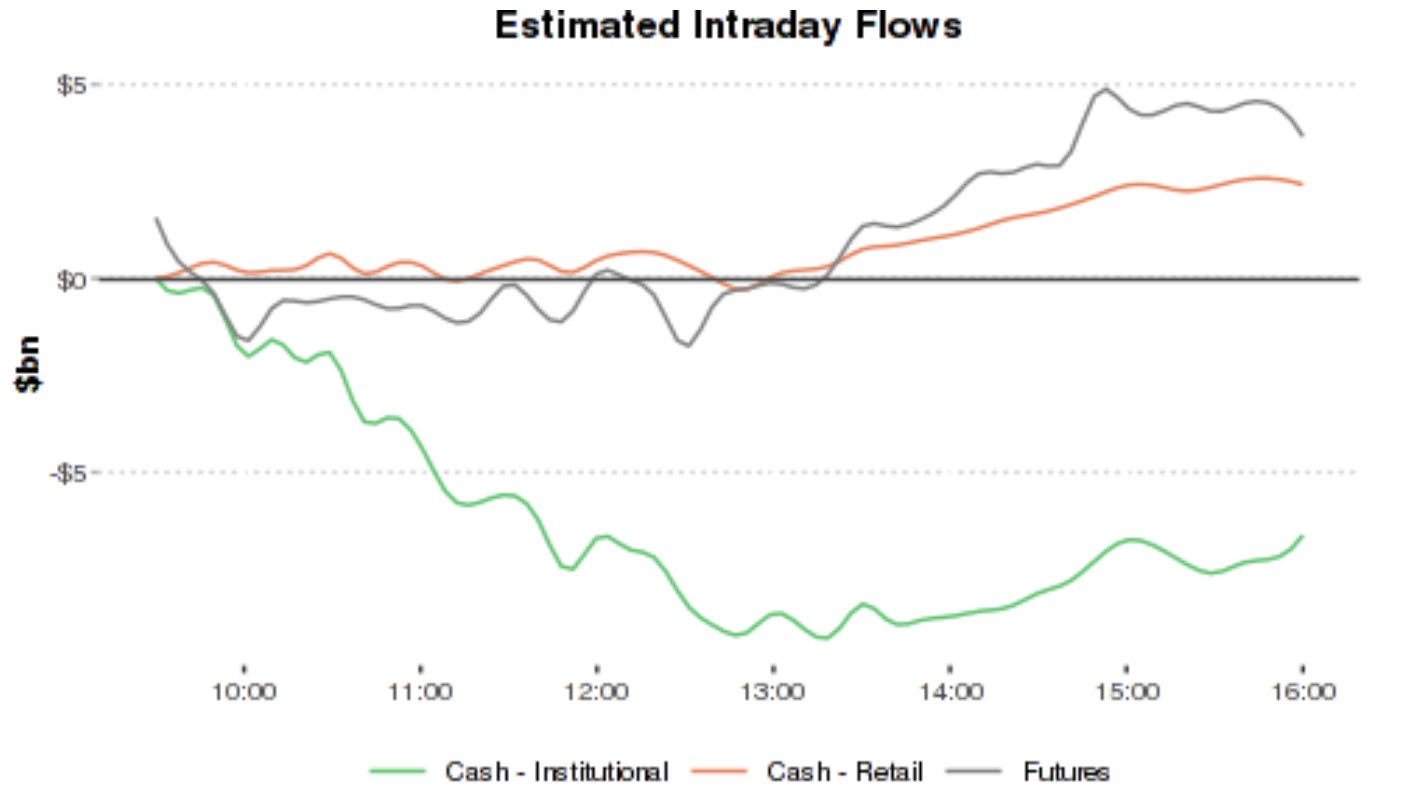
In the past, retail buying on dips often served as a buffer against price declines, but this time it is noticeably absent. Morgan Stanley stated that the net buying intensity of retail investors on the day is low (only 16% of days in the past year were lower than today), mainly occurring during the afternoon market rebound.

Meanwhile, the net selling intensity of institutions is high (only 11% of days in the past year were higher than today), primarily occurring in the morning session. This leaves consensus bulls lacking support at critical moments.

The weakness of retail investors also directly suppresses the momentum factor. Morgan Stanley pointed out that the stocks that retail investors are currently concentrated on buying overlap significantly with those used by momentum bulls/bears; therefore, once retail investors stop buying, momentum strategies will be dragged down together. Morgan Stanley also highlighted seasonal characteristics: the returns of stocks concentrated among retail investors in January are negatively correlated with returns in February and March, historically often accompanied by liquidity pressure brought on by the tax season.

What to Watch Next: A Rebound May Occur, Morgan Stanley Suggests Selling on Rebound

From historical statistics, Morgan Stanley noted that when the long-short momentum index MSZZMOMO experiences a single-day decline of 7% or more, accompanied by weakness on the long side (MSQQUMOL declining 5% or more on the same day), this usually signals negative outcomes in the following days. From the median stock price performance, the performance over 1-2 months is typically negative, turning positive in the third month. The median peak-to-trough decline of MSZZMOMO is about 22%.

Within this pricing framework, the market may experience a technical rebound in the short term. Goldman Sachs' trading desk believes that similar large momentum pullbacks may provide buying opportunities in the medium term, while Morgan Stanley's judgment is more cautious, mainly because positions have not been fully cleared, systemic supply has not landed, and the absence of retail investors as marginal buyers may make the next wave of selling pressure harder to absorb. Risk Warning and Disclaimer

The market has risks, and investment should be cautious. This article does not constitute personal investment advice and does not take into account the specific investment goals, financial situation, or needs of individual users. Users should consider whether any opinions, views, or conclusions in this article align with their specific circumstances. Investment based on this is at one's own risk