Jack Ma supervises the battle, Qianwen aims at the "AI entrance" high ground

Wallstreetcn
2026.02.06 11:18
portai
I'm PortAI, I can summarize articles.

Chinese-style AI competition?

"I looked up and unexpectedly saw Teacher Ma."

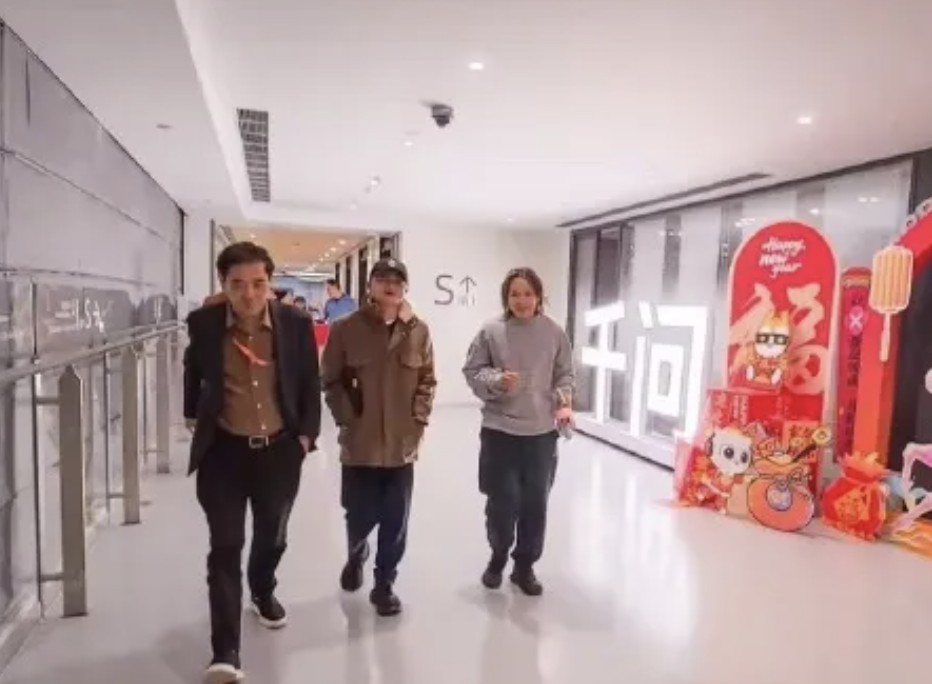
On the evening of February 4th, an Alibaba employee posted on Xiaohongshu, sharing a snapshot in which Jack Ma visited the Qianwen project team office accompanied by Alibaba partner Shao Xiaofeng. This inspection came just before the launch of the 3 billion yuan "Spring Festival Treat Plan."

Two days later, on February 6th, the largest red envelope battle of AI Apps kicked off, with Qianwen launching a milk tea free order promotion, attracting a surge of traffic. Not only did the Qianwen App crash temporarily, but the event also led to a spike in delivery orders, with consumers reporting extended delivery times, and several milk tea stores suspected of stopping order acceptance due to overwhelming demand.

Qianwen crashed, Alibaba thrived, and with the "milk tea offensive," it was no surprise that the App Store's top spot changed hands, with Alibaba's Qianwen App soaring to number one, temporarily pushing Tencent's Yuanbao, which had distributed 1 billion red envelopes days earlier, to second place.

But this was just the beginning. Alibaba's Qianwen has pulled in its internal ecosystem businesses, including Taobao Flash Sale, Fliggy, Damai, Hema, and Tmall Supermarket, preparing to treat the entire nation to a Spring Festival celebration in the form of free orders. This is the largest investment Alibaba has ever made in a Spring Festival campaign. Among the officially announced AI activities from major internet companies, Qianwen's investment amount is also the highest.

In the battle for the "AI entry point," giants like ByteDance, Tencent, Alibaba, and Baidu, which define the domestic mobile internet landscape, are all spending lavishly, hoping to stage another "Pearl Harbor attack" during the Spring Festival traffic peak. Alibaba's strategy is also to connect its ecosystem businesses, leveraging the momentum of distributing red envelopes to strengthen Qianwen's position as the group's super entry point.

However, this is a capital market that overseas investors cannot understand. Even with the powerful capabilities of large models, the fundamental growth logic of the internet remains unchanged; the way platforms attract new users is still fundamentally about burning money and creating viral growth. As a result, the stocks of Alibaba, Baidu, and Tencent have fallen for several days since the announcement of the red envelope battle.

Can this old-school internet strategy still work in the new world of AI?

On-the-spot Warfare

On the eve of the Spring Festival in 2026, the air in Hangzhou's Xixi Park is not only filled with the festive atmosphere of bidding farewell to the old and welcoming the new but also mixed with a sense of the "grassroots era" of the internet.

The day before yesterday, Jack Ma's figure appeared at Alibaba's headquarters, walking straight into the office area of the "Qianwen Spring Festival Project Team." In the photos leaked from the scene, Jack Ma, dressed casually, still wore an infectious smile, and behind him, a sign featuring elements of the Year of the Horse prominently displayed "Qianwen C-end Business Group."

In the past few years, although Jack Ma has been in a "retirement" state, each of his appearances has resonated with Alibaba's strategic direction. From his earlier obsession with agricultural technology to now personally endorsing AI projects, this shift in focus itself serves as a mobilization order.

According to insiders, Jack Ma expressed concern about the Qianwen team's "user reach" performance during the Spring Festival. He understands that in this round of technological transformation, if the C-end's mental entry point is not secured, all technological accumulation will merely become a tool for the B-end In the eyes of industry insiders, although Alibaba's vast empire is extensive, for a long time, various business segments have been almost "feudal lords" fighting their own battles. It is no easy task for Qianwen, this one App, to freely mobilize the underlying resources of other business lines.

If Qianwen can truly become the "most powerful human AI assistant," Alibaba will achieve a leap from "shelf e-commerce" to "command e-commerce."

This not only fills Alibaba's gap in high-frequency traffic entry on the consumer side but also builds a closed loop centered around itself, where users can ask for directions, book rides, dine, and shop within Qianwen, with all data and transactions remaining within the Alibaba system, no longer relying on external traffic for sustenance.

The horn was then sounded.

On February 6, Alibaba's Qianwen announced it would spend 3 billion yuan to launch the "Spring Festival Treat Plan." This plan includes full-scene free offerings from dining and entertainment to travel and shopping. In addition to direct subsidies, Qianwen also exclusively sponsored the Spring Festival Gala of four major TV stations: Dragon TV, Zhejiang TV, Jiangsu TV, and Henan TV, bringing AI-generated videos, AI image recognition, and AI Q&A capabilities into the gala's programs and interactive segments.

During the broadcast of the four Spring Festival Galas, Qianwen will also distribute exclusive password red envelopes, allowing viewers to grab red envelopes in the app while watching the gala. In this Spring Festival AI battle, Alibaba seems determined to win. This inevitably reminds one of the famous "taxi war" and "red envelope surprise attack on Pearl Harbor" from ten years ago.

In fact, in the history of the internet, the Spring Festival has become a training ground for cultivating national-level habits, with many apps achieving fame through marketing during this period. For Alibaba, subsidies may have become a kind of muscle memory. In earlier years, Alibaba's Spring Festival activities mostly focused on interactive collection of blessings and e-commerce red envelopes, with the core goal of popularizing mobile payments and boosting e-commerce transactions.

Alibaba's high-profile entry at this time is clearly aimed at leveraging the Spring Festival, the largest window for population movement and information interaction in China, to replicate the glory of Alipay's "collecting five blessings," making "if you have questions, ask Qianwen" a national habit like "scan to pay."

Moreover, in terms of investment amount, whether compared to its past self or the investment scale of other major companies this year, Alibaba's 3 billion yuan investment is undoubtedly the highest. Tencent invested 1 billion yuan, and Baidu invested 500 million yuan, far less than Alibaba's current effort.

But Alibaba is not the only one vying for a foothold during the Spring Festival.

Battle of the Giants

Five days ago, Tencent launched a Spring Festival red envelope activity on the Yuanbao App, allowing users to share a total of 1 billion yuan in cash, with individual red envelopes reaching up to 10,000 yuan.

Over the past year, Tencent has been relatively "laid-back" in the AI field. Compared to Baidu's Wenxin, Alibaba's Qianwen, and ByteDance's Doubao, Tencent seems to have lagged behind in market discussions. Therefore, Tencent CEO Pony Ma hopes to "spend money" to recreate the moment of WeChat red envelopes from 11 years ago.

On the other hand, Baidu's Wenxin Yiyan is also poised to act, preparing to launch an attack during the Spring Festival Gala period. On the evening of January 25, it announced the launch of its Spring Festival red envelope activity with a total of 500 million yuan; ByteDance is focusing on the Spring Festival Gala, preparing to achieve a nationwide cognitive exposure through sponsorship, interactive gameplay, and AI-related content exposure It has been proven that, in today's peak traffic, monetary incentives remain effective during the Spring Festival period.

With substantial subsidies, Tencent's Yuanbao successfully topped the App Store's free overall chart on February 1, marking the first time since the product's launch; on February 6, Qianwen made a significant impact, with sources from Alibaba revealing to Wall Street Insights that within 5 hours of the event, the order volume on the Qianwen App had exceeded 5 million. The Qianwen App quickly seized the top spot in major app stores.

However, subsidies have never been the goal; they are merely an outward manifestation of the anxiety of major companies.

A person close to the major companies told Wall Street Insights, "Whether it's ByteDance, Tencent, or Alibaba, what they care about today is not necessarily intelligence. Doubao and Yuanbao are very concerned about their DAU, and Alibaba is also betting on Qianwen, Quark, and Aifu. As a result, their expenditures are very high."

In the past year, China's AI large model market has experienced intense chasing and iteration, but the market landscape continues to shuffle with each model upgrade. In this context, the real differentiator may no longer be the model itself, but who can continuously reach users. Therefore, major companies are directing resources toward the same goal of seizing the "entry" high ground.

"The past experiences of the mobile internet have repeatedly proven that once an entry point is solidified, latecomers, even with decent product experiences, find it very difficult to achieve scale reversal," explained an employee from a major company.

"If there is a new traffic entry point, not missing it is something they care deeply about," the aforementioned person stated.

For more than a decade, the basic order of China's mobile internet has been built around apps, with platforms holding the dominant power in distribution, advertising, and monetization. However, the emergence of AI agents is changing this structure. When AI can understand intentions, break down tasks, and execute operations automatically, users may not necessarily need to enter a specific app.

Therefore, no platform company can afford to be complacent about the AI entry point competition. This seems like an inevitable blitzkrieg, but the capital market's reaction has been chillingly surprising.

The Trillion-Dollar Dilemma

Just after Jack Ma's appearance and the announcement of Qianwen's 3 billion subsidy plan, the stock prices of Alibaba and Tencent did not rise due to the good news but instead experienced varying degrees of decline over several trading days.

Beneath this "good news turning into bad news" facade lies investors' concerns about the "path dependence" of internet giants.

A primary market investor told Wall Street Insights, "What the major companies are doing now is essentially repeating what was done in the last decade of the mobile internet, which is fundamentally a competition for traffic."

During the mobile internet era, Meituan and Didi were able to succeed through burning cash because the marginal cost of software services was nearly zero. Once user habits were formed, the cost of serving an additional user was minimal, allowing platforms to enjoy the enormous profits brought by economies of scale. However, the logic of generative AI is entirely different. Every conversation and reasoning by AI corresponds to tangible computational power consumption and electricity costs.

If 100 million daily active users are attracted through a 3 billion subsidy, it does not mean the end of the battle, but rather the beginning of losses. The more active the users, the higher the GPU costs incurred by the servers. If the speed of commercialization cannot outpace the growth rate of reasoning costs, then the larger the user base, the greater the pressure on the company But what most investors care about is when they will see a return on their investment in the domestic traffic competition. The decline in the stock market is a rational capital voting with its feet—they fear that the giants are caught in a bottomless arms race of "increasing revenue without increasing profits," or even "losing more as revenue increases."

Secondly, burning cash for subsidies has always been just the beginning; it can create short-term miracles but cannot answer the ultimate question: Will users stay?

Jack Ma once changed the payment habits of Chinese people with Alipay because payment tools have very high switching costs and network effects. But AI chatbots are different. User loyalty to AI is extremely low; they are only loyal to "smarter brains."

Wu Jia, president of the Qianwen C-end business group, once told Wall Street News that only companies that can truly elevate the intelligence level of models and have the resources to invest ecologically can enter the final table. There are very few large companies qualified for this.

If next year's GPT-6 or other models surpass the current versions in intelligence, users will not hesitate to abandon the app that once sent red envelopes during the Spring Festival. What is bought with subsidies may only be a group of "coupon hunters," rather than true deep AI users.

The real AI revolution should occur in the qualitative change of productivity, in how to make AI truly solve complex industrial problems, rather than merely focusing on the chat windows of C-end users and competing for attention through monetary incentives in a "stock game."

The recent decline in stock prices may be the market sending a warning to the giants: the old map of the internet can no longer find the new continent of the AI era.

A 3 billion yuan Spring Festival red envelope may bring seven days of excitement, but it cannot create a moat for the AI era.

For Jack Ma and his Alibaba, the real challenge of this battle lies not in how many red envelopes can be sent tomorrow, but in how much real user value can remain in that expensive dialogue box after the Spring Festival, when subsidies recede