The ruling coalition in Japan won more than half of the seats in the House of Representatives, putting pressure on the yen and Japanese government bonds

The ruling coalition in Japan has secured a majority of seats in the House of Representatives election. This result eliminates political uncertainty in Japan, strengthens market expectations for fiscal stimulus policies, reignites expectations for "high market trading," and drives a significant rise in Nikkei 225 index futures. However, the expansionary fiscal outlook puts pressure on the yen, which has fallen to around 157.61, and Japanese government bonds face the risk of selling off, while the market has simultaneously increased bets on the Bank of Japan raising interest rates in April
The dust has settled on the Japanese House of Representatives election, with the ruling coalition winning, leading to strong market expectations for fiscal stimulus, pushing stock index futures higher while putting pressure on the yen and Japanese bonds, as "Takaichi trades" make a comeback.
According to Xinhua News Agency on February 9, the ruling coalition formed by the Liberal Democratic Party and the Japan Innovation Party secured a majority of seats in the recently concluded Japanese House of Representatives election. This result clears political obstacles for the current Japanese government to implement its economic agenda, and the market quickly reacted, with investors betting that a new round of fiscal spending will boost Japan's economic growth.
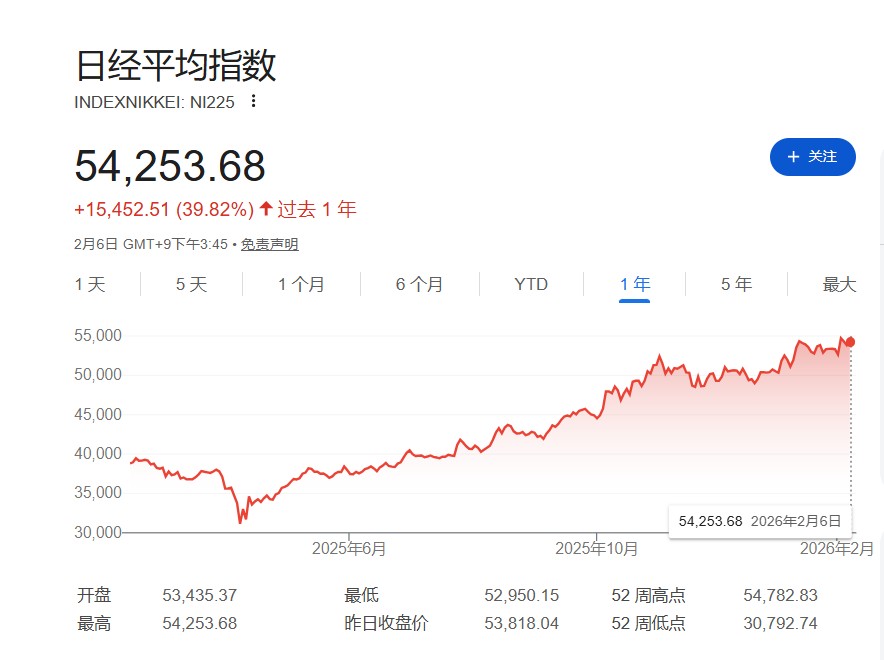
Buoyed by the election results, the financial market displayed a clear "risk appetite" pattern. The Nikkei 225 index futures rose by about 3% during early trading in Tokyo, continuing the strong performance of the Japanese stock market this year. Investors generally expect that the spending increase policy advocated by Sanae Takaichi will directly benefit the stock market, especially in the defense and technology sectors.
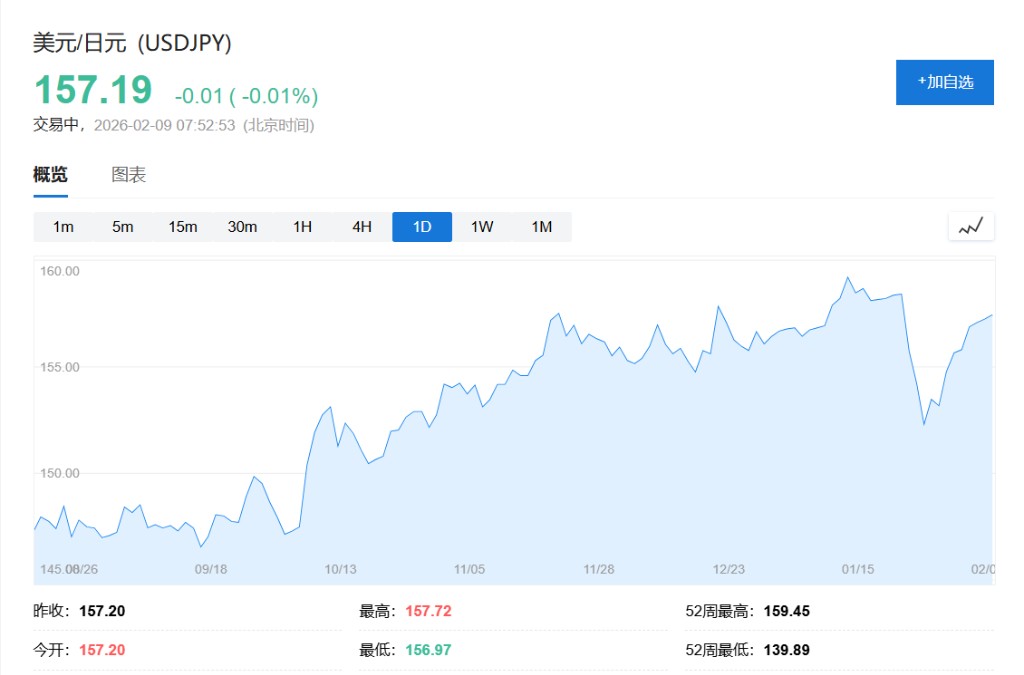
However, the foreign exchange and bond markets are under pressure. The yen weakened against the dollar, trading around 157.61 during early Asian trading on Monday, approaching the 160 level that previously prompted intervention by Japanese authorities. Meanwhile, due to concerns that the government's expansionary fiscal policy may exacerbate the debt burden, Japanese government bonds face the risk of further selling, with global fund managers having already reduced their exposure to Japanese bonds before the election.
"Takaichi trades" may dominate the stock market
With the ruling coalition securing a majority of seats, analysts believe that the so-called "Takaichi trades" may become the dominant logic in the market on Monday. The Tokyo Stock Exchange index closed at a historical high last Friday, having risen over 8% this year, far exceeding the approximately 2% increase in developed market stock indices.
Tim Waterer, Chief Market Analyst at KCM Trade, stated: "Overall, the election results are welcome news for the Nikkei index, as the outcome is clear, and Sanae Takaichi's stimulus policies have a clearer political path."
In terms of stocks, the market's most focused areas include sectors such as defense and nuclear energy, which align with Takaichi's national investment agenda. Gerald Gan, Chief Investment Officer at Reed Capital Partners in Singapore, pointed out: "The Japanese stock market is expected to rebound from this victory. Areas where Sanae Takaichi hopes to increase spending, such as military, artificial intelligence, and semiconductors, may become the biggest beneficiaries."

Yen approaches intervention red line, Japanese bonds face selling risk
In the foreign exchange market, the yen fluctuated within a narrow range during early Asian trading on Monday, slightly falling to 157.61 against the dollar. Last week, the yen had already retreated by 1.6%, and it remains in the vicinity of 160, a level that previously prompted direct intervention by Japanese authorities Neil Jones, Managing Director of Sales and Trading at TJM Europe, commented in an email: "The natural direction for the yen will be further weakness. It seems that the entire global forex market is anticipating some form of official entity action."
The bond market is also under pressure. Due to poor liquidity and concerns about Japan's fiscal sustainability, Japanese government bonds saw a significant decline in January. Global fund managers, including Schroders Plc and JPMorgan Asset Management, reduced their holdings of Japanese government bonds, particularly ultra-long bonds, ahead of the elections. The proposal by Takaichi to temporarily cut the food sales tax was one of the key drivers behind the sell-off.
Rong Ren Goh, Fixed Income Portfolio Manager at Eastspring Investments, commented: "This is a favorable outcome for the Liberal Democratic Party, although the market was not entirely caught off guard. In the past few weeks, Japanese government bond yields and the yen have been consolidating ahead of the elections, so this outcome should now allow the market to trade back through existing trends."

Expectations for Bank of Japan Rate Hike Rise
Despite fiscal concerns, bond performance improved slightly last week, easing upward pressure on yields. Masanari Takada, Quantitative and Derivatives Strategist at JPMorgan Securities Japan Co., believes: "While this outcome has heightened tensions among bond market participants, the current situation for the Liberal Democratic Party may provide Prime Minister Kishi Sanae with political leeway to address the concerns of the bond market."
Notably, during the vote counting period, Kishi Sanae stated that her comments regarding the benefits of a weak yen were taken out of context and reiterated her desire to establish an economy capable of withstanding currency fluctuations.
Currently, market focus has shifted to the Bank of Japan's policy path. Overnight index swaps indicate that there is about a 75% probability of the Bank of Japan raising rates by 25 basis points at the April meeting, with full pricing in before June