


After the 'historic' decline, has the bull market for gold and silver ended?
Gold and silver have recently experienced a "historic" decline, but market analysis suggests that the bull market has not ended. First, the conditions for a conclusion are not yet mature, and there are insufficient signals for policy adjustments and a shift in monetary policy. Second, market volatility is notably localized, and funds may temporarily flow out of precious metals, but there is still a possibility of future inflows. Finally, from the perspective of the commodity cycle, we are still in the early stages, and future trends need to be observed
Gold and silver have recently experienced a "historic" decline, and there has been much analysis regarding the reasons behind it. Here, we only want to explore one question: Has the bull market for gold and silver ended?
While we will also point out that there will be significant short-term volatility, we believe that the subsequent trend for gold and silver may be a consolidation with reduced volatility, rather than a definitive trend termination.
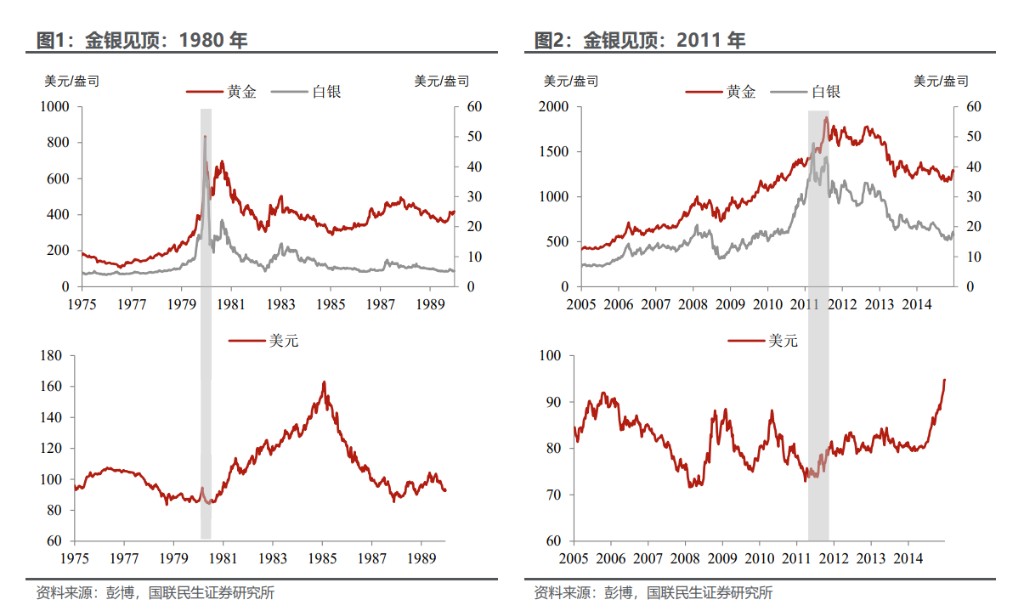
First, the conditions for termination are not yet mature. Looking back at the "great bull markets" for precious metals, there have been two major periods of significant increases since the 1970s, both accompanied by a weak dollar cycle: the 1970s and the early 21st century, with the endpoints of these surges occurring in 1980 and 2011, respectively. The conditions for termination mainly focus on two aspects: one is the emergence of policies to regulate speculation, such as exchanges raising the margin requirements for precious metals; the second is a clear shift towards a "hawkish" monetary policy. From the performance of related assets, it is evident that these past two years have marked the beginning of a new strong dollar cycle.
Currently, we have indeed seen the Chicago Mercantile Exchange continuously raising the margin requirements for precious metals like silver and gold, but using Trump's nomination of Walsh as a signal for a shift in monetary policy is insufficient; the direction of interest rate cuts has not changed. In contrast, historically, 1980 was when Volcker took charge of the Federal Reserve and aggressively tightened to combat high inflation, while 2011 marked the end of the second round of quantitative easing (QE2) by the Federal Reserve.
Moreover, in the current context of the U.S. facing high debt challenges and a loose monetary cycle, it is indeed difficult to conclude that the dollar index is about to enter a new bull market.
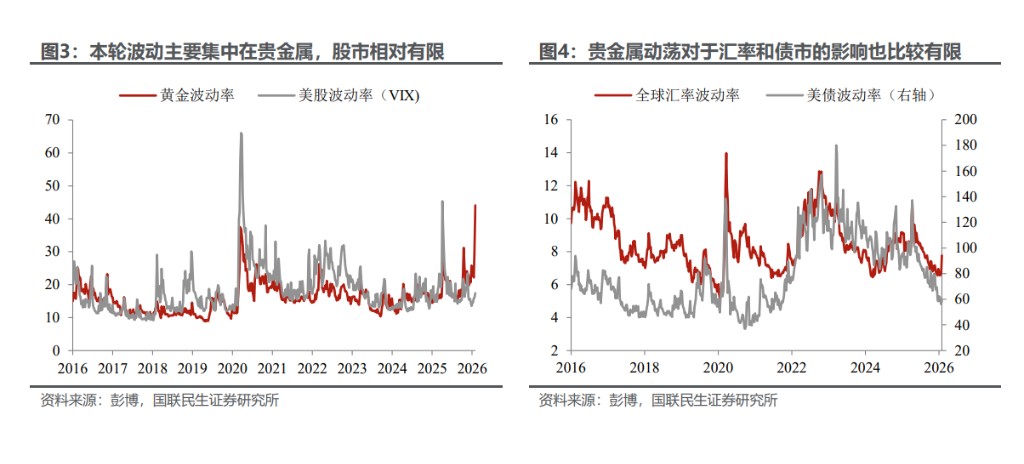
Second, the market's volatility has a noticeable locality. Unlike previous significant market fluctuations, the "historic" volatility of gold and silver has not spread; while the volatility in major stock, bond, and currency markets has increased, it remains very limited.
If the panic and "liquidity" issues are merely localized, the market's performance may indicate that "there is still a long way to go." Funds may temporarily flow out of precious metals and into other assets, but once volatility gradually returns to normal, the likelihood of funds flowing back into precious metals remains considerable.
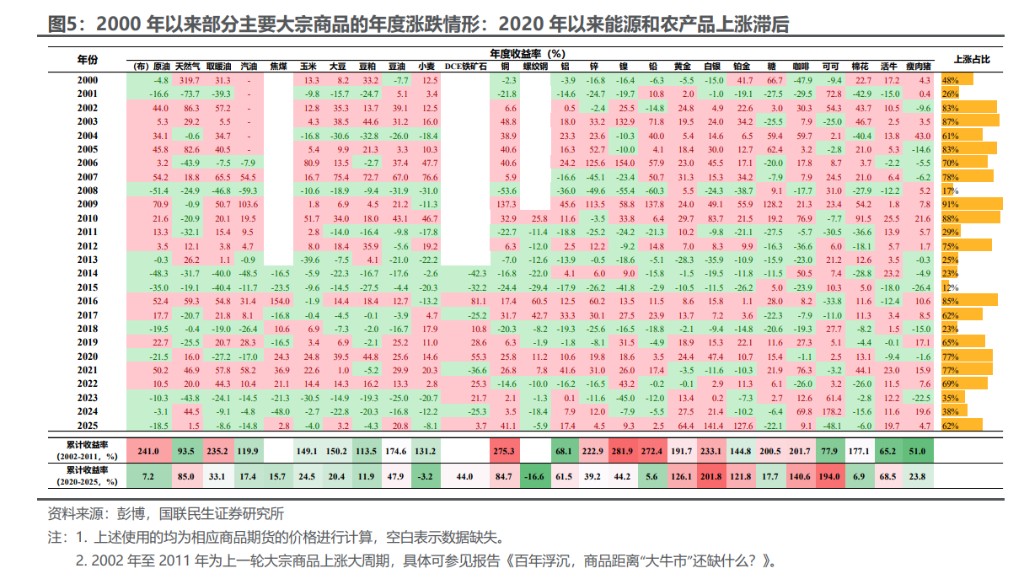
Third, from the perspective of the larger commodity cycle, we may still be in the early stages. In our previous report, "A Century of Rise and Fall: What Does the Commodity Market Need to Reach a 'Great Bull Market'?", we compared the current situation with the previous five major commodity upcycles. If we take 2020 as the starting point, aside from precious metals and some non-ferrous metals that stand out, most energy and agricultural products have seen insufficient increases.
If we still hold a "belief" in the major commodity upcycle, then during the phase of catch-up for energy and agricultural products, precious metals, as an important asset class, will also participate in the market, although their price elasticity may be relatively limited.
Based on this, while last week's "historic" drop in gold and silver was quite shocking, its impact on the main narrative of the market may not be as significant as expected. The policy changes from Federal Reserve Chair nominee Walsh may help reconstruct the market narrative, but this will take time. What should we focus on next?
Gold and silver may gradually enter a "reduced volatility" market— the frequency of significant unilateral increases or decreases is expected to decrease Since the market's trading sentiment is still present, where will the outflow of funds from gold and silver go? On one hand, we should pay attention to certain commodities that are still in a price trough, and on the other hand, this may also trigger changes in stock market styles (previously, gold and silver were relatively correlated with growth styles).
At least in the short term, some of the safe-haven functions of gold and silver may be weakened. Who will fill the gap? Pay attention to geopolitical assets such as crude oil that are experiencing stagflation, as well as opportunities in the bond market.
Risk Warning and Disclaimer
The market has risks, and investment should be cautious. This article does not constitute personal investment advice and does not take into account the specific investment goals, financial situation, or needs of individual users. Users should consider whether any opinions, views, or conclusions in this article are suitable for their specific circumstances. Investing based on this is at one's own risk
