


Li Xiang hopes to win again
Regaining Lost Ground?
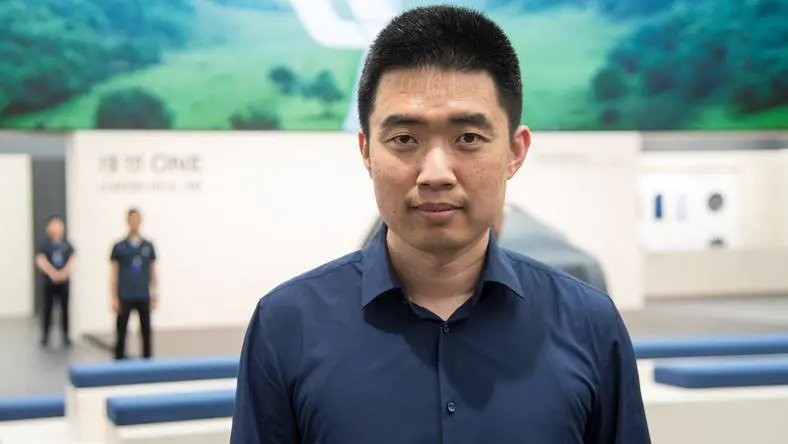
Author | Chai Xuchen
Editor | Zhou Zhiyu
After a prolonged "retrograde," Li Auto has finally reshuffled its cards.
"The best SUV under 5 million is back."
Recently, Li Xiang, the "Weibo King" and chairman of Li Auto, teased in a post that the flagship new L9 from the L series will be launched in the second quarter of this year. Additionally, for users pursuing the ultimate experience, a top version priced at 559,800 yuan, named L9Livis, has been prepared. Unlike its peers who adopt a "high configuration, low pricing" strategy, the new car is actually 120,000 yuan more expensive than the current Li Auto L9-Ultra.
Li Xiang stated that the L9 from four years ago made everyone remember the "refrigerator, color TV, and big sofa" and the "best SUV under 5 million."
Four years later, the logic of the new generation Li Auto L9 has changed: it’s not about the superficial parameters but about creating a generational experience gap. The way Li Xiang creates this experience gap is by transforming the new L9 into an embodied intelligent robot. Li Xiang said, "We have prepared for ten years, just waiting for this moment."
It’s important to note that the Li Auto L9 is a crucial vehicle for Li Auto. Although the Li ONE was the pioneering model, the L9 is what employees truly take pride in, with expected sales of about 250,000 units from 2022 to 2025, making it a flagship product that has attracted many competitors.
At a time when scale is under pressure, it seems timely to bring back the veteran L9 to reclaim lost ground in the booming large SUV market, but will the market accept the AI-embodied intelligent story of the new L9?
Veteran Comes Out
On the surface, although Li Xiang modestly claims not to compete on parameters, the materials used in the new L9 are top-notch.
The high-end Livis version is equipped with an 800V fully active suspension system, steer-by-wire, and four-wheel steering, along with Li Auto's self-developed Mach 100 chip, achieving a computing power of 2560 TOPS. This time, Li Xiang "listened to advice" and offered a customized two-tone body.
Industry insiders pointed out to Wall Street News that "for large SUV users, the biggest pain points in daily driving are heavy handling, outdated intelligence, and range anxiety," and the all-new L9Livis provides solutions to all these issues.
Previously, the L9 was criticized by consumers for being "comfortable to sit in but not to drive." While it was comfortable to ride, the driving experience felt like steering a ship. Therefore, in the new L9, Li Auto has incorporated fully active suspension configurations that were previously only available in million-yuan products like Nio ET9 and Yangwang U7, allowing for better control of body pitch and roll when cornering or going over bumps, with minimal nodding during hard braking and no lifting of the rear during rapid acceleration.
The improvements brought by the "complete" fully controlled chassis are even more significant. The integrated design of steer-by-wire, four-wheel steering, and fully electric mechanical braking reduces the turning radius of the nearly 5.3-meter-long vehicle to under 5.5 meters. Additionally, the new car has also seen significant upgrades in battery and pure electric range. The L9Livis is equipped with a 72.7 kWh battery, supporting 5C ultra-fast charging Li Auto hopes to fully meet the expectations for the new L9, hoping it can once again play the role of a firefighter.
Looking back, four years ago, Li Auto was facing pressure from Aito. At that time, the launch and operation of the Aito M7 severely impacted the sales of the Li ONE, leading to a collapse in sales and an early halt in production, resulting in a loss of over a billion in just one quarter. "For a long time, we were completely powerless," Li Xiang once stated.
In the third quarter of that year, the new L series was launched, with the vanguard L9 coming to the rescue.
After the initial launch of the L9, the market's explosive growth quickly emerged, with monthly sales stabilizing above 10,000 units, contributing over 90% of the company's sales at one point. With the success of the L9, the L8, L7, and L6 from the L series also became popular, and it was from the L9 that Li Auto rapidly expanded into a new force with a revenue level in the hundreds of billions, becoming the third global new energy vehicle company to achieve annual profitability after Tesla and BYD.
However, entering 2025, the L9 is no longer exciting.
With competitors replicating and pursuing it, the scarcity of the L9 has diminished, and its monthly sales dropped to as low as 2,000 units by the end of last year. On the other hand, due to the failure to break through in the pure electric market: the i8 did not smoothly take over, and the i6, which was expected to drive volume, faced production ramp-up challenges, leading to a gradual weakening of the company's overall presence and scale, with annual delivery volume declining by about 20% year-on-year.
Currently, facing an increasingly complex and high-pressure competitive landscape, Li Auto indeed urgently needs a new blockbuster to turn the tide and regain morale. First, Li Auto has decided to refocus on its most certain business foundation, with the primary goal of strengthening the extended range and high-end market.
To turn the situation around, the most important thing is to redefine the strategy. Industry insiders believe it is time for the L9 to undergo a reshuffle to break free from the quagmire of homogenization and reshape Li Auto's barriers.
However, these surface upgrades of the new L9 are merely paving the way for Li Auto's larger rebirth plan—"cross-generation" breakthroughs.
Rebuilding the Moat
"Returning to Li Auto, how should we position ourselves? I believe the greatest value lies in addressing life-related aspects; the car is a major part of life, and it is important to solve life problems in the physical world," Li Xiang stated.
Currently, AI is undergoing a fundamental transformation from Chatbot to Agent; past AI tools merely provided suggestions to users, while future AI must be able to act autonomously.
Thus, the L9 has become the carrier of Li Xiang's "ultimate ideal," "the all-new L9 is designed to be a car that truly understands you and has vitality." As for how to embody this, he proposed three points of "cross-generation" breakthroughs.
First is the "brain." The L9 Livis is equipped with two self-developed 5nm automotive-grade chips, with computing power three times that of NVIDIA Thor-U; at the same time, the L9 Livis is also equipped with 360-degree lidar; combined with the aforementioned 800V fully active suspension system and fully controlled chassis, the prototype of embodied intelligence is beginning to take shape.
This reflects Li Xiang's thoughts on the second half of the game.
"I believe that for at least the next three to five years, the competition in the mid-to-high-end automotive market will be a competition of embodied intelligence, just like the evolution from feature phones to iPhones and Android smartphones," Li Xiang said.
Taking Apple, which it benchmarks against, as an example, Li Xiang summarized that Apple's core barrier lies in its chips and operating systems. In the era of embodied intelligence, both hardware and software of the car are important, but from a technical perspective, the highest barriers are determined by two factors, and these two must be jointly designed, namely chips and models, which are the high ground of technology Based on the above judgment, Li Auto began designing its own chips in 2022 and started developing its own base model in 2023. "Although people didn't quite understand it at the time, I believe that after everyone experiences the all-new generation of Li Auto L9, they will have a different understanding and real experience of our early investment and judgment," Li Xiang said.
This is also the second long-term strategy for Li Auto to rebuild its moat.
For a long time, Li Auto led the new forces and even served as a model for domestic new energy, with one of its most important core advantages being the company's ability to define products.
During the ONE period, the innovative product ideas and mature functional presentations, such as refrigerator, color TV, large sofa + range extender + three-row seating large space + first-generation smart cockpit + home positioning, made Li Auto the initial leader in domestic new energy.
However, as its product thinking was widely replicated, followers repeatedly impacted Li Auto with stronger scale and cost-effectiveness, and the advantages accumulated by Li Auto in the early stage no longer held dominance. A person close to Li Auto revealed to Wall Street News that these well-known selling points of Li Auto would be learned within half a year, and the "shelf life" of the moat has now become very short.
This has also made Li Auto in 2025 constrained in various aspects of its products. After reflecting on its pain points, Li Auto is determined to create a barrier through "embodied intelligence" to completely distance itself from competitors, making it difficult for newcomers to replicate.
Li Xiang bluntly stated, "The competition in the mid-to-high-end automobile market in the next 3-5 years will actually be a competition of embodied intelligence."
An executive from an automotive company also pointed out that this technical path requires extremely high comprehensive capabilities, and only companies that possess a complete technology stack, including perception, models, chips, operating systems, software entities, and hardware entities, can truly succeed.
Currently, Li Auto is one of the few companies with this comprehensive capability.
Therefore, Li Auto has recently reorganized its autonomous driving R&D system into three core teams: the base model team, the software entity team, and the hardware entity team. The base model team, led by senior autonomous driving algorithm expert Zhan Kun, is responsible for the integration of VLA and self-developed chips;
The software entity team takes over the original autonomous driving mass production and data team, coordinating the R&D of smart cockpit and smart driving to achieve the connection between "vehicle-machine-family" scenarios;
Former senior vice president of autonomous driving, Lang Xianpeng, has been reassigned to lead the hardware entity team, responsible for the R&D of robotic hardware, including humanoid robots.
Li Xiang revealed in an internal meeting that the adjustment of the R&D team is precisely to respond to a new round of AI competition. He said, "We have prepared for ten years, just waiting for this moment."
Waiting for Verification
After clarifying the internal strategy, whether this battle can be won ultimately depends on the market landscape.
Last year, the market saw a wave of "9 series battles," with a series of large plug-in hybrid/incremental SUVs such as Lynk & Co 900, Denza N9, ZEEKR 9X, IM Motors LS9, and Voyah Taishan being launched one after another. By 2025, large three-row SUVs will no longer be exclusive to the high-end market; from the 180,000 level to the 500,000 level, there will be strong competitors available.
This year, the large SUV market will also see new products emerging, and the intensity of competition will become increasingly fierce Among the players present, Nio ES8 has achieved monthly sales of 22,000 units, while Aito M8 maintains monthly sales of 17,000 units; soon to enter the market are Nio ES9, XPeng G02, Xiaomi "Kunlun," Aito M9L, Leapmotor D19, Volkswagen ID.ERA 9X, Xiaomi YU9, and other flagship models in the 9 series. Each player has its own strengths: Nio has the NIO House system and battery swap network, Aito benefits from Huawei's halo, and ZEEKR offers cost-effectiveness.
The upgraded Li Auto L9 is also about to be swept into this "9 Series Grand Battle," and there remains a gap between vision and reality, separated by the market and consumers.
A core question that Li Auto needs to answer is: Who is the target user of L9 Livis? Industry insiders believe that the large SUV market in 2026 is no longer the blue ocean it was in 2022. There are more players, competition is fiercer, and users are more rational. The concept of embodied intelligence in Li Auto L9 Livis may still need time to be digested and accepted.
For Li Auto to succeed, it needs to return to its core genes: product definition capability, user operation capability, and experience upgrade capability. It must also be able to transform hardcore technology into perceivable experiences.
Looking back, Li Auto has undoubtedly succeeded in creating product experiences by focusing on pure family vehicles. Now, redefining vehicles as embodied intelligent robots will test how Li Xiang, this super product manager, can leverage his strengths. If the new Li Auto L9 can achieve impressive sales, it will undoubtedly dispel the current gloom.
Fortunately, on the other side of aggressively betting on the future, the market has also seen Li Auto quickly correcting its course.
This year, Li Auto has once again decided to pause its aggressive expansion in the pure electric field and refocus its strategic emphasis on the range-extended market, which it is more familiar with and still has broad space. The core vehicle for this adjustment is the upcoming major facelift of the L series.
During the Q3 2025 earnings call, Li Auto President Ma Donghui revealed that the L series will undergo a major facelift in 2026, returning to a simplified SKU model with core configurations standard across the board, such as 5C supercharging technology.
The all-new L9 is the first shot in "recapturing lost ground" and also sets the tone. Sources indicate that the new L9 has set a target of over 100,000 units in annual sales. This shows that Li Auto hopes to regain a top 3 position in the large SUV market through this upgrade.
While promoting product iteration, Li Auto has also recently reformed its sales channels for efficiency. After several years of rapid expansion of its direct sales network, Li Auto plans to close a number of low-efficiency retail centers this year. It was previously rumored that Li Auto conservatively estimates it will close 100 stores. While closing inefficient stores, Li Auto is also accelerating its penetration into lower-tier markets through light-asset cooperation models such as the "Hundred Cities Star Plan."
After a year of setbacks and experiencing another dramatic rise and fall, Li Xiang and his Li Auto are eager to win again. Fortunately, the reshuffling of the automotive market will continue, liquidity still exists, and Li Auto still has the opportunity to turn the tide
