


End of "buying the dip"? Why does Walsh's nomination mean that the threshold for the Federal Reserve to intervene in the market has significantly increased?
Citadel Securities believes that Waller's nomination means that the threshold for the Federal Reserve's market rescue will be significantly raised. He advocates for strict limits on the expansion of the central bank's balance sheet, allowing liquidity support only as an exceptional measure in crisis response, which directly undermines the "Fed put" that the market has long relied on. This could be an extremely dangerous signal for market participants accustomed to "buying the dip" in the context of rising leverage and record U.S. Treasury supply
The nomination of Waller for the Federal Reserve Chair may signal the beginning of a new era for the central bank, fundamentally reshaping investors' risk expectations. The central bank's backstop mechanism, which the market has long relied on, is facing severe challenges, meaning that the margin for error in liquidity support will be significantly narrowed for financial markets accustomed to such support.
According to a report released by Citadel Securities, Waller has long been critical of the Federal Reserve's balance sheet expansion, arguing that it distorts the market and creates an excessively loose monetary environment. In his view, the current $6.6 trillion balance sheet of the Federal Reserve needs to be structurally reduced, with liquidity support serving only as an exceptional measure in response to crises, rather than a routine operation.
This policy inclination suggests that the Federal Reserve's tolerance for financial stress will significantly increase, raising the threshold for its market interventions. Citadel Securities macro strategist Nohshad Shah pointed out that in this context, the implied strike price of "Fed put options" will substantially decline, meaning the market will need to undergo more severe adjustments to trigger the central bank's rescue response. This could be an extremely dangerous signal for market participants accustomed to "buying the dip" amid rising leverage and record U.S. Treasury supply.
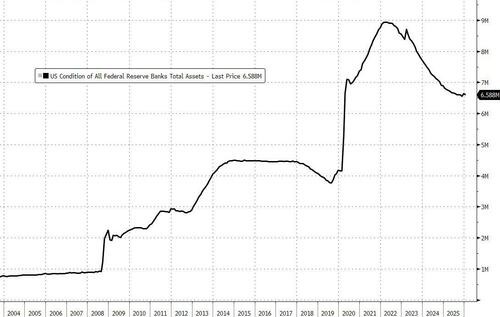
If Waller successfully pushes the Federal Open Market Committee (FOMC) to accelerate quantitative tightening, reserves in the banking system will dwindle, collateral conditions will tighten, and the cost of dollar financing may rise. This will increase the risk of liquidity shortages, potentially limiting credit supply or triggering a financing-driven crisis. Although this outlook remains speculative at present, investors should be alert to the possibility that 2026 could mark the beginning of a new era for the central bank.
Tech Stocks Under Pressure and Capital Expenditure Anxiety
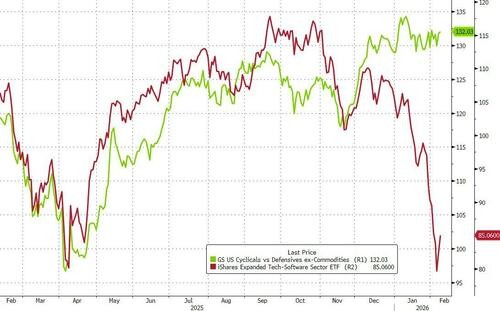
While Waller's nomination has raised macro concerns, the stock market, particularly the tech sector, has been under pressure. Software stocks have plummeted about 25% this year, reflecting a confluence of multiple factors. Citadel Securities noted that Anthropic's launch of Claude Opus 4.6 and the AI coding platform Cowork is directly targeting enterprise users, impacting traditional enterprise software business models and raising concerns about the sustainability of existing revenue streams.
Meanwhile, the capital expenditures of hyperscale cloud providers continue to accelerate, further exacerbating investor anxiety. Recent earnings reports show that giants like Alphabet, Meta, and Amazon have AI infrastructure spending plans for 2026 that far exceed expectations, totaling over $600 billion. Among them, Alphabet expects capital expenditures to reach $175 billion to $185 billion, about double last year's amount; Amazon's announced $200 billion spending plan directly led to an 11% drop in its stock price after hours Investors are shifting from focusing on growth momentum to rigorously examining investment returns, as capital expenditures continue to rise from high levels, leading to increasingly stringent market considerations regarding monetization pathways.
In addition, the ongoing weakness in digital assets has also dampened risk sentiment. Bitcoin has fallen over 50% since its peak last October, and the entire cryptocurrency market has seen a market capitalization evaporate by approximately $2.2 trillion, with this volatility also spreading to cross-asset classes such as precious metals.
Macroeconomic Fundamentals Remain Resilient
Despite the market experiencing a punitive rotation against tech stocks with high capital expenditures and the collapse of crypto assets, the fundamentals of the U.S. macroeconomy remain solid. Citadel Securities emphasizes that the strong performance of cyclical stocks indicates that recent market fluctuations reflect more specific industry risks rather than a broad reassessment of macro growth prospects. Tech companies continue to report strong earnings, with forward price-to-earnings ratios maintaining in the mid-20s, and their balance sheets remain healthy, not repeating the irrational exuberance of the internet bubble era.
Recent economic data also paints a constructive picture. Leading indicators show that growth momentum is strengthening, with the ISM Manufacturing Index unexpectedly rising to 52.6, significantly exceeding the expected 48.5, and marking the first entry into the expansion zone in twelve years. The growth in new orders suggests an improvement in demand. Although the number of layoffs in January surged 118% year-on-year, this was mainly influenced by base effects and weather factors. More reliable indicators like the JOLTS layoff rate show that the labor market still exhibits stable characteristics of reduced supply, moderate demand, and low turnover rates. Nohshad Shah maintains an optimistic view of the U.S. economy, expecting nominal GDP growth to remain in the 5-6% range.
Liquidity Tightening and Debt Absorption Challenges
Despite the macro data being acceptable, the potential systemic changes brought about by the Federal Reserve under Waller cannot be ignored. Nohshad Shah warns that, although Waller emphasizes avoiding a monetary-led approach, under the reality of fiscal dominance, the continuously expanding government debt supply must be absorbed by someone. If the central bank no longer acts as the ultimate buyer, this burden will fall on banks or the private sector.
The direct consequence of this shift is an increase in systemic risk. If liquidity tightens while facing external or internal shocks (such as a resurgence of inflation), the risk of soaring interest rates cannot be ruled out. Although Waller believes that an AI-driven productivity boom may allow for rate cuts without triggering inflation while growth exceeds trend, the most pressing reality for investors is: a Federal Reserve that is more tolerant of financial stress and committed to reducing its balance sheet is significantly altering the underlying logic of the market.
