


The US January CPI year-on-year is 2.4%, lower than expected, and the core CPI has fallen to its lowest level in four years

More news, ongoing updates
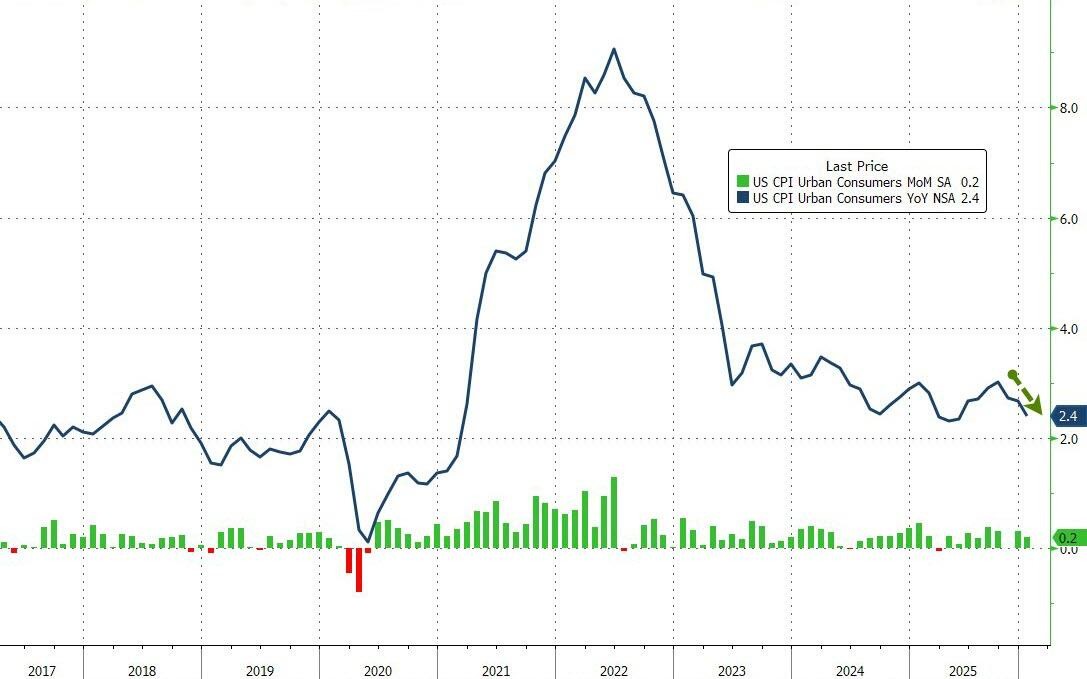
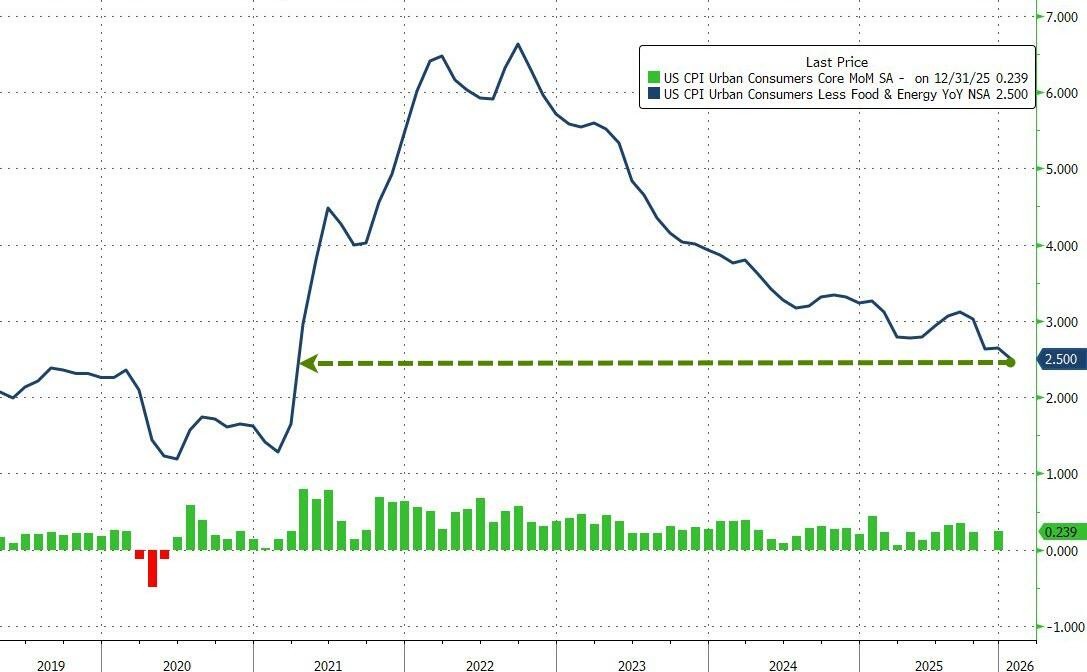
The overall inflation data for the U.S. in January is relatively "mild," with the CPI year-on-year falling to 2.4%, below expectations, and the core CPI year-on-year dropping to 2.5%, the lowest level since 2021. However, monthly core inflation remains resilient, driven by service prices.
On Friday, the U.S. Bureau of Labor Statistics (BLS) released data showing that the January CPI rose 0.2% month-on-month, lower than the 0.3% expected by economists surveyed by Reuters, and year-on-year slowed from 2.7% in December to 2.4%, also below the expected 2.5%.
Excluding food and energy, the core CPI rose 0.3% month-on-month, in line with expectations and slightly higher than the previous value of 0.2%. This is one of the higher monthly increases since last August. The core CPI year-on-year remained at 2.5%, matching expectations and down from 2.6% in December, marking the lowest level since 2021.
After the data was released, U.S. stock futures surged briefly, with Nasdaq futures up 0.13% for the day, S&P 500 futures up 0.12%, and Dow futures up 0.06%; the U.S. dollar index dipped slightly, down 0.03% for the day.
Traders expect a 50% probability of a third interest rate cut by the Federal Reserve this year.
Structural Divergence: Rising Service Costs, Declining Prices for Some Goods and Insurance
The rise in core inflation in January was mainly driven by prices related to services, including airfare, personal care, entertainment, healthcare, and communication.
At the same time, some prices for goods and services declined. Bloomberg noted that prices for used cars and trucks, household goods, and auto insurance fell in January, offsetting some of the upward pressure from the service sector.
Implications for the Federal Reserve: Cooling Does Not Mean Meeting Targets, Policy May Remain Cautious
Core CPI often tends to "exceed expectations" in January, and many economists believe that seasonal adjustment factors may not have fully captured the disturbances caused by one-time price increases at the beginning of the year.
The rise in core inflation in January may also reflect one-time price increases at the start of the year, as well as the impact of businesses passing on the broad tariff costs from President Donald Trump to prices.
According to Reuters, the Federal Reserve's 2% inflation target primarily references the PCE price index, but both CPI and PCE remain above the target level. In terms of the labor market, government data released this week showed that employment growth accelerated in January, with the unemployment rate falling from 4.4% in December to 4.3%.
In this context, Reuters pointed out that while inflation readings were below expectations, core inflation remained firm, coupled with a stabilizing labor market, which may lead the Federal Reserve to maintain interest rates unchanged for some time. The Federal Reserve kept the benchmark overnight rate in the range of 3.50% to 3.75% last month Updating
