


十年来最看空美元!机构蜂拥对冲美元头寸
The US dollar has fallen 1.3% this year, hovering at a four-year low. The latest survey by Bank of America shows that fund managers' dollar positions have dropped to the most negative level since 2012. Trump's aggressive policies, pressure on the Federal Reserve, and concerns over currency intervention have prompted institutions like JP Morgan and Vanguard to heavily short or hedge their dollar positions
Fund managers' bearish outlook on the dollar has reached its highest level in over a decade. As unpredictable U.S. policymaking takes a toll on the dollar, institutional investors are withdrawing or hedging dollar assets at an unprecedented pace.
According to the latest survey released by Bank of America last Friday (February 13), fund managers' dollar exposure has fallen below last April's low, with their dollar positions at the most negative level since at least 2012. The dollar has declined 1.3% this year against a basket of currencies including the euro and the pound, adding to a 9% drop in 2025, and is currently hovering near a four-year low.
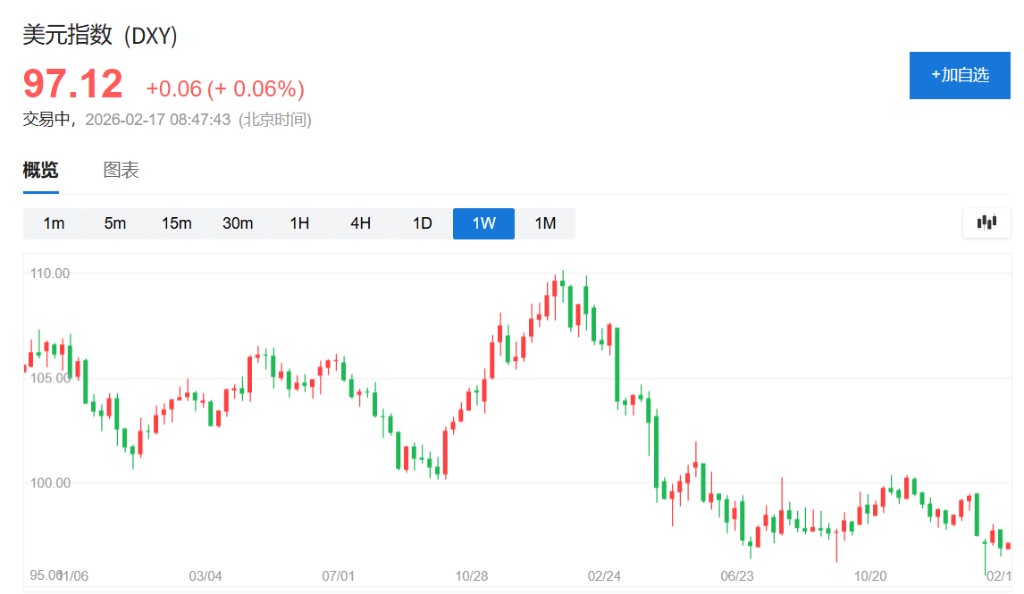
Data from the Chicago Mercantile Exchange shows that short bets on the dollar have exceeded long bets this year, reversing the situation from the fourth quarter of 2025. Bets against further depreciation of the dollar against the euro have reached levels not seen since the COVID-19 pandemic and last April when Trump announced the so-called "reciprocal tariffs."
Analysts point out that Trump's aggressive geopolitical actions and pressure on institutions like the Federal Reserve have raised concerns about the U.S.'s attractiveness as a global capital safe haven. Major asset management firms indicate that the dollar's decline reflects a growing desire among real money investors, such as pension funds, to hedge against further weakness or reduce exposure to dollar assets.
Institutions Adjust Dollar Positions
Roger Hallam, global rates head at asset management giant Vanguard, stated that some of the volatility over the past year has prompted investors to question their historically low hedge ratios on U.S. assets.
He added that this reassessment of U.S. allocations and hedge positions is a "key driver" of the dollar's recent decline.
Iain Stealey, international chief investment officer at JPMorgan Asset Management, mentioned that the firm has established short positions on the dollar in recent weeks.
Stealey specifically highlighted the outlook for carry trades, which had previously been favored due to the high interest rate returns of the dollar. He noted:
“The dollar is not severely overvalued, but we see an environment where the Federal Reserve will continue to cut rates... the carry advantage will gradually diminish over time.”
Markets expect the Federal Reserve to cut rates twice this year, narrowing the interest rate gap with major economies like the eurozone and Japan.
Caroline Houdril, multi-asset fund manager at Schroders, stated:
"We are seeing an increase in capital repatriation, with foreign dollar holders converting capital back to their local currencies."
Policy Uncertainty Intensifies Pressure on the Dollar
The nomination of Waller as Fed Chair initially reassured many investors, as he is widely seen as a conventional candidate who could alleviate concerns about central bank independence. However, Trump has begun to pressure Waller, stating earlier in February that if Waller supports rate hikes, he "won't get the job." Bank of America analysts pointed out that Walsh's nomination "has not translated into greater demand for the dollar, nor has it reignited optimism for U.S. assets."
The Greenland crisis in January heightened expectations that global investors might withdraw from U.S. assets, when Trump threatened military action and tariffs against NATO allies.
Although U.S. Treasury Secretary Basant later criticized the notion that "Europeans will sell U.S. assets," some management companies reported capital outflows.
Concerns Over Currency Intervention Persist
Washington's support for the Argentine peso against the dollar last year, as well as last month's so-called "currency check" on the yen against the dollar, has raised market concerns about a potential U.S. plan to weaken the dollar.
Trump's comments in January that a weaker dollar is "good" further exacerbated uncertainty. These remarks prompted Basant to state that the government is still pursuing Washington's traditional "strong dollar policy" and does not intend to intervene in the foreign exchange market.
Xavier Meyer, CEO of Aberdeen Group, stated:
"There are many people inside and around the government who believe that a weaker dollar would help U.S. exports and broader re-industrialization efforts."
He added that this is one of the factors that has led the market to "take seriously" the prospect of U.S.-Japan currency intervention
